Ozempic Teeth: Can Ozempic Cause Bleeding Gums and Gum Disease?
Key Takeaways
1. "Ozempic teeth" describes a cluster of oral health complications tied to GLP-1 medications, not a single official condition.
2. Dry mouth, nausea-related acid exposure, and nutritional gaps are the main drivers of gum and tooth damage.
3. Nausea affects 16-20% of Ozempic users, and those with diabetes face compounded periodontal disease risk.
4. Some dental professionals recommend more frequent dental check-ups (every 3-4 months) for patients experiencing oral symptoms while taking GLP-1 medications.
"Ozempic teeth" is the term spreading across dental offices and social media to describe the oral health complications some patients experience on GLP-1 receptor agonist medications like Ozempic (semaglutide). It functions as a warning signal rather than a formal diagnosis, but the pattern is real enough that dentists are increasingly discussing similar patterns among some GLP-1 users. If you're taking Ozempic, understanding its potential oral side effects is just as important as managing your blood sugar. Your mouth deserves the same attention as the rest of your health.
What Is 'Ozempic Teeth' and Why It Matters for GLP-1 Users
The term "Ozempic teeth" started appearing on social media before dentists began noticing it in their chairs. According to Southern Oaks Family Dental, it's a nickname for a recognizable pattern of oral health changes in patients taking GLP-1 receptor agonist medications, though it carries no official clinical classification. Think of it less as a diagnosis and more as a warning signal.
Not every Ozempic user develops these problems. But certain groups face meaningfully higher risk. People managing type 2 diabetes are already at increased risk for oral health problems, making diabetes medication oral health an important discussion during routine dental visits. Add a GLP-1 drug's side effect profile on top of that baseline risk, and the oral health stakes get considerably higher. If you've been buying Ozempic online and haven't mentioned it to your dentist yet, that's a conversation worth having soon.

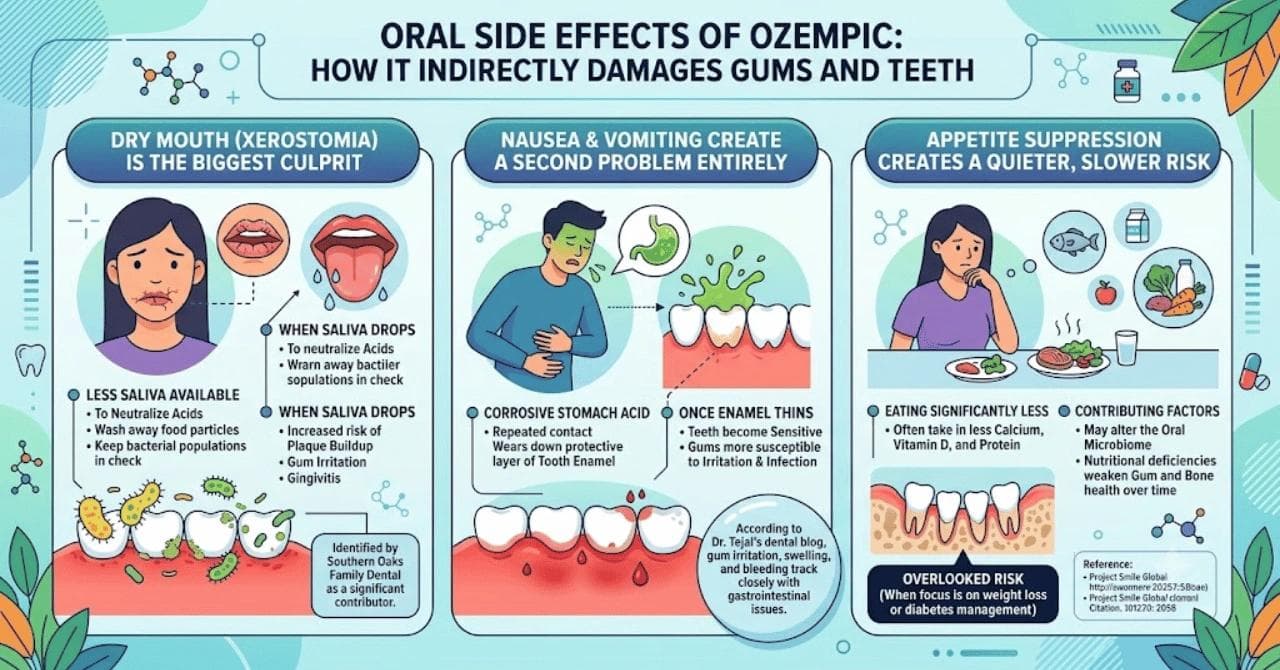
Oral Side Effects of Ozempic: How It Indirectly Damages Gums and Teeth
Semaglutide doesn't attack your teeth directly. The damage happens through a chain of indirect effects that compound over time. Maintaining good semaglutide gum health largely comes down to preventing the indirect effects of dry mouth, acid exposure, and nutritional deficiencies before they lead to lasting damage.
1. Dry mouth is the biggest culprit: Dry mouth has been reported in some people taking Ozempic, leaving less saliva available to neutralize acids and wash away bacteria. It neutralizes acids, washes away food particles, and keeps bacterial populations in check. When saliva drops, the risk of plaque buildup, gum irritation, and gingivitis increases. Southern Oaks Family Dental identifies xerostomia (the clinical term for dry mouth) as one of the most significant contributors to Ozempic-related oral health complications.
2. Nausea and vomiting create a second problem entirely: Stomach acid is corrosive, and when it repeatedly contacts tooth enamel, it wears that protective layer down. According to Dr. Tejal's dental blog, patients on GLP-1 medications have reported increases in gum irritation, swelling, and bleeding that track closely with their gastrointestinal side effects. Once enamel thins, teeth become sensitive, and gum tissue may become more susceptible to irritation and infection.
3. Appetite suppression creates a quieter, slower risk: When patients eat significantly less, they often take in less calcium, vitamin D, and protein without realizing it. Some studies, cited by Project Smile Global, suggest GLP-1 medications may also alter the oral microbiome and contribute to nutritional deficiencies that indirectly weaken gum and bone health over time. That's a risk that's easy to overlook when the focus is on weight loss or diabetes management.
Bleeding Gums, Sensitivity, and Other Oral Problems on Ozempic
Patients often first notice gum inflammation and bleeding. Patients on GLP-1 medications report increased rates of gum irritation, swelling, and bleeding, which can signal developing gum disease. These aren't cosmetic nuisances. Left untreated, gingivitis progresses to periodontitis, a condition that damages the bone supporting your teeth.
Enamel erosion from acid exposure drives a separate wave of complaints: increased tooth sensitivity, accelerated decay, and discomfort when eating or drinking anything cold or hot.
The risk compounds sharply for diabetic Ozempic users. Nearly 22% of people with type 1 and type 2 diabetes already experience gum-related complications. Diabetes increases periodontal disease risk independently of any medication, so patients managing both conditions face a genuinely stacked deck. Good oral health also supports overall diabetes management because untreated periodontal disease can make blood sugar harder to control.
How Often Do Gum Problems Actually Occur with Ozempic?
There's no single clean prevalence figure for "Ozempic teeth" as a defined condition. What the data does show is that the contributing side effects are common. Nausea is reported in 16% to 20% of Ozempic users, and vomiting affects between 5% and 9%, according to prescribing information. The FDA's prescribing label notes that the majority of these gastrointestinal symptoms occur during dose escalation, which is exactly when patients and their doctors tend to be focused on tolerability rather than dental care.
Although there isn't a formal prevalence estimate for gum disease Ozempic cases, dentists are increasingly recognizing the pattern of oral complications associated with GLP-1 therapy.
Dry mouth, the primary driver of gum disease risk, is a broadly reported side effect of glucagon-like peptide-1 medications. Patient reports and observations from dental professionals are growing, even without a formal clinical prevalence rate attached to the phenomenon yet.
Practical Steps to Protect Your Gums While Taking Ozempic
Protecting your oral health on Ozempic isn't complicated, but it does require being more deliberate than the average person needs to be. According to the available prescribing information, there are three non-negotiable pillars: excellent oral hygiene, consistent hydration, and regular dental check-ups.
On the hygiene side, brush twice daily with fluoride toothpaste and floss every day. Fluoride actively helps remineralize enamel that acid exposure has weakened. A soft-bristled brush helps reduce gum inflammation and irritation without causing additional trauma.
For dry mouth, sip water frequently throughout the day rather than drinking large amounts infrequently. Sugar-free gum containing xylitol stimulates saliva production and helps neutralize oral acids. Avoid alcohol-based mouthwashes, which dry the mouth further.
After vomiting, rinse your mouth with plain water immediately. Then wait at least 30 minutes before brushing. Brushing right after vomiting spreads stomach acid across softened enamel and accelerates erosion rather than preventing it.
Nutritionally, prioritize calcium and vitamin D sources even when your appetite is suppressed. These nutrients are foundational for both gum tissue and the bone that anchors your teeth.
For dental visits, it is generally recommended to schedule appointments every three to four months rather than the standard six-month interval for patients on GLP-1 medications. More frequent professional cleanings catch problems early, and your dentist can apply fluoride treatments that provide protection beyond what home care alone achieves. If cost is a concern, checking medication coupons and savings through your pharmacy can free up budget for the additional dental visits that matter.
Bottom Line: Protect Your Gums While Staying on Ozempic
Good oral hygiene and regular dental care are key to reducing the risk of gum problems while taking Ozempic. If you notice persistent bleeding, swelling, or other concerning symptoms, don't ignore them - speak with both your dentist and prescribing clinician. And if you need to refill your Ozempic prescription, Polar Bear Meds offers a convenient Canadian pharmacy option for eligible patients with a valid prescription.
Frequently Asked Questions
Ozempic doesn't directly cause bleeding gums, but its side effects create the conditions that lead there. Bleeding gums are just one of several Ozempic dental issues that patients have reported, alongside dry mouth, tooth sensitivity, and enamel erosion. Dry mouth may reduce saliva's protective effects, allowing plaque and bacteria to accumulate more easily. Patients on GLP-1 medications have reported increases in gum tenderness, swelling, and bleeding as these indirect effects accumulate.
There's no single published prevalence rate for Ozempic-related gum disease specifically, but the contributing factors are well-documented. Nausea affects 16% to 20% of users and vomiting affects 5% to 9%, according to prescribing information, and both expose oral tissues to damaging stomach acid. For diabetic patients already on Ozempic, nearly 22% of people with type 1 and type 2 diabetes experience gum-related complications even before factoring in medication side effects.
Start with the basics: brush twice daily with fluoride toothpaste, floss daily, and drink water consistently to combat dry mouth. If vomiting is occurring, rinse immediately with water but wait at least 30 minutes before brushing to protect softened enamel. If bleeding persists despite improved hygiene, contact your dentist and make sure they know you're taking Ozempic so they can monitor for GLP-1-specific oral health complications and recommend appropriate treatment.
Disclaimer
This article explains what current evidence says about Ozempic, bleeding gums, and oral health. It isn't a substitute for medical or dental advice. If you have persistent gum bleeding, swelling, severe pain, or other concerning symptoms, consult your dentist or healthcare provider for personalized care.