Wegovy Light Sensitivity and Vision Changes: What You Need to Know Right Now
Key Takeaways
- Blurred vision and eye irritation occurred in fewer than 2% of participants in some Wegovy clinical trials, and most cases resolved early in treatment.
- A July 2024 JAMA Ophthalmology study linked semaglutide to a 6.7% cumulative incidence of NAION over 36 months, versus 0.8% in non-GLP-1 users.
- People with diabetes and pre-existing retinopathy carry the highest risk for serious ocular complications.
- Sudden vision loss, severe eye pain, or new floaters require immediate medical attention, not a wait-and-see approach.
Wegovy light sensitivity is one of those side effects that catches patients off guard, partly because it doesn't appear on the short list of common complaints you hear about most. Wegovy, the glucagon-like peptide-1 (GLP-1) receptor agonist containing semaglutide, is approved for chronic weight management, and its ocular effects range from mild and temporary to rare but genuinely serious. Knowing the difference matters.
Common Vision Changes: Blurred Vision, Dry Eyes, and Wegovy Light Sensitivity
Blurred or fluctuating vision is a fairly common early experience on Wegovy. According to data cited by Ubie Health (April 2026), blurred vision and eye irritation occurred in fewer than 2% of participants across some clinical trials, which puts it in the "uncommon but real" category rather than a rare event.
The mechanism is straightforward. When you start semaglutide, minor shifts in fluid balance and blood sugar levels temporarily alter the shape of the eye's lens and the fluid inside it. The result is transient blurriness that typically resolves within a few weeks as the body adjusts.
Dry eyes show up for a different reason. Wegovy's well-known gastrointestinal side effects, nausea, vomiting, and diarrhea, can cause meaningful dehydration. Less fluid in the body means reduced tear production, which leaves eyes irritated and uncomfortable. That irritation, in turn, can make patients more sensitive to bright light.
Wegovy light sensitivity, or photophobia, isn't listed as a standalone common side effect in the prescribing information. But it follows logically from these early ocular changes. Dry, irritated eyes are simply more reactive to sun exposure and bright indoor lighting. For most patients, this is temporary and manageable.

The Serious Risk: NAION, Ischemic Optic Neuropathy, and Wegovy Eye Problems
This is where the conversation shifts. Non-arteritic anterior ischemic optic neuropathy, known as NAION, is a condition caused by reduced blood flow to the optic nerve. It's sometimes called an "eye stroke," and it can cause sudden, permanent vision loss.
The clinical evidence here is striking. A July 2024 study published in JAMA Ophthalmology followed 194 patients with type 2 diabetes taking semaglutide. Seventeen of them developed NAION. Over 36 months, the cumulative incidence reached 6.7% among semaglutide users, compared to just 0.8% in patients not using a GLP-1 receptor agonist.
A separate large-scale analysis of over 424,000 patients, cited by Clinical Leader, found that semaglutide exposure independently doubled the risk of NAION. A 2025 European Medicines Agency (EMA) review concluded that NAION is a rare side effect of semaglutide, potentially affecting up to 1 in 10,000 people.
Wegovy's risk profile appears to differ from Ozempic's, at least based on FDA adverse event reports collected from December 2017 through December 2024. That analysis found the risk of ischemic optic neuropathy was nearly five times higher with Wegovy than with Ozempic, and three times greater in men than in women.
People with diabetes, especially those with pre-existing retinopathy, face the highest risk. Rapid blood sugar improvement after starting semaglutide can temporarily worsen diabetic retinopathy, according to Camden Refocus Eye Doctors. That's a counterintuitive finding: better glucose control, at least initially, can stress already-compromised retinal vessels.
Why Wegovy Affects Your Eyes: The Biological Mechanisms
Four distinct mechanisms help explain the full range of Wegovy eye problems.
Blood sugar fluctuations: When glucose levels drop quickly after starting semaglutide, the lens and vitreous fluid inside the eye shift osmotically. This temporarily distorts vision and can stress retinal tissue, particularly in patients with diabetes.
Dehydration: Reduced fluid intake or excess fluid loss from GI side effects lowers tear production. Dry eyes aren't just uncomfortable. They're a direct driver of irritation, blurred vision, and sensitivity to light.
Vascular and blood pressure changes: Semaglutide affects microcirculation. Changes in blood pressure and blood flow to the optic nerve may contribute to ischemic events like NAION, particularly in patients who already have vascular risk factors.
GLP-1 receptors in the retina: Research has identified GLP-1 receptors in retinal tissue, suggesting semaglutide may have a direct influence on retinal blood flow and nerve-cell health. Researchers are still actively investigating this pathway, but it's a plausible explanation for some of the ocular adverse effects patients report beyond what dehydration or glucose shifts would explain alone.
Other reported ocular adverse effects include floaters, flashes, dark spots, eye pain, and pressure, according to Camden Refocus Eye Doctors. Blurred vision accounts for 34.33% of total ocular adverse drug events associated with oral semaglutide (Rybelsus), compared to 26.84% for injectable forms like Wegovy and Ozempic, per a 2025 study indexed in PubMed Central.
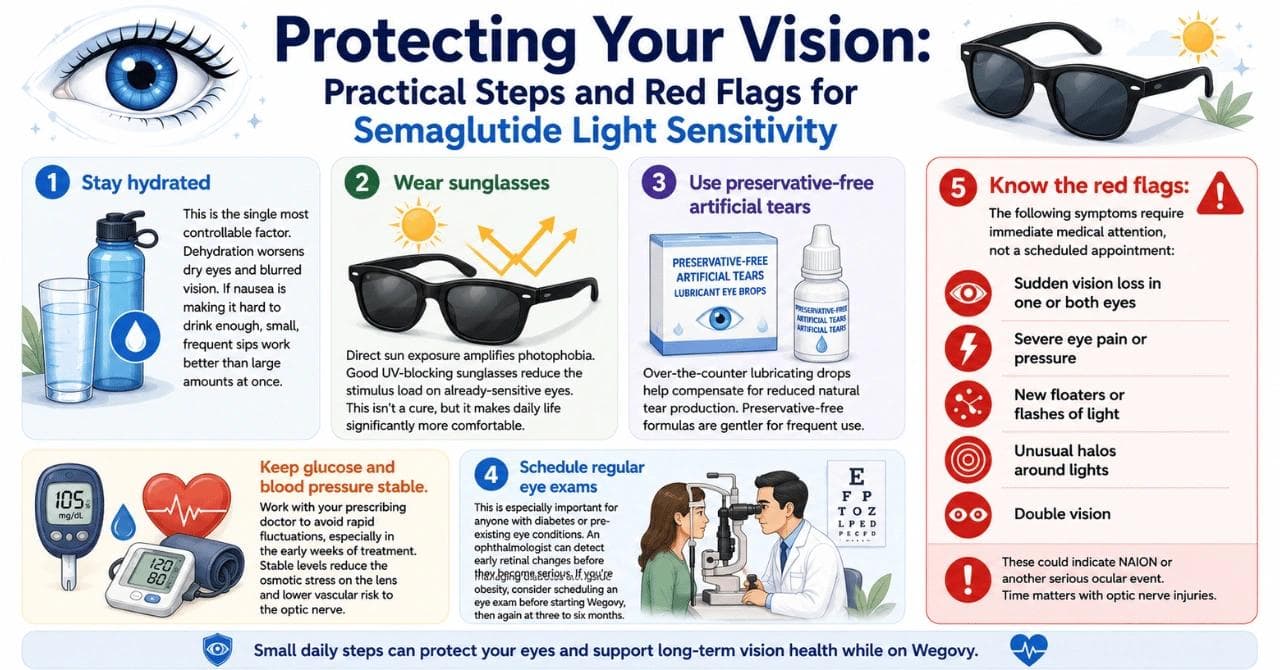
Protecting Your Vision: Practical Steps and Red Flags for Semaglutide Light Sensitivity
Managing semaglutide light sensitivity and other ocular side effects comes down to a few consistent habits and knowing when to act fast.
1. Stay hydrated: This is the single most controllable factor. Dehydration worsens dry eyes and blurred vision. If nausea is making it hard to drink enough, small, frequent sips work better than large amounts at once.
2. Wear sunglasses: Direct sun exposure amplifies photophobia. Good UV-blocking sunglasses reduce the stimulus load on already-sensitive eyes. This isn't a cure, but it makes daily life significantly more comfortable.
3. Use preservative-free artificial tears: Over-the-counter lubricating drops help compensate for reduced natural tear production. Preservative-free formulas are gentler for frequent use.
Keep glucose and blood pressure stable. Work with your prescribing doctor to avoid rapid fluctuations, especially in the early weeks of treatment. Stable levels reduce the osmotic stress on the lens and lower vascular risk to the optic nerve.
4. Schedule regular eye exams: This is especially important for anyone with diabetes or pre-existing eye conditions. An ophthalmologist can detect early retinal changes before they become serious. If you're managing diabetes alongside obesity, consider scheduling an eye exam before starting Wegovy, then again at three to six months.
5. Know the red flags: The following symptoms require immediate medical attention, not a scheduled appointment:
- Sudden vision loss in one or both eyes
- Severe eye pain or pressure
- New floaters or flashes of light
- Unusual halos around lights
- Double vision
These could indicate NAION or another serious ocular event. Time matters with optic nerve injuries.
You can find more information about Wegovy treatment options and related medications through licensed pharmacy resources if cost or access is a concern.
Moving Forward: Balancing Benefits With Informed Risk Management
Wegovy's weight-loss benefits are well-documented, and for many patients managing obesity or diabetes, those benefits are substantial. The ocular risks, while real, are mostly rare. The minor ones, blurred vision, dry eyes, and temporary Wegovy light sensitivity, tend to resolve as the body adjusts. The serious ones, particularly NAION, are uncommon but warrant genuine respect.
The practical takeaway is straightforward. Wegovy vision changes are manageable when patients go in with clear expectations, maintain open communication with both their prescribing doctor and an ophthalmologist, and know which symptoms demand urgent attention. Ongoing regulatory monitoring by bodies like the EMA and FDA continues to refine our understanding of semaglutide's ocular safety profile, and that picture will sharpen further as more long-term data becomes available. If you're already on Wegovy or considering it, explore the latest articles on medication safety and talk to your care team before making any changes to your treatment plan.
Frequently Asked Questions
Wegovy light sensitivity isn't listed as a standalone common side effect the way nausea is, but it can occur as part of broader early eye changes. Blurred vision and eye irritation appeared in fewer than 2% of participants in some clinical trials, and irritated or dry eyes can indirectly cause discomfort in bright light. Light sensitivity is also a recognized symptom of NAION, a rare but serious condition linked to semaglutide use.
Several factors likely contribute. Rapid blood sugar shifts can stress retinal tissue and worsen pre-existing retinopathy, leading to visual disturbances that include light sensitivity. Dehydration from GI side effects reduces tear production, making eyes drier and more reactive to light. Vascular changes affecting blood flow to the optic nerve may also play a role, particularly in patients with underlying cardiovascular or diabetic risk factors.
Start with the basics: stay well-hydrated, wear UV-blocking sunglasses when outdoors, and use preservative-free artificial tears as needed. Work with your doctor to keep glucose and blood pressure levels stable, since rapid fluctuations are a key driver of early ocular changes. If you have diabetes or a history of eye problems, regular comprehensive eye exams are especially important, and don't wait to seek care if symptoms become sudden or severe.
Disclaimer
This article covers what the current research says about Wegovy and eye health, but it isn't medical advice. Everyone's health situation is different, and vision changes with any medication deserve a conversation with your doctor or an eye care professional. If you experience sudden vision loss or severe eye pain, seek emergency care right away.