What Are the Long-Term Side Effects of Synthroid?
Long-term use of Synthroid is generally safe when your dose is properly adjusted, but risks can develop if thyroid hormone levels remain too high or too low over time. The most important long-term side effects of Synthroid include heart-related complications, decreased bone mineral density, and symptoms linked to excess thyroid hormone.
According to DailyMed prescribing information, most adverse effects are dose-related and reflect a hyperthyroid state caused by overtreatment, including arrhythmias, weight loss, and nervous system symptoms. If you have been taking Synthroid for years, the primary risk is not the medication itself but inadequate monitoring of thyroid-stimulating hormone (TSH) and dose adjustments.
What Happens When You Take Synthroid Long-Term?
When you take Synthroid long-term, it becomes part of your ongoing thyroid hormone replacement therapy and helps maintain normal hormone levels. For most people, this is safe and necessary. However, because treatment continues for years, even small dosing imbalances can persist and gradually lead to side effects of Synthroid if not monitored properly.
According to NCBI StatPearls, adverse effects of levothyroxine sodium are typically linked to excessive dosing, which can create a hyperthyroid-like state over time. This is why the long-term effects of levothyroxine are mainly associated with dose control rather than the medication itself.

What Are the Main Long-Term Side Effects of Synthroid?
The long-term side effects of Synthroid usually become noticeable when thyroid hormone levels remain elevated over time due to improper dosing (overtreatment). These effects typically develop gradually and affect specific systems in the body:
- Heart-related complications: Long-term excess hormone levels can increase heart rate, cardiac workload, and lead to rhythm disturbances such as atrial fibrillation.
- Bone loss and osteoporosis: Prolonged exposure to high thyroid hormone levels can accelerate bone breakdown, which reduces bone mineral density (BMD).
- Persistent hyperthyroid-like symptoms: Ongoing overtreatment may cause chronic symptoms such as anxiety, tremors, heat intolerance, and unintended weight loss.
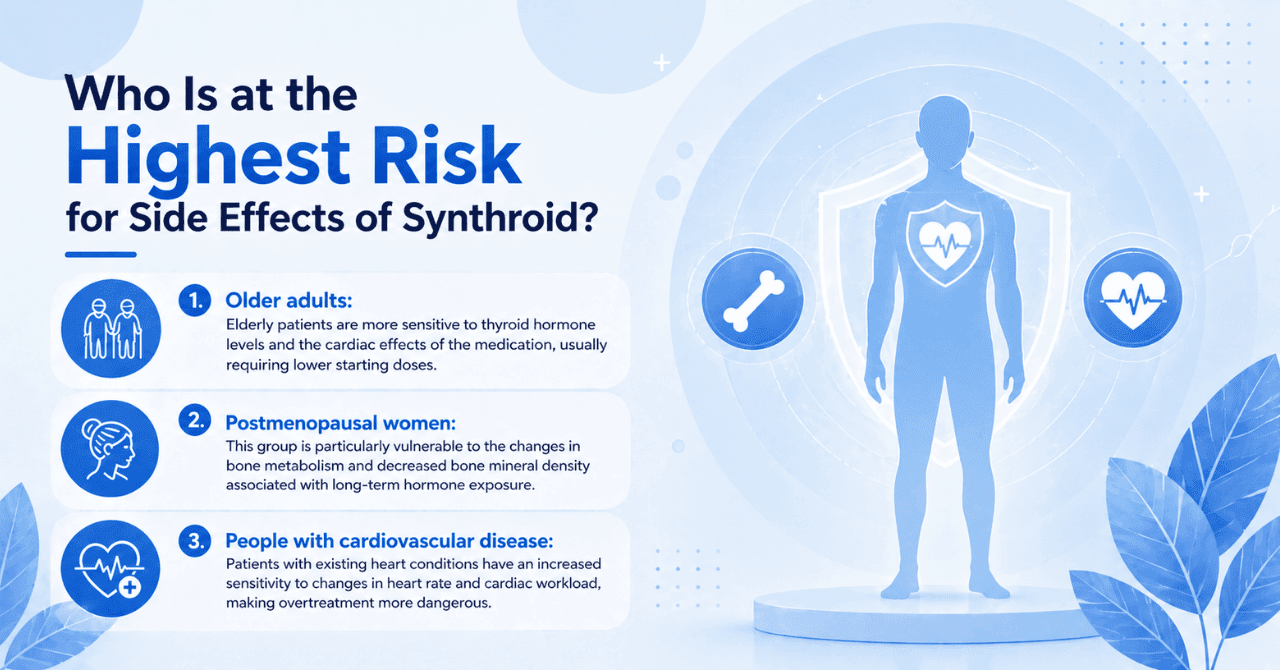
Who Is at the Highest Risk for Side Effects of Synthroid?
Certain groups are more likely to experience long-term side effects of Synthroid due to increased sensitivity to thyroid hormone or underlying health conditions.
- Older adults: Elderly patients are more sensitive to thyroid hormone levels and the cardiac effects of the medication, usually requiring lower starting doses.
- Postmenopausal women: This group is particularly vulnerable to the changes in bone metabolism and decreased bone mineral density associated with long-term hormone exposure.
- People with cardiovascular disease: Patients with existing heart conditions have an increased sensitivity to changes in heart rate and cardiac workload, making overtreatment more dangerous.
How Long Do Synthroid Side Effects Last After Stopping the Medication?
Side effects of Synthroid do not disappear immediately after stopping the medication. Because levothyroxine sodium stays active in the body, changes in symptoms usually take several weeks. The peak effect of a dose can take about 4 to 6 weeks, which means side effects related to dosing may also take a similar time to improve after adjustments or discontinuation.
It is also important to understand that stopping Synthroid does not fix the underlying thyroid condition. MedlinePlus data states that levothyroxine controls hypothyroidism but does not cure it, so symptoms like fatigue, weight gain, and low energy may return if treatment is stopped.
How to Reduce the Long-Term Side Effects of Synthroid
You can reduce the side effects of Synthroid by keeping your dose stable and avoiding factors that interfere with how your body absorbs levothyroxine sodium.
| Long-term Side Effect | How to Reduce |
|---|---|
| Heart problems (arrhythmias, atrial fibrillation) | Monitor TSH and T4 levels regularly and adjust dose carefully to avoid overtreatment, as recommended in FDA prescribing guidelines |
| Bone loss and osteoporosis | Use the lowest effective dose and reassess therapy over time, especially in high-risk groups |
| Symptoms of excess thyroid hormone (anxiety, tremors, weight loss) | Ensure dose titration is gradual and based on lab results, not symptoms alone |
| Drug absorption issues leading to unstable levels | Take levothyroxine on an empty stomach and separate it from calcium, iron, and interacting medications by at least 4 hours |
| Long-term dosing imbalance | Schedule routine follow-ups every 6-12 months or after dose changes to maintain stable hormone levels |
← Swipe to see more →
The Bottom Line: Does Synthroid Cause Long-Term Side Effects?
Yes, long-term use of Synthroid can cause side effects, but these are most likely when the dosage is too high or not properly monitored over time. The key long-term risks include decreased bone mineral density, heart-related complications such as arrhythmias, and symptoms linked to excess thyroid hormone levels.
When thyroid levels are kept within the target range, Synthroid is generally safe and effective for long-term use. Regular monitoring and proper dose adjustments are what prevent these complications. If you are planning to start or continue treatment, choose a trusted source and follow your healthcare provider’s guidance to use Synthroid safely and effectively.
Frequently Asked Questions
Yes. The long-term effects of levothyroxine (Synthroid) are mainly linked to dosing. When levels are too high over time, risks include decreased bone mineral density (BMD), atrial fibrillation, and other cardiovascular complications. When properly monitored, long-term Synthroid use is generally safe.
There are no fixed lifelong side effects if the dose is correct. However, prolonged overtreatment can lead to ongoing issues such as bone loss, heart rhythm problems, and hyperthyroidism symptoms. These are considered long-term side effects of Synthroid when hormone levels are not controlled.
Synthroid can cause heart problems if the dose is too high or not properly monitored. Excess thyroid hormone levels can increase heart rate and lead to complications such as palpitations, angina, and irregular heart rhythms like atrial fibrillation. The risk is higher in older adults and people with existing heart disease, which is why careful dose adjustment and regular monitoring are important.
Synthroid is designed for long-term or lifelong use as part of thyroid hormone replacement therapy. It remains safe as long as thyroid-stimulating hormone (TSH) levels are regularly monitored and kept within the target range.
Most Synthroid side effects improve once the dose is corrected. Because levothyroxine sodium takes time to adjust in the body, symptoms may take a few weeks to settle after dose changes.
Yes, Synthroid side effects in elderly patients can be more significant, especially when the dose is too high. According to FDA prescribing information, older adults have a higher risk of heart-related complications such as atrial fibrillation, which is why lower starting doses and careful monitoring are recommended.
Medical Disclaimer
This blog is provided for informational purposes only and does not replace expert medical guidance, diagnosis, or treatment. The content is based on authoritative sources, including U.S. Food and Drug Administration (FDA) prescribing information and peer-reviewed research from the National Library of Medicine (NCBI and PubMed), but individual responses may vary. Always consult an authorized healthcare professional before making treatment decisions.