What Are the Side Effects of Taking Robaxin?
Robaxin (methocarbamol) is an FDA-approved muscle relaxant used to treat acute musculoskeletal pain. While effective, its sedative nature often leads to various Robaxin side effects, ranging from mild drowsiness to rare metabolic changes. Because methocarbamol functions by depressing the central nervous system (CNS), understanding its safety profile is essential for managing your recovery and avoiding drug interactions.
What Are the Most Common Side Effects of Robaxin (Methocarbamol)?
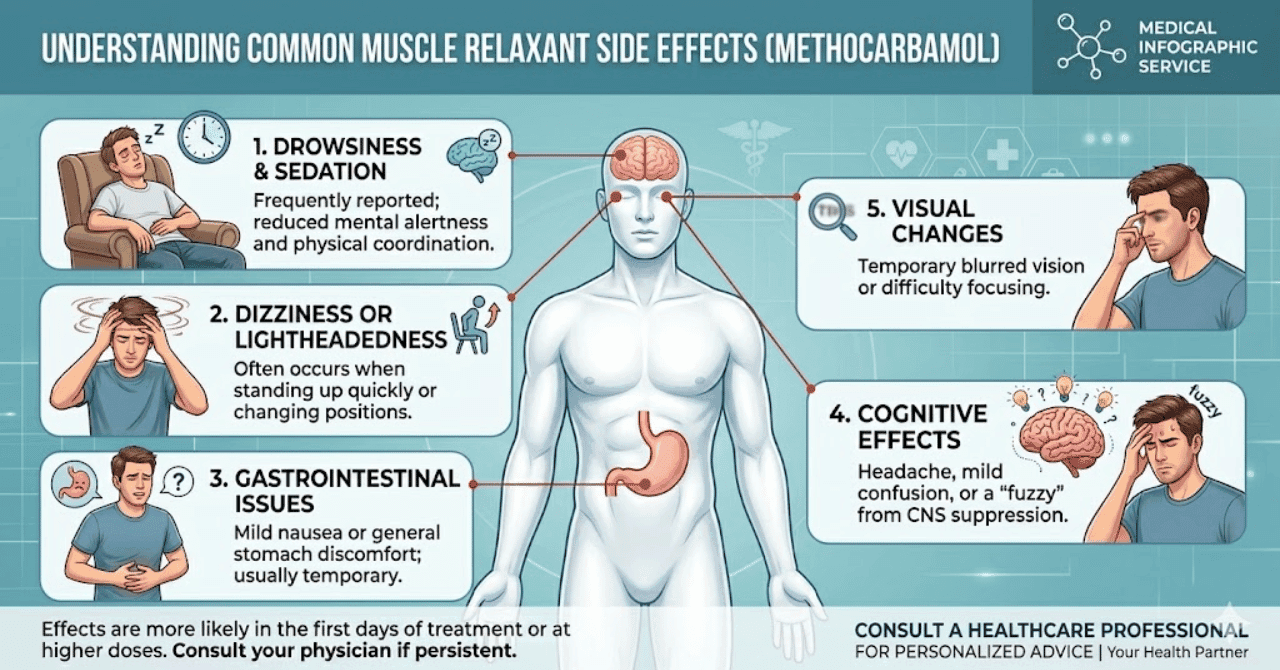
The most common Robaxin side effects are related to its effect as a CNS depressant, which slows brain and nerve activity. According to FDA labeling, these effects are usually mild and temporary but may affect daily functioning.
Common Side Effects of Taking Robaxin Include:
- Drowsiness and Sedation: These are the most frequently reported effects and may reduce mental alertness and physical coordination.
- Dizziness or Lightheadedness: Often occurs when standing up quickly or changing positions.
- Gastrointestinal Issues: Mild nausea or general stomach discomfort, usually temporary and self-limiting.
- Cognitive Effects: May include headache, mild confusion, or a general “fuzzy” feeling due to central nervous system (CNS) suppression.
- Visual Changes: Temporary blurred vision or difficulty focusing in some users.
These effects are more likely in the first days of treatment or at higher doses.
Serious (Rare) Side Effects of Robaxin: When to Seek Medical Attention
While most people tolerate Robaxin (methocarbamol) well, some rare or serious side effects require immediate medical attention. It is important to understand the difference between mild, harmless reactions and symptoms that may indicate a medical emergency.
Seek immediate medical help for the following serious reactions of Robaxin:
- Severe allergic reaction (anaphylaxis): Hives, swelling of the tongue, face, lips, or throat, and difficulty breathing
- Liver-related issues: Yellowing of the skin or eyes (jaundice), often with persistent nausea or fatigue
- Cardiovascular effects: Abnormally slow heart rate, dizziness, or fainting episodes
- Neurological symptoms: Seizures, extreme weakness, or loss of consciousness
Understanding rare urine discoloration with Robaxin:
Methocarbamol (Robaxin) can sometimes cause urine to turn green, blue, or dark brown due to harmless drug metabolites. This change is generally not dangerous and is not a sign of kidney damage. However, dark amber or tea-colored urine may indicate a more serious liver-related issue and should be checked by a doctor immediately.
How Long Do Robaxin Side Effects Last?
Robaxin (methocarbamol) side effects are generally short-term and improve as the body adjusts to the medication. Most effects, such as drowsiness and dizziness, are usually most noticeable shortly after taking a dose and gradually become less intense with continued use.
Methocarbamol has a short half-life of about 1 to 2 hours, meaning it is metabolized relatively quickly. It is typically cleared from the system within around 24 hours in most healthy adults. However, the noticeable side effects usually do not last that entire duration and tend to fade sooner as the drug wears off.
If Robaxin side effects persist for several days, worsen, or feel unusual compared to expected effects, medical advice should be sought to rule out any underlying issue.
Robaxin vs. Flexeril: Which Has Fewer Side Effects?
When comparing Robaxin (methocarbamol) and Flexeril (cyclobenzaprine), the main difference is how strongly they cause sedation and impact daily functioning. Both are effective muscle relaxants, but their side-effect profiles make them suitable for different situations.
| Feature | Robaxin (Methocarbamol) | Flexeril (Cyclobenzaprine) |
|---|---|---|
| Sedation level | Mild to moderate drowsiness | Strong sedation with pronounced fatigue |
| Common side effects | Dizziness, headache, nausea, blurred vision, metallic taste | Dry mouth, drowsiness, fatigue, constipation, dizziness |
| Duration in the body | Short half-life (about 1-2 hours) | Long half-life (about 18 hours or more) |
| Daytime use | Generally preferred for daytime activity | Often limited due to drowsiness |
| Nighttime use | Less sedating, not primarily used as a sleep aid | Often preferred when sleep is affected by pain |
| Drug interaction risk | Lower overall risk (mainly CNS depressants) | Higher risk, especially with antidepressants (serotonin-related interactions) |
← Swipe to see more →
Safety Guide: How to Reduce Robaxin Side Effects
While Robaxin (methocarbamol) side effects cannot always be completely avoided, their intensity can often be reduced by following a few simple safety steps.
Safety Tips to Manage Side Effects of Robaxin (Methocarbamol):
- Avoid alcohol and sedatives: Do not combine Robaxin with alcohol, sleeping pills, or other CNS depressants, as this can significantly increase drowsiness, dizziness, and slow reaction time.
- Take with food or milk: This may help reduce nausea and stomach upset in some users.
- Stand up slowly: Changing positions gradually can help prevent dizziness or lightheadedness.
- Avoid driving or operating heavy machinery: Do not drive or perform tasks requiring alertness until you know how Robaxin affects your body.
- Follow the prescribed dose: Taking more than prescribed can increase side effects without improving effectiveness.
- Inform your doctor about health conditions: Conditions such as liver or kidney problems may require dosage adjustments to reduce the risk of side effects.
Read more about Best Over-The-Counter Nausea Medicine
Key Takeaways About Robaxin Side Effects
Robaxin (methocarbamol) side effects, such as drowsiness, dizziness, and mild stomach upset, are usually short-term and improve as the body adjusts to its central nervous system (CNS) effects. In rare cases, it may also cause harmless changes in urine color, such as green or darker shades, due to how the medicine is processed in the body. However, warning signs like yellowing of the skin or eyes or any allergic reaction should be treated as urgent and require immediate medical attention. For safe use, avoid alcohol and sedatives, take the medicine with food, and do not drive until you know how it affects your alertness.
Frequently Asked Questions
Robaxin should not be taken with alcohol, opioids, sleeping pills, benzodiazepines, or other CNS depressants. These combinations can increase drowsiness, dizziness, and impair breathing or reaction time. Combining it with sedating medicines may also worsen side effects and lead to excessive sleepiness and poor coordination.
Yes, Robaxin is generally considered safe to take with Tylenol (acetaminophen) or ibuprofen because they work in different ways. However, it should still be used only as directed by your provider to ensure safety for your specific condition.
No, Robaxin (methocarbamol) is not a controlled substance. It does not have a high risk of dependence or abuse compared to some other muscle relaxants, although it can still cause side effects like drowsiness.
Yes, Robaxin commonly causes sleepiness and drowsiness because it works as a central nervous system depressant. This effect can reduce alertness, so activities like driving or operating machinery should be avoided until you know how it affects you.
Medical Disclaimer
This content is for informational purposes only and does not constitute medical advice. Information about Robaxin (methocarbamol) side effects may vary based on individual health conditions and medical history. Always consult a licensed healthcare professional before stopping, starting, or changing any medication or dosage.