What Foods to Avoid While Taking Metformin?
If you are looking for foods to avoid while taking Metformin or wondering what not to eat with Metformin, the direct answer is this: there are no strictly banned foods, but certain choices should be avoided or limited because they worsen blood sugar control or increase side effects. The most important ones include sugary foods and drinks, refined carbohydrates, high-fat meals, and alcohol.
According to FDA data, excessive alcohol use with Metformin increases the risk of lactic acidosis, a rare but severe condition. Choosing the right foods helps you reduce side effects and maintain stable blood sugar levels while taking Metformin.
Why Certain Foods Matter While Taking Metformin
Not all foods affect Metformin in the same way. Some foods do not directly interact with the medication but can still reduce how well it controls blood sugar levels. For example, sugary foods and refined carbohydrates can cause sharp increases in glucose, making it harder for Metformin to keep levels stable. The National Institute of Diabetes and Digestive and Kidney Diseases (NIDDK) recommends limiting sugary foods, sweet drinks, and high-fat foods to help keep blood glucose levels within a healthy range.

What to Eat to Reduce Metformin Side Effects
If you experience side effects with Metformin, your food choices can help improve tolerance. Taking Metformin with meals and choosing lighter, balanced foods may reduce symptoms like nausea or diarrhea. According to StatPearls data, Metformin is typically taken with food to help lower gastrointestinal discomfort.
| Food Approach | What to Choose | Why It Helps |
|---|---|---|
| Take with meals | Regular meals with balanced portions | Helps reduce gastrointestinal side effects like nausea |
| Low-fat foods | Boiled, grilled foods, lean proteins like chicken or fish | High-fat meals may worsen stomach discomfort |
| Moderate fiber intake | Oats, vegetables, whole grains (increase gradually) | Supports digestion without causing bloating |
| Hydration | Water, unsweetened drinks | Helps prevent dehydration from diarrhea |
| Bland foods | Rice, toast, bananas, simple meals | Easier on the stomach during the adjustment phase |
← Swipe to see more →
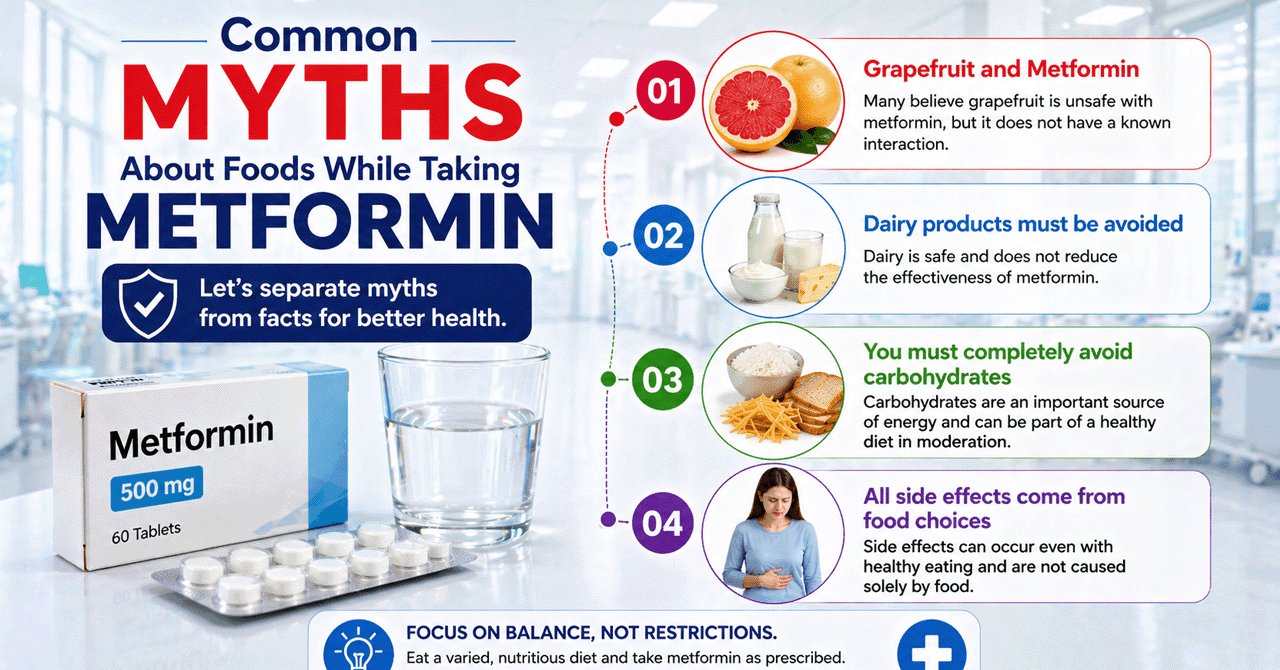
Common Myths About Foods While Taking Metformin
Some advice about foods to avoid with Metformin can be confusing or exaggerated. Not every food has a direct interaction with the medication, but certain choices may still affect blood sugar levels or side effects.
- Grapefruit and Metformin: There is no strong evidence that grapefruit directly interacts with Metformin. Unlike some other medications, Metformin is not significantly affected by grapefruit metabolism pathways.
- Dairy products must be avoided: Dairy is generally safe while taking Metformin. However, products with added sugar may raise blood sugar levels, so choosing low-sugar options is usually better.
- You must completely avoid carbohydrates: Carbohydrates are not banned, but refined carbohydrates can cause rapid increases in blood glucose. Managing portion size and quality matters more than complete avoidance.
- All side effects come from food choices: Gastrointestinal side effects such as diarrhea and nausea are common with Metformin itself, as noted by MedlinePlus data, and may improve over time or with proper meal timing.
What If You Accidentally Eat Foods to Avoid with Metformin
If you eat foods you should avoid while taking Metformin, it usually does not cause immediate harm, but it may lead to temporary blood sugar spikes or stomach discomfort.
- Monitor your blood sugar levels: Check how your body responds, especially after sugary foods or refined carbohydrates.
- Stay hydrated: Drinking water can help support digestion and reduce discomfort.
- Return to balanced meals: Focus on lighter, lower-fat, and lower-sugar meals in your next intake.
- Watch for symptoms: Ongoing nausea, diarrhea, or unusual fatigue should not be ignored.
When to Seek Medical Help While Taking Metformin
Some symptoms while taking Metformin should not be ignored, especially if they are severe or do not improve. These may indicate a serious condition or require medical evaluation.
- Signs of lactic acidosis: Extreme tiredness, weakness, nausea, vomiting, stomach pain, deep or rapid breathing, shortness of breath, dizziness, feeling cold, or an unusual heartbeat.
- Severe or persistent gastrointestinal symptoms: Ongoing diarrhea, nausea, or stomach discomfort that does not improve.
- Unusual fatigue or weakness over time: May need evaluation, especially with long-term use.
- Numbness or tingling in hands or feet: Could be linked to vitamin B12 deficiency associated with Metformin use.
- Any sudden or worsening symptoms: If something feels unusual or severe, medical advice should not be delayed.
The Bottom Line: Foods to Avoid While Taking Metformin
Managing foods to avoid while taking Metformin comes down to limiting choices that can interfere with blood sugar control or worsen side effects, especially sugary foods, refined carbohydrates, high-fat meals, and alcohol. Keeping meals balanced and paying attention to how your body responds can help improve tolerance over time. If you are planning to start or continue Metformin, following medical guidance and choosing a reliable source for your medication is important for safe and consistent use.
Frequently Asked Questions
Yes, but it is usually better to limit added sugar. NIDDK recommends limiting sugary foods and sweet drinks because they can raise blood glucose and make it harder to control.
Alcohol should be approached carefully, especially if intake is heavy or frequent. The FDA and MedlinePlus warn that excessive alcohol use with Metformin can increase the risk of lactic acidosis and may also lower blood sugar.
Greasy or high-fat meals, very sugary foods, and large, heavy meals may worsen stomach symptoms. These can increase symptoms like nausea, diarrhea, and stomach discomfort, which are already associated with Metformin use.
A balanced eating pattern is usually the safest fit. It is best to choose fruits, nonstarchy vegetables, protein foods, and whole grains, while limiting sugary foods, high-saturated-fat foods, and sweet drinks.
Medical Disclaimer
This blog is provided for informational purposes only and does not replace expert medical guidance, diagnosis, or treatment. The information is based on trusted sources such as FDA safety information and resources from the National Library of Medicine, but individual responses may vary. Always consult an authorized healthcare professional before making treatment decisions.