What Happens If You Stop Taking Farxiga?
Key Takeaways
- Farxiga is commonly prescribed for Type 2 Diabetes, heart failure, and chronic kidney disease.
- Stopping Farxiga does not cause withdrawal symptoms, but your underlying condition may return or worsen.
- Blood sugar levels and fluid balance can change within a few days after stopping the medication.
- Always consult your doctor to discuss Farxiga alternatives or a safe transition plan if you need to stop.
Stopping Farxiga (dapagliflozin) can quickly affect how your body manages blood sugar, heart function, and kidney health. This medication helps remove excess glucose through urine while also offering protective benefits for the heart and kidneys. When you stop taking it, these effects begin to wear off, often causing blood sugar levels to rise within 24-48 hours.
If you’re wondering what happens if you stop taking Farxiga, the impact goes beyond glucose control. You may lose its long-term protective benefits, increasing the risk of worsening heart failure symptoms and reduced kidney protection. Because these changes can happen quickly, stopping Farxiga without medical guidance may lead to complications.
Can You Stop Taking Farxiga Suddenly?
No, you should not stop taking Farxiga (dapagliflozin) suddenly without medical guidance. While the FDA-approved prescribing information does not list “withdrawal symptoms,” abrupt discontinuation can quickly reverse its therapeutic benefits. Because Farxiga alters how the kidneys excrete glucose and sodium, stopping it “cold turkey” leads to an immediate physiological shift.
What happens if you stop taking Farxiga suddenly:
- Farxiga Rebound Effect: Once the drug is stopped, the kidneys reduce glucose and sodium excretion, leading to a rapid increase in fluid retention and blood sugar. Clinical data from the DECLARE-TIMI 58 trial confirms that Farxiga's glycemic and cardiovascular benefits are closely tied to consistent, ongoing use.
- Fluid Accumulation: In patients with heart failure, stopping therapy may lead to more rapid fluid accumulation (edema). The DAPA-HF trial demonstrated that Farxiga reduces the risk of hospitalization by 30%, a protection that is lost upon discontinuation.
- Loss of Kidney Protection: For those with chronic kidney disease (CKD), the DAPA-CKD trial showed that Farxiga significantly slows the decline of kidney function. Stopping the drug removes this "shield," potentially accelerating the progression of kidney disease.
- No Dependency: Farxiga is not habit-forming; there are no addiction-related withdrawal effects. However, the NHS guidelines warn that stopping suddenly can cause your underlying condition to worsen rapidly.
Always consult your healthcare provider before stopping Farxiga. They will typically recommend a transition plan or alternative therapy to ensure your heart and kidneys remain protected during the shift.
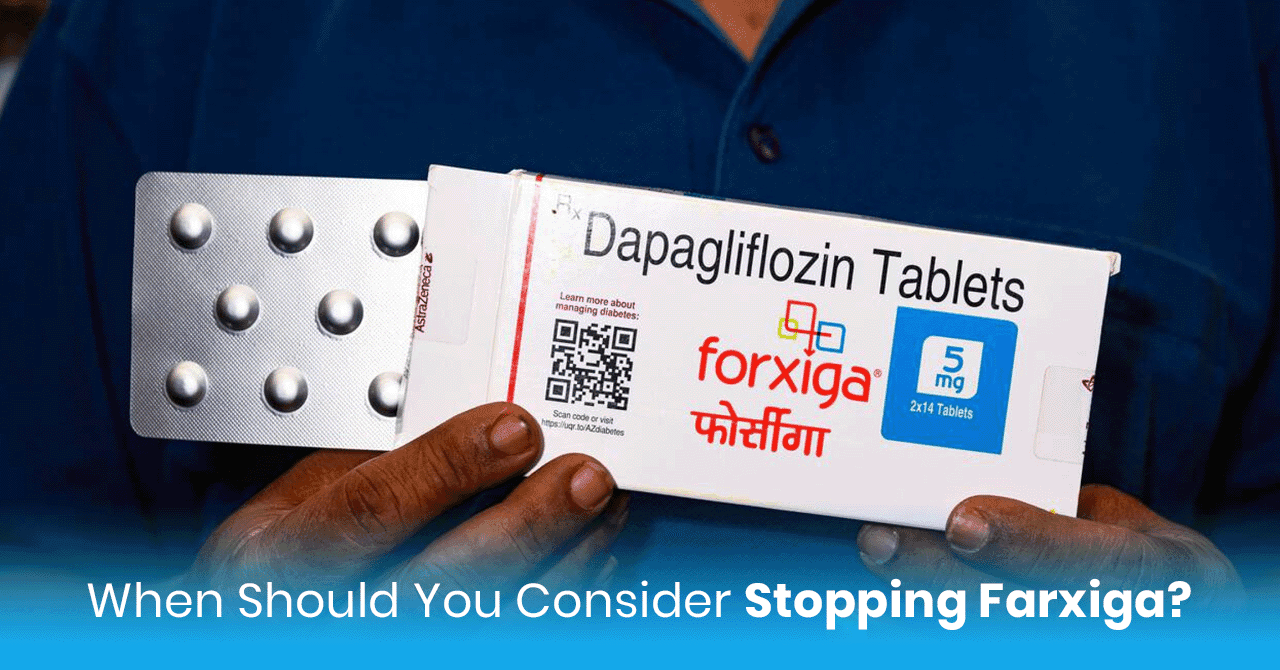
When Should You Consider Stopping Farxiga?
While Farxiga (dapagliflozin) is typically used long-term, there are specific safety situations in which stopping it, either temporarily or permanently, may be necessary. These decisions should always be made with guidance from a healthcare professional.
1. Emergency “Red Flags” (Stop Immediately & Seek Care)
Contact your healthcare provider/doctor or seek urgent medical attention if you experience:
- Signs of Diabetic Ketoacidosis (DKA): Nausea, vomiting, abdominal pain, difficulty breathing, unusual fatigue, or “fruity” breath—even with normal glucose levels
- Fournier’s Gangrene: Severe pain, redness, swelling, or tenderness in the genital or perineal area, often with fever (rare but serious)
- Severe Allergic Reaction: Swelling of the tongue, face, lips, or throat, or a widespread rash
2. Temporary Pauses (Sick Day & Surgery Rules)
Farxiga may need to be paused temporarily to reduce risks like dehydration or metabolic complications:
- Before Surgery: Clinical safety guidance recommends stopping at least 3 days before major procedures
- Severe Illness: Pause during high fever, persistent vomiting, diarrhea, or inability to stay hydrated (“sick day rules”)
- Extended Fasting: During medical tests or conditions where food intake is significantly reduced
3. Clinical Thresholds for Discontinuation
Your doctor may recommend stopping Farxiga based on specific health parameters:
- Declining Kidney Function: If eGFR drops consistently below approximately 25-30 mL/min/1.73 m², treatment may no longer be appropriate
- Not Suitable for Certain Patients: Generally avoided in Type 1 Diabetes due to increased risk of ketoacidosis
Do not stop Farxiga based only on improved blood sugar readings. Always consult your provider to ensure a safe treatment plan.
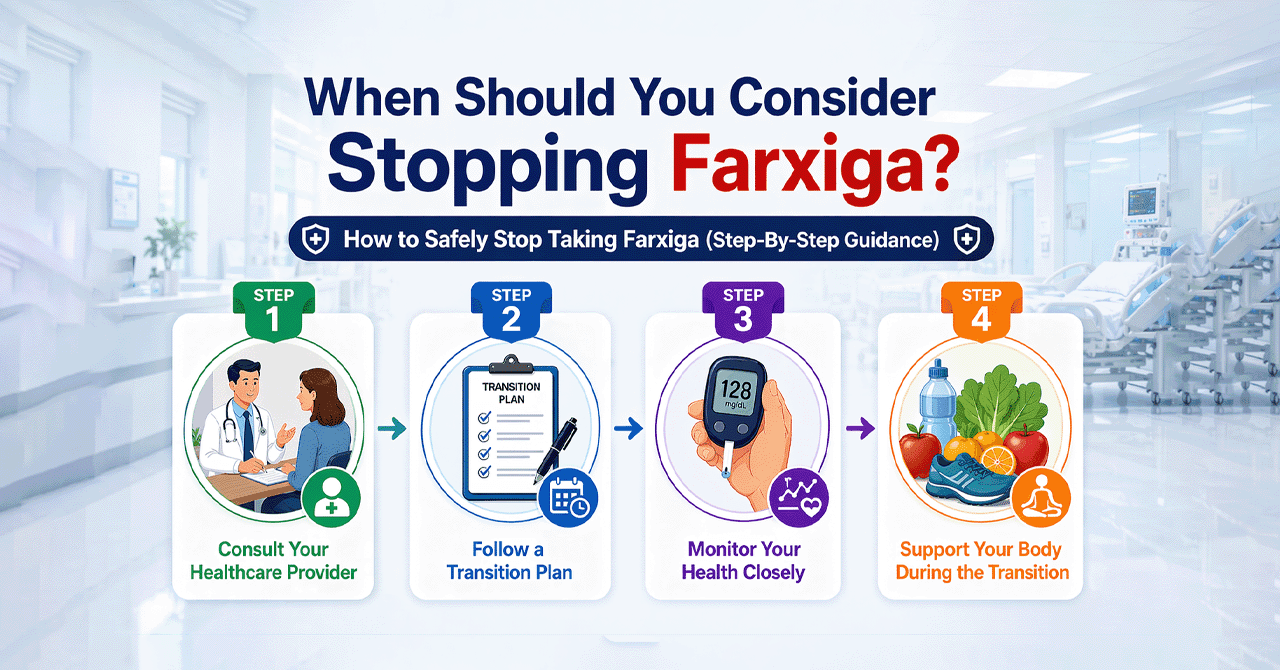
How to Safely Stop Taking Farxiga (Step-By-Step Guidance)
Stopping Farxiga should always be planned with your healthcare provider to avoid complications and ensure continuity of care.
Step 1: Consult Your Healthcare Provider
Discuss your reason for stopping (side effects, cost, surgery, or other concerns). Your doctor or provider will evaluate your current health status and decide if you need a Farxiga alternative.
Step 2: Follow a Transition Plan
Your provider may recommend switching to a suitable alternative, adjusting existing medications, or temporarily pausing treatment. If you’re preparing for surgery, Farxiga is typically stopped 3 days before the procedure, per current safety guidance.
Step 3: Monitor Your Health Closely
After your last dose, the medication clears within a few days, so tracking your health is essential:
- Check blood sugar levels more frequently
- Watch for symptoms like fatigue, swelling, or unusual thirst
- Use ketone testing if you feel unwell (if advised by your doctor)
Step 4: Support Your Body During the Transition
Maintain consistent lifestyle habits to help stabilize your condition:
- Follow your prescribed diet plan
- Stay physically active
- Keep regular follow-up appointments
Never stop Farxiga abruptly without guidance unless it’s a medical emergency (such as symptoms of ketoacidosis or a severe allergic reaction).
What Are the Alternatives If You Stop Taking Farxiga?
If you stop Farxiga, your doctor will choose an alternative based on your treatment goals, whether that’s lowering A1C, supporting heart health, or protecting kidney function. Because Farxiga is an SGLT2 inhibitor, the closest substitute is typically another SGLT2 inhibitor.
Top FDA-Approved Alternatives to Farxiga
| Medication | Best For | Key Clinical Benefit |
|---|---|---|
| Jardiance | Heart & Kidney | Same drug class (SGLT2 inhibitor) with similar cardiovascular and kidney benefits |
| Ozempic | A1C & Heart | GLP-1 receptor agonist shown to reduce cardiovascular risk and support weight loss |
| Mounjaro | Weight Loss | Dual GIP/GLP-1 therapy with strong A1C reduction and significant weight loss effects |
| Metformin | Daily Control | Widely used first-line therapy that lowers liver glucose production |
| Kerendia | Kidney Protection | Non-SGLT2 option that helps reduce kidney disease progression in Type 2 Diabetes |
| Januvia | Fewer Side Effects | DPP-4 inhibitor with a lower risk of urinary or dehydration-related side effects |
← Swipe to see more →
Expert Note: Never switch medications without a professional transition plan. Your doctor may need to overlap treatments or adjust dosages to prevent a "gap" in your blood sugar control or heart protection.
The Bottom Line: What Happens When You Stop Taking Farxiga?
Stopping Farxiga can lead to a rise in blood sugar and the gradual loss of its heart and kidney benefits. Although it is not habit-forming, stopping it suddenly may cause symptoms of your underlying condition to return. To avoid complications, it’s important to consult your doctor and follow a structured plan, such as adjusting treatment or switching to a suitable alternative.
Frequently Asked Questions
No. Farxiga is not addictive and has no chemical withdrawal symptoms. However, you may experience a "rebound effect," where blood sugar levels spike and fluid retention returns within 48 to 72 hours as the drug leaves your system.
If you miss a Farxiga dose, take it as soon as you remember on the same day. If it’s close to your next dose, skip the missed one; do not double up. Missing one dose may slightly affect blood sugar control, but it is usually not dangerous.
Farxiga does not require tapering, but you should not stop it abruptly without medical advice. Your doctor will guide you on safely stopping or switching medications to avoid health risks.
Farxiga (dapagliflozin) typically stays in your system for about 2 to 3 days after the last dose. It has a half-life of around 12-13 hours, meaning it takes several days to be mostly eliminated from the body. However, its blood-sugar-lowering effects may begin to wear off within 24-48 hours, depending on kidney function, age, and overall health.
Medical Disclaimer
This content is for informational purposes only and does not constitute medical advice. Farxiga use and discontinuation may vary based on individual health conditions. Always consult a licensed healthcare provider before starting, stopping, or changing your medication.