What Is Otezla Used For?
Key Takeaways
- Otezla (Apremilast) is an oral PDE4 inhibitor used to treat chronic inflammatory conditions.
- It is FDA-approved for moderate to severe plaque psoriasis, psoriatic arthritis, and oral ulcers in Behçet’s disease.
- It helps reduce skin plaques, joint pain, and inflammation without requiring injections.
- Common Otezla side effects include diarrhea, nausea, headache, and potential weight loss.
- It may be suitable for patients needing a systemic, non-biologic oral medication, but it requires medical supervision.
Key Takeaways:
Otezla (apremilast) is an oral prescription medication primarily utilized to manage specific chronic inflammatory diseases. If you are wondering, “What is Otezla used for?”, it works as a targeted PDE4 inhibitor to calm the overactive immune responses that cause severe skin plaques, joint inflammation, and painful mouth sores.
Unlike many traditional biologic treatments that require injections, it serves as a convenient, systemic oral medication for psoriasis and related autoimmune flare-ups. According to the official prescribing information, it is strictly indicated for three distinct medical diagnoses. Let’s break down exactly who it is for and how it helps below.
The 3 FDA-Approved Uses for Otezla
If you are asking exactly, “What does Otezla treat?”, federal health guidelines outline three specific, targeted indications.
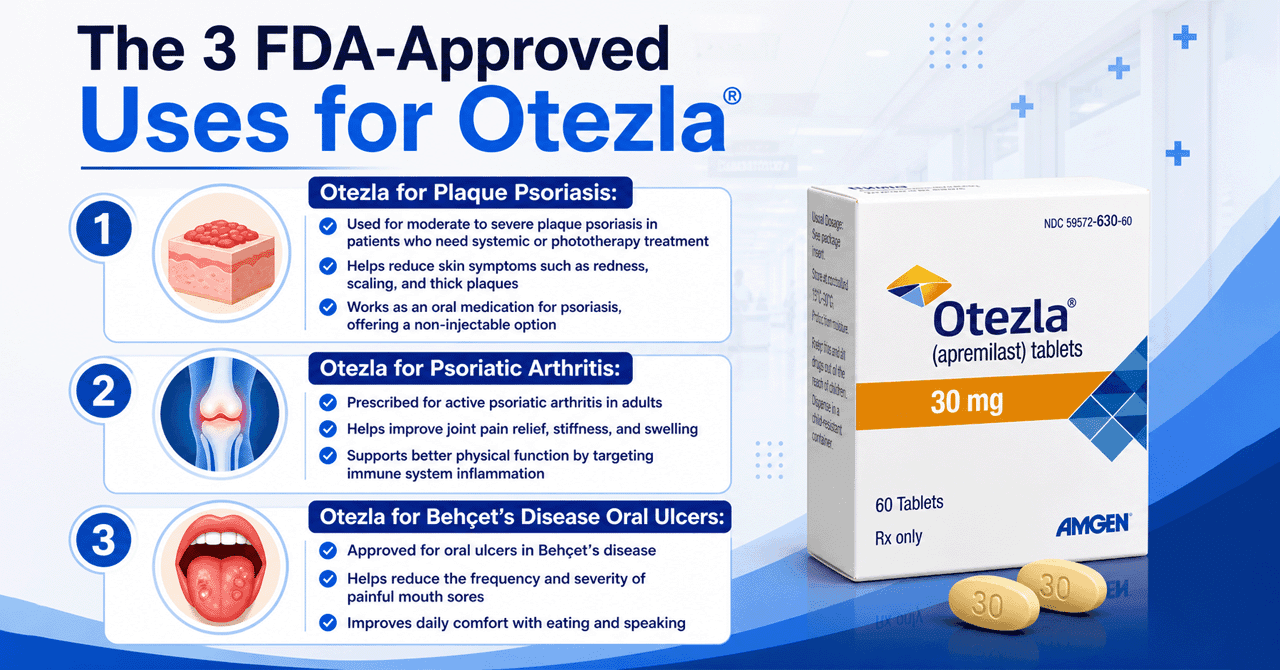
Otezla for Plaque Psoriasis:
- Used for moderate to severe plaque psoriasis in patients who need systemic or phototherapy treatment
- Helps reduce skin symptoms such as redness, scaling, and thick plaques
- Works as an oral medication for psoriasis, offering a non-injectable option
Otezla for Psoriatic Arthritis:
- Prescribed for active psoriatic arthritis in adults
- Helps improve joint pain relief, stiffness, and swelling
- Supports better physical function by targeting immune system inflammation
Otezla for Behçet’s Disease Oral Ulcers:
- Approved for oral ulcers in Behçet’s disease
- Helps reduce the frequency and severity of painful mouth sores
- Improves daily comfort with eating and speaking
What Are the Benefits of Taking Otezla?
The biggest advantage of this PDE4 inhibitor is how easily it fits into a normal routine. Because it is a daily tablet, you get systemic relief from immune system inflammation without dealing with painful self-injections or scheduling clinical infusions. Another massive clinical benefit is the lack of constant blood work. A PMC medical journal review notes that this medication does not require routine laboratory monitoring. This makes it a much less stressful psoriatic arthritis treatment compared to traditional biologics that require frequent liver or tuberculosis screening.

Otezla Safety and Eligibility Considerations
Before starting this treatment, your doctor will evaluate your medical history to ensure it aligns with official Otezla indications. Here is a clear breakdown of the ideal candidates and those who may need to explore other options.
Who Should Take Otezla?
If you are wondering who should take Otezla, it is generally recommended for patients looking for an oral alternative to manage their chronic inflammatory symptoms.
- Adults and children (6 years and older, weighing at least 20 kg) with moderate to serious plaque psoriasis who are candidates for systemic therapy or phototherapy.
- Adults and eligible pediatric patients dealing with active psoriatic arthritis.
- Adults suffering from recurring oral ulcers associated with Behçet's disease.
Who Should Avoid Otezla?
Certain underlying conditions make this PDE4 inhibitor unsafe or require strict medical supervision.
- People with a known hypersensitivity or allergy to apremilast.
- Patients with a history of depression or suicidal thoughts, as new or worsening mood changes can occur.
- Clinical studies from the NCBI Bookshelf state that individuals taking strong cytochrome P450 enzyme inducers (like rifampin) may prevent the medication from working effectively.
- Women who are pregnant, planning to become pregnant, or nursing, since animal studies indicate potential risks.
What Are the Common Side Effects of Otezla?
Otezla side effects are usually mild and tend to appear during the first few weeks of treatment as your body adjusts to the medication.
| Reported Side Effect | Clinical Context |
|---|---|
| Diarrhea & Nausea | The most frequent gastrointestinal reactions. These typically peak within the first two weeks as your digestive tract adjusts to the drug, then gradually resolve. |
| Tension Headaches | Mild to moderate head pain that generally improves on its own with continued daily dosing. |
| Upper Respiratory Infections | Cold-like symptoms, including a sore throat, nasal congestion, or sneezing. |
| Otezla Weight Loss | Some people experience reduced appetite or unintended weight decrease |
← Swipe to see more →
According to the DailyMed prescribing data, the majority of these Otezla side effects improve as you continue taking the medication. However, if you experience severe volume depletion from continuous diarrhea or sudden, unexplained weight loss, your healthcare provider may need to temporarily suspend or reduce your dosage.
The Bottom Line: Is It Safe to Take Otezla?
Otezla provides a highly effective, long-term oral solution for managing the persistent inflammation of plaque psoriasis, active psoriatic arthritis, and Behçet’s disease without the burden of injections. While highly convenient, it requires medical supervision to monitor for early digestive adjustments, mood changes, and weight loss. Once you and your healthcare provider confirm this PDE4 inhibitor safely fits your medical needs, you can securely fulfill your official prescription.
Frequently Asked Questions
Otezla is neither a biologic nor a steroid. It is a PDE4 inhibitor, a type of oral medication that works inside cells to reduce immune system inflammation rather than targeting specific immune proteins like biologics.
Otezla is often used as a long-term treatment to manage chronic inflammatory conditions. The duration depends on how well your symptoms improve and how your body responds to the medication.
While most Otezla side effects are mild, serious effects can include severe diarrhea, significant weight loss, and mood changes such as depression. You should contact your healthcare provider if these symptoms occur.
You should avoid medications that strongly affect liver enzymes, such as certain seizure drugs or rifampin, because they can reduce how well Otezla works. Always discuss your current medications with your doctor before starting treatment.
Unlike many other heavy-duty immunosuppressive medications and traditional biologics, one of the major benefits of this treatment is that the official prescribing label does not require routine laboratory monitoring (such as constant liver function tests or tuberculosis screenings).
Medical Disclaimer
This blog is provided for informational purposes only and does not replace expert medical guidance, diagnosis, or treatment. The content is based on trusted sources, including FDA prescribing information, DailyMed, MedlinePlus, and peer-reviewed research from the National Library of Medicine (NLM), but individual responses may vary. Always consult an authorized healthcare professional before making treatment decisions.