When Should the Elderly Stop Taking Eliquis Blood Thinners Safely?
Many patients and caregivers often ask: “When should the elderly stop taking Eliquis?” especially when balancing bleeding risks and stroke prevention. Elderly patients should stop taking Eliquis (apixaban) only under strict medical supervision and in specific situations such as severe or uncontrolled bleeding, before certain surgeries, or after completing a prescribed treatment course.
The decision is not based on age alone but on a careful evaluation of bleeding risk versus stroke prevention. According to the FDA prescribing information, stopping Eliquis prematurely increases the risk of stroke and blood clots. You should never stop taking Eliquis on your own, even if you feel well, because doing so can lead to severe and potentially life-threatening complications.
Why Do Elderly Patients Take Eliquis?
Eliquis (apixaban) is an anticoagulant prescribed to lower the risk of stroke and blood clots in conditions such as atrial fibrillation and deep vein thrombosis. In older adults, these risks are higher because conditions like atrial fibrillation become more common with age. Evidence from the National Library of Medicine (NLM) shows that stroke risk rises with age in patients with atrial fibrillation, making anticoagulant treatment important for prevention.
For this reason, stopping Eliquis requires careful medical evaluation. It directly affects your protection against serious complications such as stroke or blood clots, which is why doctors carefully evaluate risks before discontinuing treatment. While Eliquis provides important protection, there are situations where stopping it may be necessary.

When Do Doctors Decide to Stop Eliquis in Elderly Patients?
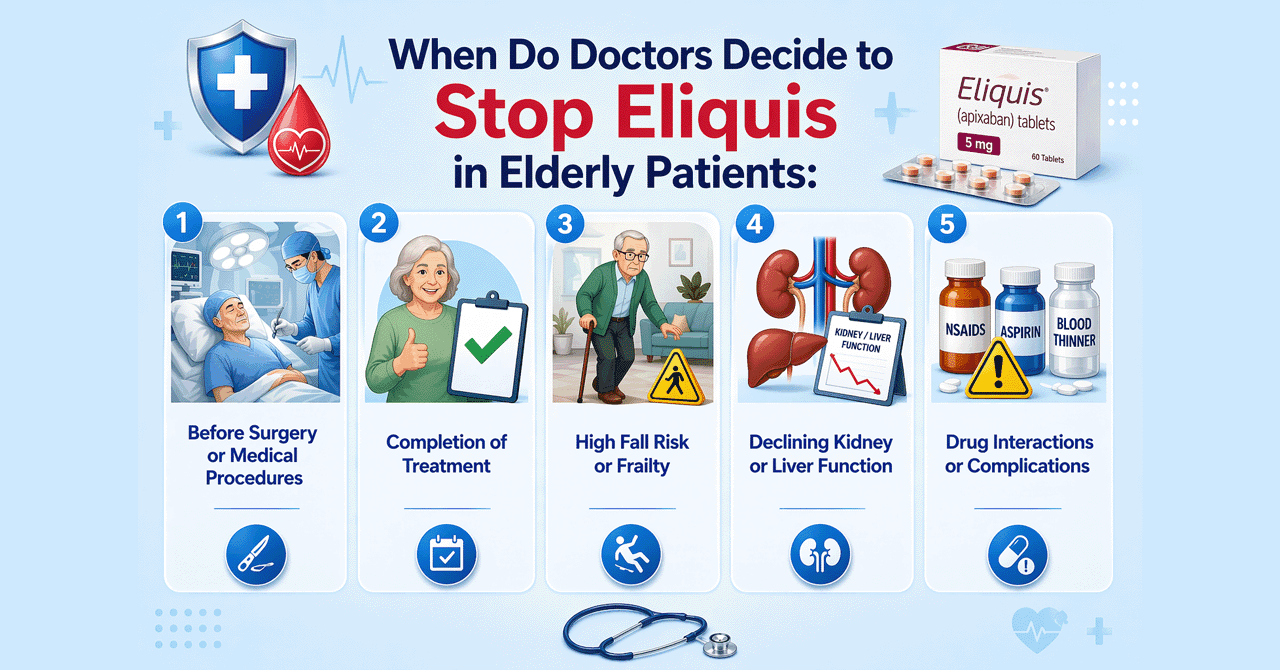
Doctors decide to stop Eliquis only when the risk of serious bleeding outweighs its benefit in preventing stroke or blood clots. This decision is based on medical evaluation, not age alone. In most cases, stopping is either temporary or carefully managed to reduce complications. Common situations include the following:
Severe or Uncontrolled Bleeding
Active or serious bleeding is the most urgent reason to stop Eliquis. This may include:
- Internal bleeding or gastrointestinal bleeding
- Uncontrolled or persistent blood loss
- Bleeding that poses an immediate health risk
The FDA data states that Eliquis should be discontinued in patients with active pathological bleeding.
Before Surgery or Medical Procedures
Eliquis may be stopped temporarily to reduce bleeding risk during procedures.
- Stopped at least 24 to 48 hours before surgery
- Timing depends on the bleeding risk of the procedure
- Restart after bleeding is controlled
FDA guidance recommends stopping Eliquis before elective procedures based on bleeding risk.
Completion of Treatment
Some patients do not need lifelong anticoagulation.
- Short-term use for deep vein thrombosis or pulmonary embolism
- Treatment duration typically lasts a few months
- Stopping is considered once the clot risk is reduced
FDA guidance notes that discontinuation may occur after completing a prescribed treatment course.
High Fall Risk or Frailty
Frequent falls increase the risk of serious bleeding complications.
- Higher chance of internal bleeding or head injury
- Increased overall bleeding risk in frail patients
- Requires reassessment of risk versus benefit
Doctors evaluate whether continuing Eliquis remains safe in these situations.
Declining Kidney or Liver Function
Organ function affects how Eliquis is processed in the body.
- Reduced kidney or liver function increases drug levels
- Higher risk of bleeding complications
- Dose adjustment or discontinuation may be required
FDA data highlights the need for dose adjustments in patients with impaired function.
Drug Interactions or Complications
Certain medications can increase bleeding risk when combined with Eliquis.
- NSAIDs, aspirin, or other anticoagulants
- Drugs that affect clotting or metabolism
- Increased risk of adverse effects
What Happens If You Stop Eliquis Suddenly?
Stopping Eliquis without medical guidance can be dangerous. According to MedlinePlus, patients taking apixaban have a higher risk of stroke after stopping the medication, especially if they have atrial fibrillation. The FDA prescribing information also warns that premature discontinuation of Eliquis increases the risk of thrombotic events such as stroke or blood clots. This happens because the protective anticoagulant effect is removed, allowing blood to clot more easily and increasing the risk of serious complications in high-risk patients.
How Long Does Eliquis Stay in the Body?
Eliquis (apixaban) has a half-life of about 12 hours, which means its effects can last for at least 24 hours after the last dose. In older adults, the drug may remain in the body longer due to reduced kidney function and slower drug clearance. This is why timing matters when stopping Eliquis, especially before surgery or medical procedures.
When Should Elderly Patients Seek Medical Help While Taking or Stopping Eliquis?
You should seek immediate medical attention if you notice symptoms that may indicate bleeding or clot-related complications. These risks can occur whether you are continuing or stopping Eliquis, especially without proper medical guidance.
| Symptom | What It May Indicate |
|---|---|
| Sudden weakness, confusion, or trouble speaking | Possible stroke requiring urgent care |
| Severe headache or vision problems | Potential internal bleeding or stroke |
| Chest pain or shortness of breath | Possible blood clot or pulmonary embolism |
| Unusual bleeding or easy bruising | Increased bleeding risk from anticoagulation |
← Swipe to see more →
The Bottom Line: When Should the Elderly Stop Taking Eliquis?
Elderly patients should stop taking Eliquis (apixaban) only under medical guidance when the risk of bleeding outweighs the benefit of preventing stroke or blood clots. Situations such as severe bleeding, planned surgery, or completion of treatment may require discontinuation, but stopping suddenly can significantly increase stroke risk, especially in conditions like atrial fibrillation or deep vein thrombosis. If you are unsure when to stop Eliquis or how to do it safely, always consult your doctor to avoid serious complications.
Frequently Asked Questions
No. According to FDA prescribing information, stopping apixaban suddenly increases the risk of stroke and blood clots, especially in patients with atrial fibrillation. Always consult your doctor before stopping.
Eliquis should only be stopped under medical supervision. Doctors evaluate your stroke risk, bleeding risk, and overall condition before discontinuation. In some cases, another anticoagulant may be used to reduce the risk of blood clots during the transition.
When you stop taking Eliquis, its anticoagulant effect wears off, allowing blood to clot more easily. This increases the risk of stroke or blood clot formation, particularly in high-risk patients.
Yes, but only in certain cases, such as treatment for deep vein thrombosis or pulmonary embolism. Your doctor will decide based on whether the risk of blood clots has decreased.
Eliquis is usually stopped 24 to 48 hours before surgery, depending on bleeding risk. This decision must be made by your doctor to balance bleeding and clotting risks safely.
Common side effects include increased bleeding risk, easy bruising, and nosebleeds. In elderly patients, bleeding risk may be higher due to age-related factors such as reduced kidney function or other medications.
Important Disclaimer
This blog is provided for informational purposes only and does not replace expert medical guidance, diagnosis, or treatment. The information is based on trusted sources such as the FDA and National Library of Medicine, but individual responses may vary. Always consult an authorized healthcare professional before making treatment decisions.