

Which Organ Produces Insulin? A Comprehensive Guide
The pancreas is the organ responsible for producing insulin in the human body. If you are wondering which organ produces insulin, the answer is the pancreas. It contains specialized beta cells that release insulin to help regulate blood sugar levels. When you eat, these cells respond to rising glucose levels by releasing insulin into the bloodstream. This process allows your body to use glucose for energy. If the pancreas does not produce enough insulin or the body cannot use it effectively, blood sugar levels can rise, leading to conditions such as diabetes.
What Part of the Pancreas Produces Insulin?
Insulin is produced by specialized cells within the pancreas known as beta cells. These cells are located in clusters called the islets of Langerhans. Key points:
- Beta cells are responsible for insulin production
- They are part of the endocrine pancreas
- They release insulin directly into the bloodstream
- They respond to rising blood sugar levels
These cells play a critical role in maintaining normal blood glucose levels.
How Insulin Works in the Body
After you eat, blood sugar levels rise in the bloodstream. In response, the pancreas releases insulin from beta cells. Insulin helps move glucose from the blood into the body’s cells, where it is used for energy. The pancreas has two functions: it produces digestive enzymes (exocrine function) and releases hormones like insulin (endocrine function). According to the CDC, insulin acts like a key that allows glucose to enter cells, helping maintain normal blood sugar levels.

What Happens If the Body Does Not Produce Enough Insulin?
When insulin production is low or ineffective, glucose cannot enter the body’s cells and builds up in the bloodstream. This leads to high blood sugar levels and prevents the body from using glucose properly.
Type 1 Diabetes:
- The immune system destroys insulin-producing beta cells
- The pancreas produces little or no insulin
- Requires lifelong treatment with insulin therapy
Type 2 Diabetes:
- The body becomes resistant to insulin
- Glucose remains in the bloodstream instead of entering cells
- The pancreas initially produces more insulin, but over time, it cannot keep up with demand
When to See a Doctor for Insulin or Blood Sugar Problems
You should consult a healthcare provider if you notice symptoms such as:
- Frequent urination
- Increased thirst
- Unexplained weight loss
- Fatigue or weakness
- Blurred vision
These may indicate high blood sugar or issues with insulin production and require medical evaluation.
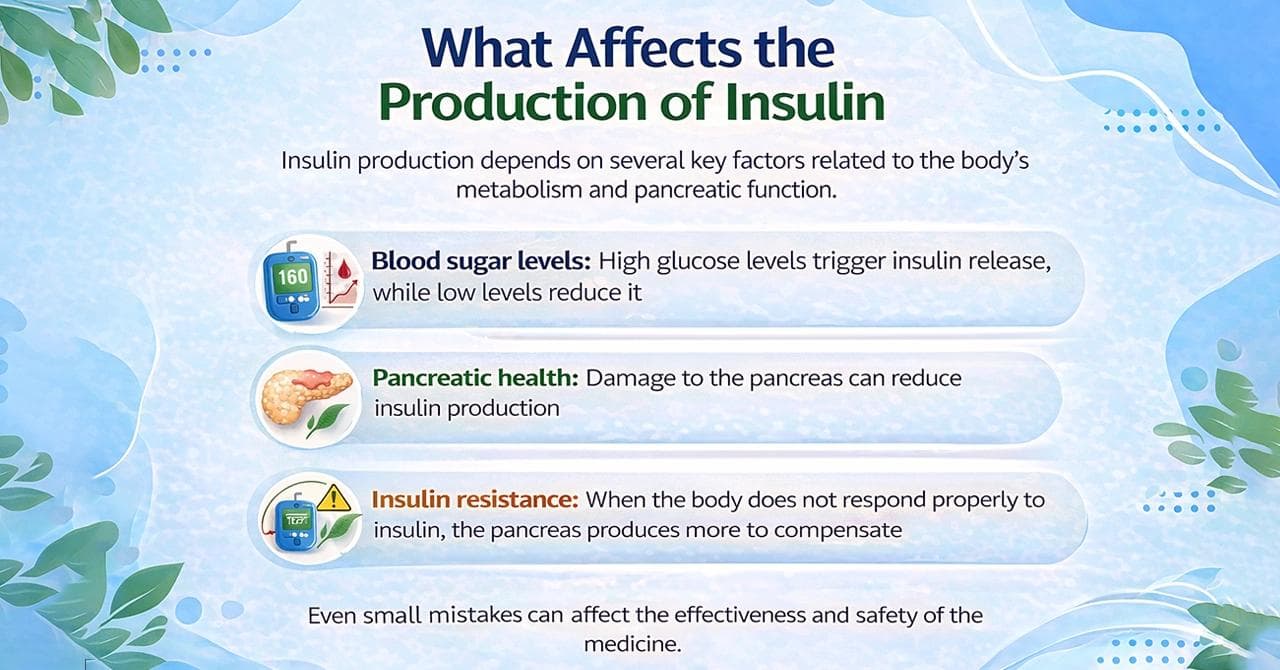
What Affects the Production of Insulin
Insulin production depends on several key factors related to the body’s metabolism and pancreatic function.
- Blood sugar levels: High glucose levels trigger insulin release, while low levels reduce it
- Pancreatic health: Damage to the pancreas can reduce insulin production
- Insulin resistance: When the body does not respond properly to insulin, the pancreas produces more to compensate
How Normal Insulin Function Differs from Impaired Insulin
Clinical studies indicate that insulin function determines how effectively the body controls blood sugar and uses glucose for energy.
| Aspect | Normal Function | Impaired Function |
|---|---|---|
| Insulin Release | The pancreas releases insulin in response to rising blood sugar | Little, no, or delayed insulin release |
| Glucose Uptake | Cells absorb glucose efficiently for energy | Glucose remains in the bloodstream |
| Blood Sugar Levels | Remain stable within normal range | Stay elevated (hyperglycemia) |
| Pancreas Response | Adjusts insulin based on body needs | Overworked or unable to meet demand |
| Long-Term Effect | Maintains metabolic balance | Leads to diabetes and complications |
← Swipe to see more →
Final Words: Which Organ Produces Insulin?
The pancreas is the organ responsible for producing insulin in the human body. This clearly answers the question of which organ produces insulin. Insulin is released by beta cells located in the islets of Langerhans, helping the body move glucose from the bloodstream into cells for energy. When this process is disrupted, either due to damage to these cells or reduced response in the body, it can lead to conditions such as diabetes.
For individuals managing blood sugar levels, access to the right medications and support is important. Polar Bear Meds provides a range of insulin and diabetes-related treatments. However, any treatment decisions should always be made in consultation with a qualified healthcare professional.
Important Disclaimer: This content is provided for informational purposes only and does not replace expert medical guidance, diagnosis, or treatment. Information is based on reputable medical sources, including government health organizations, but individual responses may vary. Always consult an authorized healthcare professional before making any medical or treatment decisions.
Frequently Asked Questions
The pancreas is the gland that secretes both insulin and glucagon. These hormones work together to maintain stable blood sugar levels.
Insulin helps regulate glucose from the bloodstream into cells and signals the liver to store excess sugar, keeping blood sugar levels stable.
When insulin levels are low, glucose cannot enter cells and builds up in the bloodstream, resulting in elevated blood sugar levels and diabetes.
No, the pancreas is the primary organ responsible for insulin production. Without it, the body cannot produce enough insulin to regulate blood sugar.


