Zepbound Dry Mouth at Night: A 2026 Guide for U.S. Patients
Key Takeaways
- Dry mouth from Zepbound is usually indirect, driven by GI side effects and reduced fluid intake from appetite suppression.
- Clinical trial data show dry mouth affects anywhere from 1% to 22% of patients, depending on dose and study methodology.
- Structured hydration, alcohol-free oral care products, and humidifiers are the most effective nighttime relief strategies.
- Symptoms typically improve within 2 to 6 weeks as the body adjusts to tirzepatide.
Zepbound dry mouth is one of the more surprising side effects patients report after starting this weight management medication. The discomfort often peaks overnight, disrupting sleep quality and leaving patients wondering whether it's serious. This article breaks down exactly why it happens, what the clinical data shows, and which treatment options actually work, so you can stay on track with your weight loss goals.
Zepbound's FDA Approval and What It Means for Weight Management
Zepbound (tirzepatide) received FDA approval for chronic weight management on November 8, 2023. It became commercially available in U.S. pharmacies in late November 2023, making it one of the fastest prescription drug launches in recent memory. If you're considering it, you can buy Zepbound online from Canada through Polar Bear Meds, often at significantly lower prices than U.S. retail.
The medication activates both GLP-1 and GIP receptors, according to the FDA. That dual mechanism helps regulate appetite and blood sugar simultaneously. Understanding how it works matters here because those same pathways that suppress appetite and slow digestion are what set the stage for dry mouth symptoms.
Why Zepbound Causes Dry Mouth: The Indirect Pathway
Dry mouth isn't a direct pharmacological effect of tirzepatide. It's indirect. Zepbound's GI side effects, including nausea, vomiting, and diarrhea, cause meaningful fluid loss. At the same time, appetite suppression reduces how much patients naturally drink, since GLP-1 agonists can blunt thirst cues alongside hunger signals.
The result is a slow, quiet dehydration that often shows up most noticeably at night. Clinically known as xerostomia, this reduction in saliva can affect oral health over time if left unmanaged.
The reported incidence varies considerably by source.
According to the official prescribing information analyzed by Drugs.com, dry mouth or dry throat was reported by 1% of Zepbound-treated patients versus 0.1% in the placebo group. SURMOUNT trial data tells a different story, with dry mouth occurring in 17 to 22% of tirzepatide participants compared to 5% in placebo groups. The gap likely reflects dose differences and how symptoms were tracked across studies.
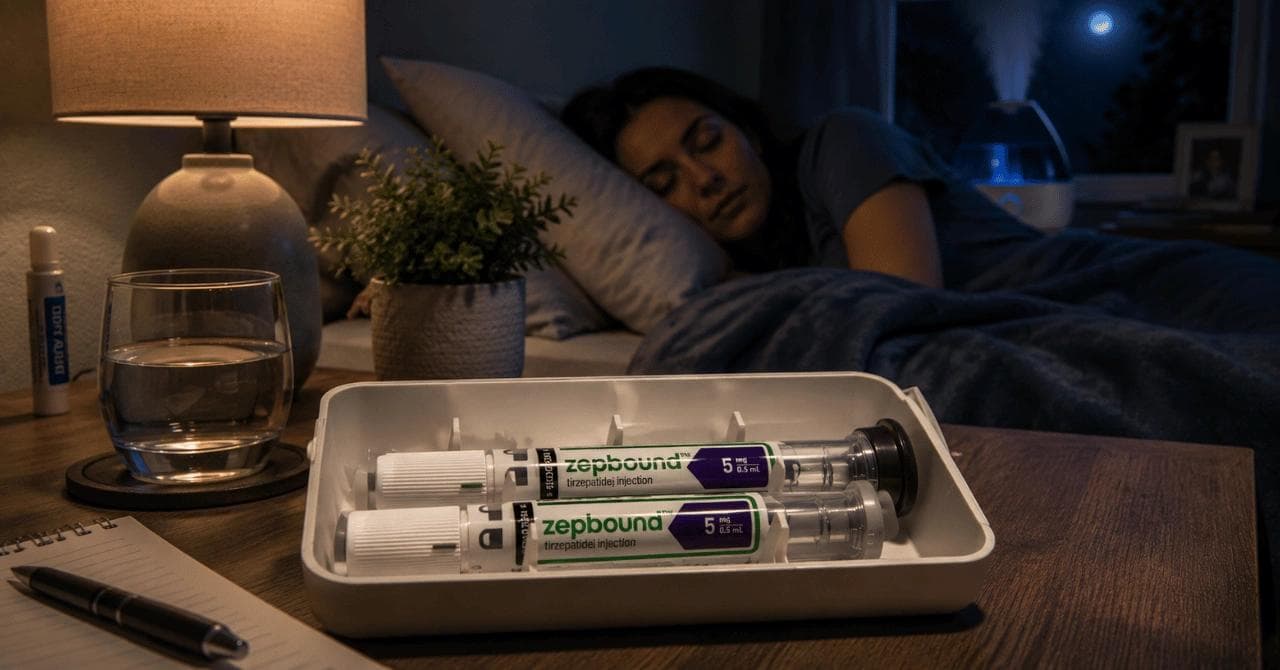
Practical Solutions for Nighttime Dry Mouth Relief
So what actually works? Simply telling someone to "drink more water" misses the point entirely. Zepbound's GLP-1 activity suppresses thirst signals, so patients genuinely don't feel thirsty even when they're dehydrated. A structured fluid intake schedule, set reminders throughout the day rather than waiting for thirst, is far more effective.
For targeted oral care, a few products stand out. Sugar-free gum and lozenges stimulate saliva production mechanically. Alcohol-free mouthwashes like Biotene or ACT dry mouthwash hydrate oral tissue without the drying effect that alcohol-based rinses cause. For more persistent nighttime xerostomia, prescription lipid-based oral sprays like Aquoral form a protective film that retains moisture longer than standard rinses. These oral hydration products are worth knowing about before symptoms escalate.
Environmental fixes help too. Running a humidifier in your bedroom adds moisture to the air you breathe overnight. If you use a CPAP machine, adjusting the humidity setting upward can make a noticeable difference in how you feel by morning.
One easy-to-overlook lifestyle change involves cutting back on caffeine and alcohol in the evening hours. Both are dehydrating, and combining them with an already-suppressed fluid intake is a reliable recipe for waking up with a painfully dry mouth.
Managing Gastrointestinal Side Effects That Drive Dry Mouth
Gastrointestinal side effects are the primary cause of upstream issues. Nausea appeared in approximately 25 to 40% of patients, depending on dose level in Zepbound clinical trials, according to available data. Diarrhea affected 22 to 23% of the treatment group, while vomiting occurred in 7 to 21% of participants. Taken together, up to 70% of participants in tirzepatide studies reported at least one gastrointestinal symptom, according to Ubie Health.
Each of those symptoms contributes to fluid loss, which feeds directly into dry mouth. Higher doses of tirzepatide are more likely to trigger these effects, and transient dry mouth tends to recur when the dose is escalated. The good news is that symptoms typically improve significantly within 2 to 6 weeks as the body builds tolerance.
Careful dose titration can significantly help manage these effects. Starting at the lowest effective dose and moving up slowly gives the GI system time to adapt. Eating smaller, lower-fat meals and avoiding spicy foods during the adjustment period reduces nausea frequency. These aren't just comfort measures; they're legitimate lifestyle changes that protect your hydration status.
Severe vomiting or persistent diarrhea is a different situation. According to Zepbound's clinical data from Lilly, severe gastrointestinal adverse reactions were reported in 1.7% to 3.1% of Zepbound patients across doses, compared to 1.0% in the placebo group. These cases warrant a call to your provider, not just increased water intake.
When to Seek Medical Help for Persistent Dry Mouth
Fortunately, most dry mouth symptoms are mild and transient. They'll often resolve on their own as your body adjusts to tirzepatide over the first few weeks. That's the typical trajectory, and it's worth knowing before you panic at 3 a.m. with a dry throat.
Dose escalation can restart the cycle. When your prescriber moves you to a higher dose, expect the possibility of dry mouth returning temporarily. Managing hydration proactively during those first days at a new dose makes the transition easier.
Contact your healthcare provider if dry mouth is severe, if you're showing signs of dehydration (dizziness, dark urine, rapid heartbeat), or if you develop mouth sores or significant oral health changes. These aren't normal adjustment symptoms, and they need professional evaluation rather than self-management.
Proactive Management for Sustained Zepbound Success
Clinical data and FDA approval strongly support Zepbound's efficacy for weight loss. However, long-term adherence depends on managing medication side effects before they lead to discontinuation. Fortunately, dry mouth is a manageable side effect. It's also a signal worth paying attention to.
Keeping a symptom log, noting when dry mouth is worst, which dose you're on, and what you ate or drank that day, gives you real data to share with your provider. This conversation is more productive than a vague complaint. Your prescriber can adjust timing, titration pace, or recommend specific oral hydration products based on your actual pattern.
For patients looking to manage costs while staying consistent with their Zepbound treatment, Polar Bear Meds offers savings on prescription medications from a licensed Canadian pharmacy. Zepbound for weight loss works best when side effect management is integrated into the treatment plan, not viewed as an obstacle. Start the hydration schedule before symptoms appear. Stock the right oral care products. And don't wait until dry mouth is disrupting your sleep to act.
Frequently Asked Questions
According to the official prescribing information reviewed by Drugs.com, dry mouth or dry throat was reported by 1% of Zepbound-treated patients in clinical trials, compared to 0.1% in the placebo group. SURMOUNT trial data suggest the real-world incidence may be higher, with 17 to 22% of tirzepatide participants experiencing it versus 5% on placebo. The range likely reflects dose level and how consistently symptoms were captured across different study protocols.
A structured hydration schedule throughout the day is the foundation, since Zepbound's GLP-1 activity suppresses natural thirst cues, and waiting until you're thirsty doesn't work. Alcohol-free mouthwashes like Biotene or ACT, sugar-free gum to stimulate saliva, and prescription oral sprays like Aquoral all offer targeted nighttime relief. Running a humidifier in your bedroom and adjusting CPAP humidity settings (if applicable) adds an environmental layer that many patients find surprisingly effective.
Zepbound is already available. The FDA approved it for chronic weight management on November 8, 2023, and it became commercially available in U.S. pharmacies in late November 2023. Patients who want to reduce their prescription costs can also explore options through licensed Canadian pharmacies that ship prescription drugs to the U.S.
Disclaimer
This article is informational and doesn't substitute for medical advice. Zepbound is a prescription drug, and your specific symptoms, health history, and dosing schedule need to be evaluated by a licensed healthcare provider. If you're experiencing persistent or severe side effects, contact your doctor or pharmacist before making any changes to your treatment.