Zepbound Teeth Grinding: What Patients and Dentists Are Seeing
Key Takeaways
- Zepbound (tirzepatide) can trigger jaw clenching and teeth grinding, particularly during sleep, though it's not officially listed as a side effect.
- The most likely causes are indirect: rapid weight loss stress, anxiety, and sleep disruption rather than the drug acting directly on jaw muscles.
- GLP-1 side effects like dry mouth and acid reflux create additional dental risks beyond bruxism.
- Night guards, Botox injections, and stress management are the most effective treatment options currently available.
Zepbound teeth grinding (bruxism) is showing up in patient reports and dental offices with enough consistency that it's worth taking seriously. Tirzepatide, the GLP-1/GIP receptor agonist behind Zepbound, isn't formally listed as causing bruxism in FDA prescribing information. Yet the pattern keeps emerging. This article breaks down what's driving it, what it means for your oral health, and what you can actually do about it.
Zepbound Users Report Jaw Clenching. Here's What the Evidence Shows
Patients on tirzepatide are waking up with sore jaws. Their partners are hearing grinding at night. Dentists are noticing unusual wear patterns in people who never had bruxism before. None of this appears in Zepbound's official prescribing information, but the reports are consistent enough that dental and medical professionals have started paying attention.
A 2024 review published in Experimental and Therapeutic Medicine found that bruxism affects 60% to 70% of the population, yet only 1 in 4 people with symptoms know they have it. That baseline matters here, because it means some Zepbound users were probably already grinding without realizing it. The medication may be amplifying something that was already present, rather than creating it from scratch.
The distinction matters clinically. Zepbound doesn't appear to directly activate the jaw muscles responsible for clenching. The connection is indirect, running through the physical and psychological stress that GLP-1 therapy can create. That's a meaningful nuance when deciding how to treat it.
How Zepbound May Trigger Teeth Grinding
The physical stress of rapid weight loss is one plausible driver. When the body undergoes significant metabolic change quickly, muscle tension can increase throughout the body, including in the jaw. Bruxism, in this context, may be one expression of that broader physiological strain.
Then there's the anxiety angle. Some patients on GLP-1 medications report increased restlessness or anxiety as a secondary effect, and both awake bruxism and sleep bruxism are closely linked to psychological stress. A patient managing nausea, dietary restriction, and body composition changes all at once has real reasons to feel on edge. That tension tends to land somewhere, and for susceptible individuals, it lands in the jaw.
Sleep disruption can make things worse. Poor sleep quality intensifies nighttime grinding for many people. If Zepbound's gastrointestinal side effects are waking someone up or disturbing their sleep architecture, that's another pathway to more severe jaw clenching by morning.

The Broader Oral Health Impact: Dry Mouth, Acid Reflux, and Enamel Wear
Zepbound jaw clenching isn't the only oral health concern worth tracking. GLP-1 medications create several conditions that can quietly damage teeth over months of use.
Dry mouth, or xerostomia, is one of the more underappreciated medication side effects in this class. Reduced saliva flow strips away the mouth's natural defense against bacteria, increasing the risk of tooth decay, gum irritation, and plaque buildup. Saliva isn't just moisture; it's an active buffer that neutralizes acids and remineralizes enamel. When it's diminished, the whole oral environment shifts toward decay.
Nausea and vomiting are common in tirzepatide clinical trials, with nausea reported in 25 to 29% of patients and vomiting in 8 to 9%. Every episode of vomiting coats the teeth in stomach acid. Over time, that acid exposure causes enamel wear and sensitivity, and it raises cavity risk considerably. Acid reflux creates a similar problem on a slower, more chronic timeline. Anecdotal reports have gone further.
Some users have described chipped, cracked, or lost teeth while on GLP-1 therapy, according to observations noted at adambrowndds.com. A conclusive direct link to the medication hasn't been proven, but the pattern is worth monitoring closely, especially for patients already prone to dental issues.
Proven Treatments for Zepbound-Related Bruxism
Managing Zepbound bruxism starts with protecting the teeth from further damage while addressing the underlying triggers. Here are the most effective treatment options available to US patients right now.
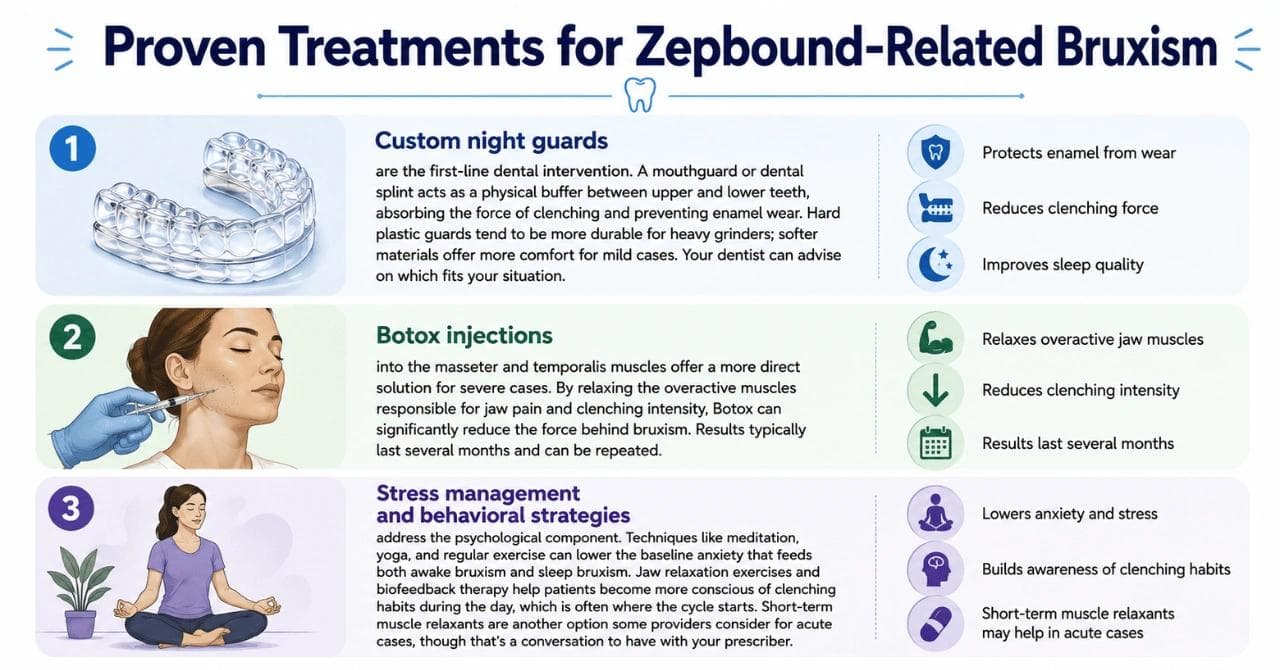
Custom night guards are the first-line dental intervention. A mouthguard or dental splint acts as a physical buffer between upper and lower teeth, absorbing the force of clenching and preventing enamel wear. Hard plastic guards tend to be more durable for heavy grinders; softer materials offer more comfort for mild cases. Your dentist can advise on which fits your situation.
Botox injections into the masseter and temporalis muscles offer a more direct solution for severe cases. By relaxing the overactive muscles responsible for jaw pain and clenching intensity, Botox can significantly reduce the force behind bruxism. Results typically last several months and can be repeated.
Stress management and behavioral strategies address the psychological component. Techniques like meditation, yoga, and regular exercise can lower the baseline anxiety that feeds both awake bruxism and sleep bruxism. Jaw relaxation exercises and biofeedback therapy help patients become more conscious of clenching habits during the day, which is often where the cycle starts. Short-term muscle relaxants are another option some providers consider for acute cases, though that's a conversation to have with your prescriber.
The Counterpoint: Can Zepbound Actually Reduce Bruxism?
Here's where the picture gets genuinely interesting. Zepbound has received FDA approval for treating obstructive sleep apnea (OSA) in patients with obesity, and OSA affects approximately 30 million Americans, with prevalence rates reaching 26% in adults aged 30 to 70.
OSA and bruxism are closely linked. When breathing is obstructed during sleep, the jaw often tenses as the body tries to maintain an open airway. Treating OSA, even indirectly through weight loss, can substantially reduce that nighttime grinding reflex. For patients whose bruxism is primarily driven by sleep apnea rather than anxiety or weight loss stress, Zepbound's benefits may actually outweigh its risks on this particular front.
Better sleep quality, which tends to follow meaningful weight loss, also reduces jaw tension naturally. So the same medication that may be triggering bruxism in some patients could be relieving it in others, depending on what was driving their grinding in the first place.
Protecting Your Teeth While Taking Zepbound
Good Zepbound oral health management doesn't require anything exotic. It requires consistency. Fluoride toothpaste, twice-daily brushing, and daily flossing are non-negotiable. Fluoride actively strengthens enamel and provides some protection against the acid exposure that comes with reflux or vomiting. If dry mouth is a persistent issue, your dentist may recommend a prescription-strength fluoride product or a saliva substitute.
Hydration matters more than most patients realize. Staying well-hydrated supports saliva production, which is the mouth's built-in cavity prevention system. Rapid weight loss can also create nutritional gaps that affect jawbone density and gum health, so paying attention to nutrient intake during the active weight loss phase is worth discussing with your care team.
Regular dental visits are the safety net here. A dentist who knows you're on tirzepatide can catch early signs of enamel wear, gum changes, or TMJ stress before they become serious problems. If you haven't told your dentist you're on a GLP-1 medication, that conversation should happen at your next appointment.
If you're considering Zepbound from a licensed Canadian pharmacy, you'll still need a valid prescription and should keep your dental provider in the loop from day one.
Moving Forward: Integrated Medical and Dental Care on GLP-1 Therapy
Zepbound teeth grinding is manageable, but only if it's caught. The biggest risk is the one that goes unaddressed for months while enamel quietly wears down. Tell your dentist you're on a GLP-1 medication. Tell your prescriber if you're waking up with jaw pain or headaches. These two providers rarely talk to each other without prompting, and the gap between them is where dental damage tends to accumulate. Early warning signs, caught at a routine checkup, are far easier to treat than cracked teeth or advanced enamel erosion.
Zepbound's weight loss benefits are real and well-documented. So are the oral health considerations that come with it. The patients who do best are the ones who treat this as a whole-body medication, not just a weight loss tool, and build a care team that reflects that. You can browse prescription drug options and resources to stay informed as part of that process.
Ready to Continue Your Treatment?
Stay on track with your prescribed Zepbound KwikPen treatment. Order safely through Polar Bear Meds with a valid prescription.
Frequently Asked Questions
Yes, Zepbound (tirzepatide) can sometimes lead to jaw clenching and teeth grinding, medically known as bruxism, particularly during sleep. The connection appears to be indirect, running through the physical stress of rapid weight loss and the increased restlessness or anxiety that some patients experience on GLP-1 therapy, rather than the drug acting directly on jaw muscles.
Bruxism isn't officially listed as a common adverse effect in Zepbound's FDA prescribing information, and its exact prevalence in tirzepatide users hasn't been established through clinical trials. That said, patient reports and observations from dental professionals are consistent enough to suggest it occurs in a meaningful subset of users, with symptoms including jaw soreness on waking, audible grinding reported by partners, and tension headaches at the temples.
Custom night guards and dental splints are the first-line option, providing a physical buffer that prevents enamel wear during sleep. For more severe cases, Botox injections into the masseter and temporalis muscles can relax overactive jaw muscles and significantly reduce clenching intensity. Stress management techniques, jaw relaxation exercises, and behavioral therapy address the psychological triggers that often fuel both awake bruxism and sleep bruxism.
Disclaimer
This article is for informational purposes only and isn't a substitute for professional medical or dental advice. If you're experiencing jaw pain, teeth grinding, or other oral health symptoms while on Zepbound or any GLP-1 medication, talk to your dentist and prescribing physician. They can assess your specific situation and recommend the right treatment options for you.