Zepbound Frequent Headaches: How Common They Are and What Actually Helps
Key Takeaways
- Headaches affect roughly 10-15% of Zepbound users based on clinical and post-marketing data.
- The main triggers aren't the drug itself but secondary effects: dehydration and blood sugar shifts.
- Most headaches improve within 4-8 weeks as the body adjusts to tirzepatide.
- Simple strategies like consistent hydration and regular meals prevent the majority of episodes.
Zepbound frequent headaches are one of the more surprising complaints from patients new to tirzepatide, especially since headaches don't appear prominently in the medication's official FDA-approved labeling. Yet clinical trial data and real-world reports tell a different story. This article breaks down how common these headaches actually are, why they happen, and what you can do to get ahead of them.
Zepbound Frequent Headaches: How Common and Why They Happen
The numbers are more telling than the label suggests. Clinical trials and post-marketing data report headaches in up to 10-15% of Zepbound users. A 2023 systematic review and meta-analysis put the figure closer to 4-5% across other studies. The SURMOUNT trials, the major pivotal studies for tirzepatide, found that 10.2% of patients on the medication reported headaches compared to 8.3% on placebo, according to data cited by TryDoseAI.
So why isn't "headache" listed as a common Zepbound side effect? Official FDA labeling reflects thresholds from specific trial designs, and post-marketing reports often surface symptoms that didn't meet those thresholds during controlled studies. The gap between the label and lived experience is real, and US patients are noticing it.
Timeline: When Zepbound Headaches Start and How Long They Last
Timing follows a predictable pattern for most people. Headaches typically begin within days to weeks of starting therapy or right after a dose increase, when the body is adjusting to a new level of the medication. Many users notice the worst symptoms within 24-72 hours after their weekly injection.
This doesn't last forever. Most headaches improve within 4-8 weeks, and the majority resolve entirely by the 8-12 week mark as the body settles into the treatment. Think of the early weeks as the adjustment window, not a permanent state.

The Root Causes: Dehydration, Blood Sugar, and Beyond
Zepbound doesn't directly inflame nerves or trigger pain pathways the way a classic migraine mechanism does. The headaches are almost always downstream of something else.
Dehydration is the primary culprit. Appetite suppression, one of tirzepatide's intended effects, means patients naturally drink less throughout the day. Layer on top of that the GI side effects that many users experience, particularly nausea, vomiting, and diarrhea, and fluid loss accelerates quickly. The result is mild to moderate dehydration, which is a well-documented headache trigger on its own.
Blood sugar fluctuations add another layer. The brain depends on a steady glucose supply, and when tirzepatide's effects push blood sugar lower than usual, hypoglycemia can starve the brain of the energy it needs. That oxygen-and-glucose deficit manifests as a throbbing headache.
Gastrointestinal symptoms create a cascade effect. Nausea reduces the desire to eat or drink, diarrhea depletes electrolytes, and the combined result is a body running low on both fluids and minerals. Dizziness often accompanies these episodes.
Finally, there's the neurochemical adjustment. Tirzepatide works through a dual GIP/GLP-1 mechanism that the body hasn't encountered before. As the brain and nervous system adapt to this new hormonal signaling, some patients experience symptoms that include headache as part of that broader recalibration.
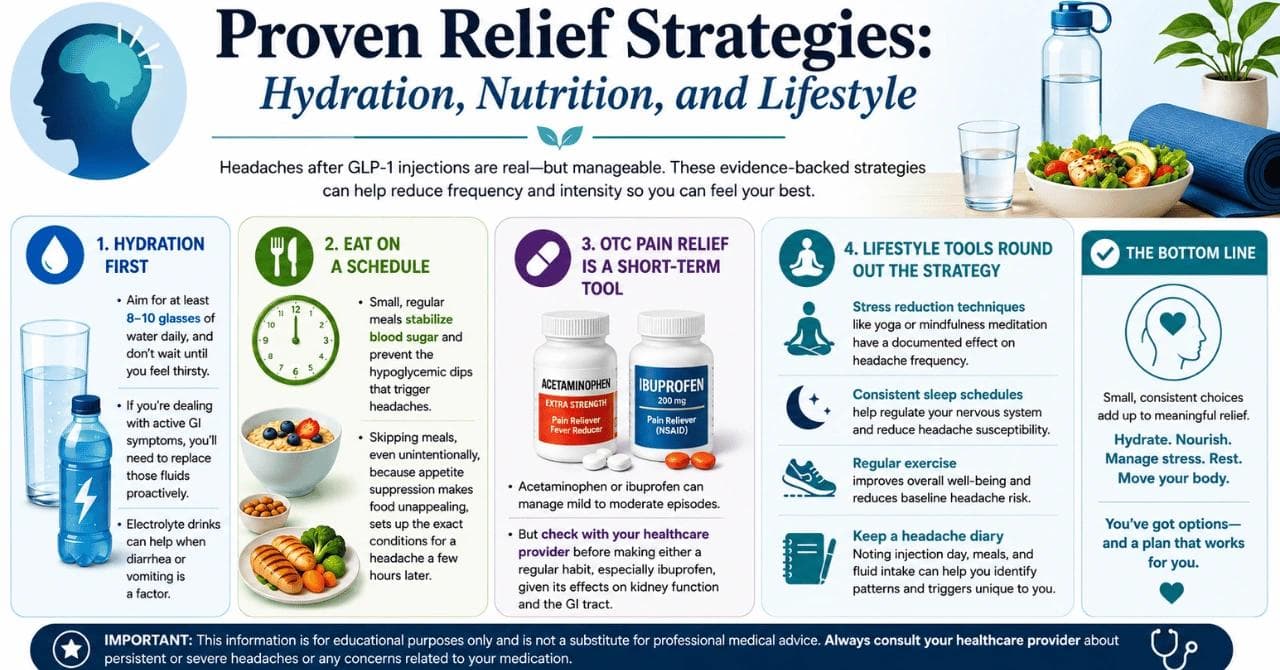
Proven Relief Strategies: Hydration, Nutrition, and Lifestyle
Getting ahead of Zepbound nausea, headaches, and the dehydration that drives them comes down to a few consistent habits
- Hydration first. Aim for at least 8-10 glasses of water daily, and don't wait until you feel thirsty. If you're dealing with active GI symptoms, you'll need to replace those fluids proactively. Electrolyte drinks can help when diarrhea or vomiting is a factor.
- Eat on a schedule. Small, regular meals stabilize blood sugar and prevent the hypoglycemic dips that trigger headaches. Skipping meals, even unintentionally, because appetite suppression makes food unappealing, sets up the exact conditions for a headache a few hours later.
- OTC pain relief is a reasonable short-term tool. Acetaminophen or ibuprofen can manage mild to moderate episodes, but check with your healthcare provider before making either a regular habit, especially ibuprofen, given its effects on kidney function and the GI tract.
- Lifestyle tools round out the strategy. Stress reduction techniques like yoga or mindfulness meditation have a documented effect on headache frequency. Consistent sleep schedules and regular exercise both reduce baseline headache susceptibility. Some patients also find it useful to keep a simple headache diary, noting injection day, meals, and fluid intake, to spot their personal patterns.
If you're managing Zepbound treatment and looking for cost-effective ways to stay on track, exploring options through a licensed Canadian pharmacy can make long-term adherence more practical.
Severity and When to Contact Your Doctor
For the vast majority of people, Zepbound headaches are mild to moderate. "Nagging" is the word most patients use. Debilitating is rare. In clinical trials, less than 1% of users stopped the medication because of headaches, according to TryDoseAI, which tells you something about how manageable they typically are.
That said, there are situations where you shouldn't wait it out. Contact your doctor if you experience severe or rapidly worsening headaches, especially when paired with vision changes, confusion, or signs of significant dehydration like extreme dizziness or very dark urine. These symptoms can indicate something beyond a typical Zepbound side effect and warrant prompt evaluation. True migraines, as distinct from the garden-variety Zepbound headache, are uncommon with this medication but not impossible.
Moving Forward: Managing Zepbound Frequent Headaches for Long-Term Success
Zepbound frequent headaches are a manageable, often temporary part of early treatment. They don't signal that something is fundamentally wrong with the medication or with you. For most patients, they're a short-term adjustment cost that fades well before the real weight loss and metabolic benefits fully take hold.
The patients who handle this best are the ones who treat hydration and meal timing as non-negotiable from day one, not something they address after a headache hits. Proactive habits prevent the majority of episodes before they start.
Stay in close contact with your healthcare provider, especially during dose increases. If symptoms feel disproportionate or don't improve on the expected timeline, that conversation is worth having early. Patients exploring affordable prescription options for tirzepatide-based treatments can also browse the latest medication articles at Polar Bear Meds for additional guidance on managing GLP-1 side effects.
Frequently Asked Questions
Headaches affect roughly 10-15% of Zepbound users based on clinical trial and post-marketing data. The SURMOUNT trials specifically found that 10.2% of tirzepatide patients reported headaches versus 8.3% in the placebo group. A 2023 systematic review and meta-analysis reported a somewhat lower figure of about 4-5%, reflecting differences in how headache data were captured across studies.
Most headaches begin within days to a few weeks of starting the medication or following a dose increase. Peak symptoms often fall within the 24-72 hour window after a weekly injection, when tirzepatide levels are highest. For most patients, the frequency decreases noticeably as the body adjusts over the first several weeks.
Consistent hydration is the single most effective preventive step, targeting at least 8-10 glasses of water daily to offset both appetite suppression and GI fluid losses. Eating small, regular meals keeps blood sugar stable and reduces hypoglycemia-driven headaches. Acetaminophen or ibuprofen can help manage acute episodes with your doctor's approval, and stress reduction practices like yoga or deep breathing support longer-term prevention.
Most are mild to moderate and described as nagging rather than debilitating. Less than 1% of patients in clinical trials stopped taking the medication because of headaches, which reflects how rarely they reach a severity that derails treatment. Persistent, worsening, or headaches accompanied by neurological symptoms like vision changes or confusion should prompt a call to your doctor.
Disclaimer
This article covers what the research says about Zepbound headaches, but it's not medical advice. Every patient's situation is different, and side effects can vary based on your health history, other medications, and individual response to tirzepatide. Talk to your doctor or pharmacist before making changes to your treatment or starting any new pain relief regimen.