Can Type 2 Diabetes Cause Headaches? What You Need to Know
Type 2 diabetes does not directly cause headaches, but blood sugar fluctuations associated with diabetes can trigger them. When blood sugar rises too high (hyperglycemia) or drops too low (hypoglycemia), the body reacts in ways that may lead to headaches. Headaches related to blood sugar changes may occur alongside symptoms such as thirst, fatigue, confusion, or blurred vision. In some cases, frequent headaches may be an early warning sign that blood sugar levels are poorly controlled.
What Is the Connection Between Type 2 Diabetes and Headaches?
The connection between Type 2 diabetes and headaches mainly involves changes in blood sugar levels and fluid balance in the body. When blood glucose levels rise too high (hyperglycemia) or drop too low (hypoglycemia), the brain may not receive a stable energy supply, which can trigger headache pain.
High blood sugar levels can lead to dehydration because excess glucose causes the body to lose fluids through frequent urination. Dehydration reduces blood flow to the brain and may result in pressure-like or dull headaches. On the other hand, low blood sugar reduces the amount of glucose available to the brain, which depends heavily on glucose for energy. This sudden energy shortage can trigger sharp or throbbing headaches.
Over time, repeated blood sugar swings may also affect blood vessels, nerve function, and hormone balance. These changes increase the likelihood of headaches, especially in people with poorly controlled diabetes or insulin resistance.
Understanding this connection helps explain why stabilizing blood sugar levels is one of the most effective ways to prevent recurring headaches in people with Type 2 diabetes.
Diabetes Headache Symptoms to Watch For
Headaches related to diabetes often feel similar to stress-related headaches. However, they may have certain warning signs depending on the underlying cause.
Common diabetes headache symptoms include:
- Blurred vision
- Throbbing or dull head pain
- Pressure around the forehead or temples
- Difficulty concentrating
- Dizziness or lightheadedness
- Fatigue or weakness
- Irritability
- Increased hunger or thirst
The findings from PubMed Central suggest that frequent headaches, along with abnormal blood glucose readings, may indicate poor glycemic control and the need for treatment adjustments.
High Blood Sugar Headache vs Low Blood Sugar
Understanding the difference between high and low blood sugar headaches can help identify the correct treatment quickly. The table below highlights key differences between hyperglycemia headaches and hypoglycemia headaches.
| Feature | High Blood Sugar Headache (Hyperglycemia) | Low Blood Sugar Headache (Hypoglycemia) |
|---|---|---|
| Onset | Develops gradually | Occurs suddenly |
| Headache Type | Persistent or dull pain | Sharp or throbbing pain |
| Blood Glucose Level | Usually above 180 mg/dL | Usually below 70 mg/dL |
| Common Symptoms | Fatigue, thirst, frequent urination, blurred vision | Hunger, sweating, confusion, shaking |
| Cause | Excess glucose leads to dehydration and fluid imbalance | Lack of glucose supply to the brain |
| Immediate Treatment | Take prescribed medicines and drink water | Consume fast-acting carbohydrates |
| Urgency Level | Seek medical attention if persistent | Requires immediate treatment |
← Swipe to see more →
What to Do If You Have a Diabetes Headache?
If you develop a headache and have type 2 diabetes, checking your blood sugar level should be the first step. Most diabetes headaches happen when blood sugar gets too high or too low, so checking early makes a big difference.
Follow these steps if you suspect a diabetes-related headache:
- Check your blood glucose immediately using a glucometer or continuous glucose monitor (CGM).
- If blood sugar is below 70 mg/dL, consume 15 grams of fast-acting carbohydrates, such as glucose tablets, fruit juice, or regular soda.
- If blood sugar is above 180 mg/dL, drink water to stay hydrated and follow your prescribed diabetes management plan.
- Recheck your blood sugar after 15 minutes to confirm that levels are improving.
- Seek medical care if the headache persists, worsens, or occurs alongside symptoms such as confusion, vomiting, or severe fatigue.
Acting early can help bring blood sugar levels back to normal and prevent more serious problems.
| Blood Sugar Reading | What to Do |
|---|---|
| Below 70 mg/dL | Take 15 g fast-acting carbohydrates |
| 70-180 mg/dL | Monitor symptoms and hydrate |
| Above 180 mg/dL | Hydrate and follow the treatment plan |
| Above 300 mg/dL | Seek medical advice promptly |
← Swipe to see more →
Diabetic Ketoacidosis Headache: A Serious Warning Sign
According to the Centers for Disease Control and Prevention, a headache may also occur during diabetic ketoacidosis (DKA), a serious and potentially life-threatening complication. While DKA is more common in Type 1 diabetes, it can occur in people with Type 2 diabetes under certain conditions, such as illness, missed medications, or infection.
Diabetic ketoacidosis develops when the body lacks sufficient insulin and begins breaking down fat for energy, producing ketones. High ketone levels can cause chemical imbalances in the blood.
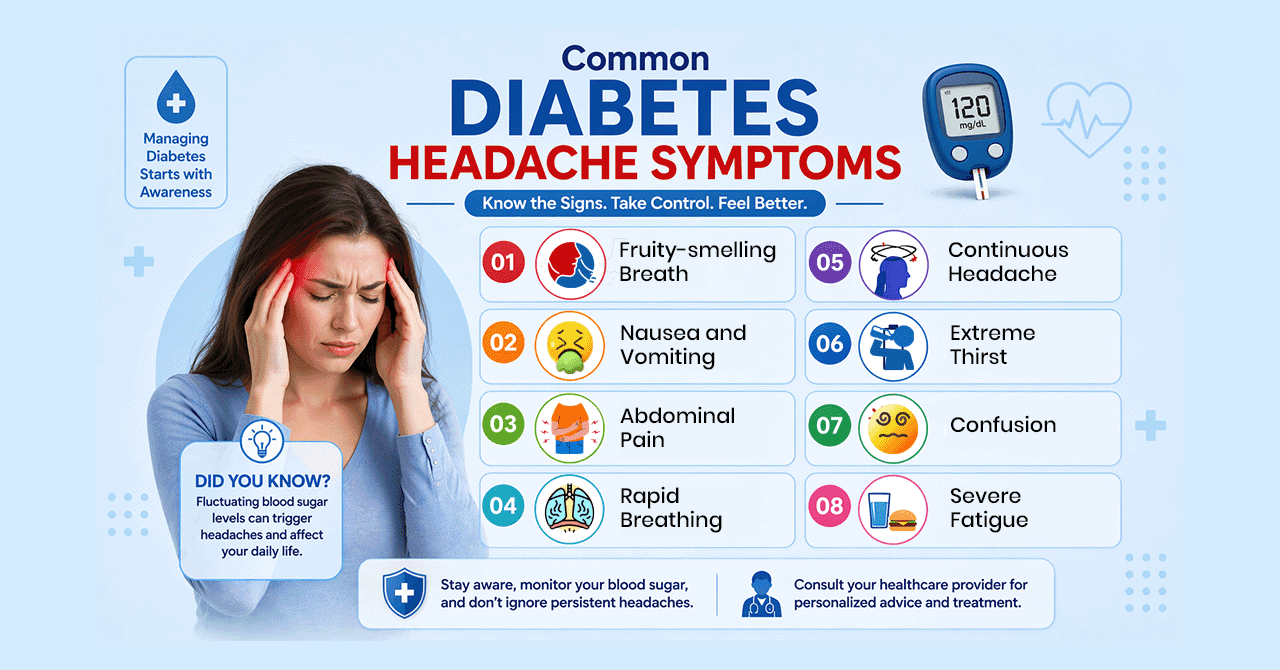
Symptoms of diabetic ketoacidosis include:
- Continuousheadache
- Nausea and vomiting
- Abdominal pain
- Rapid breathing
- Fruity-smelling breath
- Extreme thirst
- Confusion
- Severe fatigue
Seek immediate medical help if you experience any of the above symptoms. Diabetic ketoacidosis (DKA) can’t be treated at home, as it is considered a medical emergency.

Can Insulin Cause Headaches?
Insulin itself does not directly cause headaches, but it can lead to headaches if it lowers blood sugar too quickly (hypoglycemia). People who recently started insulin therapy or changed their dosage may notice temporary headaches as the body adjusts to new blood glucose levels.
Headaches related to insulin use are usually associated with:
- Hypoglycemia caused by excess insulin
- Rapid shifts in blood glucose levels
- Incorrect insulin dosing
- Changes in meal timing
- Increased physical activity without dose adjustments
If insulin-related headaches occur frequently, healthcare providers may recommend adjusting the dosage, timing of medication, or meal-planning strategies.
What Are the Other Diabetes-Related Causes of Headaches?
The factors related to type 2 diabetes that may increase the risk of headaches are listed below:
Stress and Fatigue
Managing chronic illness can be stressful, and stress itself triggers headaches. Sleep cycles may be disrupted due to diabetes, which may also increase headache frequency.
Dehydration
High blood glucose levels often lead to frequent urination, resulting in fluid loss. Dehydration reduces blood flow to the brain and can trigger headache pain. Drinking enough water is important for diabetes control.
Hormonal and Metabolic Changes
Type 2 diabetes affects the endocrine system, altering hormone balance and metabolism. These changes may contribute to headaches, especially in individuals with metabolic syndrome.
When to See a Doctor for Headaches Caused by Type 2 Diabetes?
Regular headaches may not be dangerous, but you should not ignore certain symptoms. Those serious but rare symptoms include:
- Vision loss
- Severe or constant headache
- Headache with confusion or difficulty speaking
- Frequent headaches, even if you have a stable glucose level
- Vomiting with high blood sugar
- Headache accompanied by diabetic ketoacidosis
How to Prevent Headaches in Type 2 Diabetes?
Preventing headaches in type 2 diabetes starts with maintaining stable blood glucose levels. Keeping your diabetes well-managed helps prevent both high and low blood sugar.
Strategies to prevent type 2 diabetic headaches include:
- Monitoring blood glucose levels regularly
- Taking medications exactly as prescribed
- Eating balanced meals at consistent times
- Staying hydrated throughout the day
- Managing stress levels
- Getting adequate sleep
- Engaging in regular physical activity
- Avoiding skipped meals
Having your treatment plan under a licensed healthcare provider provides greater stability and reduces blood sugar fluctuations.
The Bottom Line: Can Type 2 Diabetes Cause Headaches?
Finally, can type 2 diabetes cause headaches? Type 2 diabetes does not directly cause headaches, but unstable blood glucose levels, whether too high or too low, are a common trigger. Headaches may also signal dehydration, insulin imbalance, and serious complications such as diabetic ketoacidosis.
Paying attention to when headaches occur and checking your blood sugar can help, and proper diabetes management can reduce discomfort and prevent complications. If headaches become severe, frequent, or unusual, medical evaluation is essential to ensure safe and effective diabetes care.
Frequently Asked Questions
No, diabetes itself does not directly cause headaches. However, changes in blood sugar levels, either too high or too low, are a common trigger. While the disease itself doesn’t typically cause pain directly, the stress and hormonal changes triggered by glucose imbalances are a direct cause of diabetic headaches.
You should be concerned if a headache is severe, persistent, or accompanied by other serious symptoms such as nausea, vomiting, abdominal pain, confusion, or a fruity breath odor. These could be diabetic ketoacidosis warning signs, which require immediate emergency medical attention. Always consult your doctor about any new or worsening headaches.
Insulin resistance headaches are often more chronic and less directly tied to acute blood sugar swings. They are thought to be linked to systemic inflammation and metabolic dysfunction associated with insulin resistance mechanisms. While not always severe, they can contribute to persistent discomfort or exacerbate other headache types.
Medical Disclaimer
The above content is for informational purposes only and does not replace professional medical advice. Always consult a licensed healthcare provider before starting or combining medications.