Does Nicotine Raise Blood Pressure?
Nicotine is a potent stimulant known for its immediate effects on the central nervous system and heart health. One of the most frequent questions for those using tobacco or vaping products is: Does nicotine raise blood pressure even in small amounts? The answer is yes; nicotine triggers the sympathetic nervous system, causing an immediate spike in heart rate and a narrowing of the blood vessels. This process, known as vasoconstriction, forces the heart to work harder, leading to an elevated blood pressure reading shortly after use. Repeated exposure can lead to chronic cardiovascular strain, placing significant long-term pressure on your heart health.
How Does Nicotine Raise Blood Pressure? (Mechanism Explained)
Nicotine raises blood pressure through a rapid chain of physiological responses that affect both the heart and blood vessels. Here’s how the process works:
- Adrenaline Release: Nicotine stimulates the adrenal glands to release epinephrine, which increases heart rate and strengthens each heartbeat.
- Increased Cardiac Output: As the heart pumps faster, more blood is pumped through the arteries, raising blood pressure.
- Peripheral Vasoconstriction: Nicotine narrows blood vessels, increasing resistance and forcing blood through tighter spaces.
- Blood Pressure Spike: These combined effects typically cause a temporary rise of about 5 to 10 mmHg, which may be higher in people with hypertension.
The intensity of this response depends on the source of nicotine. Smoking and high-dose vaping usually cause a faster and stronger spike, while nicotine replacement therapies like patches or gum tend to produce a slower, more controlled effect.

How Long Does the Nicotine Blood Pressure Spike Last?
A nicotine-related blood pressure spike begins within minutes of use, peaks around 15 to 30 minutes, and usually returns to normal within 2 to 4 hours in most healthy individuals. However, how long the effect lasts depends on the delivery method:
- Inhaled nicotine (cigarettes/vapes): Causes a rapid spike that typically begins to fade within 30 to 60 minutes after the initial dose.
- Oral products (gum/pouches): Absorbed more slowly, so blood pressure may stay mildly elevated for a longer period.
- Transdermal patches: Deliver nicotine steadily over 16 to 24 hours, which can keep blood pressure slightly elevated throughout use.
Does Nicotine Raise Blood Pressure in Smokers vs. Vapers?
The primary difference lies in the exposure and frequency of smoking and vaping. Below is a breakdown of how these two habits compare regarding your blood pressure:
| Factor | Smoking (Cigarettes) | Vaping (E-Cigarettes) |
|---|---|---|
| Nicotine Delivery | Rapid, high peak per cigarette | Variable; depends on device and usage |
| Blood Pressure Pattern | Short, sharp spikes | Frequent spikes with repeated use |
| Co-Factors | Carbon monoxide reduces oxygen levels | Aerosols may contribute to vascular irritation |
| Usage Behavior | Session-based (clear start and stop) | Often continuous or frequent use |
| Impact on Arteries | High risk of arterial stiffness over time | It may contribute to arterial stiffness, but evidence is still emerging |
← Swipe to see more →
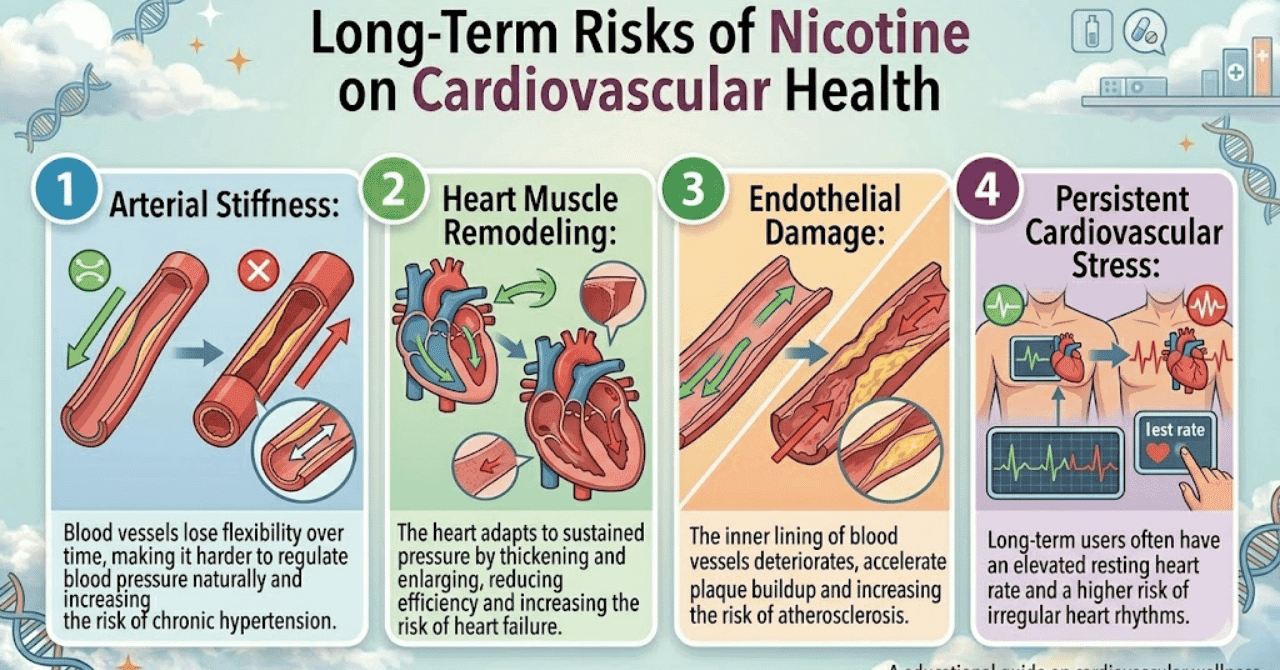
Long-Term Risks of Nicotine on Cardiovascular Health
Long-term nicotine use does more than cause temporary blood pressure spikes; it places the cardiovascular system under constant strain, leading to lasting damage even when nicotine is not actively in the body. Clinical research archived by PubMed Central (PMC8099302) shows that repeated exposure can result in permanent structural changes.
- Arterial Stiffness: Blood vessels lose flexibility over time, making it harder to regulate blood pressure naturally and increasing the risk of chronic hypertension.
- Heart Muscle Remodeling: The heart adapts to sustained pressure by thickening and enlarging, reducing efficiency and increasing the risk of heart failure.
- Endothelial Damage: The inner lining of blood vessels deteriorates, accelerating plaque buildup and increasing the risk of atherosclerosis.
- Persistent Cardiovascular Stress: Long-term users often have an elevated resting heart rate and a higher risk of irregular heart rhythms.
How to Lower Blood Pressure After Using Nicotine
A temporary rise in blood pressure after nicotine use can be managed with simple, immediate steps that help the body return to a relaxed state.
- Practice Deep Breathing: Slow, controlled breathing (inhale for 4 seconds, exhale for 6-8 seconds) helps calm the nervous system and lower blood pressure.
- Stay Hydrated: Drinking water supports circulation and helps the body process nicotine more efficiently.
- Light Movement: A short walk can improve blood flow and help stabilize blood pressure more quickly.
- Avoid Additional Stimulants: Limit caffeine or other stimulants during this time, as they can prolong the effect.
- Rest and Relax: Sitting or lying down in a calm environment allows the body to recover faster.
Long-term solution: The most effective way to control nicotine-related blood pressure changes is to reduce or quit nicotine use. Blood pressure often begins to improve shortly after stopping, lowering overall cardiovascular risk over time.
Final Verdict: Does Nicotine Raise Blood Pressure Permanently?
Nicotine does not cause a permanent rise in blood pressure after a single use, but it consistently triggers temporary spikes every time it enters the body. The real risk comes from repeated exposure. Over time, frequent nicotine use can push the cardiovascular system into a state of constant stress, increasing the likelihood of developing chronic high blood pressure (hypertension).
If nicotine use continues daily, these repeated spikes can gradually turn into a persistent problem, especially in individuals already at risk. However, the good news is that in many cases, blood pressure can improve after reducing or quitting nicotine, allowing the body to recover over time.
Frequently Asked Questions
Yes, nicotine gum can slightly increase heart rate. Although it delivers nicotine more slowly than smoking, it still stimulates the cardiovascular system. It may cause mild increases in heart rate and blood pressure, especially in sensitive individuals.
Blood pressure usually begins to return to normal within 2 to 4 hours after nicotine use as the body metabolizes it. With complete cessation, noticeable improvements in blood pressure can occur within a few days to weeks, depending on overall health.
Nicotine generally has a stronger and more consistent impact on blood pressure than caffeine. While both can cause temporary increases, nicotine also contributes to long-term cardiovascular strain with repeated use.
In the U.S., most nicotine replacement products, such as gum, patches, and lozenges, are available over the counter without a prescription. However, certain forms like nicotine inhalers and nasal sprays require a prescription from a healthcare provider. All nicotine products are regulated by the FDA, and you must be 21 or older to purchase them.
According to the American Heart Association, blood pressure is considered high at 130/80 mmHg or higher. Readings between 120-129 (systolic) are classified as elevated, while 140/90 mmHg or above is considered Stage 2 hypertension.
Medical Disclaimer
This content is for informational purposes only and does not constitute medical advice. The effects of nicotine on blood pressure can vary based on individual lifestyle, health conditions, and usage patterns. Always consult a licensed healthcare provider before making decisions about nicotine use, quitting, or managing blood pressure.