Does Qulipta Cause Weight Gain? The Truth & How to Manage Your Weight
Does Qulipta cause weight gain? No, clinical evidence does not show weight gain as a common side effect. In fact, studies report that some patients experience modest weight loss while taking Qulipta (atogepant). According to FDA prescribing data and clinical trials, a small percentage of patients had decreased body weight, while weight gain was not identified as a typical outcome.
However, individual responses can vary. This guide explains what clinical trials show about Qulipta weight changes, why weight loss may occur, and what it means for you.
What Do Clinical Trials Show About Qulipta Weight Loss?
Clinical trial data provide the clearest answer on how Qulipta affects body weight. According to research published by the National Library of Medicine (NIH), patients taking atogepant experienced modest, dose-dependent weight loss over time, not weight gain.
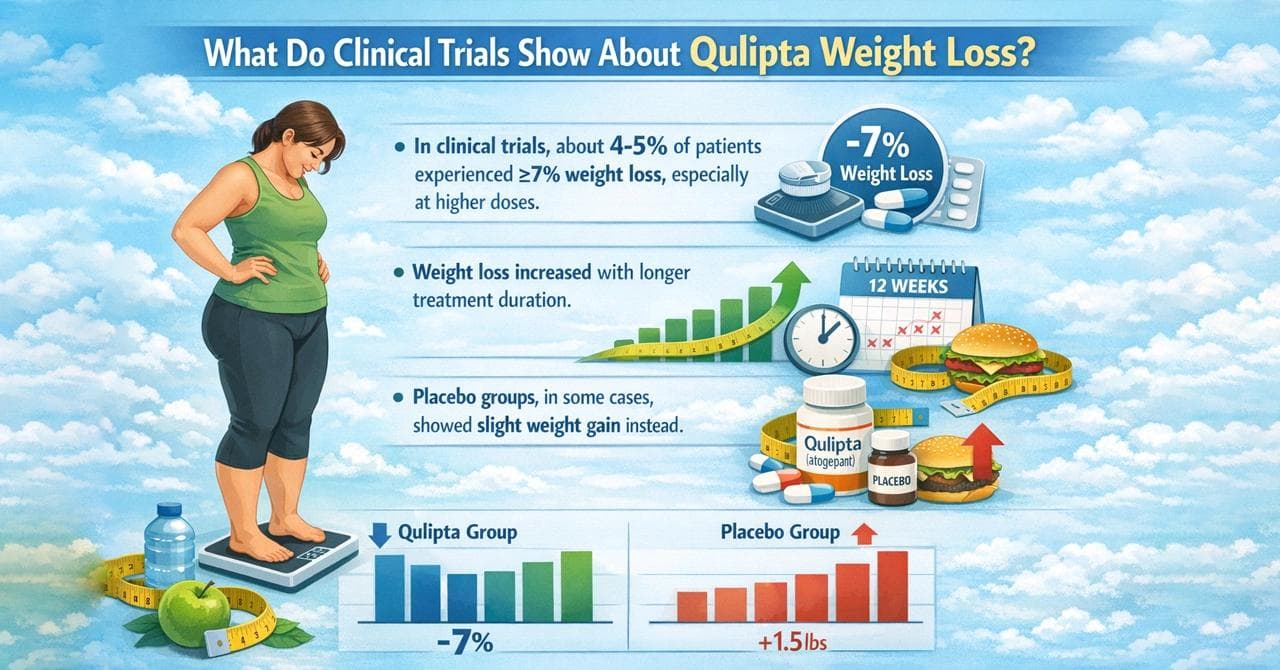
- In clinical trials, about 4-5% of patients experienced ≥7% weight loss, especially at higher doses.
- Weight loss increased with longer treatment duration.
- Placebo groups, in some cases, showed slight weight gain instead.
Additionally, FDA prescribing data confirms that more patients on Qulipta experienced a weight decrease compared to placebo.
Why Does Qulipta Cause Weight Loss in Some People?
Qulipta does not directly cause fat loss. Instead, weight loss may happen because the medication can affect appetite and digestion. Clinical data show that some people taking Qulipta experience reduced appetite. Common side effects like nausea or constipation can also make it harder to eat regular meals or maintain usual portion sizes.
Research from clinical trials indicates that this weight loss is typically mild and may increase gradually over time, especially with continued use. In most cases, this happens because you may be eating less without realizing it, rather than due to any direct effect on metabolism.
How to Manage Weight Changes on Qulipta?
If you notice changes in your weight while taking Qulipta, small adjustments in your daily routine can help you stay balanced and comfortable during treatment.
If You’re Losing Weight
Unintentional weight loss is often linked to reduced appetite or nausea. To manage this:
- Eat smaller, more frequent meals throughout the day
- Focus on nutrient-dense foods like proteins, healthy fats, and complex carbohydrates
- Try to maintain a consistent eating schedule, even if your appetite is low
- Monitor your weight regularly to track any significant changes
If You Notice Possible Weight Gain
Perceived weight gain during Qulipta treatment is not commonly linked to the medication itself; it’s important to look at overall lifestyle and treatment factors:
- Monitor weight trends over time rather than short-term changes
- Review dietary intake and appetite patterns
- Consider other medications that may influence weight
- Assess for bloating or constipation, which can mimic weight gain
If weight changes are rapid or concerning, consult a healthcare provider.
What Are the Most Common Qulipta Side Effects?
Understanding common side effects can help you interpret weight changes more accurately. Several side effects may indirectly influence weight.
| Side Effect | How It May Affect Weight |
|---|---|
| Decreased appetite | Leads to lower calorie intake and a gradual reduction in weight |
| Nausea | Reduces desire to eat or delays meals |
| Constipation | Causes bloating, which may feel like weight gain |
| Fatigue or sleepiness | May reduce physical activity levels |
← Swipe to see more →
Who Should Be Cautious with Qulipta?
Although Qulipta isn’t linked to weight gain, some people may be more sensitive to changes in appetite, digestion, or body weight during treatment. You may need closer monitoring if you:
- Have a low body weight or recent unintentional weight loss
- Experience persistent nausea or reduced appetite
- Have digestive conditions that affect nutrient intake
- Take multiple medications that influence weight or metabolism
When Should You Be Concerned About Weight Changes on Qulipta?
Most weight changes with Qulipta are mild. However, some symptoms may require medical attention. Contact a healthcare provider if you notice:
- Rapid or unexplained weight loss
- Ongoing nausea or inability to maintain regular meals
- Unusual fatigue, weakness, or dizziness
- Sudden weight gain with swelling or fluid retention
The Bottom Line: Can Qulipta Cause Weight Gain?
Does Qulipta cause weight gain? No, current clinical evidence shows that weight gain is not a typical side effect of Qulipta. Instead, some patients may experience mild, gradual weight loss, often linked to reduced appetite or gastrointestinal side effects. While individual responses can vary, most weight-related changes are manageable with proper monitoring and routine adjustments. If you notice significant or unexpected changes in your weight, it’s important to consult a healthcare provider to ensure safe and effective use of the medication.
Frequently Asked Questions
No, clinical trials do not show weight gain as a common side effect. In fact, some patients experience mild weight loss instead.
Most side effects are mild and tend to improve within the initial weeks as your body adjusts to the medication.
Qulipta can cause constipation, which may lead to bloating or a temporary feeling of fullness.
Avoid known migraine triggers such as alcohol and follow your healthcare provider’s advice, especially if you experience nausea or appetite changes.
CGRP inhibitors, including Qulipta (atogepant), are not commonly associated with weight gain in clinical studies. Some patients may experience mild weight loss instead, although individual responses can vary.
Yes. Qulipta may reduce appetite in some people, leading to lower calorie intake and a gradual reduction in weight. This effect is usually mild and may improve as your body adjusts to the medication.
Clinical data show that a small percentage of patients may experience weight loss of around 7% or more, particularly at higher doses over time.
Important Disclaimer
This blog is provided for informational purposes only and does not replace expert medical guidance, diagnosis, or treatment. The information is based on trusted sources such as FDA prescribing data and clinical research, but individual responses to medications may vary. Always consult an authorized healthcare professional before making treatment decisions.