Is Zepbound Better Than Wegovy for Weight Loss?
Key Takeaways
- Zepbound has been shown to lead to greater weight loss than Wegovy in clinical studies.
- Wegovy offers added cardiovascular benefits, including reduced risk of heart attack and stroke in certain patients.
- Zepbound works through dual GIP + GLP-1 pathways, which may enhance appetite control and weight reduction.
- Both medications have similar side effects, mainly gastrointestinal, and require gradual dose increases.
- The better choice is determined by your health goals, not just weight loss results alone.
Zepbound has been shown to be more effective than Wegovy for weight loss based on current clinical evidence. It tends to produce greater overall weight reduction, making it a stronger option if your primary goal is to lose more weight. However, Wegovy is still a highly effective FDA-approved medication for chronic weight management.
According to FDA data, Wegovy is also approved to reduce the risk of serious cardiovascular events such as heart attack and stroke, which gives it an important advantage beyond weight loss. If your goal is maximum weight loss, Zepbound may have an edge. But if you have heart-related risks or need additional health benefits, Wegovy may be the better choice.
Zepbound vs. Wegovy Weight Loss Results
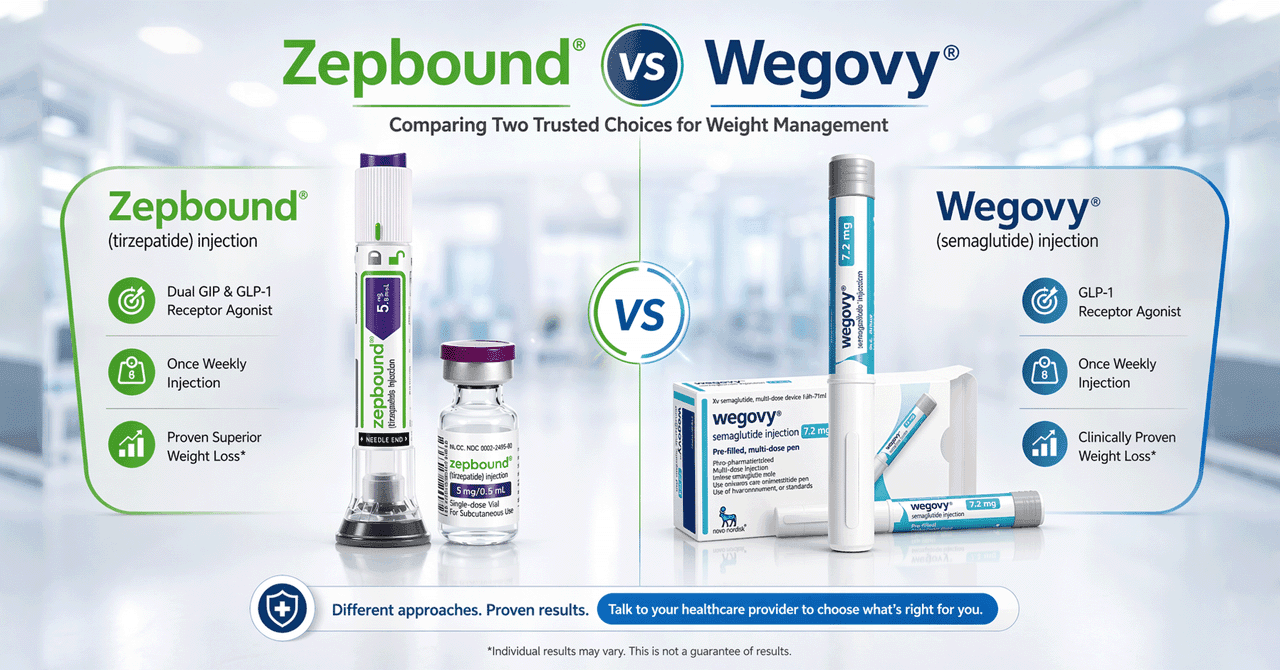
Zepbound vs. Wegovy weight loss results show that Zepbound leads to greater average weight reduction compared to Wegovy. In a head-to-head clinical study, patients using Zepbound lost about 20.2% of their body weight, while those using Wegovy lost around 13.7% over a similar period.
This difference is clinically meaningful. A gap of roughly 6% to 7% body weight can result in noticeably greater fat loss and improved health outcomes. A 2025 meta-analysis comparing tirzepatide vs. semaglutide weight loss also found that tirzepatide produced significantly greater weight reduction overall, confirming consistent superiority across studies.
Why Is Zepbound More Effective Than Wegovy for Weight Loss?
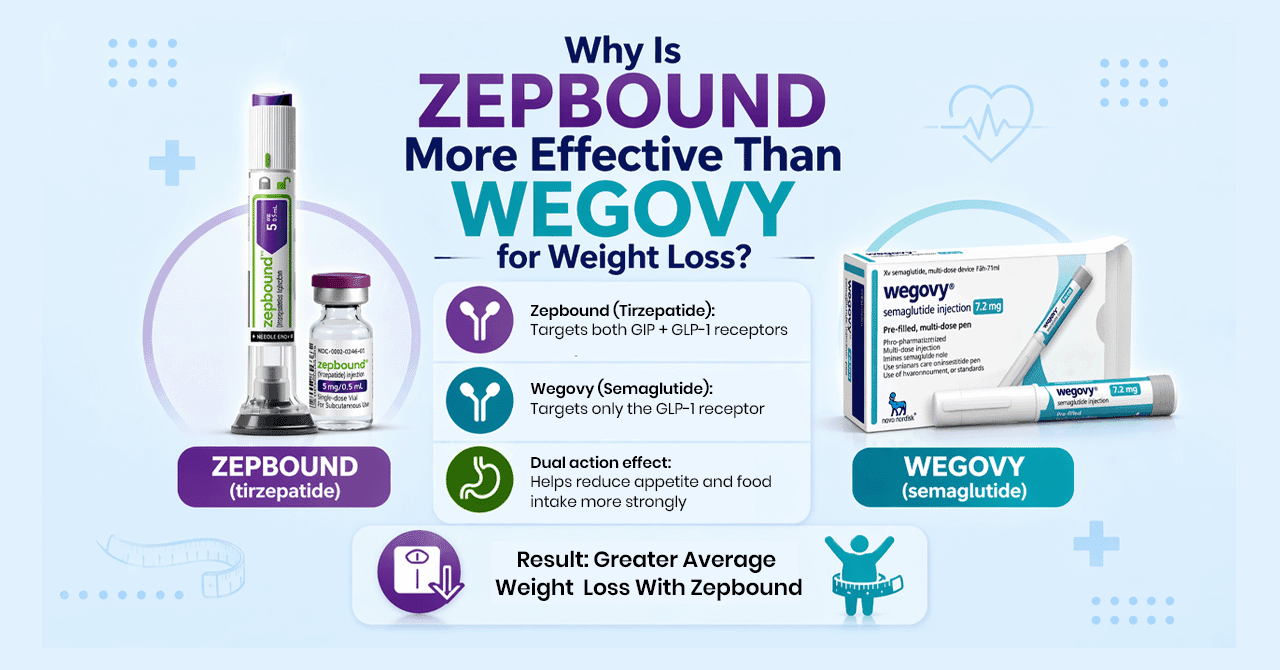
Zepbound vs. Wegovy effectiveness differs mainly because of how each medication works in the body. Zepbound targets more pathways that control hunger and metabolism, which leads to greater overall weight loss. Key differences in how they work:
- Zepbound (tirzepatide): Targets both GIP + GLP-1 receptors
- Wegovy (semaglutide): Targets only the GLP-1 receptor
- Dual action effect: Helps reduce appetite and food intake more strongly
- Result: Greater average weight loss with Zepbound
According to FDA information, the active ingredient in Zepbound acts on both GIP and GLP-1 receptors to reduce appetite and calorie intake, directly supporting weight loss.
Zepbound vs. Wegovy Side Effects: Which Is Easier to Tolerate?
Zepbound vs. Wegovy side effects are generally similar, as both medications commonly cause gastrointestinal symptoms. However, tolerability can vary slightly by individual. The side effect comparison is given below:
| Aspect | Zepbound (tirzepatide) | Wegovy (semaglutide) |
|---|---|---|
| Common side effects | Nausea, diarrhea, vomiting, constipation | Nausea, diarrhea, vomiting, constipation |
| Severity pattern | Can occur during dose increases | Can occur during dose increases |
| Overall tolerability | Generally similar | Generally similar |
| Serious warning | Thyroid C-cell tumor risk | Thyroid C-cell tumor risk |
← Swipe to see more →
Both medications carry a boxed warning for thyroid C-cell tumors and should not be used in individuals with a personal or family history of medullary thyroid carcinoma or MEN2.
When Zepbound May Be Better Than Wegovy for Weight Loss
Zepbound may be a better choice if your primary goal is achieving greater weight loss. It may be more suitable if:
- You want higher average weight loss outcomes
- You have not achieved the desired results with Wegovy
- You need stronger appetite control, as the active ingredient in Zepbound targets both GIP and GLP-1 pathways
Because Zepbound leads to greater reductions in body weight on average, it is often preferred when weight loss effectiveness is the main focus.
When Wegovy May Be Better Than Zepbound for Weight Loss
Wegovy may be a better option for weight loss when additional health benefits, especially cardiovascular protection, are important. It may be more suitable if:
- You have cardiovascular risk factors, such as heart disease
- Your treatment goal includes heart protection along with weight loss
- You need an FDA-approved weight loss medication with proven cardiovascular benefit
In these cases, choosing Wegovy is not about reduced effectiveness, but about selecting a treatment that supports both weight loss and overall health outcomes.
Who Should Avoid Zepbound or Wegovy for Weight Loss
You should avoid Zepbound or Wegovy for weight loss if you have certain medical conditions that increase the risk of serious side effects. The FDA prescribing information shows that these medications should not be used if you have:
- A known serious allergic reaction to tirzepatide or semaglutide
- Multiple Endocrine Neoplasia syndrome type 2 (MEN2)
- A personal or family history of medullary thyroid carcinoma (MTC)
They should also be used with caution if you have:
- A history of pancreatitis
- Gallbladder disease
- Kidney problems, especially related to dehydration
According to FDA warnings, Zepbound has been associated with gastrointestinal reactions, pancreatitis, gallbladder disease, and kidney injury in some cases, particularly during treatment or dose escalation.
When to Seek Medical Help While Using Zepbound or Wegovy
You should seek medical help immediately if you develop serious symptoms while using Zepbound or Wegovy for weight loss. These include:
- Severe abdominal pain, especially if it may indicate pancreatitis
- Signs of a severe allergic reaction, such as swelling of the face or difficulty breathing
- Persistent vomiting or diarrhea, which may lead to dehydration
- Symptoms of gallbladder problems, such as upper abdominal pain or fever
The Bottom Line: Which is Better Zepbound or Wegovy?
Zepbound and Wegovy are both effective for weight loss, but they serve slightly different purposes. Evidence shows that Zepbound offers a greater average weight loss, making it a strong option when the goal is significant fat loss. Wegovy, on the other hand, offers added value for people who need cardiovascular risk reduction as well as weight management. The decision is not just about which drug works better, but which one aligns better with your health needs, risk factors, and long-term treatment goals.
Frequently Asked Questions
Zepbound has been shown to produce higher average weight loss compared to Wegovy in head-to-head studies, making it more effective for maximizing weight reduction.
The choice depends on your medical profile and health goals. Zepbound may be better if your focus is greater weight loss, while Wegovy may be more suitable if you have heart-related risk factors or need additional cardiovascular benefits.
A doctor may recommend Wegovy if you have a history of cardiovascular disease, as it is FDA-approved to reduce the risk of heart attack and stroke in certain patients.
Clinical studies show that patients on Zepbound achieve greater average weight loss compared to those on Wegovy. A higher percentage of patients on Zepbound also reach significant weight loss milestones.
Yes, you can switch from Wegovy to Zepbound, but only under medical supervision. Doctors may consider switching if weight loss has slowed, side effects are difficult to tolerate, or treatment goals are not being met. Because both are GLP-1-based medications, switching typically requires dose adjustment and careful monitoring to reduce side effects.
Important Disclaimer
This blog is provided for informational purposes only and does not replace expert medical guidance, diagnosis, or treatment. The information is based on trusted sources, including the FDA and peer-reviewed medical research, but individual results and responses may vary. Always consult an authorized healthcare professional before making treatment decisions.