Tirzepatide Rash at Injection Site: Symptoms & Treatment
Medications like Mounjaro and Zepbound, which contain tirzepatide, are now commonly used to help manage type 2 diabetes and long-term weight loss. According to PubMed Central studies on Tirzepatide injection site reactions, the treatment is given as weekly subcutaneous injections. Some people experience mild skin reactions at the injection site, such as itching, redness, swelling, or tenderness.
These reactions are usually temporary, but knowing why they happen and how to handle them can make ongoing treatment more comfortable. This guide explains common tirzepatide injection site reactions, practical ways to reduce discomfort, and signs that may require medical attention.
What Are the Common Symptoms of a Tirzepatide Injection-Site Rash?
Localized reactions can sometimes occur after injecting medications containing tirzepatide, including Mounjaro and Zepbound. Most reactions are mild and stay close to the injection site, though the exact appearance can differ from person to person.
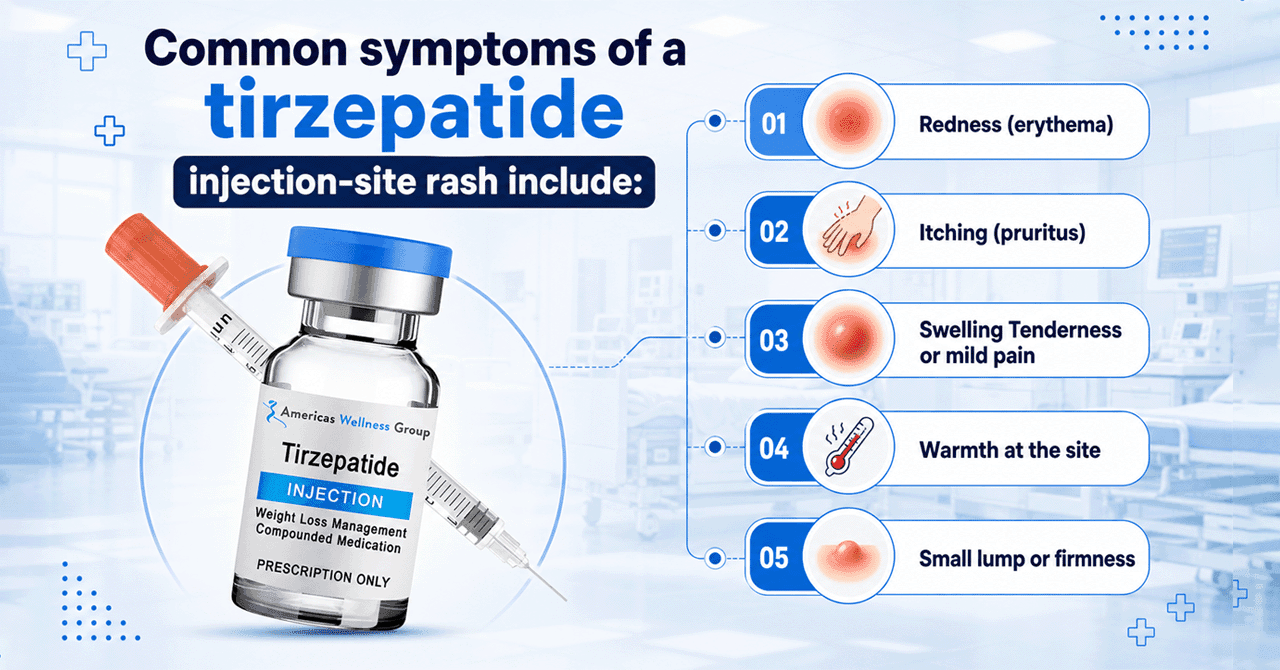
Common symptoms of a tirzepatide injection-site rash include:
- Redness (erythema): A red or pink patch around the injection area caused by mild skin irritation.
- Itching (pruritus): Mild to moderate itching that may occur soon after a Mounjaro or Zepbound injection site reaction.
- Swelling: Slight puffiness or raised skin due to localized inflammation at the injection site.
- Tenderness or mild pain: Sensitivity when touching the area, especially shortly after injection.
- Warmth at the site: A mild warming sensation caused by increased blood flow to the affected area.
- Small lump or firmness: A temporary hardened spot under the skin that may form after injection.
In most cases, rash from tirzepatide is mild and self-limiting, meaning it resolves naturally without medical treatment. However, symptoms that worsen, spread beyond the injection site, or persist for more than a few days may require medical evaluation.
What Causes Tirzepatide Injection Site Reactions?
Instead of describing visible symptoms, focus on underlying triggers:
- Minor tissue injury from injection: The needle creates a small, temporary disruption in the skin and subcutaneous tissue, which naturally triggers inflammation.
- Localized inflammatory response: The body releases histamines and inflammatory mediators at the injection site, leading to temporary skin irritation.
- Reaction to inactive ingredients: Some individuals may be sensitive to stabilizers or preservatives in the formulation, not just tirzepatide itself.
- Injection technique factors:
- Incorrect injection angle
- Injecting too shallow or too deep
- Injecting too quickly
- Alcohol swab irritation: Injecting before the alcohol fully dries can cause extra skin irritation or stinging.
How to Treat Tirzepatide Rash at the Injection Site?
When they do occur, these reactions are usually mild and resolve within a few days without medical treatment. The following tips can help treat a tirzepatide rash at the injection site:
Apply a Cold Compress
Placing a clean, cold compress on the affected area for 10-15 minutes can help reduce redness, swelling, and itching.
Avoid Scratching or Rubbing
Scratching can worsen irritation and increase the risk of skin damage or infection. Keeping the area clean and untouched helps it heal faster.
Rotate Injection Sites
Using a different injection area each week (such as the abdomen, thigh, or upper arm) helps prevent repeated irritation in the same spot.
Use Over-The-Counter Relief If Needed
If itching is bothersome, an OTC oral antihistamine or mild hydrocortisone cream may help, but only if recommended by a healthcare provider.
Monitor the Reaction
Most mild reactions improve within a few days.
Best Injection Practices to Prevent Injection-Site Rash
In addition to managing symptoms, proper injection technique can significantly reduce the risk of developing a rash.
- Use a 90-degree angle for subcutaneous injection unless instructed otherwise
- Do not inject into irritated, bruised, or scarred skin
- Allow alcohol to fully dry before injecting
- Avoid injecting the same exact spot repeatedly
- Inject slowly and steadily to reduce tissue pressure
- Let medication reach room temperature before injection (cold injections can irritate)
When to Contact a Healthcare Provider While Using Tirzepatide?
Most injection site reactions with medications containing tirzepatide, including Mounjaro and Zepbound, are mild and improve on their own.
You should contact a healthcare provider if the following injection site reactions:
- Symptoms worsen after 48-72 hours instead of improving
- Redness spreads beyond 5-7 cm
- Severe pain or increasing warmth develops
- Signs of infection appear (pus, fever)
- Lump persists longer than 1-2 weeks
- Any signs of systemic allergic reaction (breathing difficulty, facial swelling)
While most reactions are not dangerous, closely monitoring changes helps ensure safe and continued use of the treatment.
How Common Is Tirzepatide Rash at the Injection Site?
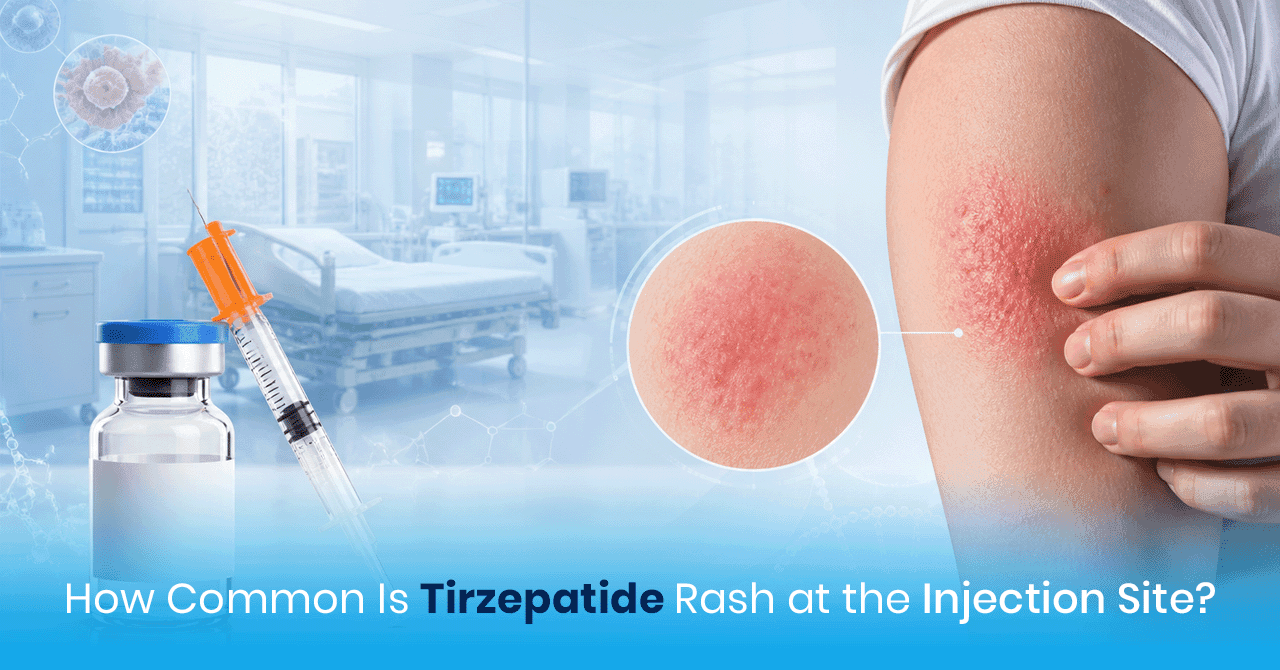
Injection site reactions with medications containing tirzepatide, including Mounjaro and Zepbound, are uncommon but occur more often than with placebo in clinical trials.
- In clinical trials of Mounjaro, injection-site reactions occurred in 4.6% of participants with antibodies, compared with 0.7% of those without antibodies.
- The FDA prescribing information for Zepbound reported rates of 11.3% versus 1%, respectively.
Overall, these reactions tend to be mild and may occur slightly more frequently at higher doses.
The Final Thought on Causes and Treating Tirzepatide Rash at the Injection Site
Injection site reactions from medications containing tirzepatide, including Mounjaro and Zepbound, are generally mild, temporary, and manageable. In most cases, these reactions are a normal local skin response to the injection process, including minor irritation, immune activity, or sensitivity at the injection site. Understanding both the causes and symptoms can help patients respond appropriately without unnecessary concern.
Simple measures that you can follow at home, such as using cold compresses, rotating injection sites, and avoiding irritation, often suffice to manage discomfort. However, persistent, worsening, or unusual skin reactions should always be evaluated by a healthcare provider to rule out complications. Overall, these reactions rarely affect treatment effectiveness, allowing patients to continue therapy safely while staying informed and proactive about their skin health.
Frequently Asked Questions
Yes, in most cases, you can still take your next dose of tirzepatide, including Mounjaro or Zepbound, if the rash is mild and improving. However, if the reaction is severe, worsening, or spreading, you should consult your healthcare provider before continuing treatment.
Yes, mild redness, itching, or swelling at the injection site is a known side effect of medications like tirzepatide, including Mounjaro and Zepbound. These reactions are usually temporary and improve on their own within a few days.
Most mild skin reactions last around 1 to 3 days after the injection. If symptoms persist longer or worsen, it is best to consult a healthcare provider.
Seek medical advice if the rash becomes severe, spreads, or shows signs of infection, such as pus or worsening pain. Allergic reactions or persistent swelling should also be evaluated promptly.
Medical Disclaimer
The above content is for informational purposes only and does not replace professional medical advice. Always consult a licensed healthcare provider before starting or combining medications.