Does Zepbound Make You Itchy? Zepbound Skin Reactions Explained
Key Takeaways
- Injection site reactions affect roughly 3-7% of users in clinical trials, making itching far less common than GI side effects.
- Most localized skin reactions resolve within a few days without stopping treatment.
- Proper injection technique, including site rotation and letting alcohol dry, significantly reduces skin irritation.
- Severe allergic reactions are rare but require immediate medical attention.
Zepbound itching is real, but it's far less common than the nausea and digestive complaints most people associate with this medication. Zepbound (tirzepatide) is a dual GIP and GLP-1 receptor agonist approved for chronic weight management, and it does list pruritus as a recognized side effect. Most cases are mild, localized to the injection site, and clear up on their own within days.
Does Zepbound Actually Make You Itchy? What the Data Shows
Itching from Zepbound affects a small minority of users. According to data from the SURPASS clinical trials, injection site reactions occurred in approximately 3-7% of participants, varying by dose. A separate analysis put that range at 1.7% to 5.8%. Either way, it's a fraction of the 25-40% of users who report gastrointestinal symptoms like nausea.
Two patterns show up consistently. Localized reactions at the injection site are the more common form, typically presenting as mild redness, swelling, or itching that fades within days. Systemic itching, which occurs across the body with no visible rash, is less common but does happen. Knowing which type you're dealing with shapes how you respond to it.
Three Mechanisms Behind Zepbound-Related Itching
Understanding why Zepbound causes skin irritation makes it easier to manage. There are three distinct drivers.
Local inflammation at the injection site: Every subcutaneous injection causes minor mechanical trauma. The needle puncture triggers a mild local immune response, including histamine release, which produces that familiar itch-and-redness combo. This is the most common cause of Zepbound skin reactions, and it's largely mechanical.
Systemic immune activation: Tirzepatide is a GLP-1 and GIP analog. These endocrine-active compounds interact with receptors throughout the body, not just in the gut and pancreas. That interaction can trigger low-level, body-wide immune changes in some people, resulting in generalized pruritus that has nothing to do with where the needle went in.
Skin barrier changes from rapid weight loss: This one surprises people. According to Ubie Health, rapid weight loss associated with Zepbound treatment can alter the skin barrier, causing dryness, reduced elasticity, and increased sensitivity. The skin simply hasn't caught up to the body's new composition yet, which can make existing irritation feel worse.
Itching Without a Rash: Recognizing What's Normal
Not every Zepbound skin side effect looks dramatic. Some of the most common reactions involve no visible rash at all.
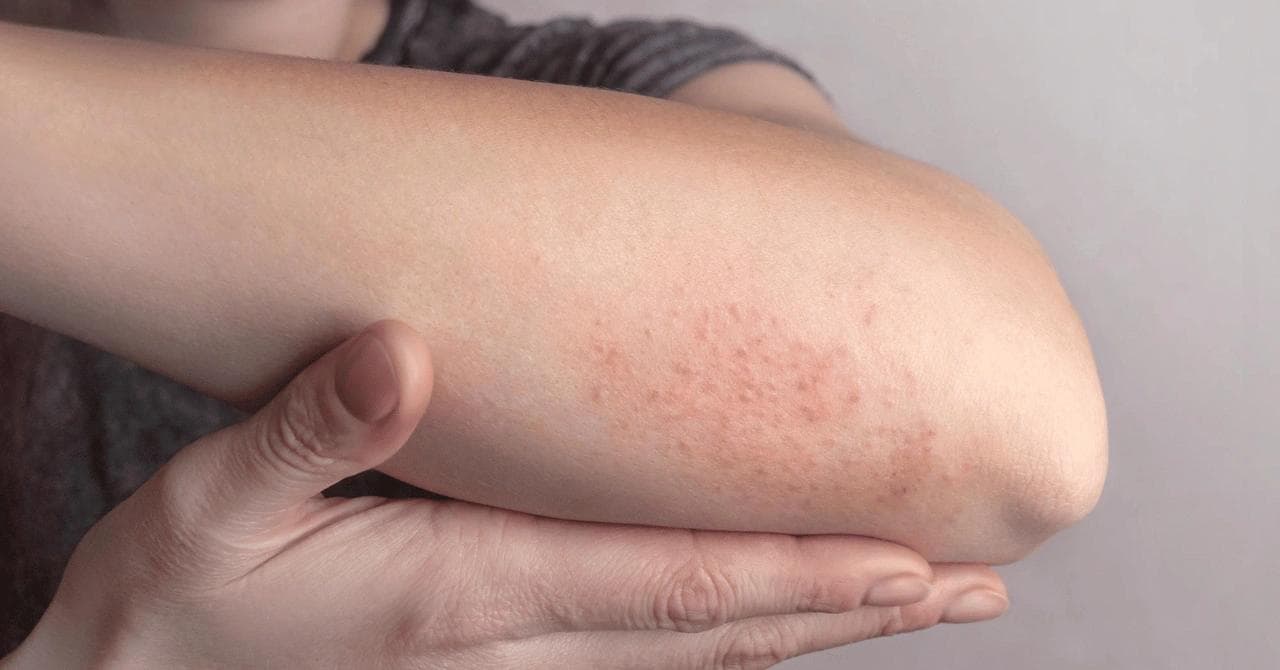
At the injection site, you might notice mild redness, slight swelling, or tenderness that doesn't look like much but feels uncomfortable. These are typical localized adverse events. They don't require treatment, and they don't mean that something is seriously wrong.
Generalized pruritus, body-wide itching without any skin eruption, is also possible. It's less common, but it's documented. The skin looks fine; it just itches. This tends to stem from the systemic immune activation described above.
The reassuring part: most of these reactions are self-limiting. According to Fella Health, injection site reactions typically resolve within a few days without requiring you to stop treatment. If yours disappear on that timeline, that's the medication doing exactly what the clinical data predicted.
Practical Steps to Reduce Injection Site Itching
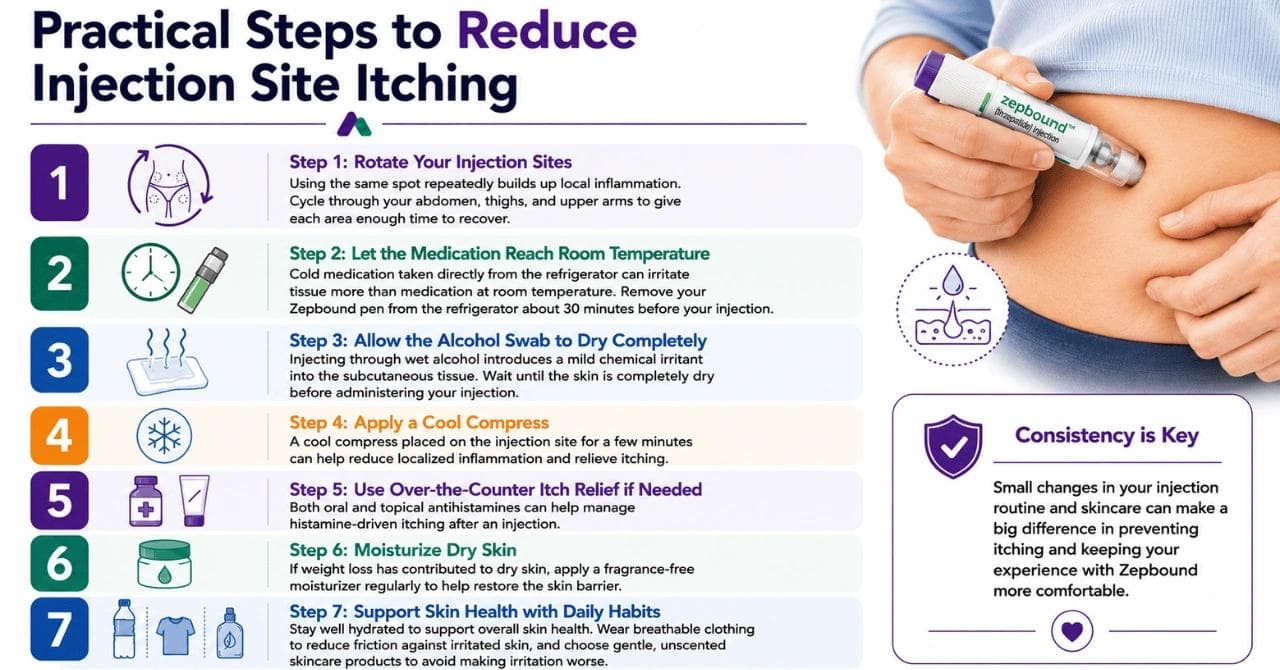
Good technique makes a real difference. According to Fella Health, these habits can meaningfully reduce localized skin reactions.
Step 1: Rotate Your Injection Sites
Using the same spot repeatedly builds up local inflammation. Cycle through your abdomen, thighs, and upper arms to give each area enough time to recover.
Step 2: Let the Medication Reach Room Temperature
Cold medication taken directly from the refrigerator can irritate tissue more than medication at room temperature. Remove your Zepbound pen from the refrigerator about 30 minutes before your injection.
Step 3: Allow the Alcohol Swab to Dry Completely
Injecting through wet alcohol introduces a mild chemical irritant into the subcutaneous tissue. Wait until the skin is completely dry before administering your injection.
Step 4: Apply a Cool Compress
A cool compress placed on the injection site for a few minutes can help reduce localized inflammation and relieve itching.
Step 5: Use Over-the-Counter Itch Relief if Needed
Both oral and topical antihistamines can help manage histamine-driven itching after an injection.
Step 6: Moisturize Dry Skin
If weight loss has contributed to dry skin, apply a fragrance-free moisturizer regularly to help restore the skin barrier.
Step 7: Support Skin Health with Daily Habits
Stay well hydrated to support overall skin health. Wear breathable clothing to reduce friction against irritated skin, and choose gentle, unscented skincare products to avoid making irritation worse.
Red Flags: When Itching Signals a Serious Problem
Most Zepbound itching is manageable at home. Some of it isn't. Knowing the difference matters.
See a doctor if itching persists despite proper technique, worsens over time, or spreads well beyond the injection site. A widespread rash, hives, blisters, or peeling skin are all signs that something beyond a normal localized reaction is happening.
Watch for infection indicators at the injection site: increasing pain (rather than decreasing), warmth, pus, or red streaks radiating outward. These are signs of a bacterial infection that needs medical treatment, not home remedies.
The most urgent scenario is a true allergic reaction. Clinical data show that severe hypersensitivity reactions occurred in 0.1% of Zepbound-treated patients across a pool of two weight reduction studies. Rare, yes, but serious. If you develop generalized itching alongside facial swelling, hives, difficulty breathing, wheezing, a rapid pulse, dizziness, or fainting, call 911. Don't wait to see if it resolves on its own.
Moving Forward: Managing Comfort During Zepbound Treatment
Building a systematic injection site rotation schedule is one of the most effective things you can do for long-term skin comfort. Map out your rotation across at least three body regions and stick to it. Repeated trauma to a single spot compounds inflammation over time.
Tracking your symptoms, even briefly in a notes app, helps you distinguish normal adjustment from a pattern that needs attention. If reactions are consistently fading within a few days, that's reassurance. If they're not, you've got documentation to share with your provider.
Speaking of which, open communication with your healthcare provider about any Zepbound skin side effects is worth prioritizing. Dermatological concerns are easy to dismiss as minor, but your provider can adjust your plan, recommend specific antihistamines, or rule out other causes if something doesn't fit the typical pattern. You can also explore Zepbound options through a licensed Canadian pharmacy if cost is a barrier to staying on treatment, since discontinuing due to expense isn't the only option.
Zepbound itching treatment is rarely complicated. Most people find that a combination of better technique and simple at-home care gets them through the adjustment period without interrupting their weight loss progress.
Frequently Asked Questions
Yes. Itching is a recognized side effect of Zepbound, most commonly appearing as a localized reaction at the injection site. These reactions are typically mild to moderate and resolve on their own within a few days. Generalized itching without a visible rash is less common but also documented.
Localized itching usually comes from needle trauma, triggering a mild immune response and histamine release at the injection site. Systemic itching can result from body-wide immune activation caused by tirzepatide's GLP-1 and GIP activity. Rapid weight loss associated with treatment can also alter the skin barrier, contributing to dryness and increased sensitivity, according to Ubie Health.
Contact your doctor if itching persists, worsens, or spreads significantly beyond the injection site, especially if accompanied by a rash, hives, or blisters. Signs of infection at the injection site, such as increasing pain, warmth, or pus, also warrant a call. Seek emergency care immediately if you experience facial or throat swelling, difficulty breathing, or a rapid pulse alongside itching.
Yes. Localized itching, redness, swelling, or tenderness at the injection site can occur without any visible rash. Generalized pruritus across the body without skin eruptions has also been reported. Dryness and flaking related to skin barrier changes from rapid weight loss can add to overall skin sensitivity without producing a classic rash.
Disclaimer
This article shares what the research says about Zepbound skin reactions, but it's not a substitute for medical advice. If you're experiencing persistent or worsening symptoms, or if anything described in the red flags section applies to you, talk to your doctor or pharmacist. They can assess your specific situation in ways a general article simply can't.