Does Zoloft (Sertraline) Cause Weight Gain?
Zoloft (Sertraline) is an effective SSRI (selective serotonin reuptake inhibitor), though concerns about weight and metabolic changes are common. So, does zoloft cause weight gain? Clinical evidence shows some patients may experience modest increases over time, particularly with long-term use. However, many remain weight-neutral, and understanding how serotonin influences appetite can help you manage potential changes during treatment.
Does Zoloft Cause Weight Gain? Real Statistics and Expectations
For most people, weight gain on Zoloft is modest and gradual, not sudden or extreme. High-quality evidence, including a 2024 study indexed by the National Institutes of Health, helps set realistic expectations for long-term treatment. However, individual responses can vary based on metabolism, lifestyle, and symptom improvement.
Zoloft Weight Gain: Key Research Findings
- Average increase: A 2024 study (Annals of Internal Medicine) found an average gain of about 0.2 kg (0.5 lb) at 6 months and ~1.4 kg (3 lbs) over 24 months
- Clinically noticeable gain (≥5% body weight): ~25% of long-term users
- Higher threshold (≥7% body weight): ~4-5% of users
- Overall pattern: Most patients remain weight-neutral or experience only small, manageable increases
Weight changes are typically linked to appetite recovery and behavioral adjustments, rather than a direct metabolic effect alone.
When Does Zoloft Cause Weight Gain? Timeline
Weight changes on Zoloft usually follow a gradual and clinically predictable progression, rather than occurring suddenly:
- Months 1-2: Weight is usually stable or may decrease slightly (often due to early side effects like nausea or reduced appetite)
- Months 3-6: Appetite begins to normalize as symptoms improve
- Months 6-12: Gradual weight increase may become noticeable in some individuals
- 1-2 years: Weight often stabilizes or plateaus
This pattern reflects recovery-related normalization of appetite, not rapid fat gain or abrupt metabolic changes.
Why Does Zoloft Cause Weight Gain?
Weight changes on Zoloft don’t come from a single cause. They typically result from a combination of appetite recovery and subtle biological effects linked to long-term SSRI use.
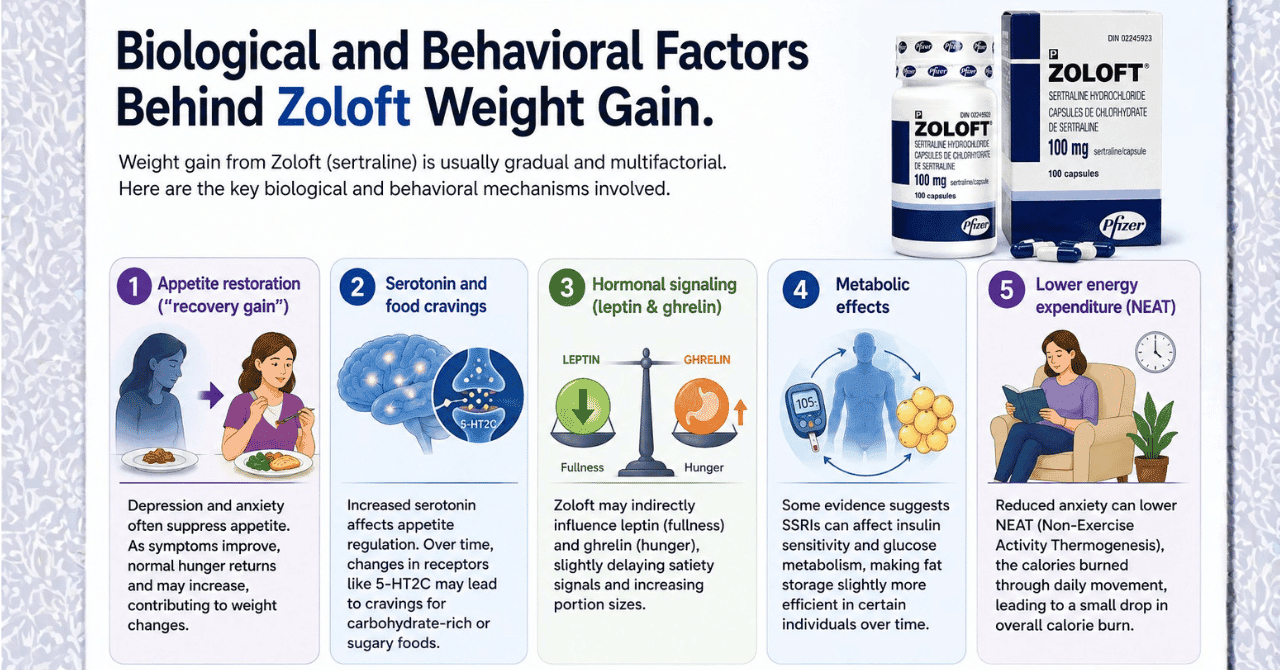
Biological and Behavioral Factors Behind Zoloft Weight Gain
- Appetite restoration (“recovery gain”): Depression and anxiety often suppress appetite. As symptoms improve, normal hunger returns and may increase, contributing to weight changes.
- Serotonin and food cravings: Increased serotonin affects appetite regulation. Over time, changes in receptors like 5-HT2C may lead to cravings for carbohydrate-rich or sugary foods.
- Hormonal signaling (leptin & ghrelin): Zoloft may indirectly influence leptin (fullness) and ghrelin (hunger), slightly delaying satiety signals and increasing portion sizes.
- Metabolic effects: Some evidence suggests SSRIs can affect insulin sensitivity and glucose metabolism, making fat storage slightly more efficient in certain individuals over time.
- Lower energy expenditure (NEAT): Reduced anxiety can lower NEAT (Non-Exercise Activity Thermogenesis), the calories burned through daily movement, leading to a small drop in overall calorie burn.
Does Zoloft Dosage Affect Weight Gain?
A higher Zoloft (Sertraline) dose does not automatically mean more weight gain. Evidence suggests weight changes are influenced more by duration of use and individual response than by dose alone.
Zoloft Dosage and Weight Gain: Quick Comparison
| Dosage Range | Typical Weight Impact | Primary Reason |
|---|---|---|
| Low (25-50 mg) | Stable weight or slight loss | Early side effects like nausea may temporarily reduce appetite |
| Standard (50-100 mg) | Mild, gradual gain in some users | Appetite normalizes as symptoms improve (“recovery effect”) |
| High (150-200 mg) | Similar or slightly higher risk | Possible reduction in daily movement (NEAT), not a major metabolic shift |
← Swipe to see more →
How to Prevent Weight Gain While Taking Zoloft (Sertraline)
Preventing weight gain on Zoloft isn’t about strict dieting; it’s about managing appetite, movement, and daily habits as your body adjusts to treatment.
1. Control appetite, not just calories
- Focus on high-protein and high-fiber meals to stay full longer
- Eat mindfully to avoid overeating from cravings
- Plan meals to reduce impulsive snacking
2. Stay active to support metabolism
- Increase daily movement (walking, stairs, standing more)
- Include strength training to maintain muscle and metabolism
- Stay consistent rather than relying on intense workouts
3. Improve sleep and stress control
- Get 7-9 hours of sleep to regulate hunger hormones
- Manage stress to reduce emotional or comfort eating
4. Track progress early
- Monitor weight weekly, not daily
- Adjust habits if you see a steady upward trend
5. Work with your doctor if needed
- Discuss persistent changes with your healthcare provider
- Consider options like Wellbutrin (bupropion) if appropriate
- Check for other causes, like thyroid or hormonal issues
Read more about Can Antidepressants Prevent Drug Abuse and What Are the Risks?
Zoloft vs. Other Antidepressants: Which Causes the Most Weight Gain?
Zoloft (sertraline) is generally considered a low-to-moderate risk SSRI for weight gain. Compared to Paxil (paroxetine) or Remeron (mirtazapine), it is less likely to cause significant weight changes, though it may have a higher risk than Wellbutrin (bupropion).
| Medication | Weight Gain Risk | Clinical Insight |
|---|---|---|
| Wellbutrin (bupropion) | Low | Often weight-neutral or associated with slight weight loss |
| Prozac (fluoxetine) | Low | Generally weight-neutral, especially short-term |
| Zoloft (sertraline) | Low-Moderate | Modest, gradual weight gain in some users over time |
| Lexapro (escitalopram) | Moderate | Higher likelihood of noticeable weight gain in some individuals |
| Paxil (paroxetine) | Moderate-High | Higher risk of weight gain among SSRIs |
| Remeron (mirtazapine) | High | Strongly associated with increased appetite and weight gain |
← Swipe to see more →
Does Zoloft Cause Weight Gain? Key Takeaways
Zoloft (sertraline) can cause modest, gradual weight gain in some users, but many remain weight-neutral. Changes are usually driven by appetite recovery and long-term adjustments rather than dosage alone. With mindful eating, regular activity, and early monitoring, weight gain is often manageable, making Zoloft a relatively weight-friendly option compared to several other antidepressants.
Frequently Asked Questions
Yes, weight loss is possible, especially in the early stages of treatment. Some people experience reduced appetite or nausea, which can lead to short-term weight loss. However, this effect often stabilizes over time, and long-term changes vary; some individuals may later gain weight as appetite and mood improve.
Not necessarily. Weight gain is often reversible with lifestyle changes or medication adjustments. Once treatment stabilizes or if the medication is changed, many people are able to lose the weight they have gained.
Weight gain is usually slow and gradual, developing over several months. In the first 1-2 months, weight often stays stable or may decrease slightly before increasing.
In some cases, yes. Switching to a more weight-neutral option like Wellbutrin (bupropion) may help reduce or reverse weight gain, but this should always be done under medical supervision.
Focus on high-protein, high-fiber meals, regular physical activity, good sleep, and stress management. Monitoring weight trends early and consulting your doctor if changes persist can help prevent long-term gain.
Medical Disclaimer
This content is for informational purposes only and does not constitute medical advice. Information about Zoloft (sertraline) and weight changes may vary by individual. Always consult a licensed healthcare professional before stopping, starting, or adjusting any medication.