FDA Position on GLP-1 Microdosing in 2026: What U.S. Patients Should Know
Key Takeaways
- Federal regulators target unlawful manufacturers and marketers, not individual patients adjusting doses at home.
- Self-directed GLP-1 microdosing is an unapproved practice that bypasses critical medical oversight.
- Manually splitting factory-sealed pens causes severe dosing miscalculations and high bacterial contamination risks.
- Cash pay patients can safely avoid high retail costs by utilizing regulated standard-dose pharmacy alternatives and manufacturer programs.
The federal stance on fractional dosing focuses entirely on severe safety risks tied to unapproved practices and dangerous medication handling errors. Many patients facing high retail costs constantly question if adjusting their own injections is legally or medically safe. Understanding the exact federal enforcement strategy is absolutely crucial before you change how you use your medication.
What Is the FDA Position on GLP-1 Microdosing in 2026?
The current FDA position on GLP-1 microdosing clearly separates medically supervised dose adjustments from self-directed fractional dosing. Many online forums confuse a doctor lowering a prescription dose with a patient manually hacking a device. To understand the federal safety view, compare clinical standard practices against unapproved dosing schedules.
| Feature | Clinical Dose Adjustment | Self-Directed Microdosing |
|---|---|---|
| Definition | A doctor prescribing a lower approved dose based on patient tolerability. | Manually extracting non-standard liquid amounts from a maximum strength pen. |
| Federal Status | Fully compliant with official medical guidelines and clinical testing. | Completely unapproved and operating outside all manufacturer safety parameters. |
| Safety Profile | Highly stable process utilizing intact devices exactly as intended. | High risk of bacterial contamination and severe volume measurement errors. |
| Medical Oversight | Monitored directly by licensed healthcare providers to track side effects. | Managed completely at home without professional clinical guidance. |
← Swipe to see more →
Is It Illegal to Split Ozempic Pens? The FDA Enforcement Stance
Many patients asking, “Is it illegal to split Ozempic pens?” are worried about federal enforcement tied to lower-cost dosing strategies. The reality is that federal regulators direct their legal power toward massive compounding facilities, illegal telehealth platforms, and operations violating basic manufacturing laws. Recent federal actions actively warned telehealth companies making false claims about unapproved weight loss drugs to protect the public health supply chain.
The FDA stance on off-label GLP-1 prescribing is also completely different from unsupervised self-dosing. Licensed doctors possess the legal authority to prescribe medications outside standard clinical trial parameters if they monitor the patient closely. However, a patient independently splitting a factory device removes all professional medical oversight. The agency cannot verify the quality or safety of a drug once a consumer breaks the sterile seal at home.
You will not face legal prosecution or federal charges for splitting an Ozempic pen in your own kitchen. The government does not send law enforcement to monitor how you inject your medication. Instead, regulators issue severe clinical warnings because self-managed dosing removes all quality control. The absence of legal penalties does not make the practice medically safe.
Why the FDA Warning on Splitting Ozempic Pens Matters
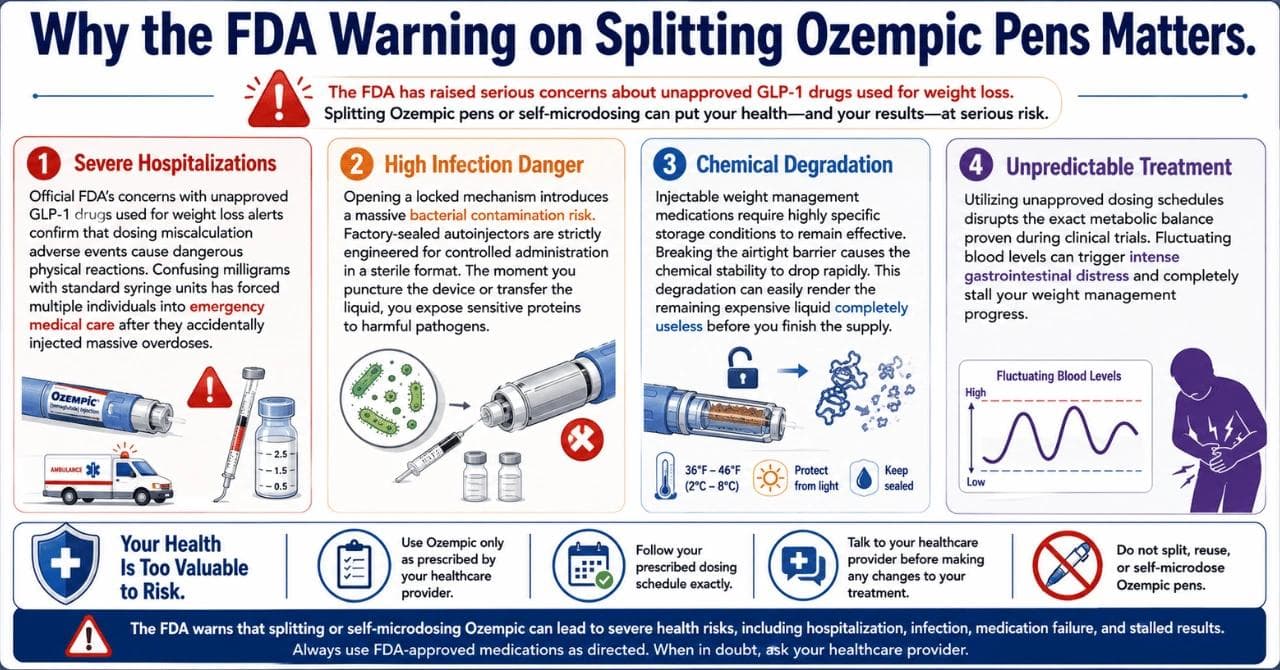
You might wonder, “Is microdosing Semaglutide safe?” if you are extremely careful with your equipment at home. The official FDA warning splitting Ozempic pens explicitly outlines why manually altering these devices leads directly to critical health emergencies.
- Severe Hospitalizations: Official FDA’s concerns with unapproved GLP-1 drugs used for weight loss alerts confirm that dosing miscalculation adverse events cause dangerous physical reactions. Confusing milligrams with standard syringe units has forced multiple individuals into emergency medical care after they accidentally injected massive overdoses.
- High Infection Danger: Opening a locked mechanism introduces a massive bacterial contamination risk. Factory-sealed autoinjectors are strictly engineered for controlled administration in a sterile format. The moment you puncture the device or transfer the liquid, you expose sensitive proteins to harmful pathogens.
- Chemical Degradation: Injectable weight management medications require highly specific storage conditions to remain effective. Breaking the airtight barrier causes the chemical stability to drop rapidly. This degradation can easily render the remaining expensive liquid completely useless before you finish the supply.
- Unpredictable Treatment: Utilizing unapproved dosing schedules disrupts the exact metabolic balance proven during clinical trials. Fluctuating blood levels can trigger intense gastrointestinal distress and completely stall your weight management progress.
Safest Ways to Access Standard Dose Ozempic in 2026
The main reason patients attempt dangerous dosing workarounds is the high Ozempic price without insurance. You can completely avoid unapproved methods by exploring these legitimate pathways to secure affordable Ozempic alternatives safely.
| Affordability Pathway | How It Protects Your Safety and Budget |
|---|---|
| Manufacturer Programs | Official savings cards help eligible commercial insurance patients reduce monthly out-of-pocket costs. |
| Formal Insurance Appeals | Doctors can submit prior authorization appeals to force coverage exceptions based on medical necessity. |
| Independent Medical Grants | Nonprofit patient advocacy groups offer financial support for individuals managing chronic conditions. |
| Verified International Pharmacies | Regulated channels like Polar Bear Meds provide factory-sealed standard-dose Ozempic Canada options at lower retail rates. |
← Swipe to see more →
The Bottom Line on the FDA Position on GLP-1 Microdosing
The primary federal focus remains entirely on protecting your physical safety from the severe hazards of unapproved dosing schedules and manual device manipulation. Even though the government does not prosecute individuals for splitting an Ozempic pen at home, circumventing factory safety standards leads directly to dosing miscalculation, adverse events, and dangerous contamination.
Ultimately, safeguarding your health requires abandoning risky financial workarounds in favor of regulated, authentic prescriptions. To confidently transition away from dangerous methods and secure a clinically validated treatment plan, you should thoroughly investigate all legally available pathways for your metabolic care.
Frequently Asked Questions
Licensed healthcare providers hold the legal authority to prescribe medications off-label when they determine it is medically appropriate and provide direct monitoring. This authorized clinical practice is entirely different from a patient independently creating unapproved dosing schedules without professional medical supervision.
Federal health regulators issue severe alerts because manual pen splitting bypasses all safety controls. Official government reports confirm that manipulating these delivery devices causes dangerous dosing miscalculation, adverse events, high bacterial contamination risk, and chemical degradation that ruins the medication.
No, self-directed fractional dosing carries extreme physical risks. There is no clinical evidence supporting fractional dosing below approved starting levels. Safety concerns escalate dramatically when patients compromise sterile factory-sealed autoinjectors to extract liquid from a locked delivery mechanism.
Patients struggling with the high Ozempic price without insurance can safely explore official manufacturer savings programs, file prior authorization appeals, apply for independent medical grants, or compare standard dose Ozempic Canada options through verified international pharmacies.
Disclaimer
This blog is provided for informational purposes only and does not replace professional medical, insurance, financial, or prescription guidance. Pricing, availability, prescription requirements, shipping timelines, and medication access policies may change over time and vary by provider, pharmacy source, and insurance plan. Always consult your healthcare provider, insurance representative, or official government resources before making medication, prescription, or coverage decisions.