GLP-1 Weight Loss for Non-Diabetics: Benefits, Risks, and Results
GLP-1 medications are approved for weight loss in certain adults with obesity or overweight who meet specific criteria. These medications, including semaglutide and tirzepatide, were originally developed for diabetes but are now approved for chronic weight management in adults without diabetes.
According to FDA approvals, they can produce significant weight loss when combined with diet and physical activity. However, they are not a quick fix. You need to understand how they work, what results to expect, and the potential risks before starting treatment. This guide explains the benefits, side effects, and who should avoid them so you can make an informed decision.
How GLP-1 Causes Weight Loss in Non-Diabetics
By reducing appetite and slowing digestion, GLP-1 medications help you eat less without strict restriction. These medications mimic natural hormones that signal fullness to your brain, making it easier to control hunger and reduce calorie intake. According to the National Library of Medicine (NLM), GLP-1 receptor agonists promote weight loss by increasing satiety and reducing overall food intake.
Another key mechanism is delayed gastric emptying, which means food stays in your stomach longer and keeps you full for extended periods. According to the FDA, drugs like semaglutide and tirzepatide reduce appetite and food intake, making them effective for weight management even without diabetes.

GLP-1 Weight Loss Results for Non-Diabetics: What to Expect
Results are clinically significant, but not immediate. According to the FDA, adults without diabetes using tirzepatide achieved about 18% average body weight loss over 72 weeks. Other clinical evidence from the National Library of Medicine (NLM) shows many patients reach 10-20% weight loss, depending on adherence and duration. Here’s what you can realistically expect:
- First month: Appetite drops, early weight changes
- 3-6 months: Noticeable fat loss begins
- Long-term: Weight loss slows and stabilizes
A benefit-harm analysis from NLM found that about 375 out of 1000 people achieved 10% weight loss over two years, showing strong effectiveness in non-diabetic populations. Despite this effectiveness, results can vary, and relying only on medication without diet and physical activity may lead to weaker and less sustainable outcomes.
Benefits of GLP-1 for Non-Diabetics
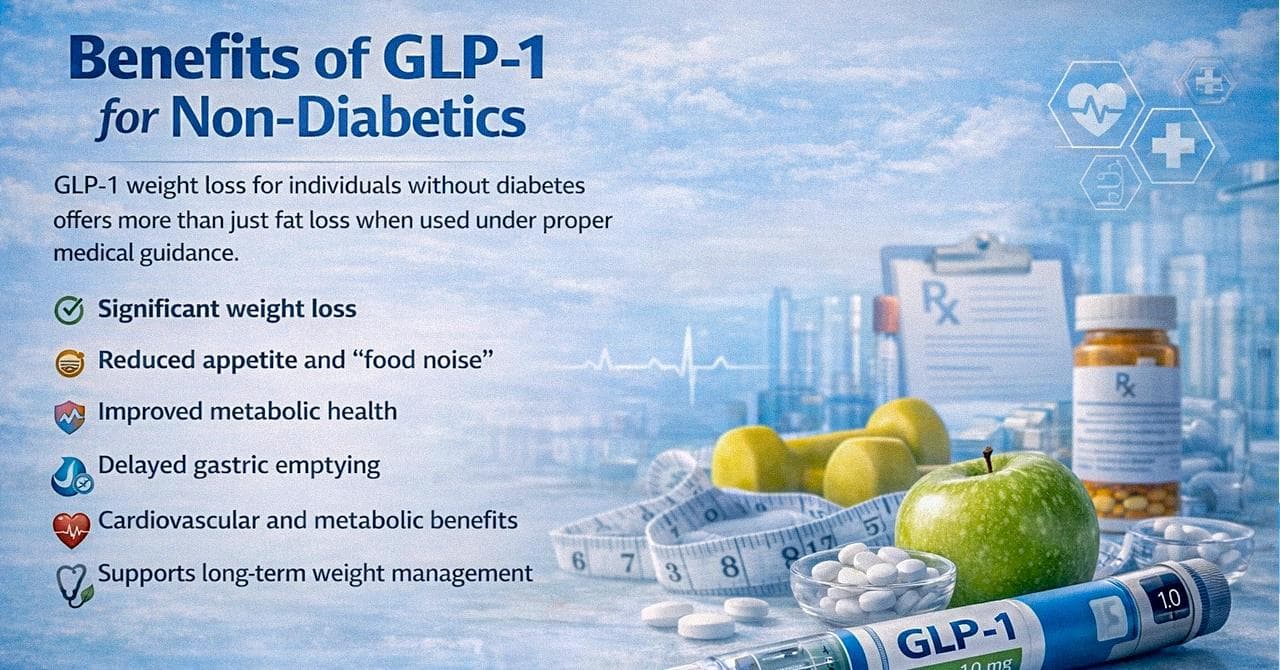
GLP-1 weight loss for individuals without diabetes offers more than just fat loss when used under proper medical guidance.
- Significant weight loss: Typically 10-20% of body weight with consistent use
- Reduced appetite and “food noise”: Helps control cravings and portion size
- Improved metabolic health: Supports insulin sensitivity and hunger regulation
- Delayed gastric emptying: Keeps you full longer, reducing calorie intake
- Cardiovascular and metabolic benefits: Clinical studies show improved heart risk markers and reduced inflammation
- Supports long-term weight management: Effective when combined with lifestyle changes
Risks and Side Effects of GLP-1 in Non-Diabetics
Clinical studies and systematic reviews show that while these medications are effective, common non-diabetic GLP-1 side effects include gastrointestinal issues and some less-discussed risks.
Common Side Effects
| Side Effect | What Happens |
|---|---|
| Nausea | Most frequent, especially during dose escalation |
| Vomiting | It can occur with higher doses |
| Diarrhea | Increased bowel movements |
| Constipation | Slower gut movement in some users |
| Abdominal discomfort | Includes bloating or mild pain |
← Swipe to see more →
Less Common but Important Risks
| Risk | What You Should Know |
|---|---|
| Muscle loss | Weight loss may include lean mass, not just fat |
| Gallbladder issues | Includes gallstones, especially with rapid weight loss |
| Pancreatitis (rare) | Serious but uncommon; requires medical attention |
| Dose-related intolerance | Side effects increase with higher doses |
← Swipe to see more →
Who Can Use GLP-1 for Weight Loss Without Diabetes and Who Should Avoid It
These medications are only recommended for people who meet specific medical criteria and are indicated for adults with overweight or obesity with at least one weight-related condition, and must be used alongside diet and physical activity.
Who Should Consider GLP-1
You may be a candidate if:
- BMI is 30 or higher
- BMI is 27 or higher with conditions like hypertension, high cholesterol, or sleep apnea
- You have not achieved sufficient weight loss with lifestyle changes alone
- You are willing to follow long-term treatment under medical supervision
Who Should NOT Take GLP-1
These medications are not suitable for everyone. Avoid use if you have any of the following:
- Personal or family history of medullary thyroid cancer or MEN2
- History of pancreatitis or gallbladder disease
- Severe gastrointestinal conditions
- Pregnancy or breastfeeding
FDA safety data also warns about thyroid tumor risk and other serious adverse effects in specific populations.
Important Safety Considerations Before Starting GLP-1
To use GLP-1 medications safely:
- Only use FDA-approved medications prescribed by a licensed provider
- Avoid compounded or unapproved versions, as they are not reviewed for safety or quality
- Ensure proper storage, as temperature issues can affect drug effectiveness
- Follow correct dosing to reduce side effects and complications
The Bottom Line: Is GLP-1 Weight Loss Worth It for Non-Diabetics?
GLP-1 weight loss for individuals without diabetes can be highly effective, but only for those who meet medical criteria and are prepared for long-term use. Clinical evidence shows that achieving meaningful weight loss, especially around 10% or more, can outweigh the risks when treatment is properly supervised. However, it is not a quick or cosmetic solution. If you are not committed to lifestyle changes and ongoing treatment, the results are harder to maintain, and risks become more relevant.
Frequently Asked Questions
Yes, GLP-1 medications are FDA-approved for chronic weight management in adults without diabetes who meet criteria such as BMI ≥30, or BMI ≥27 with at least one weight-related condition.
Weight loss varies, but most people experience reduced appetite early, with more noticeable weight loss typically occurring between 3 and 6 months when treatment is combined with diet and physical activity.
GLP-1 medications are considered safe for ongoing use under medical supervision, but long-term effects are still being studied, including risks such as muscle loss and gallbladder complications.
The best GLP-1 medication depends on individual factors such as health history, response to treatment, and medical guidance.
Weight regain is common after stopping GLP-1 treatment because appetite and metabolic effects return to baseline without continued therapy.
Semaglutide is approved at specific doses for weight management in adults without diabetes, but it should only be used under medical supervision and for appropriate clinical indications.
No, the FDA studies warn that compounded or unapproved GLP-1 drugs are not reviewed for effectiveness, safety, or quality and may pose serious health risks.
Important Disclaimer
This content is provided for informational purposes only and does not replace expert medical guidance, diagnosis, or treatment. The information is based on trusted sources, including the FDA and National Institutes of Health (NIH), but individual responses to medications may vary. Always consult an authorized healthcare professional before making treatment decisions.