How Does Inflammation Lead to Weight Gain?
Unexplained weight gain or stubborn belly fat can be frustrating, especially when diet and exercise alone don’t seem to help. Research from NIH has identified chronic inflammation as a possible hidden factor behind these challenges, making many people ask: Does inflammation cause weight gain? In many cases, the answer is yes.
While inflammation is a natural defense mechanism, long-term inflammation can disrupt metabolism, alter hormone balance, and increase fat storage. These changes may contribute to gradual weight gain and make weight loss more difficult. Understanding this connection is an important step toward managing inflammation and supporting healthier, more sustainable weight control.
What Is the Connection Between Inflammation and Weight Gain?
The connection between inflammation and weight gain is mainly linked to chronic inflammation, a long-term immune response that disrupts normal metabolic functions. While short-term inflammation helps the body heal, persistent inflammation can interfere with how the body uses energy and stores fat.
Chronic inflammation may affect hormones such as insulin and leptin, which regulate blood sugar, hunger, and fat storage. When these processes are disrupted, the body may store more fat and burn fewer calories, leading to gradual weight gain. In addition, excess body fat, especially abdominal fat, can release inflammatory chemicals, creating a cycle in which inflammation and weight gain continue to reinforce each other.
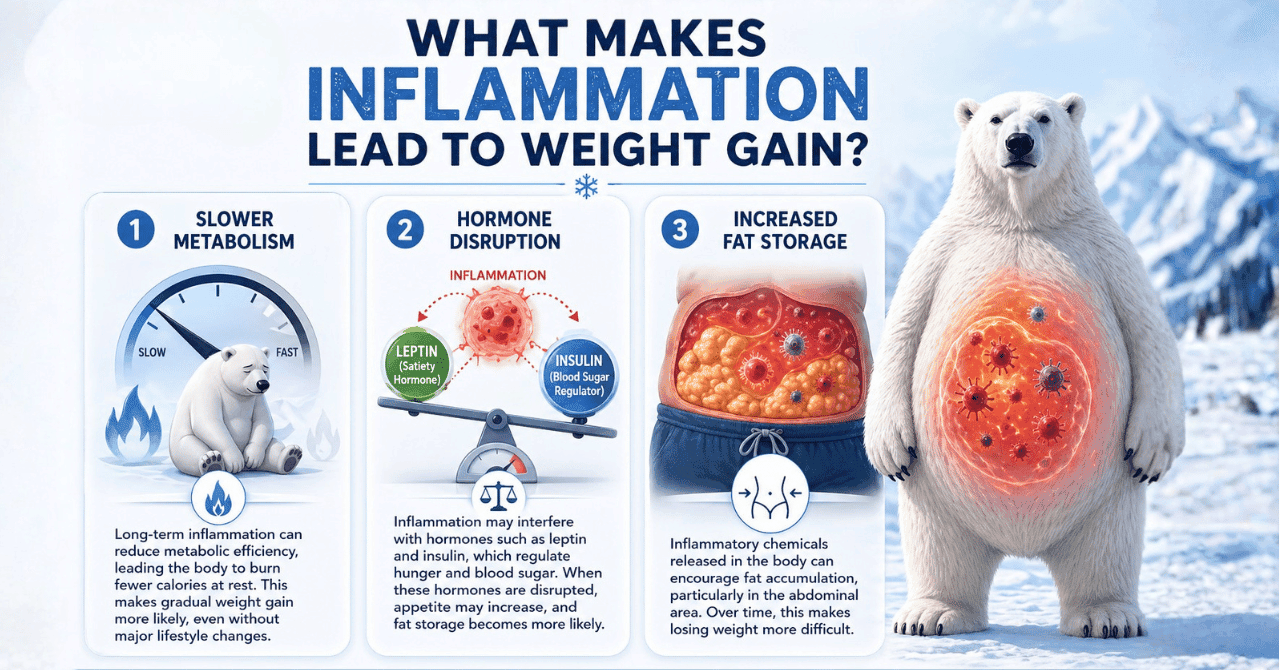
What Makes Inflammation Lead to Weight Gain?
Chronic inflammation leads to weight gain by interfering with normal metabolic and hormonal processes. When inflammation remains active for long periods, the body becomes less efficient at burning energy and more likely to store fat.
Slower Metabolism
Long-term inflammation can reduce metabolic efficiency, leading the body to burn fewer calories at rest. This makes gradual weight gain more likely, even without major lifestyle changes.
Hormone Disruption
Inflammation may interfere with hormones such as leptin and insulin, which regulate hunger and blood sugar. When these hormones are disrupted, appetite may increase, and fat storage becomes more likely.
Increased Fat Storage
Inflammatory chemicals released in the body can encourage fat accumulation, particularly in the abdominal area. Over time, this makes losing weight more difficult.
Can Inflammation Cause Belly Fat and Stubborn Weight Gain?
Yes, inflammation can contribute to the buildup of belly fat, particularly visceral fat, which forms deep around internal organs. Unlike subcutaneous fat, visceral fat is biologically active and closely linked to inflammatory processes.
Findings from PubMed Central indicate that higher levels of abdominal fat are associated with elevated inflammatory markers such as C-reactive protein (CRP) and interleukin-6 (IL-6). People with higher abdominal fat levels often show significantly higher inflammation than those with lower fat levels.
Inflammation also encourages abdominal fat cells to release inflammatory chemicals called cytokines. These substances interfere with normal metabolism and promote additional fat storage, creating a cycle in which inflammation increases belly fat, and belly fat further increases inflammation. Over time, this ongoing cycle makes weight loss more difficult and contributes to stubborn belly fat that may be harder to reduce through diet and exercise alone.
How Insulin Resistance and Inflammation Create a Weight Gain Cycle?
Insulin resistance and inflammation are closely linked and can create a cycle that promotes ongoing weight gain. Insulin is a hormone that helps move glucose from the bloodstream into cells for energy. When inflammation is present for long periods, it can interfere with how cells respond to insulin, making them less sensitive to its effects.
As insulin resistance develops, glucose remains in the bloodstream instead of being used for energy. To compensate, the body produces more insulin, which encourages the storage of excess glucose as fat, especially in the abdominal area. Over time, this process increases fat accumulation and makes weight loss more difficult.
Studies from the National Institutes of Health suggest that chronic inflammation contributes to insulin resistance by releasing inflammatory chemicals that disrupt insulin signaling pathways. As body fat increases, particularly belly fat, more inflammatory substances are released, further worsening insulin resistance. This creates a self-reinforcing cycle in which inflammation leads to insulin resistance, and insulin resistance promotes continued fat storage and weight gain.

Can Leaky Gut and Inflammation Lead to Weight Gain?
Yes, leaky gut and inflammation can contribute to weight gain by increasing immune activity and disrupting normal metabolism. A condition commonly referred to as “leaky gut,” or increased intestinal permeability, occurs when the protective lining of the intestines becomes weakened. This allows bacteria, toxins, and partially digested food particles to enter the bloodstream, triggering inflammation throughout the body.
Available data shows that disruption of the gut barrier is linked to systemic inflammation, which plays a role in metabolic disorders such as insulin resistance and obesity. When the immune system remains active due to ongoing gut irritation, the body may become less efficient at using energy and more likely to store fat.
In addition, increased gut permeability has been associated with weight gain and related metabolic conditions. Ongoing inflammation resulting from gut barrier damage can disrupt hormone signaling and promote fat accumulation over time.
What Are the Common Symptoms of Metabolic Inflammation?
Metabolic inflammation often develops gradually and may not cause obvious symptoms at first. However, ongoing low-grade inflammation can lead to noticeable physical and metabolic changes over time. Recognizing these symptoms early may help identify underlying inflammation that contributes to weight gain and metabolic imbalance.
| Symptoms | What It May Indicate |
|---|---|
| Unexplained Weight Gain | Gradual weight gain despite no major changes in diet or physical activity |
| Persistent Belly Fat | Increased fat accumulation around the abdomen is often linked to visceral fat |
| Fatigue or Low Energy | Feeling tired even after adequate rest due to disrupted metabolic processes |
| Frequent Sugar or Carb Cravings | Increased hunger signals caused by insulin resistance and hormonal imbalance |
| Poor Concentration or Brain Fog | Difficulty focusing or mental sluggishness linked to inflammatory responses |
| Muscle or Joint Pain | Low-grade inflammation may cause stiffness, aches, or discomfort |
| Difficulty Losing Weight | Weight loss becomes harder even with regular exercise and dietary changes |
| Blood Sugar Fluctuations | Episodes of hunger, shakiness, or energy crashes related to insulin imbalance |
← Swipe to see more →
How to Reduce Inflammation to Support Healthy Weight Loss?
Reducing inflammation involves consistent lifestyle and dietary habits that support metabolic health. Scientific evidence suggests that balanced nutrition, weight loss, and regular physical activity can lower inflammatory markers such as C-reactive protein (CRP), which are linked to chronic inflammation.
Ways to reduce inflammation:
- Eat Anti-Inflammatory Foods: Include fruits, vegetables, nuts, fatty fish, seeds, and olive oil, which are connected with lower inflammatory activity.
- Maintain a Healthy Weight: Even modest weight loss can reduce inflammation and improve metabolic function.
- Stay Physically Active: Regular exercise helps improve insulin sensitivity and reduces fat accumulation, which is linked to inflammation.
- Prioritize Sleep and Stress Management: Poor sleep and chronic stress can increase inflammation and contribute to weight gain over time.
Limiting highly processed foods and added sugars may further support the control of inflammation and sustainable weight management.
When to Seek Medical Advice for Inflammation-Related Weight Gain?
Mild inflammation can often be managed through lifestyle changes, but persistent or unexplained weight gain may require medical evaluation. Consider consulting a healthcare provider if you experience:
- Rapid or unexplained weight gain without clear changes in activity or diet.
- Severe fatigue that does not improve with rest.
- Ongoing digestive problems, such as bloating or discomfort.
- Frequent blood sugar fluctuations, including sudden hunger or energy crashes.
- Persistent abdominal fat that does not improve with diet and exercise.
- Existing health conditions such as diabetes, thyroid disorders, or autoimmune diseases.
Conclusion: Understanding How Inflammation Leads to Weight Gain
Inflammation plays a significant role in weight gain by interrupting key metabolic processes that regulate hormone balance and fat storage. Chronic inflammation can contribute to belly fat accumulation, insulin resistance, and gut-related changes that make weight management more difficult over time. These factors often create a cycle in which inflammation promotes fat storage, and excess fat further increases inflammation.
Recognizing the signs of metabolic inflammation and addressing underlying factors, such as inactivity, poor diet, and chronic stress, can help break this cycle. By focusing on long-term lifestyle changes and early medical guidance when needed, it is possible to reduce inflammation and support healthier, more sustainable weight management.
Frequently Asked Questions
Yes. Chronic inflammation can disrupt hormones that regulate hunger, metabolism, and fat storage, making it easier for the body to gain weight over time.
Common signs may include persistent belly fat, fatigue, sugar cravings, and difficulty losing weight despite healthy eating and regular physical activity.
Foods such as berries, fatty fish, leafy greens, seeds, nuts, and olive oil are commonly associated with lower inflammation and better metabolic health.
Important Disclaimer
This blog is provided for informational purposes only and does not replace expert medical guidance, diagnosis, or treatment. The information is based on trusted sources such as the FDA and National Library of Medicine, but individual responses may vary. Always consult an authorized healthcare professional before making treatment decisions.