How Does Otezla Work in the Body?
Key Takeaways
- Otezla (Apremilast) is a PDE4 inhibitor that reduces inflammation inside immune cells.
- It works by increasing cAMP levels, thereby lowering inflammatory cytokine levels.
- Effects are gradual, with noticeable improvement typically seen within 12 to 16 weeks.
- This mechanism helps manage plaque psoriasis, psoriatic arthritis, and Behçet's disease without broadly suppressing immunity.
- Its intracellular action explains both its benefits and common early side effects.
Key Takeaways:
If you are wondering exactly, ”How does Otezla work?” to clear severe skin plaques and ease joint pain, the answer lies deep inside your cells. Otezla (apremilast) is an oral tablet that regulates an overactive immune system by blocking the enzyme phosphodiesterase 4 (PDE4). According to clinical overviews in StatPearls, this targeted mechanism helps control immune activity without fully suppressing it, making it different from many traditional treatments.
What Causes Inflammation in Conditions Treated by Otezla?
In conditions like plaque psoriasis and psoriatic arthritis, an overactive immune system drives continuous inflammation inside the body. This happens when immune cells produce high levels of inflammatory cytokines, which lead to skin cell buildup, joint swelling, and ongoing tissue irritation.
The clinical review of PMC shows that specific cytokines like TNF-alpha, IL-17, and IL-22 play a major role in driving this relentless tissue irritation. Understanding this chemical root cause is the key to grasping exactly, “What does Otezla do?” It is engineered to target and shut down these internal signals at the cellular level rather than just masking surface symptoms.
What is PDE4 & Why Is It Important in the Working of Otezla?
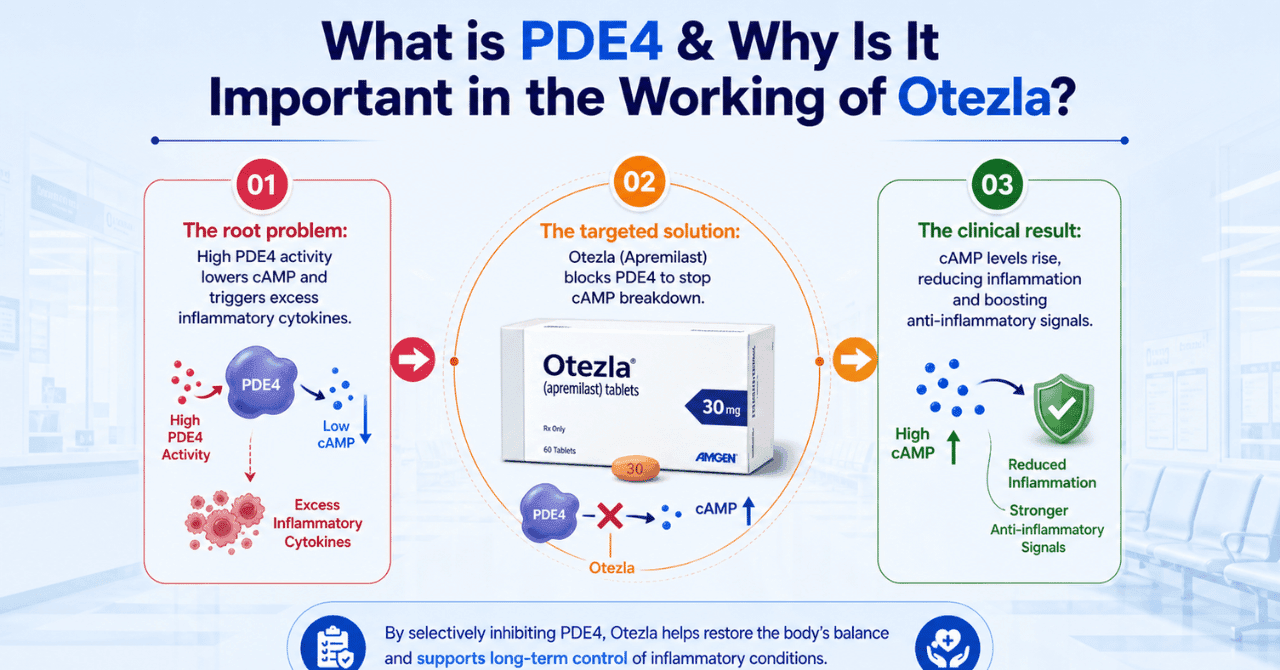
Phosphodiesterase 4 (PDE4) is an enzyme inside immune cells that controls inflammation by breaking down cyclic adenosine monophosphate (cAMP). When PDE4 becomes overactive, cAMP levels drop, which increases inflammatory signals in the body. Here is a quick breakdown of why this is the most important part of the Otezla mechanism of action:
- The root problem: High PDE4 activity lowers cAMP and triggers excess inflammatory cytokines.
- The targeted solution: Otezla (Apremilast) blocks PDE4 to stop cAMP breakdown.
- The clinical result: cAMP levels rise, reducing inflammation and boosting anti-inflammatory signals
Why the Mechanism of Otezla Matters for Side Effects?
This targeted PDE4 inhibitor works systemically, meaning its effects extend beyond your immune cells. The enzyme also naturally exists in your digestive tract and central nervous system, which accounts for the most common side effects as your body adjusts to the new tablet.
| Side Effect | Why the Mechanism Matters |
|---|---|
| Diarrhea & Nausea | PDE4 inhibition temporarily disrupts gut signaling, requiring a 5-day dosage step-up. |
| Tension Headaches | Shifting intracellular cAMP levels temporarily affects nervous system communication. |
| Mood Changes & Depression | PDE4 directly impacts brain pathways linked to mood regulation. |
| Otezla Weight Loss | Early GI adjustments and inflammatory signaling shifts can suppress appetite. |
← Swipe to see more →
According to the FDA prescribing label, understanding this cellular process makes it clear why these specific reactions occur, though most patients see significant improvement as their system finds a new balance over time.
How Long Does It Take for Otezla to Work in the Body?
Otezla works gradually by reducing intracellular inflammation, so symptom relief is not immediate. Most people notice improvement over time as the immune response becomes more controlled.
- First Week: A 5-day dose titration helps your body adjust and reduces early gastrointestinal side effects.
- Early Action: PDE4 inhibition begins quickly, lowering inflammatory signaling at the cellular level.
- Visible Results: Clinical studies show that meaningful improvements are typically seen around 12 to 16 weeks (around 3 to 4 months).
The Bottom Line: How Otezla Works in the Body?
Otezla works by targeting inflammation at its source inside immune cells rather than acting on symptoms alone. This mechanism explains both its gradual onset of action and why certain side effects can occur during early treatment. Overall, it provides a controlled, intracellular approach to managing conditions like plaque psoriasis and psoriatic arthritis without broadly suppressing immune function. If your healthcare provider has prescribed Otezla and you are considering a reliable way to access your medication, choosing a trusted and verified online source is an important next step.
Frequently Asked Questions
Otezla (Apremilast) works as a PDE4 inhibitor that reduces inflammation inside immune cells. By blocking phosphodiesterase 4, it increases cAMP levels and lowers the production of inflammatory cytokines that drive conditions like plaque psoriasis and psoriatic arthritis.
It decreases pro-inflammatory cytokines like interleukins and TNF-alpha while increasing anti-inflammatory signals. This helps control an overactive immune system at the cellular level rather than just treating symptoms.
Otezla works for psoriasis by lowering inflammatory signals that cause rapid skin cell buildup. This helps reduce scaling, redness, and thickness of plaques over time.
Otezla is not a biologic. It is an oral PDE4 inhibitor that works inside immune cells, unlike biologics that target specific proteins outside the cells.
Otezla is considered an immunomodulator rather than a traditional immunosuppressant. It adjusts immune system activity instead of broadly shutting it down, which helps reduce inflammation without severely weakening immune defenses.
You may notice reduced skin plaques, less redness, and improved joint pain or swelling over time. These changes reflect decreased inflammatory activity inside the body.
Psoriasis may return after stopping Otezla because the underlying inflammatory process can become active again. Continued treatment is usually needed to maintain results.
Medical Disclaimer
This blog is provided for informational purposes only and does not replace expert medical guidance, diagnosis, or treatment. The content is based on trusted sources, including U.S. Food and Drug Administration (FDA) prescribing information, National Library of Medicine (NLM) resources, and peer-reviewed research from PubMed Central (PMC), but individual responses may vary. Always consult an authorized healthcare professional before making treatment decisions.