Medicare GLP-1 Coverage in 2026: Bridge Program, Appeal Levels, and What to Do When You're Denied
Key Takeaways
- The Medicare GLP-1 Bridge Program launched July 1, 2026, covering Foundayo, Wegovy, and Zepbound KwikPen for a flat $50 monthly copay.
- Standard Medicare Part D still prohibits weight-loss-only coverage; the Bridge Program is a separate, temporary pathway running through December 31, 2027.
- Eligible beneficiaries must have Part D, be 18 or older, and meet specific BMI thresholds.
- If denied, 75% of Part D appeals succeed, according to Medicare Rights Center data, yet only 1% of beneficiaries ever file one.
Medicare GLP-1 coverage shifted significantly on July 1, 2026, when the new Bridge Program opened direct access to weight-loss medications for eligible beneficiaries. If you've been denied coverage, confused by prior authorization rules, or just trying to figure out what you actually qualify for, this guide walks through the program details, the five-level appeal process, and your backup options if Medicare says no.
Medicare's GLP-1 Game-Changer: What Changed on July 1, 2026
For decades, Medicare Part D plans were legally prohibited from covering drugs prescribed solely for weight loss. That left millions of beneficiaries paying out of pocket for medications like Wegovy and Zepbound, where brand-name costs routinely run between $900 and $1,349 per month.
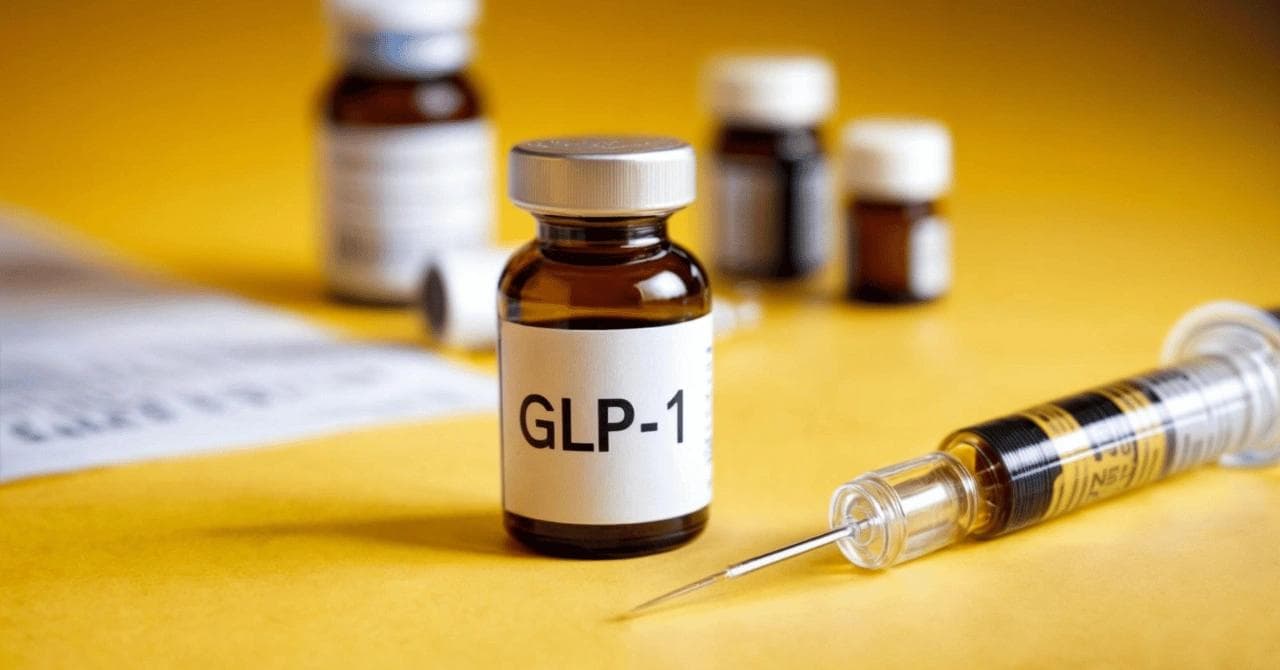
The Bridge Program changes that. Starting July 1, 2026, eligible Medicare beneficiaries can access Foundayo, all formulations of Wegovy, and the Zepbound KwikPen through this new pathway. Medicare negotiated a net price of $245 per 30-day supply from Novo Nordisk and Eli Lilly. Beneficiaries pay a fixed $50 monthly copay.
One detail worth understanding: that $50 copay doesn't count toward your Part D deductible or your out-of-pocket limit. It sits outside the standard Part D cost structure, separate from how standard Part D benefits accumulate.
Am I Eligible? Breaking Down BMI and Health Criteria for the Bridge Program
Not everyone with Medicare Part D qualifies automatically. The BMI thresholds are specific. You need a BMI of 35 or higher, or a BMI of 30 or higher combined with a qualifying condition such as heart failure, uncontrolled hypertension, or chronic kidney disease.
You also must be 18 or older and have active Medicare Part D coverage. That's the baseline. The program runs through December 31, 2027, so this is a temporary window, not a permanent benefit. More than two-thirds of Medicare beneficiaries are either overweight or obese, according to the research data, which means a large share of the population could potentially qualify.
When GLP-1s Qualify Under Standard Medicare Part D (Beyond the Bridge)
The Bridge Program isn't the only path. Standard Part D can cover GLP-1 medications when they're prescribed for an FDA-approved indication other than weight loss, including type 2 diabetes, established cardiovascular disease, or obstructive sleep apnea.
Drugs like Ozempic for diabetes or Wegovy for cardiovascular risk reduction may qualify under regular Part D, but formulary restrictions and prior authorization requirements still apply. Your plan can still say no based on step therapy rules, meaning they may require you to try a different drug first. Your doctor's letter of medical necessity is often what moves the needle. A well-documented clinical rationale, showing why a specific GLP-1 is medically appropriate for you, gives your plan less room to deny.
The 5-Level Medicare Part D Appeal Process: Your Roadmap When Coverage Is Denied
When standard Part D denies your GLP-1 prescription, you have a structured path forward.
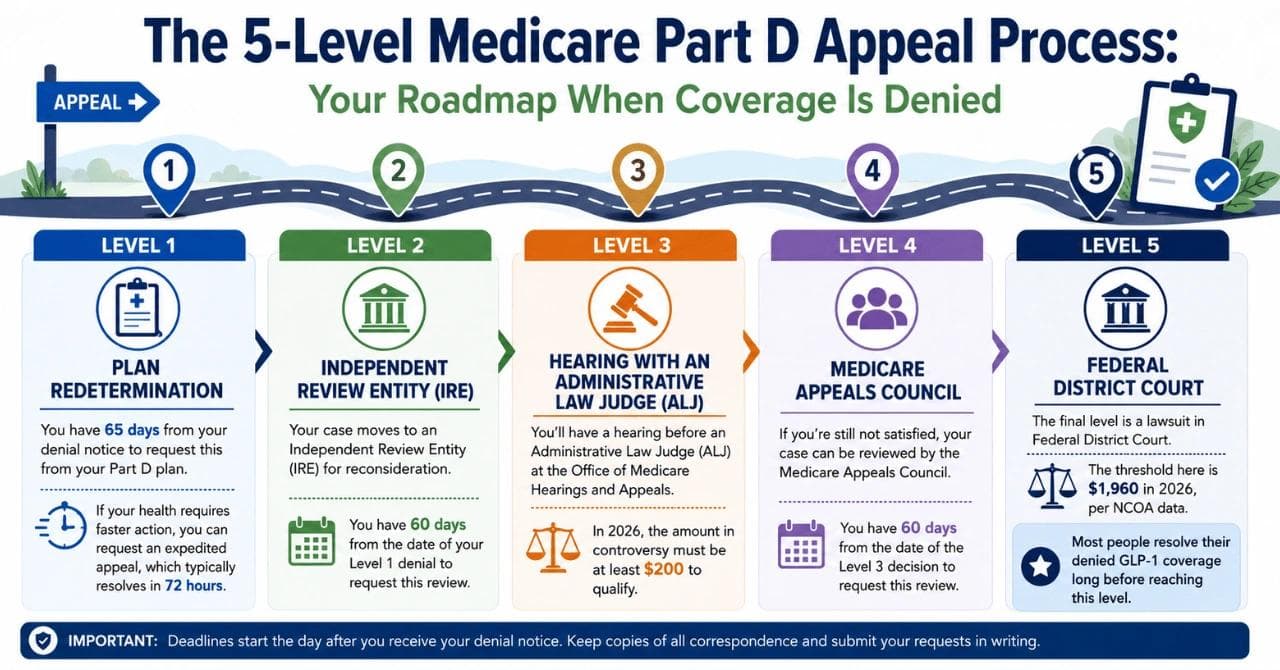
According to the National Council on Aging, the Medicare appeal process runs five levels.
- Level 1 is Plan Redetermination. You have 65 days from your denial notice to request this from your Part D plan. If your health requires faster action, you can request an expedited appeal, which typically resolves in 72 hours.
- Level 2 moves to an Independent Review Entity (IRE) for reconsideration, with a 60-day window after a Level 1 denial.
- Level 3 is a hearing with an Administrative Law Judge (ALJ) at the Office of Medicare Hearings and Appeals. In 2026, the amount in controversy must be at least $200 to qualify.
- Level 4 is a review by the Medicare Appeals Council, again within 60 days.
- Level 5 is the Federal District Court. The threshold here is $1,960 in 2026, per NCOA data. Most people resolve their denied GLP-1 coverage long before reaching this level.
Building a Winning Medicare Appeal: Documentation, Deadlines, and Doctor Coordination
Most Part D denials fall into a few predictable categories: missing prior authorization, step therapy requirements your plan says you haven't completed, or the drug simply not appearing on your plan's formulary. Knowing the specific reason matters because your response should address it directly.
Your prescriber is your most important ally here. A detailed letter of medical necessity, documenting your diagnosis, your BMI, any comorbidities like diabetes or obesity, and why a specific GLP-1 is clinically appropriate, gives the IRE or ALJ something concrete to evaluate. Vague letters rarely move denials.
Track every deadline in writing. Missing a 60-day or 65-day window can close an appeal level permanently. If your case becomes complex, patient advocacy organizations and legal aid resources can help you manage the process. For ongoing support and information, Polar Bear Meds' articles section covers medication access topics that can supplement your research.
If Medicare Denies Your GLP-1 Appeal: Manufacturer Programs, Discounts, and Alternatives
A denied appeal isn't the end of your options. It's just the beginning of a different set of calculations. Manufacturer savings programs from Novo Nordisk and Eli Lilly can bring monthly costs down significantly for eligible self-pay patients, from the standard $900 to $1,349 range to roughly $199 to $449 per month. Pharmacy discount cards like GoodRx and SingleCare offer another layer of savings for people paying out of pocket.
Compounded GLP-1 options are cheaper still, but they're not FDA-approved products and carry higher quality and safety risks. If you're exploring all available options, browsing prescription drugs from a licensed Canadian pharmacy can surface additional affordability pathways for medications like Ozempic, Mounjaro, and Zepbound at prices that may be substantially lower than U.S. retail.
Next Steps: Securing GLP-1 Access on Your Timeline
Start with three concrete actions. First, confirm your eligibility for the Bridge Program by checking your BMI against the thresholds and verifying your Part D enrollment status. Second, contact your prescriber to discuss prior authorization and whether a medical necessity letter is already on file. Third, if you're denied, don't let the appeal deadline pass. Only 1% of beneficiaries appeal Part D denials, yet 75% of those appeals succeed.
For medication access questions or to explore lower-cost options, Polar Bear Meds' customer support team can help you understand what's available. When it comes to medicare GLP-1 coverage, the rules changed meaningfully in 2026, and knowing them puts you in a much stronger position than most beneficiaries realize.
Frequently Asked Questions
The Part D appeal process has five levels. It starts with a Plan Redetermination (within 65 days of denial), then moves to IRE Reconsideration, an ALJ Hearing (requiring at least $200 in controversy in 2026), a Medicare Appeals Council Review, and finally Federal District Court (requiring at least $1,960 in 2026), according to NCOA. Most coverage denial cases resolve at the earlier levels before reaching the courts.
Start by contacting your Part D plan to get the specific denial reason in writing, then work with your doctor to submit a prior authorization request or exception with a supporting letter of medical necessity. If that's denied, you'll receive a formal denial notice and have 60 to 65 days to file a Redetermination. If your situation is urgent, request an expedited appeal, which typically gets a decision within 72 hours.
Yes, starting July 1, 2026, the Medicare GLP-1 Bridge Program provides coverage specifically for weight loss through a temporary program running until December 31, 2027. Standard Medicare Part D still can't cover weight-loss-only prescriptions, but if your GLP-1 is prescribed for type 2 diabetes, cardiovascular disease, or another FDA-approved indication, regular Part D coverage may apply, subject to your plan's formulary and prior authorization rules.
Without insurance, brand-name GLP-1 medications typically cost between $900 and $1,349 per month, according to Doctronic. Under the Bridge Program, eligible Medicare beneficiaries pay a flat $50 monthly copay. For those outside the Bridge Program, manufacturer savings programs can reduce costs to roughly $199 to $449 per month for qualifying patients.
Disclaimer
This article is for informational purposes only and isn't a substitute for personalized medical or insurance advice. Medicare coverage rules vary by plan, and your specific eligibility depends on your health profile and enrollment details. Talk to your doctor and contact your Part D plan directly before making decisions about your medications or appeal strategy.