Microdosing vs. Standard Dosing GLP-1: 2026 Annual Cost Comparison for U.S. Patients
The financial burden of buying a GLP-1 without insurance today is completely staggering. Desperate patients frequently compare Microdosing vs. Standard Dosing GLP-1 plans. Many attempt dangerous dose rationing to save immediate money. However, calculating the true semaglutide annual cost reveals surprising financial realities. Understanding this exact mathematical breakdown reveals a much smarter path forward.
What Microdosing vs. Standard Dosing GLP-1 Means in 2026
Evaluating Microdosing vs Standard Dosing GLP 1 requires looking at medication volume over time. The fundamental difference lies in regulatory approval and proven clinical safety. Comparing microdosing GLP 1 vs full dose treatments reveals distinct patient motivations today.
| Feature | Unofficial Microdosing | Standard Dosing |
|---|---|---|
| Dosing Method | Unofficial and unapproved dose reduction strategies. | Strict FDA-approved clinical titration schedule. |
| Primary Motivation | Stretching supplies to lower immediate pharmacy costs. | Achieving optimal metabolic control safely. |
| Clinical Evidence | Lacks large-scale safety data completely. | Backed by robust clinical trial data. |
| Safety Profile | High risk if using unapproved compounded formulas. | Factory-calibrated delivery systems ensure safety. |
← Swipe to see more →
Why Some U.S. Patients Stretch Ozempic Pens in 2026
The staggering Ozempic out-of-pocket cost in 2026 drives most unofficial rationing behavior today. Uninsured Americans face extreme monthly retail pricing levels. These costs quickly become impossible to maintain continuously. Retail cash pricing also heavily impacts fully insured patients. High deductibles and insurance exclusions force households into difficult financial situations.
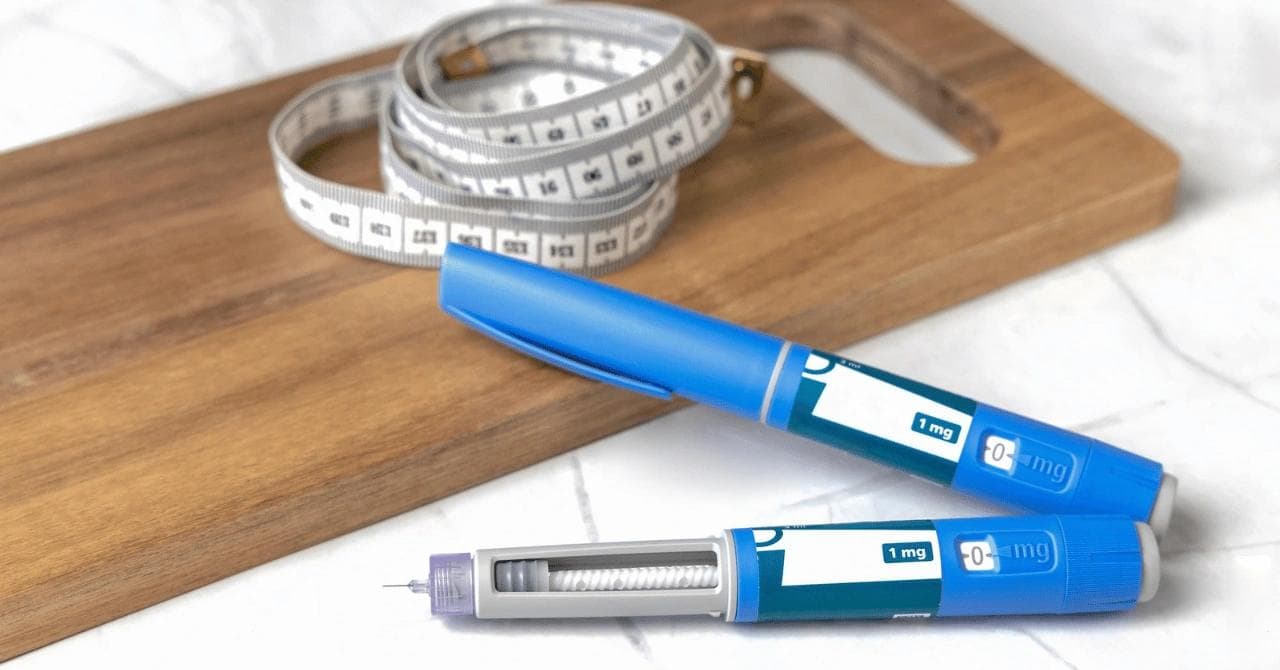
Many people attempt stretching Ozempic pen supplies to reduce monthly refill frequency. A common method involves buying higher-dosage pens. Patients then manually click-count dial settings to administer smaller fractional doses. This happens because different pen strengths often share the same retail price point.
Patients stretch supplies to create artificial monthly discounts. Frequent retail pharmacy supply shortages also force consumers to ration doses. Some individuals attempt microdosing to mitigate severe gastrointestinal side effects. They split doses to avoid intense nausea and vomiting. However, this desperate behavior reflects financial pressure rather than approved clinical protocol.
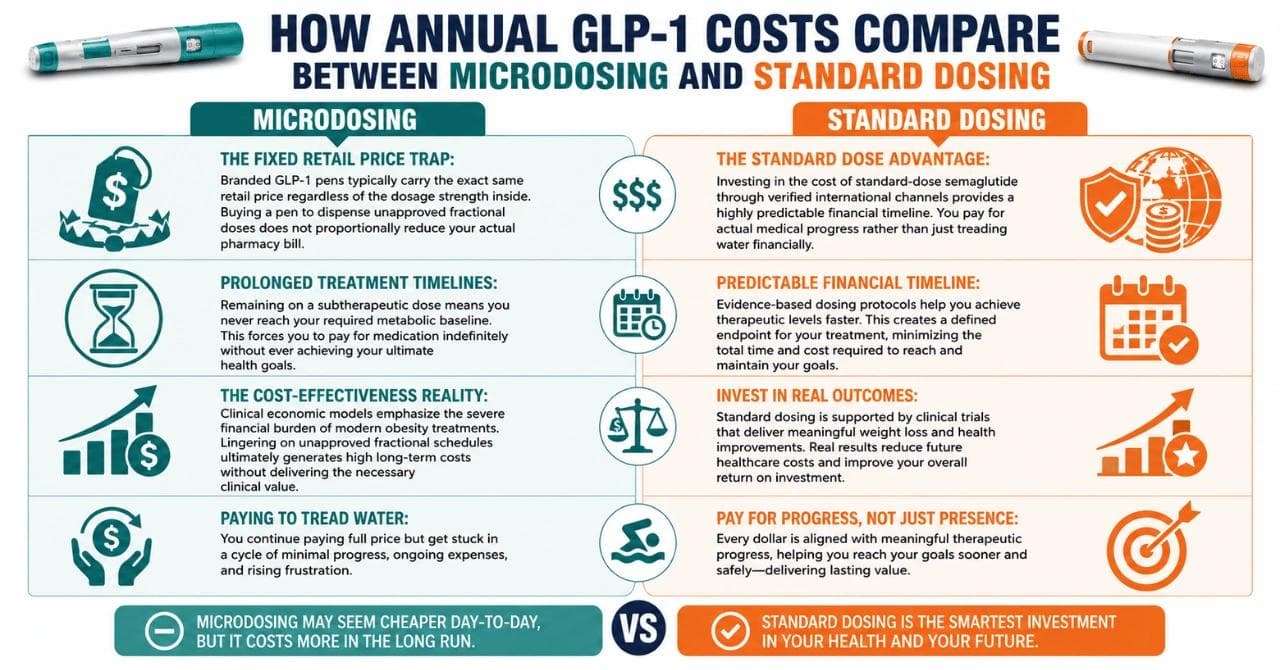
How Annual GLP-1 Costs Compare Between Microdosing and Standard Dosing
At first glance, the Ozempic microdosing cost appears financially attractive to consumers trying to lower their immediate pharmacy bills. However, calculating the true microdosing annual savings over a full year reveals a deeply flawed economic strategy.
- The Fixed Retail Price Trap: Branded GLP-1 pens typically carry the exact same retail price regardless of the dosage strength inside. Buying a pen to dispense unapproved fractional doses does not proportionally reduce your actual pharmacy bill.
- Prolonged Treatment Timelines: Remaining on a subtherapeutic dose means you never reach your required metabolic baseline. This forces you to pay for medication indefinitely without ever achieving your ultimate health goals.
- The Cost-Effectiveness Reality: Clinical economic models emphasize the severe financial burden of modern obesity treatments. Lingering on unapproved fractional schedules ultimately generates high long-term costs without delivering the necessary clinical value.
- The Standard Dose Advantage: Investing in the cost of standard-dose semaglutide through verified international channels provides a highly predictable financial timeline. You pay for actual medical progress rather than just treading water financially.
Does Microdosing Actually Create Long-Term Annual Savings?
While lowering your weekly dosage might seem like an easy way to cut immediate expenses, calculating the true microdosing annual savings over a full year reveals several hidden financial traps. Stretching Ozempic pen supplies actually introduces major medical and economic inefficiencies that destroy your long-term budget.
- Strict Expiration Waste: Every branded GLP-1 pen carries a strict 56-day expiration window once the seal is punctured. Attempting to stretch a single pen across three or four months means you are injecting expired, degraded medication, effectively wasting a massive portion of the expensive drug you just purchased.
- Extended Treatment Duration: Standard clinical titration schedules are designed to efficiently move your body to a highly effective maintenance dose. Lingering indefinitely on unapproved fractional doses delays your metabolic progress, forcing you to pay for extra months or even years of subtherapeutic treatment.
- Diminished Clinical Returns: Paying full retail price just to artificially lower your dose means you are paying a massive premium for only a fraction of the clinical benefit. The math simply does not support paying thousands of dollars annually for an unapproved strategy that stalls your actual health goals.
Generic Ozempic Price Comparison: The 2026 Math
Patients desperately need a clear generic Ozempic price comparison to understand their actual financial options. Generic semaglutide is commercially available in Canada in 2026. While no FDA-approved generic semaglutide is currently available in the United States. Eligible patients can compare commercially available generic semaglutide options through licensed Canadian pharmacy providers, subject to prescription verification and product availability.
| Purchasing Method | Estimated Annual Cost | Clinical Safety Profile |
|---|---|---|
| Domestic Retail Cash | Extreme High Cost | Safe if the standard dose is used |
| Unofficial Microdosing | High Cost | Dangerous and unapproved |
| Generic Semaglutide Pens (Canada) | Lower-cost alternative to brand-name semaglutide | Commercially available product subject to regulatory review |
← Swipe to see more →
When cash-paying patients calculate the cost of standard-dose semaglutide through verified international channels, the financial reality completely shifts. Securing an affordable baseline through regulated international options easily beats the flawed economics of domestic microdosing.
Legitimate Affordability Options for Standard Dosing
Patients exploring GLP-1 affordability options must compare legitimate pathways before altering their doses independently. Because federal regulators are actively taking action against dangerous and unapproved compounded formulas, securing safe financial support is absolutely critical.
- Manufacturer Assistance Programs: Patients should check the official Novo Nordisk patient assistance program for immediate domestic support. Qualifying uninsured individuals can secure significant discounts on brand-name medications directly from the manufacturer.
- Insurance Formulary Appeals: Formal insurance appeals can occasionally help patients secure coverage for medically necessary weight management prescriptions. Patients should routinely review their commercial or Medicare plans for updated coverage criteria.
- Verified International Pharmacies: Eligible patients may compare commercially available Generic Semaglutide Pens through licensed Canadian pharmacy providers. Patients should verify prescription requirements, pricing, and product availability before ordering. Securing a standard therapeutic dose of generic semaglutide plan through a neutral provider like Polar Bear Meds establishes an affordable long-term baseline.
The Bottom Line: Which GLP-1 Cost Strategy Makes More Financial Sense?
Choosing between microdosing and standard dosing ultimately comes down to long-term mathematical reality. While stretching weekly injections might create an illusion of immediate savings, strict medication expiration rules quickly destroy your health budget. Prolonged subtherapeutic treatment forces you to pay for medication indefinitely without ever reaching your clinical goals.
Achieving genuine metabolic results requires a predictable and safe clinical dosing schedule. Securing an affordable baseline through regulated international pharmacies eliminates the need for dangerous financial rationing. Review verified therapeutic options to support your prescribed health journey safely today.
Frequently Asked Questions
It might reduce your immediate monthly pharmacy bills temporarily. However, longer treatment durations and strict pen expiration dates ruin your overall annual savings.
Domestic retail pricing remains extremely high across the United States. However, verified international pharmacies currently offer a much more affordable baseline for cash-paying patients.
No. Unofficial fractional dosing schedules never match FDA-approved maintenance protocols. Microdosing lacks clinical safety data and stalls your medical progress completely.
While domestic manufacturer assistance programs offer some discounts, regulated international pharmacies typically provide the most affordable baseline for uninsured patients seeking standard doses.
No. Stretching pens past their 56-day expiration window wastes expensive medication completely. Total yearly savings diminish significantly when factoring in the degraded and wasted product.
Many patients attempt lower doses purely because of severe domestic affordability concerns. Unofficial microdosing happens when patients cannot afford their prescribed maintenance dose.
Patients often review official manufacturer assistance programs and detailed insurance appeals. Many also monitor regulated international pharmacy access for affordable standard dosing.
Disclaimer
This blog is provided for informational purposes only and does not replace professional medical, insurance, financial, or prescription guidance. Pricing, availability, prescription requirements, shipping timelines, and medication access policies may change over time and vary by provider, pharmacy source, and insurance plan. Always consult your healthcare provider, insurance representative, or official government resources before making medication, prescription, or coverage decisions.