Mounjaro Bloating Not Resolving: Why It Happens and How to Get Relief
Key Takeaways
1. Bloating on Mounjaro stems directly from slow gastric emptying, an intended effect of the medication.
2. Gastrointestinal symptoms affect between 12% and 24% of patients and are dose-dependent.
3. Dietary changes, eating habits, and hydration can meaningfully reduce bloating severity.
4. Certain symptoms, like severe abdominal pain or jaundice, require immediate medical attention.
Mounjaro bloating not resolving after the first few weeks is one of the most common frustrations people share about this prescription medication. Tirzepatide works by slowing how fast your stomach empties, and that mechanism is exactly what drives persistent abdominal distension. This article breaks down why it happens, what makes it worse, and what actually helps.
Why Mounjaro Causes Bloating: The Gastric Emptying Connection
Among the most common Mounjaro side effects bloating is frequently reported by patients because the medication slows gastric emptying. Mounjaro (tirzepatide) is a dual GLP-1 and GIP agonist, a class of diabetes treatment and weight loss drug that works partly by slowing how quickly food leaves your stomach. That's not a bug. It's the mechanism that reduces appetite and helps control blood sugar. But slow gastric emptying also means food, gas, and fluid sit in your digestive tract longer than usual, which is what produces that uncomfortable feeling of fullness and abdominal distension.
According to data from Fella Health, gastrointestinal symptoms related to tirzepatide affect between 12% and 24% of patients and are dose-dependent. They occur most commonly during initial treatment and after dose escalation. Nausea was reported by up to 22% of people in Mounjaro clinical trials, and indigestion by up to 8%, according to Drugs.com.
For most people, symptoms peak in the first 2 to 4 weeks or after a dose increase, then ease as the body adapts to the medication. That said, individual variability is real. Some people find bloating resolves quickly. Others experience it as a daily battle, particularly when dietary habits or constipation are compounding the problem.

Foods and Habits That Make Mounjaro Bloating Worse
Not all Mounjaro stomach issues are caused by the medication alone. What you eat, and how you eat it, plays a significant role.
Specific dietary triggers identified by Medino include high-carb meals, pasta, raw vegetables, beans, and high-fiber foods. Fizzy drinks add swallowed gas on top of already sluggish digestion. High-fat meals slow gastric emptying even further, which compounds the medication's own effect on gut motility.
Eating patterns matter just as much as food choices. Large portions overwhelm a stomach that's already emptying slowly. Eating quickly leads to swallowed air and less thorough chewing, both of which worsen gas buildup. Constipation was reported in clinical trials. Diarrhea is one of the commonly reported gastrointestinal adverse reactions.
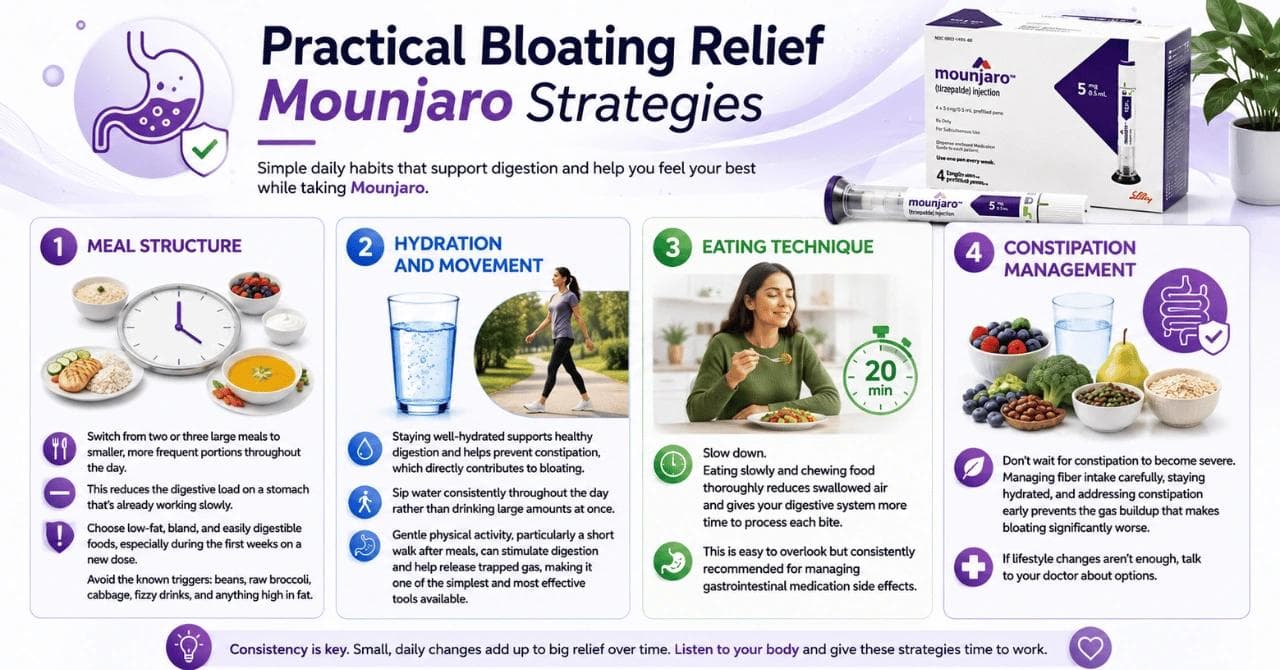
Practical Bloating Relief Mounjaro Strategies
So what actually helps? The short answer is that small, consistent changes to eating habits and daily routine can make a real difference.
Meal structure
Switch from two or three large meals to smaller, more frequent portions throughout the day. This reduces the digestive load on a stomach that's already working slowly. Choose low-fat, bland, and easily digestible foods, especially during the first weeks on a new dose. Avoid the known triggers: beans, raw broccoli, cabbage, fizzy drinks, and anything high in fat.
Hydration and movement
Staying well-hydrated supports healthy digestion and helps prevent constipation, which directly contributes to bloating. Sip water consistently throughout the day rather than drinking large amounts at once. Gentle physical activity, particularly a short walk after meals, can stimulate digestion and help release trapped gas, making it one of the simplest and most effective tools available.
Eating technique
Slow down. Eating slowly and chewing food thoroughly reduces swallowed air and gives your digestive system more time to process each bite. This is easy to overlook but consistently recommended for managing gastrointestinal medication side effects.
Constipation management
Don't wait for constipation to become severe. Managing fiber intake carefully, staying hydrated, and addressing constipation early prevents the gas buildup that makes bloating significantly worse. If lifestyle changes aren't enough, talk to your doctor about options.
Red Flags: When Mounjaro Bloating Not Resolving Signals a Serious Problem
Although uncommon, gastroparesis Mounjaro discussions have increased because delayed gastric emptying can resemble gastroparesis symptoms. Most bloating on Mounjaro is uncomfortable but manageable. Some symptoms, though, are not normal and require prompt medical attention.
Seek care immediately if you experience severe or persistent abdominal pain, especially if it radiates to your back. Persistent vomiting, signs of dehydration (dizziness, dry mouth, very little urination), yellowing of the skin or eyes, fever, rapid pulse, or severe constipation lasting several days with pain are all warning signs that something more serious may be happening.
These symptoms could indicate gastroparesis, pancreatitis, gallbladder problems, or acute kidney injury. Gastroparesis is a condition in which the stomach empties more slowly than normal because the stomach muscles do not work properly. Note that Mounjaro is contraindicated in patients with severe gastrointestinal disease, including severe gastroparesis, because it delays gastric emptying further.
This doesn't mean evey case of bloating is dangerous. But the line between common discomfort and a serious complication is worth knowing clearly.
Checking With Your Doctor: Dose Adjustment and Symptom Management
Persistent or worsening bloating isn't something to quietly tolerate. Your healthcare provider needs to know about it. That conversation matters because the solution often comes from within the treatment plan itself.
Gradual dose titration is one of the most effective ways to reduce initial gastrointestinal side effects. Mounjaro is typically started at a lower dose and increased slowly, giving the body time to adjust. If bloating is severe, your doctor may slow that titration schedule or temporarily hold a dose increase.
If you're managing your Mounjaro prescription through an online canadian pharmacy, keep your prescribing doctor in the loop about any side effects. Scheduled follow-up appointments are the right venue for persistent but non-emergency symptoms. Emergency care is appropriate for the red-flag symptoms listed above.
Bottom Line: What to Do If Mounjaro Bloating Persists
For most people, Mounjaro bloating not resolving improves as the body adjusts to treatment, especially with smaller meals, good hydration, and healthy eating habits. Persistent bloating is not considered one of the established Mounjaro long term effects for most patients, but symptoms that are severe, worsening, or accompanied by vomiting, intense abdominal pain, or jaundice should be evaluated promptly. Stay in contact with your healthcare provider and report any ongoing gastrointestinal symptoms to ensure your treatment remains safe and effective.
Frequently Asked Questions
Mounjaro causes bloating primarily because it slows gastric emptying, meaning food, gas, and fluid remain in the stomach longer than normal. This is an intended therapeutic effect that reduces appetite and helps control blood sugar, but it also produces abdominal distension as a side effect. Bloating often improves as the body adjusts, though it can persist after dose increases or when dietary triggers like high-fat foods and fizzy drinks are involved.
Eating smaller, more frequent meals and avoiding known gas-producing foods (raw vegetables, beans, high-fat meals, fizzy drinks) can significantly reduce symptoms. Staying well-hydrated, eating slowly, chewing thoroughly, and taking a short walk after meals all support digestion and help release trapped gas. If bloating persists despite these changes, your doctor may consider adjusting your dose titration schedule or recommending medication to ease symptoms.
Mild to moderate bloating is common and usually temporary, but certain symptoms require immediate medical attention. These include severe or persistent abdominal pain (especially radiating to the back), persistent vomiting, signs of dehydration, yellowing of the skin or eyes, fever, and severe constipation lasting several days with pain. These could indicate serious conditions like gastroparesis, pancreatitis, or gallbladder problems, all of which need prompt evaluation.
Disclaimer
This article is for informational purposes only and does not substitute for medical advice from a qualified healthcare provider. Mounjaro is a prescription medication with real risks, and your individual situation may differ from what's described here. If you're experiencing persistent or severe gastrointestinal symptoms, talk to your doctor before making any changes to your dosage or treatment plan.