Mounjaro Chest Tightness: What's Actually Causing It and When to Worry
Key Takeaways
1. Chest tightness is not a listed common side effect of Mounjaro; gastrointestinal effects like nausea and acid reflux are the primary culprits behind chest discomfort.
2. A 2022 meta-analysis found that tirzepatide was associated with a 24% reduction in major adverse cardiovascular events (MACE). Although chest tightness itself is not considered one of the established Mounjaro cardiac side effects.
3. Anxiety has been reported in some tirzepatide users and may contribute to anxiety chest pain symptoms during the early adjustment period.
4. Persistent, radiating, or severe chest pain always warrants emergency care, regardless of what medication you're on.
Mounjaro chest tightness concerns are more common than the official prescribing information might suggest, yet tirzepatide's documented side effect profile tells a different story. Chest discomfort isn't listed as a direct common side effect. Understanding chest pain Mounjaro symptoms, why patients still report them, and which signs require emergency care can genuinely protect your health.
How Mounjaro's GI Side Effects Can Trigger Chest Discomfort
Gastrointestinal effects are the dominant side effect story with Mounjaro. As a dual GIP/GLP-1 receptor agonist, Mounjaro slows gastric emptying, which contributes to many of these gastrointestinal side effects. According to Eli Lilly's official medication guide, the most commonly reported issues are nausea, diarrhea, decreased appetite, vomiting, constipation, indigestion, and stomach pain.
Those aren't minor inconveniences for everyone. They can be genuinely disruptive, especially in the early weeks of treatment. Similar gastrointestinal effects have also been reported with Generic semaglutide and other GLP-1 medications, although each medication has its own safety profile.
This leads to the chest connection. Acid reflux, esophageal irritation from repeated vomiting, and musculoskeletal strain from forceful retching may contribute to sensations that feel like chest tightness or pressure, according to mybmi.org. Your esophagus runs directly behind your sternum. When it's irritated, the discomfort can be hard to distinguish from something more serious.
Practical ways to reduce these GI-related sensations include eating smaller, lower-fat meals, staying upright for at least an hour after eating, and staying well hydrated. If reflux is the suspected driver, your doctor may recommend a short course of antacid therapy alongside your Mounjaro treatment.
Cardiac Chest Pain vs. Anxiety-Related Chest Pain: Key Differences
Not all chest pain is equal. Knowing the difference between cardiac chest pain and anxiety-related chest pain could be life-saving.
Cardiac chest pain, the kind associated with angina or a heart attack, typically presents as pressure, heaviness, or a squeezing sensation in the center of the chest, according to Healthline. It may radiate to the left arm, jaw, neck, or back. Physical activity tends to make it worse. Shortness of breath, sweating, and dizziness often accompany it.
Anxiety-related chest pain feels different. It's usually described as a sharp stab or localized pressure that comes and goes, often improving with relaxation techniques. A panic attack can also produce tingling in the hands, a racing heart, and a sense of impending doom. Those symptoms overlap uncomfortably with cardiac warning signs.
The difficulty lies in this overlap. Self-diagnosis is genuinely unreliable here. If you're uncertain about your chest pain symptoms, professional evaluation isn't optional. It's the only way to receive an accurate diagnosis and appropriate treatment.

Mounjaro's Cardiovascular Safety and Heart Health Benefits
Mounjaro cardiac side effects are not the primary concern suggested by the evidence. The research points in a more reassuring direction. A 2022 meta-analysis found that Mounjaro was associated with a 24% reduction in major adverse cardiovascular events (MACE), including in patients with underlying cardiovascular disease. Tirzepatide has also been shown to produce a 38% reduction in the risk of worsening heart failure or cardiovascular death for adults with obesity and heart failure.
What about Mounjaro heart palpitations? Clinical trials have observed modest average heart rate increases of approximately 2-4 beats per minute. That's generally considered a normal cardiovascular adjustment, not a warning sign. For most patients, it's temporary and well-tolerated.
Patients experiencing rapid weight loss should still discuss any new chest symptoms with their doctor rather than assuming they are medication related. The cardiovascular benefits are particularly meaningful for people managing type 2 diabetes alongside existing heart disease. If you're considering Mounjaro treatment options, understanding this protective profile is worth discussing with your prescribing physician.
Anxiety as a Mounjaro Side Effect and Its Connection to Chest Symptoms
Anxiety doesn't get enough attention in conversations about tirzepatide. According to doctronic.ai, anxiety occurs in approximately 2-5% of patients taking tirzepatide, typically emerging within the first 4-8 weeks as the body adjusts. Blood sugar fluctuations and other physiologic changes during treatment may contribute.
This connection is important for understanding chest tightness because anxiety chest pain symptoms can produce very real physical sensations in the chest. A patient experiencing GLP-1-related anxiety might interpret those sensations as a cardiac problem, which then amplifies the anxiety further. It's a cycle that's worth breaking early.
Practical coping strategies include mindfulness and stress reduction practices, maintaining stable blood glucose levels through consistent meal timing, and staying properly hydrated. Dehydration, which is already a risk with Mounjaro's GI side effects, can worsen both anxiety and palpitations. If anxiety symptoms persist beyond the initial adjustment window, a conversation with your doctor about additional support is reasonable.
Red Flags: When to Seek Immediate Medical Attention
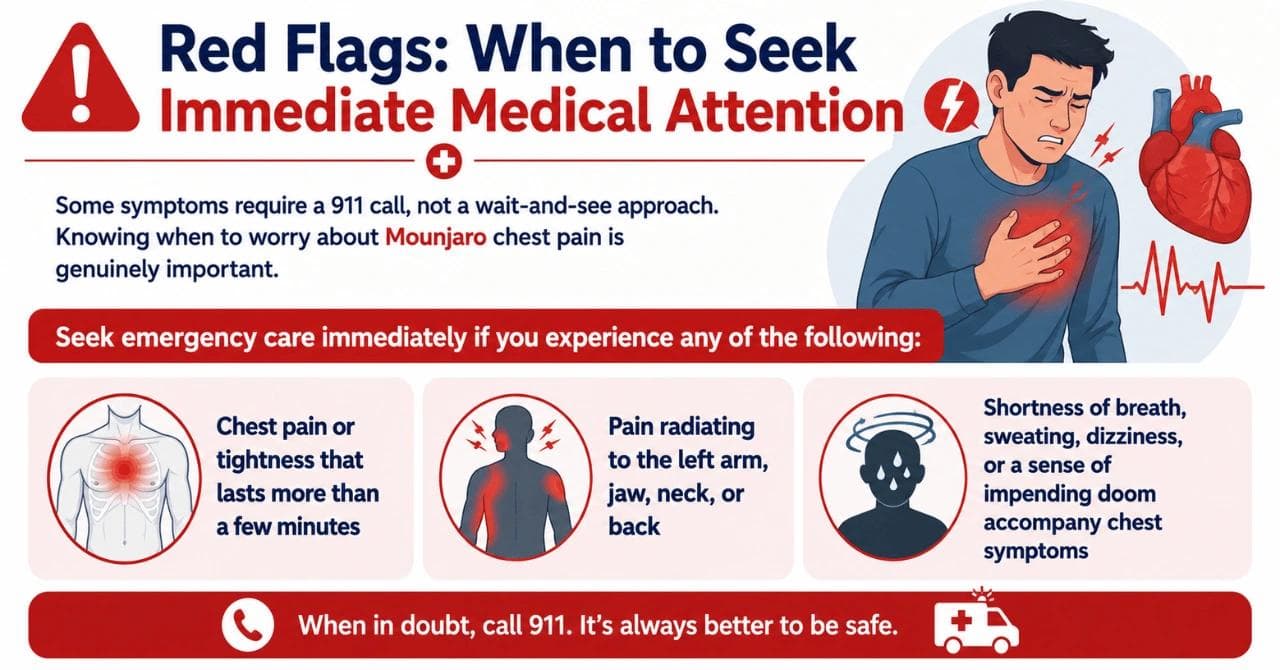
Some symptoms require a 911 call, not a wait-and-see approach. Knowing when to worry about Mounjaro chest pain is genuinely important.
Seek emergency care immediately if you experience any of the following:
- Chest pain or tightness that lasts more than a few minutes
- Pain radiating to the left arm, jaw, neck, or back
- Shortness of breath, sweating, dizziness, or a sense of impending doom accompany chest symptoms
According to the FDA prescribing information for Mounjaro, serious adverse reactions also include acute pancreatitis, acute kidney injury from dehydration, gallbladder problems, and severe hypoglycemia. Severe or persistent abdominal pain that radiates to the back is a potential pancreatitis signal and requires immediate medical attention.
For non-emergency but concerning symptoms, contact your doctor promptly. New palpitations, a persistently rapid heart rate, signs of dehydration like dark urine, or worsening GI pain that won't settle all warrant a call. Patients with pre-existing heart conditions should be especially proactive about reporting any new chest symptoms. If you have questions about your medication and want a pharmacist's perspective, the team at Polar Bear Meds is available to help.
Bottom Line: Mounjaro Chest Tightness and Your Next Steps
Mounjaro chest tightness is a real patient concern, but the current evidence does not suggest chest tightness is a common direct cardiac adverse effect of tirzepatide. GI-related irritation, anxiety, and musculoskeletal strain account for most reported chest discomfort. The medication's actual cardiovascular track record is strongly positive. That said, no one should dismiss chest pain without proper evaluation.
When symptoms are severe, persistent, or radiating, emergency care is the only appropriate response. Talk to your doctor about any new or worsening symptoms, keep communication open throughout your treatment, and don't rely on self-diagnosis when your heart health is on the line. You can explore more health and medication guidance in the Polar Bear Meds articles section.
Frequently Asked Questions
No. According to Eli Lilly's official medication guide, chest tightness is not listed as a common direct side effect of Mounjaro. The most frequently reported side effects are gastrointestinal, including nausea, vomiting, diarrhea, and stomach pain. Chest discomfort that does occur is more likely an indirect result of acid reflux, esophageal irritation, or musculoskeletal strain from vomiting.
Seek emergency care immediately if chest pain lasts more than a few minutes, radiates to the arm, jaw, neck, or back, or is accompanied by shortness of breath, sweating, or dizziness. These could signal a heart attack or serious cardiac event. Severe abdominal pain radiating to the back is also an emergency, as it may indicate pancreatitis.
Clinical evidence has not shown an increased cardiovascular risk in most patients, and several studies suggest cardiovascular benefit. Modest heart rate increases of 2-4 beats per minute have been documented in clinical trials, but these are typically temporary and well-tolerated.
Disclaimer
This article walks through what the published research says about Mounjaro and chest tightness, but it's not medical advice. Everyone's health situation is different, and symptoms that seem minor can sometimes signal something serious. Before starting, changing, or stopping any medication, talk to your doctor or a qualified healthcare provider who knows your full medical history.