Mounjaro Cold Hands and Feet: Causes, Symptoms, and What to Do
Key Takeaways
1. Cold hands and feet are not listed among the reported adverse reactions in the FDA prescribing information for Mounjaro.
2. The sensation is largely driven by rapid weight loss, reduced metabolic heat production, and changes in peripheral blood flow.
3. Mild, symmetrical coldness is typically benign. Severe pain, color changes, or symptoms affecting only one limb require immediate medical attention.
4. Practical strategies, including layering, staying hydrated, and eating regular meals, can meaningfully reduce cold sensitivity.
Mounjaro cold hands and feet are not listed among the drug's official adverse reactions, yet many patients report experiencing them. Tirzepatide, the dual GIP and GLP-1 receptor agonist marketed as Mounjaro for type 2 diabetes and Zepbound for chronic weight management, may leave patients wondering what's causing these symptoms and when medical evaluation is needed.
Cold Hands and Feet on Mounjaro: Understanding Cold Extremities Mounjaro Patients Report
Mounjaro (tirzepatide) is a dual GIP and GLP-1 receptor agonist approved for both type 2 diabetes and chronic weight management. It works by targeting two separate hormone receptors simultaneously, which is part of why its weight loss results are so substantial. Clinical trials (the SURMOUNT-1 trials) showed average body weight reductions of 15 to 21% over 72 weeks in people with obesity.
What those trials didn't flag? Cold extremities. Cold sensitivity is not listed among the reported adverse reactions in the FDA prescribing information.
Reality looks different. Online forums are full of patients describing icy hands and feet, and the pattern is consistent enough that researchers have explored patient-reported adverse events using social media datasets. A study published in Nature Health, analyzing self-reported GLP-1 side effects on Reddit, deemed chills and temperature-related complaints an "unrecognized" side effect, with 43.5% of users who self-reported using these medications posting about at least one side effect. That's a meaningful signal. The gap between trial data and lived patient experience is real, and understanding why it exists starts with the physiology.
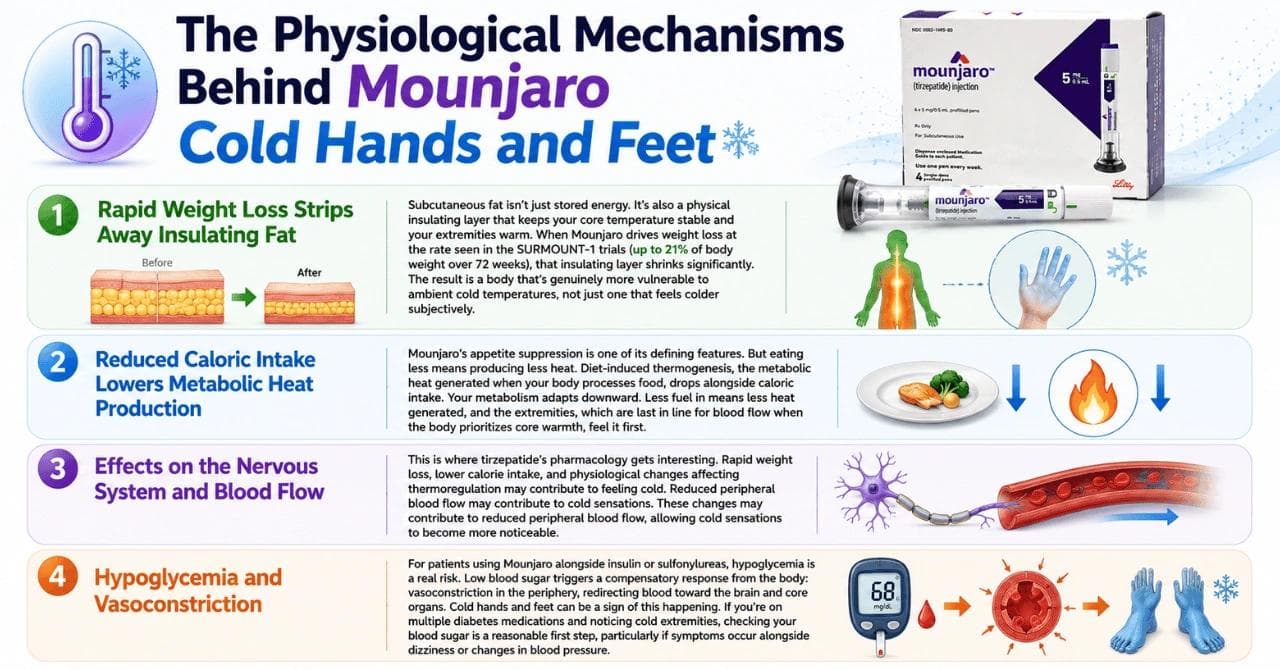
The Physiological Mechanisms Behind Mounjaro Cold Hands and Feet
Several distinct mechanisms likely contribute to GLP-1 cold sensitivity, including the cold sensations some patients experience while taking Mounjaro.
Rapid Weight Loss Strips Away Insulating Fat
Subcutaneous fat isn't just stored energy. It's also a physical insulating layer that keeps your core temperature stable and your extremities warm. When Mounjaro drives weight loss at the rate seen in the SURMOUNT-1 trials (up to 21% of body weight over 72 weeks), that insulating layer shrinks significantly. The result is a body that's genuinely more vulnerable to ambient cold temperatures, not just one that feels colder subjectively.
Reduced Caloric Intake Lowers Metabolic Heat Production
Mounjaro's appetite suppression is one of its defining features. But eating less means producing less heat. Diet-induced thermogenesis, the metabolic heat generated when your body processes food, drops alongside caloric intake. Your metabolism adapts downward. Less fuel in means less heat generated, and the extremities, which are last in line for blood flow when the body prioritizes core warmth, feel it first.
Effects on the Nervous System and Blood Flow
This is where tirzepatide's pharmacology gets interesting. Rapid weight loss, lower calorie intake, and physiological changes affecting thermoregulation may contribute to feeling cold. Reduced peripheral blood flow may contribute to cold sensations. These changes may contribute to reduced peripheral blood flow, allowing cold sensations to become more noticeable.
Hypoglycemia and Vasoconstriction
For patients using Mounjaro alongside insulin or sulfonylureas, hypoglycemia is a real risk. Low blood sugar triggers a compensatory response from the body: vasoconstriction in the periphery, redirecting blood toward the brain and core organs. Cold hands and feet can be a sign of this happening. If you're on multiple diabetes medications and noticing cold extremities, checking your blood sugar is a reasonable first step, particularly if symptoms occur alongside dizziness or changes in blood pressure.
Although these Mounjaro side effects hands feet reports are not listed in official prescribing information, the underlying physiological explanations are consistent with how rapid weight loss and reduced calorie intake can affect temperature regulation.
Secondary Factors Contributing to Cold Extremities
Weight loss and metabolic changes drive the primary mechanism, but several secondary factors can amplify cold sensitivity considerably.
Dehydration often contributes, but is overlooked. Gastrointestinal side effects, nausea, vomiting, and diarrhea, are among the most commonly reported experiences on Mounjaro. Any significant fluid loss impairs circulation and can intensify cold sensations in the hands and feet.
Nutritional deficiencies compound the problem further. Iron deficiency reduces the blood's oxygen-carrying capacity, resulting in poorly perfused tissues. Low B12 can affect nerve function, potentially contributing to tingling or numbness alongside the cold sensation. Iodine deficiency affects thyroid function, and an underactive thyroid is itself a well-known cause of cold sensitivity. These deficiencies don't cause the cold hands directly, but they lower the threshold at which the other mechanisms become symptomatic.
For patients with pre-existing diabetic peripheral neuropathy, these sensations may already be present. Diabetic peripheral neuropathy is a common complication of diabetes and may make cold sensations more noticeable.
Timing and Patterns: When Cold Sensitivity Peaks
Cold sensitivity on Mounjaro isn't random. Some patients report that track with the medication's pharmacological activity.
The days immediately following a weekly injection often bring heightened cold sensitivity, particularly during the first weeks of treatment or after dose increases. when the body is adjusting to a new level of drug exposure. Between meals and during extended fasting periods, when blood sugar may dip lower than usual, the vasoconstriction response can intensify. Periods of rapid weight loss tend to produce more pronounced symptoms than plateau phases, which aligns with the fat-loss-as-insulation-loss mechanism described above.
Environmental context matters too. Weight loss may make people feel colder in cooler environments. interact with ambient temperature in ways that can feel disproportionate to the actual conditions.
Red Flags Versus Normal Adaptation: When to Seek Help
Most people experiencing mounjaro poor circulation symptoms during treatment are dealing with a benign physiological adjustment. Mild, symmetrical coldness in both hands and feet, without pain, typically poses no danger and often improves as the body adapts to both the medication and the weight changes it drives. Persistent symptoms may warrant evaluation for Raynaud's or other vascular conditions.
But some presentations require prompt medical attention. Seek care immediately if you notice severe pain in the extremities, distinct color changes (white, blue, or mottled skin), numbness that doesn't resolve, ulceration, or if cold symptoms affect only one limb rather than both. Unilateral symptoms particularly point to a vascular problem unrelated to Mounjaro's metabolic effects.
Even without emergency-level symptoms, you should visit a doctor if cold sensitivity persists, severely impacts daily life, or arrives alongside extreme fatigue, dizziness, unexplained weight changes, shortness of breath, or hair loss. These combinations can point toward underlying conditions like Raynaud's phenomenon. Although Raynaud's Mounjaro has not been established as a recognized adverse effect, similar symptoms deserve medical evaluation.
Practical Management Strategies for Cold Hands and Feet
The good news is that most cold sensitivity on Mounjaro responds well to straightforward management strategies.
1. Clothing and environment: Layering offers the most immediate tool. Thermal gloves, wool socks, and heated accessories provide direct warmth to the extremities most affected. Keeping indoor temperatures slightly warmer than you'd previously needed is a reasonable accommodation during active weight loss phases.
2. Nutrition and hydration: Eating regular, nutrient-dense meals helps sustain diet-induced thermogenesis and keeps blood sugar more stable throughout the day. Adequate protein intake supports metabolic rate. Consistent hydration, especially important given GI side effects, directly supports circulation. If you're losing fluids through nausea or other GI symptoms, replacing them proactively matters more than most patients realize.
3. Physical activity: Gentle exercise improves peripheral blood flow and can meaningfully reduce cold sensations in the hands and feet. Even a short walk after meals improves circulation and supports blood sugar stability simultaneously.
4. Medical monitoring: If cold sensitivity is persistent or severe, ask your provider to check blood sugar patterns, thyroid function, and key nutrient levels including iron and B12. Early identification of a deficiency or thyroid issue means faster resolution. Patients managing their Mounjaro prescription through a pharmacy should also ask about whether their current dose level is contributing to symptoms, as adjustments during escalation phases can sometimes reduce side effect burden.
Bottom Line: Understanding Mounjaro Cold Hands and Feet
Mounjaro cold hands and feet are not listed as an official side effect, but many patients report experiencing them during treatment. In most cases, the sensation is likely related to rapid weight loss, reduced heat production, and changes in blood flow rather than a serious medical problem.
Mild symptoms often improve with simple measures like staying warm, eating balanced meals, and maintaining hydration. However, persistent symptoms, severe pain, skin color changes, or one-sided coldness should be evaluated by a healthcare provider. If you're looking for ways to reduce prescription costs, Polar Bear Meds helps eligible U.S. patients access Mounjaro through licensed Canadian pharmacy partners.
Frequently Asked Questions
Mounjaro's regulatory documentation from either the FDA or the UK MHRA doesn't officially list cold sensitivity as a common side effect. That said, patient reports tell a different story. A study published in Nature Medicine, analyzing self-reported GLP-1 side effects on Reddit, deemed chills and temperature-related complaints an "unrecognized" side effect, with 43.5% of Reddit users in that dataset posting about at least one side effect.
Multiple factors cause these symptoms. Rapid weight loss reduces insulating subcutaneous fat, making the body more vulnerable to cold. Reduced caloric intake lowers metabolic heat production through decreased diet-induced thermogenesis. Rapid weight loss and reduced calorie intake may contribute to feeling colder in some patients. Hypoglycemia, particularly in patients combining Mounjaro with insulin or sulfonylureas, triggers additional peripheral vasoconstriction. Dehydration from GI side effects and potential nutritional deficiencies in iron, B12, or iodine can amplify all of these effects.
Mild, symmetrical coldness in both hands and feet generally represents a benign adaptation to the metabolic and weight changes Mounjaro produces, and it often improves over time. Seek immediate medical attention if you experience severe pain, skin color changes (white, blue, or mottled), numbness, ulceration, or cold symptoms affecting only one limb. Consult your doctor or endocrinology specialist if cold sensitivity persists, significantly affects daily life, or accompanies symptoms like extreme fatigue, dizziness, or unexplained weight changes that could point to thyroid issues, anemia, or another underlying condition.
Disclaimer
This article is for educational purposes only and should not replace professional medical advice, diagnosis, or treatment. If you're experiencing nerve symptoms while taking Mounjaro, talk to your doctor or a diabetes specialist before drawing any conclusions. A proper evaluation is the only way to know what's actually causing your symptoms and what to do about it.