Mounjaro Eye Twitching: What's Actually Causing It and When to Worry
Key Takeaways
1. Eye twitching is not listed among common Mounjaro side effects, but indirect factors like dehydration or electrolyte imbalance may contribute to it.
2. Mounjaro’s GI side effects may contribute to dehydration or electrolyte imbalance, which can trigger muscle twitching in some people.
3. Some observational research has explored links between GLP-1 drugs, optic nerve disorders, and diabetic retinopathy, but findings should be discussed with an eye specialist.
4. Sudden vision loss, eye pain, or twitching alongside decreased urination are emergencies, not side effects to wait out.
Mounjaro Eye Twitching concerns are common among Mounjaro (tirzepatide) users searching for straight answers, not speculation. Many patients searching for eye twitching causes Mounjaro want to know whether the drug itself is responsible. Eye twitching is not listed among common adverse reactions in Mounjaro’s prescribing information, but dehydration, electrolyte imbalance, and blood sugar swings may irritate the nervous system.
Eye Twitching on Mounjaro: Separating Fact From Speculation
Patients on Reddit and health forums have reported eye twitching while taking Mounjaro, often attributing it to dehydration or stress. These anecdotal reports are worth taking seriously, even if the clinical picture is less dramatic than some posts suggest. Here's what the data actually shows. It is not listed among the common adverse reactions in Mounjaro’s prescribing information.
So why are patients reporting it? The answer lies in the difference between a direct drug effect and an indirect physiological response. Mounjaro doesn't appear to twitch your eyelid on its own. What it does do, especially in the early weeks, is set off a chain of GI side effects that can quietly destabilize electrolyte and fluid balance, and that's where the eye twitching likely originates. Understanding that distinction matters for patient safety because it changes how you address the symptom.

How Mounjaro's GI Side Effects Trigger Muscle Spasms
Nausea, vomiting, and diarrhea are among the most commonly reported Mounjaro medication side effects. They're unpleasant on their own, but the downstream consequences are what create the eye twitching link. This is why searches for Mounjaro muscle twitching often overlap with dehydration, vomiting, diarrhea, and electrolyte concerns.
Vomiting or diarrhea can reduce fluids and may disturb electrolytes, including minerals involved in normal muscle function. These minerals aren't just nutritional checkboxes. They're the chemical signals your nervous system uses to tell muscles when to contract and, critically, when to stop. When fluid or electrolyte balance is disrupted, nerve-muscle signaling may become more irritable.
The eyelid is particularly susceptible. It's thin, highly innervated, and under near-constant use throughout the day. Small disruptions in electrolyte balance that wouldn't visibly affect a larger muscle group can produce noticeable, repetitive twitching in the orbicularis oculi. That's not a Mounjaro-specific quirk; it's basic muscle physiology applied to a vulnerable location. Mounjaro’s GI side effects can create conditions where dehydration or electrolyte imbalance becomes more likely.
Blood Sugar Swings and Vision Changes
Mounjaro vision problems don't always start with the eyes themselves. Rapid changes in blood glucose levels can temporarily alter the physical shape of the eye's lens through osmotic shifts, a process where fluid moves in and out of lens tissue as glucose concentrations change. Blurry vision is the result, fluctuating sometimes hour to hour.
Hypoglycemia adds another layer. In Mounjaro trials, hypoglycemia was more common when tirzepatide was used with insulin or a sulfonylurea. Severe hypoglycemia remained uncommon, but blood glucose below 54 mg/dL occurred more often in those combination groups. Low blood sugar can trigger shakiness, tremors, and general muscle instability, all of which can contribute to or worsen twitching symptoms.
These vision changes typically resolve as glycemic control stabilizes, which is reassuring. Once glucose levels find a new normal, the osmotic pressure on the lens equalizes and blurry vision fades. Tight blood sugar monitoring during dose escalation is the most direct way to reduce this particular risk.
Serious Eye Conditions Linked to Mounjaro
Not every ocular side effect of tirzepatide is benign or temporary. Two conditions deserve specific attention.
Nonarteritic Anterior Ischemic Optic Neuropathy (NAION) is a rare but serious form of optic neuropathy involving sudden, usually painless vision loss. One observational study reported an association between tirzepatide exposure and NAION, but this does not prove causation. In absolute terms, this translated to 0.04% of tirzepatide-exposed patients versus 0.02% of unexposed patients over a two-year follow-up. The relative increase sounds alarming; the absolute numbers remain low. But for patients with type 2 diabetes who already carry elevated vascular risk, that relative increase is worth discussing with a doctor before starting treatment.
Diabetic retinopathy also deserves attention. Mounjaro’s prescribing information advises monitoring patients with a history of diabetic retinopathy for progression. Rapid improvement in blood sugar can sometimes affect diabetic eye disease, so patients with existing eye complications should stay in touch with their eye specialist.
Red flags requiring immediate emergency evaluation: sudden loss of vision in one or both eyes, severe blurry vision that doesn't improve, new floaters or flashes of light, eye pain, redness or swelling, a dark curtain or shadow across your visual field, or severe headaches accompanied by vision changes.
Timeline: When Eye Twitching and Vision Issues Improve
Benign eye twitching tied to dehydration or electrolyte shifts typically resolves within days to weeks, once the underlying imbalance is corrected. There's no specific duration documented in the medical literature for Mounjaro-related twitching specifically, but the general pattern for transient myokymia holds: fix the trigger, and the twitch goes away.
Blurry vision from blood sugar fluctuations tends to follow a similar arc. As glucose stabilizes over weeks, the lens returns to its normal shape and vision clears.
GI side effects, the root cause of much of this, often peak in the first few days of a new dose and then gradually decrease as the body adjusts. Dose adjustments can also help if symptoms remain severe. If twitching persists well beyond the initial adjustment window, that's a signal to loop in your prescriber rather than waiting it out.
Red Flags and When to Call Your Doctor
Some symptoms can't wait for your next scheduled appointment. The following warrant same-day or emergency evaluation.
Urgent ocular warning signs include sudden vision loss in one or both eyes, severe blurry vision that doesn't improve with time, new or sudden floaters or flashes of light, eye pain, redness or swelling, and severe headaches paired with any vision change. These could indicate NAION or another serious neurological event. Patients searching for Mounjaro neurological side effects should treat vision loss, confusion, seizures, or severe weakness as urgent warning signs.
Systemic warning signs are equally serious. Muscle twitching with decreased urine output, rapid weight gain, seizures, confusion, unusual weakness, or swelling may signal serious dehydration or kidney problems and needs urgent medical attention. That's not a "drink more water" situation. It's an emergency room situation.
Early intervention in both categories can prevent permanent damage. Do not let a concern about bothering your doctor delay a call that could protect your vision or kidney function.
Practical Steps to Reduce Eye Twitching Risk
Managing the indirect triggers is the most actionable thing a patient can do. Here's where to focus.
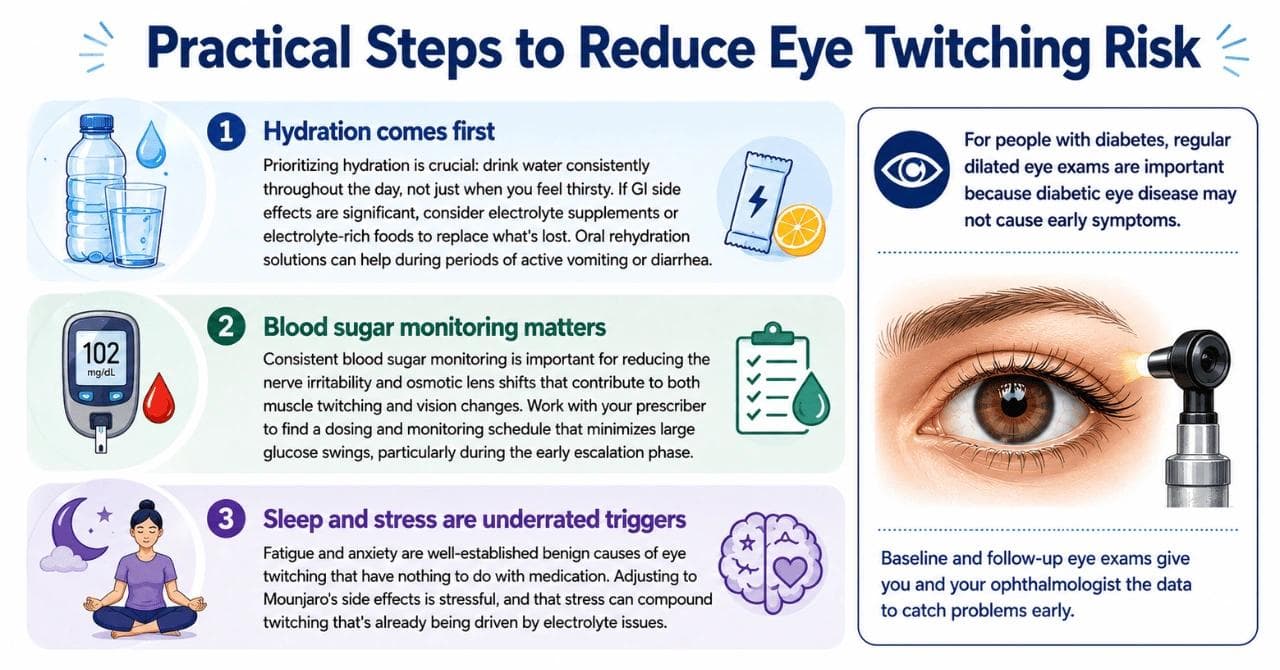
Hydration comes first
Prioritizing hydration is crucial: drink water consistently throughout the day, not just when you feel thirsty. If GI side effects are significant, consider electrolyte supplements or electrolyte-rich foods to replace what's lost. Oral rehydration solutions can help during periods of active vomiting or diarrhea.
Blood sugar monitoring matters
Consistent blood sugar monitoring is important for reducing the nerve irritability and osmotic lens shifts that contribute to both muscle twitching and vision changes. Work with your prescriber to find a dosing and monitoring schedule that minimizes large glucose swings, particularly during the early escalation phase.
Sleep and stress are underrated triggers
Fatigue and anxiety are well-established benign causes of eye twitching that have nothing to do with medication. Adjusting to Mounjaro's side effects is stressful, and that stress can compound twitching that's already being driven by electrolyte issues.
For people with diabetes, regular dilated eye exams are important because diabetic eye disease may not cause early symptoms. Baseline and follow-up eye exams give you and your ophthalmologist the data to catch problems early. If you already have a valid prescription, Polar Bear Meds can help U.S. patients compare Canadian pharmacy pricing and prescription logistics.
Bottom Line: Mounjaro Eye Twitching Is Usually Indirect, But Don’t Ignore Red Flags
Mounjaro eye twitching is not listed as a common direct side effect, but patient reports can still make sense. Dehydration, electrolyte imbalance, blood sugar changes, sleep loss, and stress may all contribute to eyelid twitching during treatment.
Most mild twitching is not an emergency. Still, sudden vision loss, severe blurry vision, eye pain, confusion, swelling, or decreased urination needs urgent medical attention. Patients with diabetes or existing eye disease should keep regular eye exams and discuss any new vision changes with their provider.
If you already have a valid prescription, Polar Bear Meds can help U.S. patients compare Canadian pharmacy pricing and prescription logistics.
Frequently Asked Questions
No. Eye twitching is not listed among the common adverse reactions in Mounjaro’s prescribing information. That said, some patients do report it, and the likely explanation is indirect: Mounjaro’s GI side effects can cause dehydration and possible electrolyte imbalance, which may disrupt nerve-muscle signaling and contribute to involuntary eyelid twitching.
There's no specific duration documented in the medical literature for Mounjaro-related eye twitching. Benign twitching tied to transient causes like dehydration or early blood sugar fluctuations generally resolves within a few days to weeks once the underlying trigger is addressed. If twitching persists or gets worse, that's worth raising with your doctor rather than assuming it will pass.
Isolated, occasional eye twitching is usually benign. Seek immediate medical attention if twitching occurs alongside sudden vision loss, severe blurry vision that doesn't improve, new floaters or flashes of light, eye pain, or severe headaches with vision changes. Mounjaro’s prescribing information warns that severe gastrointestinal reactions may lead to dehydration and acute kidney injury. Twitching with decreased urine output, confusion, swelling, or severe weakness should be treated as urgent.
Disclaimer
This article is for informational purposes only and is not medical advice. Mounjaro-related eye twitching, vision changes, dehydration symptoms, or any new symptom should be discussed with a licensed healthcare provider. Do not stop, change, or restart any medication without guidance from your doctor or pharmacist.