Mounjaro Knee Pain: What the Clinical Data Actually Shows
Key Takeaways
1. Clinical trials reported arthralgia in 3-5% of tirzepatide users, at rates matching placebo groups, so no direct causal link is established.
2. Most joint discomfort linked to Mounjaro is indirect, driven by rapid weight loss, dehydration, or immune response.
3. Emerging observational research has suggested that tirzepatide may be associated with a lower risk of developing osteoarthritis compared with some other anti-obesity medications, although additional research is needed to confirm this finding.
4. Staying hydrated, eating enough protein, and talking to your doctor about symptoms are the most effective management steps.
Mounjaro knee pain is one of the more common concerns patients raise before starting tirzepatide, and the answer is more nuanced than a simple yes or no. Mounjaro (tirzepatide) is a dual GIP and GLP-1 receptor agonist used for type 2 diabetes and obesity treatment. Some users report Mounjaro side effects joints, while others notice existing knee pain improving after weight loss.
Does Mounjaro Actually Cause Knee Pain?
Knee pain is not listed among the most common Mounjaro adverse events in the FDA-approved prescribing information. In clinical trials, arthralgia was reported in roughly 3-5% of tirzepatide patients, and that figure was comparable to the placebo group rates, according to data cited by Bolt Pharmacy. No established direct causal link between the drug itself and knee discomfort has emerged from those controlled studies.
That said, "no direct causal link" doesn't mean patients aren't feeling anything. The distinction matters. Clinical trials indicate tirzepatide does not chemically attack your joints. They cannot always capture the cascade of indirect effects that follow significant weight loss and gastrointestinal side effects. Those are real, and they deserve a closer look.

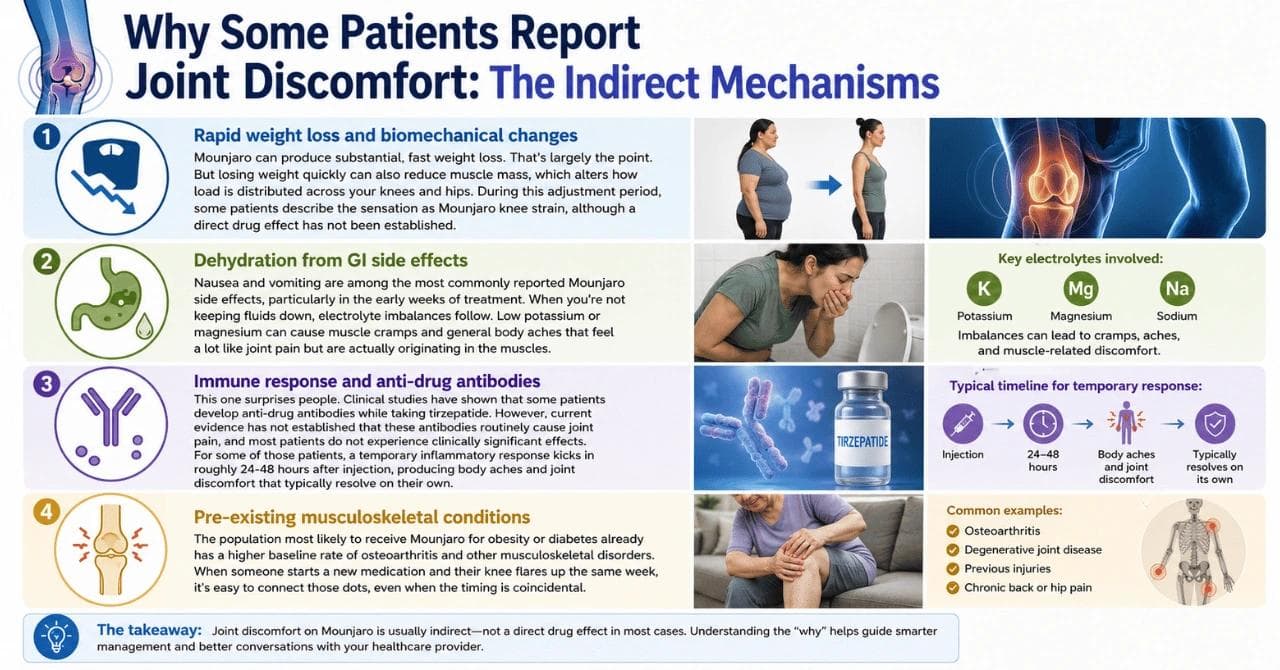
Why Some Patients Report Joint Discomfort: The Indirect Mechanisms
So if the drug isn't directly causing knee strain, why do so many patients report it? There are several plausible explanations, and they often overlap.
Rapid weight loss and biomechanical changes
Mounjaro can produce substantial, fast weight loss. That's largely the point. But losing weight quickly can also reduce muscle mass, which alters how load is distributed across your knees and hips. During this adjustment period, some patients describe the sensation as Mounjaro knee strain, although a direct drug effect has not been established.
Dehydration from GI side effects
Nausea and vomiting are among the most commonly reported Mounjaro side effects, particularly in the early weeks of treatment. When you're not keeping fluids down, electrolyte imbalances follow. Low potassium or magnesium can cause muscle cramps and general body aches that feel a lot like joint pain but are actually originating in the muscles.
Immune response and anti-drug antibodies
This one surprises people. Clinical studies have shown that some patients develop anti-drug antibodies while taking tirzepatide. However, current evidence has not established that these antibodies routinely cause joint pain, and most patients do not experience clinically significant effects. For some of those patients, a temporary inflammatory response kicks in roughly 24-48 hours after injection, producing body aches and joint discomfort that typically resolve on their own.
Pre-existing musculoskeletal conditions
The population most likely to receive Mounjaro for obesity or diabetes already has a higher baseline rate of osteoarthritis and other musculoskeletal disorders. When someone starts a new medication and their knee flares up the same week, it's easy to connect those dots, even when the timing is coincidental.
How Common Is Joint Discomfort in Real-World Use?
The gap between trial data and real-world reports is striking here. Post-marketing reports and patient forums describe joint discomfort more frequently than clinical trials, but these observations cannot establish how common the symptom truly is because they lack controlled comparisons.
Part of the explanation is methodology. Clinical trials are controlled environments with strict reporting criteria. Real-world use involves messier conditions: patients with more complex health histories, less consistent hydration, and no placebo comparison group to calibrate against.
Muscle pain specifically affects approximately 2-5% of tirzepatide patients, and it typically appears within the first 4-8 weeks of treatment as the body adjusts to the medication. For comparison, semaglutide (the active ingredient in Ozempic and Wegovy) shows similar arthralgia rates in its own clinical trials, suggesting this pattern isn't unique to tirzepatide and likely reflects the indirect effects of weight loss rather than a GLP-1 class-specific pharmacological effect. Similar questions about GLP-1 knee pain have also been raised with semaglutide and other medications in this class.
If you're considering Mounjaro treatment options and weighing the side effect profile, this context matters. Estimates differ between controlled trials and post-marketing reports.
What Current Research Suggests About Long-Term Joint Health
Here's the counterintuitive part of this story. While some patients experience joint discomfort during treatment, the long-term picture for joint health looks quite positive. A study found that people taking tirzepatide had a 43% lower risk of actively developing osteoarthritis compared to those taking other weight-loss medications, including semaglutide. That's a meaningful difference, not a marginal one.
Several mechanisms have been proposed. Removing every pound of body weight translates into reduced mechanical stress on weight-bearing joints like the knees. For patients carrying significant excess weight, the relief on those joints after sustained weight loss can be substantial. Beyond the mechanical benefit, emerging research suggests that GLP-1 agonists may also reduce systemic inflammation, which is a key driver of osteoarthritis progression.
The long-term data on knee replacement surgery is also worth noting. Taking GLP-1 medications for one year correlated with a 1.4 percentage-point reduced risk of knee replacement surgery at the three-year follow-up, and a 2.8 percentage-point lower risk after eight years. For patients with significant joint disease, those numbers represent real quality-of-life outcomes. You can also explore how semaglutide compares as an alternative GLP-1 option if tirzepatide isn't the right fit for your situation.
Practical Steps to Manage Joint Discomfort While on Mounjaro
Managing musculoskeletal side effects during treatment doesn't require stopping the medication. Most cases respond well to straightforward interventions.
- Hydrate consistently: GI side effects can quietly deplete your fluid intake. Drinking enough water and replenishing electrolytes (especially potassium and magnesium) can reduce muscle cramping that mimics joint pain.
- Prioritize protein: Rapid weight loss tends to take muscle along with fat. Adequate protein intake helps preserve lean mass, which keeps your joints supported and stable during the weight-loss phase.
- Move gently: Low-impact exercise like walking, swimming, or cycling maintains joint mobility without adding excessive strain. A physical therapist can design a program specifically suited to your current fitness level and any pre-existing conditions.
- Use appropriate OTC relief: For mild discomfort, acetaminophen or topical NSAIDs are reasonable first-line options. Talk to your pharmacist or doctor before combining any new medications with tirzepatide.
- Know when to call your doctor: Mild aches differ from severe joint pain, swelling, warmth, redness, or any functional impairment that affects your daily movement, which warrants medical attention promptly. Those symptoms could indicate something unrelated to Mounjaro that needs its own evaluation.
If you're managing multiple prescriptions alongside Mounjaro, browsing prescription drug options from Canada can help you compare costs and availability in one place.
Bottom Line: What Patients Should Know About Mounjaro Knee Pain
When it comes to mounjaro knee pain, the evidence points in a clear direction. What does exist is a set of manageable indirect mechanisms, most of which can be addressed through hydration, nutrition, and appropriate physical activity. The more striking finding is on the other side of the ledger: a 43% lower risk of developing osteoarthritis compared to other weight-loss medications is a substantial protective signal.
For most patients, Mounjaro's long-term effect on joint health is positive, not negative. The short-term discomfort some users experience is real, but it's typically transient and addressable. Anyone experiencing persistent diabetes medication joint pain should be evaluated to rule out causes unrelated to tirzepatide. Keeping your provider informed about any musculoskeletal symptoms ensures you get personalized guidance rather than guessing through it alone. If you're ready to start or continue treatment, you can upload your prescription securely to get started through a licensed Canadian pharmacy.
Frequently Asked Questions
Mounjaro isn't listed as a direct cause of knee pain in its official prescribing information, and clinical trial data shows arthralgia rates in tirzepatide users matching those in placebo groups. That said, some patients do experience knee discomfort indirectly, through muscle loss from rapid weight loss, dehydration-related electrolyte imbalances, or a temporary immune response in the roughly 25% of patients who develop anti-drug antibodies.
Muscle pain affects approximately 2-5% of tirzepatide patients, typically emerging within the first 4-8 weeks of treatment. Clinical trials documented back pain and arthralgia at rates similar to placebo groups, so they aren't considered definitive drug-specific effects. Serious joint events are uncommon, though one study noted severe joint pain requiring medical intervention in 5 out of 100 patients, making it worth monitoring.
Clinical trials reported joint pain in 3-5% of Mounjaro users, with semaglutide showing comparable rates in its own trials. Real-world reports suggest the figure may reach around 30% of Mounjaro users, a gap that likely reflects indirect factors like rapid weight loss and dehydration rather than a direct pharmacological effect of GLP-1 receptor agonism itself.
Disclaimer
This article covers what the research currently shows about Mounjaro and joint health, but it's not medical advice. Everyone's situation is different, and musculoskeletal symptoms can have causes that go well beyond any single medication. Talk to your doctor or a qualified healthcare provider before making changes to your treatment plan or before starting tirzepatide for the first time.