Ozempic and Cold Sores: Why Ozempic Users Are Reporting Flare-Ups and What the Evidence Actually Shows
Key Takeaways
1. No clinical evidence directly links Ozempic to cold sore outbreaks, but anecdotal reports are widespread and worth understanding.
2. HSV-1 reactivation is driven by stress, dietary shifts, and dehydration, all of which can accompany starting semaglutide.
3. Ozempic does not suppress immune function: GLP-1 receptor agonists actually show anti-inflammatory properties.
4. Managing hydration, nutrition, and stress during the adjustment period can reduce outbreak risk.
Ozempic and cold sores don't have an obvious connection, yet the anecdotal reports keep piling up. Ozempic (semaglutide) is a GLP-1 receptor agonist prescribed for type 2 diabetes and, at higher doses under the brand Wegovy, for chronic weight management. Cold sores are caused by the herpes simplex virus type 1 (HSV-1). So why are so many users reporting lip sores during their first weeks on this medication? Many people searching "Ozempic side effects cold sores" are trying to understand whether there's a real connection or just a coincidence.
How Cold Sores Develop: The HSV-1 Reactivation Cycle
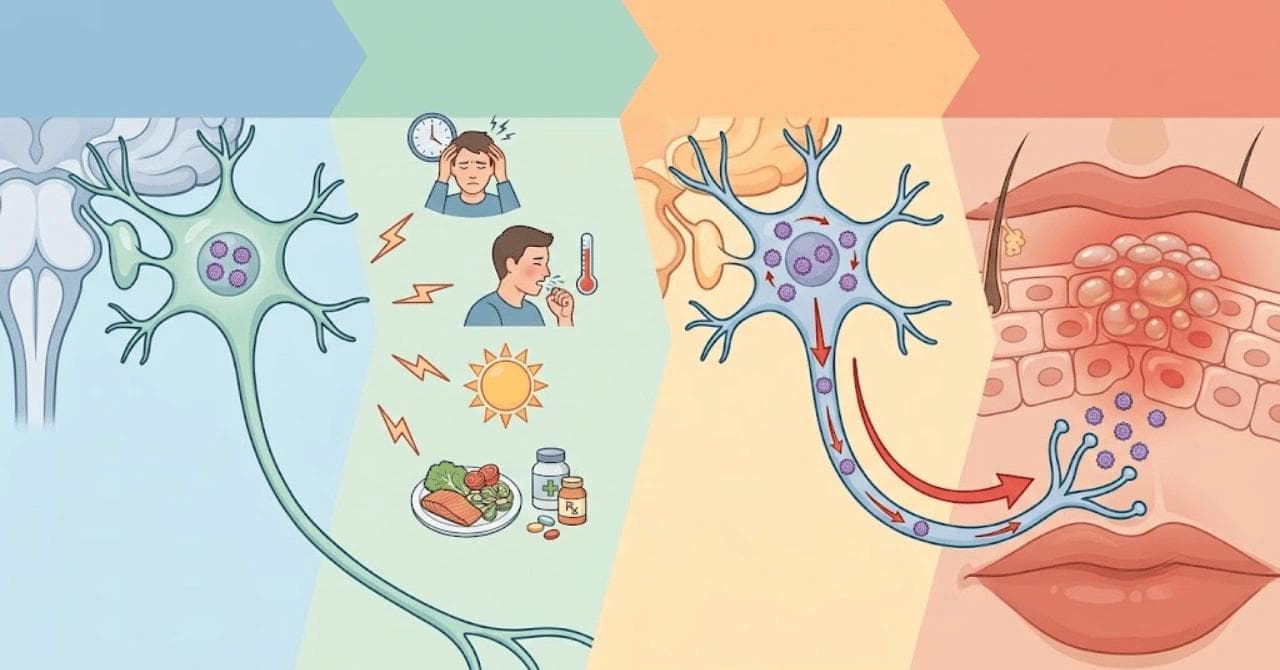
According to the World Health Organization, an estimated 64% of people under age 50 globally carry HSV-1. The virus doesn't disappear after the first infection. Instead, it establishes lifelong latency in nerve cells, specifically along the trigeminal nerve pathway, and waits for the right conditions to reactivate.
Those conditions are well-documented: physical or emotional stress, illness, hormonal changes, and nutrient imbalances can all wake a dormant infection. Viral reactivation doesn't require a weakened immune system in the clinical sense. Even a temporary disruption, like starting a new medication, can be enough to tip the balance. That's the relevant context for understanding what Ozempic users might be experiencing.
The Clinical Reality: Does Ozempic Directly Cause Cold Sores?
Short answer: no. At present, no proven semaglutide cold sores link has been established in clinical trials or official prescribing information. Official prescribing information and clinical trial data for semaglutide do not list cold sores or oral herpes as a side effect. Current prescribing information and clinical trials have not identified clinically significant immune suppression with semaglutide.
"No direct evidence" is not the same as "no connection at all," though. The gap between the clinical data and user experience is real, and it's worth explaining rather than dismissing. If you're researching your Ozempic prescription and wondering whether cold sores are on the side effect list, the honest answer is that they aren't officially, but the indirect story is more nuanced.
The Indirect Pathway: Why Ozempic Might Trigger Outbreaks Indirectly
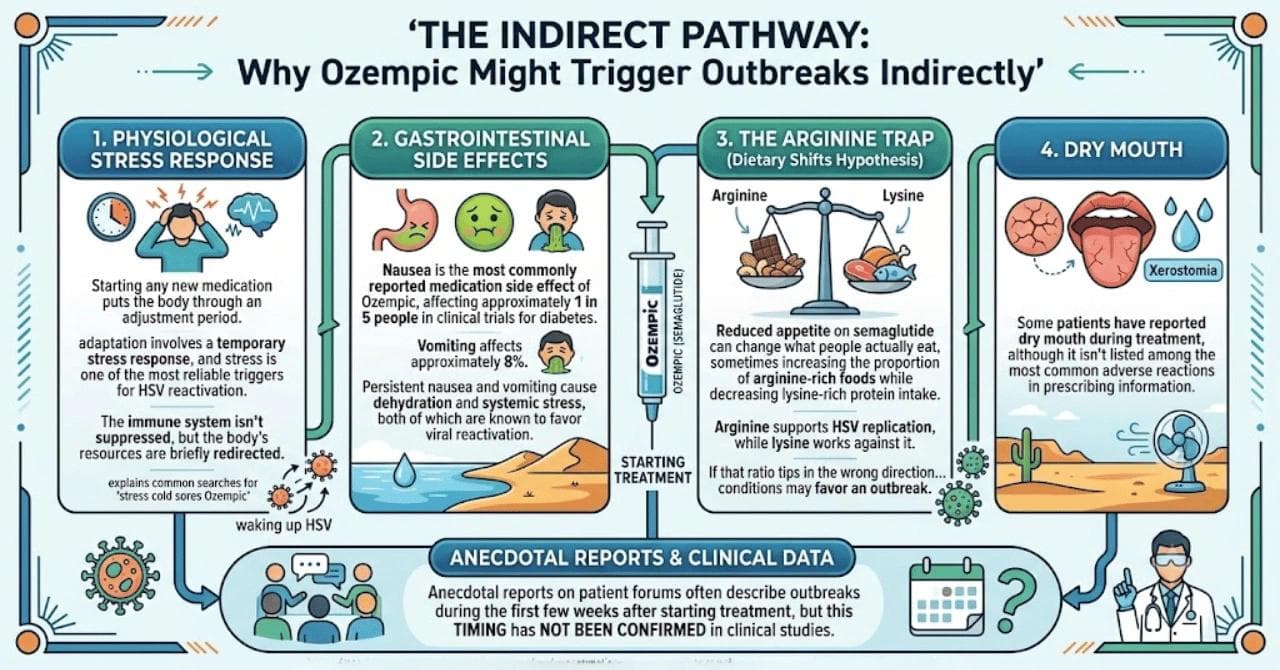
This is where the picture gets more interesting. Several mechanisms, none of them proven definitively but all of them plausible, could explain why HSV-1 reactivation clusters in the first weeks of semaglutide treatment.
1. Physiological stress response: Starting any new medication puts the body through an adjustment period. This helps explain why searches for stress cold sores Ozempic have become increasingly common, even though stress itself, rather than semaglutide directly, is the established trigger. That adaptation involves a temporary stress response, and stress is one of the most reliable triggers for HSV reactivation. The immune system isn't suppressed, but the body's resources are briefly redirected.
2. Gastrointestinal side effects: Nausea is the most commonly reported medication side effect of Ozempic, affecting approximately 1 in 5 people in clinical trials for diabetes. Vomiting affects approximately 8%. Persistent nausea and vomiting cause dehydration and systemic stress, both of which are known to favor viral reactivation.
3. The arginine trap: One hypothesis worth knowing about involves dietary shifts. Reduced appetite on semaglutide can change what people actually eat, sometimes increasing the proportion of arginine-rich foods while decreasing lysine-rich protein intake. Arginine is known to support HSV replication, while lysine works against it. If that ratio tips in the wrong direction, even without any immune system change, conditions may favor an outbreak.
4. Dry mouth: Some patients have reported dry mouth during treatment, although it isn't listed among the most common adverse reactions in prescribing information.
Anecdotal reports on patient forums often describe outbreaks during the first few weeks after starting treatment, but this timing has not been confirmed in clinical studies.
Ozempic and Immune Function: Clearing Up Misconceptions
The fear that Ozempic weakens the immune system is understandable but not supported by the data. Large-scale clinical trials and FDA safety data consistently show that semaglutide does not suppress immune defenses. Ozempic primarily targets metabolic pathways involved in blood sugar regulation and appetite control, not the components of the immune system that guard against infection.
Questions about immunity Ozempic cold sores often arise because people naturally associate recurring viral infections with weakened immune defenses, even though current evidence does not support that explanation for semaglutide.
The science actually points in a more interesting direction. GLP-1 receptor agonists are recognized for immunomodulatory and anti-inflammatory effects, meaning they may reduce inflammation and influence immune cell activity in ways that researchers are still studying. That's a complex interaction, not suppression.
There are rare reports of drug-induced lupus linked to semaglutide. Those cases exist, and your doctor should know your full medical history before you start any weight loss drug. But rare autoimmune reports don't indicate general immunosuppression, and they shouldn't be extrapolated into a broader claim that Ozempic compromises your defenses. You can browse Polar Bear Meds' medication articles for more evidence-based breakdowns of semaglutide's effects.
Treating Cold Sores on Ozempic: A Practical Action Plan
Getting a cold sore while on Ozempic doesn't mean you need to stop treatment. It means you need a plan.
1. Talk to your doctor first: Prescription antiviral medications, including acyclovir, valacyclovir, and famciclovir, are the most effective treatment for oral herpes outbreaks. The key is starting antiviral medication early, ideally at the first sign of tingling, before the blister fully forms. Don't wait to see if it resolves on its own.
2. Address the indirect triggers directly: If nausea is driving dehydration, prioritize fluid intake. If your diet has narrowed due to appetite suppression, make a conscious effort to include lysine-rich proteins. L-lysine supplementation is something some users find helpful, but discuss it with your provider before adding it, since individual needs vary.
3. Support your body through the adjustment period: Stress management matters here. The physiological stress response to a new medication is temporary, but you can soften it with adequate sleep, gentle movement, and consistent hydration. Over-the-counter cold compresses and topical pain relief can ease discomfort while the outbreak resolves.
If your semaglutide prescription costs are a concern, medication coupons and savings options are worth checking before your next refill.
Bottom Line: What the Evidence Actually Shows About Ozempic and Cold Sores
Current evidence does not show a direct link between Ozempic and cold sores. However, starting semaglutide may temporarily create conditions such as dehydration, gastrointestinal side effects, dietary changes, and physiological stress that can trigger HSV-1 reactivation in people who already carry the virus. While anecdotal reports describe flare-ups early in treatment, this pattern hasn't been confirmed in clinical studies.
If you develop a cold sore while taking Ozempic, don't stop the medication without speaking to your healthcare provider. Staying hydrated, maintaining balanced nutrition, and seeking early treatment if symptoms appear can help manage outbreaks. If you're looking to refill your Ozempic prescription, Polar Bear Meds offers a convenient online ordering option for eligible U.S. patients to source medications from Canada.
Frequently Asked Questions
There's no direct clinical evidence supporting a semaglutide cold sores link, and official prescribing information doesn't list cold sores as a side effect. Some patients have reported flare-ups during the first several weeks, likely because indirect factors like physiological stress, GI side effects, and dietary shifts can trigger HSV-1 reactivation in people who already carry the virus.
No. Large-scale trials and FDA safety data show that semaglutide doesn't suppress immune function, and infection rates in clinical trials were comparable between patients taking the drug and those on placebo. GLP-1 receptor agonists are actually being studied for their anti-inflammatory and immunomodulatory properties, which suggests a more complex interaction than simple suppression.
Contact your healthcare provider promptly for diagnosis and to discuss prescription antiviral options like acyclovir or valacyclovir, which work best when started at the first sign of symptoms. Support recovery by staying hydrated, eating balanced meals with adequate protein, managing stress, and asking your doctor whether L-lysine supplementation makes sense for your situation.
Disclaimer
This article reflects current research and clinical data about semaglutide and HSV-1 reactivation, but it's not medical advice. If you're experiencing cold sore outbreaks or any other symptoms while taking Ozempic, talk to your doctor or pharmacist. They can assess your specific situation and recommend the right course of treatment.