Ozempic Bad Breath: Why It Happens and How to Actually Fix It
Key Takeaways
1. Ozempic bad breath has at least three distinct biological causes: slowed digestion, ketosis, and dry mouth.
2. Clinical trials reported eructation (burping) in about 9% of semaglutide users, while sulfur burps have also been described in patient reports.
3. Hydration, oral hygiene, and diet adjustments can meaningfully reduce symptoms.
4. Persistent or worsening breath issues warrant a conversation with your doctor or dentist.
Ozempic bad breath is a commonly discussed Ozempic side effects breath complaint among GLP-1 users, yet it isn't listed in the official prescribing information. That gap matters. The odor isn't random, and it's not a hygiene failure. It traces back to specific biological changes that semaglutide triggers in your digestive system, your metabolism, and your mouth.
Why Ozempic Bad Breath Happens (It's Not Just Poor Oral Hygiene)
Many patients report bad breath while taking GLP-1 medications, even though it's not officially listed as a side effect. Clinical trials of semaglutide reported eructation (burping) as a gastrointestinal side effect, which may contribute to breath changes in some people.
Bad breath is harder to measure than symptoms such as nausea or burping, so its true frequency isn't well established. Ozempic-related breath changes aren't caused by a single mechanism; instead, they typically result from three overlapping biological processes, each producing a different type of odor.

The Fermentation Problem: How Slowed Digestion Creates Sulfur Burps
GLP-1 medications work partly by slowing gastric emptying. That's intentional. Keeping food in the stomach longer helps suppress appetite and blunts post-meal blood sugar spikes, which is why semaglutide is useful for both diabetes management and weight loss. But slowed GI motility has a consequence most patients aren't warned about.
When food lingers in the stomach for extended periods, it ferments. Bacteria break down proteins and other compounds, producing volatile sulfur compounds (VSCs) in the process. These sulfa compounds don't stay put. They travel upward and escape through burps or through exhaled breath, carrying the characteristic rotten egg or fishy odor that patients describe.
The Ozempic breath cause here is a fermentation problem, not a hygiene problem. Your mouth can be spotless and you'll still notice the smell if your stomach is producing sulfur gas. The effect tends to be strongest early in treatment, when the body hasn't yet adjusted to the change in GI motility. Individual gut microbiome composition also plays a role. Some people's bacteria produce more VSCs than others under the same conditions, which explains why two people on identical doses can have wildly different experiences.
Ketosis and Acetone Breath: The Sweet or Metallic Smell
The second Ozempic breath cause operates through an entirely different pathway. When GLP-1 medications suppress appetite significantly, many users reduce their carbohydrate intake, sometimes without intending to. The body, running low on glucose, shifts into ketosis and starts burning fat for fuel instead.
Ketosis produces ketone bodies, including acetone. Acetone is volatile, meaning it exits the body through the lungs. The resulting breath smells fruity, sweet, or metallic. Some people describe it as nail-polish remover. That is not an exaggeration. It is literally acetone vapor.
This is a completely separate odor profile from the sulfur burps. One smells like rotten eggs; the other smells sweet or chemical. If you're experiencing Ozempic metallic taste along with the breath change, ketosis is almost certainly the driver. Recognizing which type you're dealing with matters, because the fixes are different. Sulfur odors respond to digestive interventions. Ketosis breath responds to adjusting how much carbohydrate you're eating.
Dry Mouth: The Silent Amplifier of Ozempic Bad Breath
Saliva does a lot of quiet work. It washes away food particles, neutralizes acids, and keeps bacterial populations in check. When saliva production drops, that whole system breaks down.
GLP-1 medications may contribute to dry mouth through reduced fluid intake and other mechanisms, leading to xerostomia (dry mouth). Without adequate saliva flow, odor-causing bacteria multiply faster and linger longer on the tongue, gums, and between teeth. The result amplifies whatever breath odor was already present from the GI or metabolic sources.
Dry mouth also connects to broader oral health concerns. When bacteria thrive unchecked, the risks of cavities and gum inflammation increase alongside the bad breath. Some clinicians refer to this cluster of issues as "Ozempic mouth" or "Ozempic teeth." It's a reminder that oral hygiene becomes more important, not less, when you're on a GLP-1 medication.
Other GI Side Effects That Make Breath Worse
Nausea, vomiting, diarrhea, and constipation are all common Ozempic GI issues, and each one can feed into the breath problem. Vomiting brings stomach acid into the mouth repeatedly, which erodes enamel and introduces foul odors. Constipation slows the entire digestive system, promoting bacterial overgrowth further along the gut. Diarrhea accelerates dehydration, which worsens dry mouth.
GERD and acid reflux, whether pre-existing or worsened by slowed gastric emptying, add another layer. Stomach acid traveling upward carries its own odor and can damage tooth enamel over time. For patients who already dealt with gastroparesis tendencies before starting semaglutide, these effects can be more pronounced.
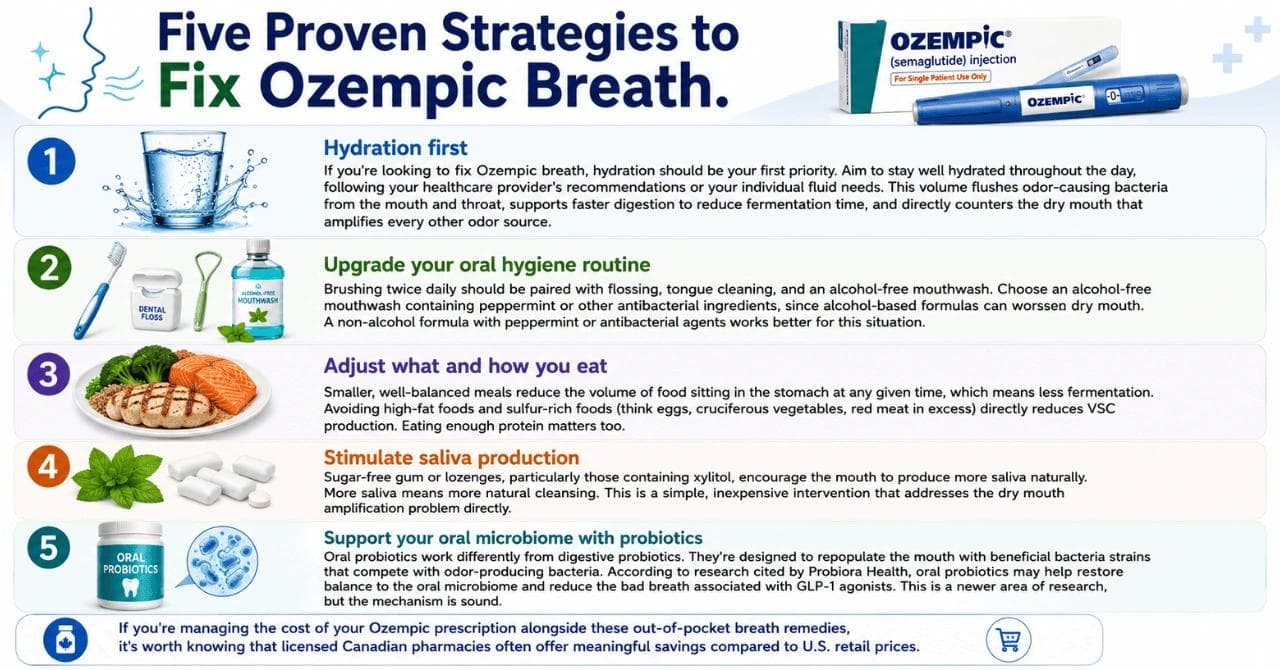
Five Proven Strategies to Fix Ozempic Breath
Hydration first
If you're looking to fix Ozempic breath, hydration should be your first priority. Aim to stay well hydrated throughout the day, following your healthcare provider's recommendations or your individual fluid needs. This volume flushes odor-causing bacteria from the mouth and throat, supports faster digestion to reduce fermentation time, and directly counters the dry mouth that amplifies every other odor source.
Upgrade your oral hygiene routine
Brushing twice daily should be paired with flossing, tongue cleaning, and an alcohol-free mouthwash. Choose an alcohol-free mouthwash containing peppermint or other antibacterial ingredients, since alcohol-based formulas can worsen dry mouth. A non-alcohol formula with peppermint or antibacterial agents works better for this situation.
Adjust what and how you eat
Smaller, well-balanced meals reduce the volume of food sitting in the stomach at any given time, which means less fermentation. Avoiding high-fat foods and sulfur-rich foods (think eggs, cruciferous vegetables, red meat in excess) directly reduces VSC production. Eating enough protein matters too.
Stimulate saliva production
Sugar-free gum or lozenges, particularly those containing xylitol, encourage the mouth to produce more saliva naturally. More saliva means more natural cleansing. This is a simple, inexpensive intervention that addresses the dry mouth amplification problem directly.
Support your oral microbiome with probiotics
Oral probiotics work differently from digestive probiotics. They're designed to repopulate the mouth with beneficial bacteria strains that compete with odor-producing bacteria. According to research cited by Probiora Health, oral probiotics may help restore balance to the oral microbiome and reduce the bad breath associated with GLP-1 agonists. This is a newer area of research, but the mechanism is sound.
If you're managing the cost of your Ozempic prescription alongside these out-of-pocket breath remedies, it's worth knowing that licensed Canadian pharmacies often offer meaningful savings compared to U.S. retail prices.
Bottom Line: Managing Ozempic Bad Breath Effectively
Ozempic bad breath is usually linked to slowed digestion, ketosis, or dry mouth rather than poor oral hygiene alone. In many cases, staying hydrated, maintaining good oral hygiene, and making simple dietary adjustments can help reduce symptoms. If bad breath persists, worsens, or occurs alongside significant GI symptoms, it's worth discussing with your healthcare provider or dentist. They can review your treatment plan, including medications such as metformin, and determine whether additional evaluation or management is needed while you continue treatment safely.
Frequently Asked Questions
Bad breath isn't listed as an official side effect in Ozempic's prescribing information, so its true prevalence isn't known. Clinical trials reported eructation (burping) in approximately 9% of semaglutide users, and slowed digestion, dry mouth, and ketosis may contribute to breath changes in some people.
Yes, and the most common driver is ketosis. When semaglutide suppresses appetite enough to reduce carbohydrate intake significantly, the body shifts into fat-burning mode and produces ketones, including acetone, which exits through the lungs and creates a fruity, sweet, or metallic taste and odor. Dry mouth also alters taste perception independently, so some users experience taste changes even without significant ketosis.
The timeline varies from person to person. Some users report sulfur burps resolving within two to three weeks. Consistent hydration and dietary adjustments speed up the process, but for some people, the issue persists as long as they're on the medication. If it's not improving despite active management, that's worth raising with your healthcare provider.
Disclaimer
This article covers what the research says about ozempic bad breath and its causes, but it's not medical advice. Everyone's situation is different, and GLP-1 medications interact with your individual health history in ways no article can fully account for. Talk to your doctor or dentist before making significant changes to your routine, especially if you're experiencing persistent or worsening symptoms.