What Happens When You Stop Taking Weight Loss Drugs?
Weight-loss medications such as GLP-1 drugs like Ozempic and Wegovy help many people manage appetite and body weight effectively. However, some individuals stop treatment due to cost, side effects, or goal achievement. After stopping, changes in appetite, metabolism, and weight may occur, and clinical research shows that weight regain is common without ongoing lifestyle support.
Questions often focus on whether weight may return or hunger may increase. Clinical studies published in PubMed Central show that weight regain is common after discontinuing anti-obesity medications. Understanding these expected changes can help support safer long-term weight management decisions.
What Happens to Your Body When You Stop Taking Weight Loss Drugs?
When you stop taking weight loss drugs, your body gradually adjusts as the medication effects wear off. Treatments such as Wegovy, Ozempic, and Mounjaro control appetite, slow digestion, and support blood sugar regulation. After discontinuation, the body returns to its natural balance. Some individuals may notice temporary changes, commonly described as Mounjaro side effects.
The noticeable changes that may occur after stopping weight loss drugs include:
- Rise in blood sugar levels: One of the most noticeable changes is an increase in blood sugar levels, especially in people with diabetes or prediabetes, as the medication’s glucose-regulating effects wane.
- Increased appetite after stopping Wegovy: Appetite often increases after stopping Wegovy, leading to more frequent hunger and stronger food cravings.
- Resolution of medication-related side effects: Symptoms such as nausea, vomiting, diarrhea, or constipation often improve or resolve after treatment is stopped.
- Changes in digestion and fullness: The stomach may empty faster, reducing feelings of fullness after meals.
- Gradual metabolic adjustment: The body may slowly shift back toward its previous metabolic state, which can influence appetite, energy balance, and weight stability.
Do You Gain Weight After Stopping Weight Loss Drugs?
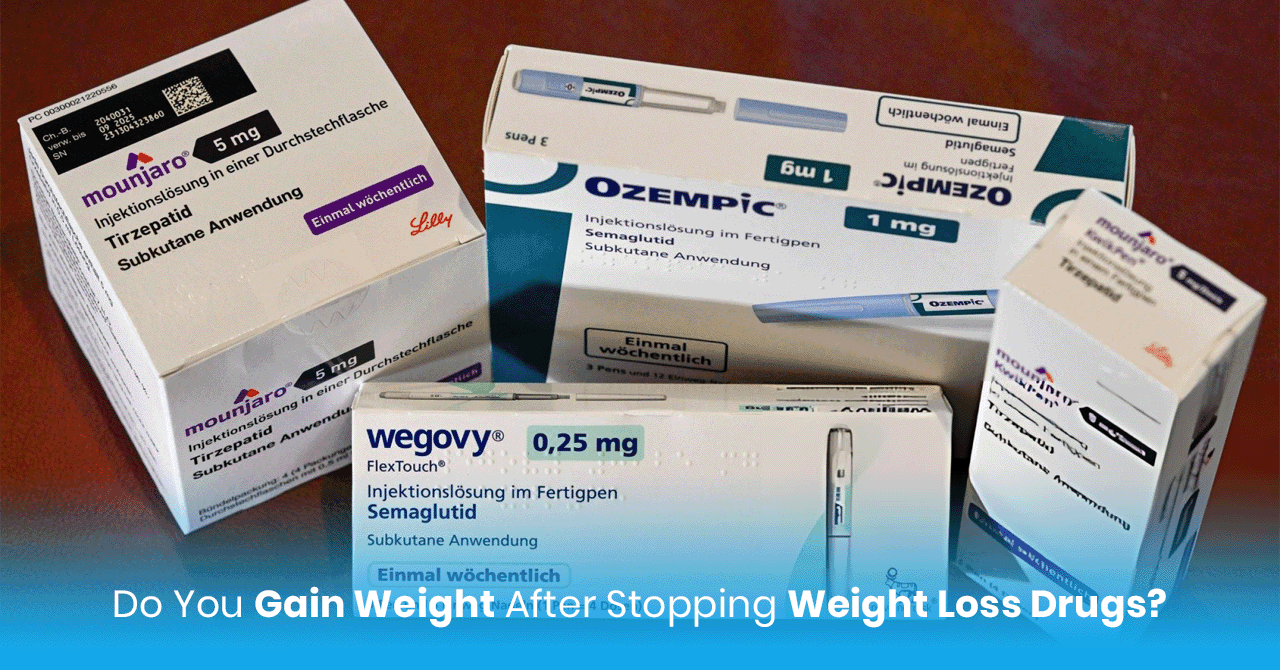
Weight regain is common after stopping weight-loss drugs, though the amount and speed of regain can vary among individuals. As these effects wear off, hunger may increase, making it easier to consume excess calories.
This pattern of stopping Ozempic leading to weight regain has been widely reported, especially when lifestyle changes are not maintained. In a systematic review of clinical studies, a significant portion of lost weight, around one-third or more, may be regained within a year of stopping anti-obesity medications, although results vary widely between individuals. However, weight regain varies, and individuals who maintain healthy habits may keep some of their weight loss.
How Quickly Do Weight Loss Drugs Leave Your System After Stopping?
When you stop taking weight loss drugs, the medication does not leave your body immediately. The time it takes for weight-loss medications to leave the body depends on their half-life, which determines how long the drug remains active in the body. These medications have relatively long half-lives, meaning they remain in the body for several weeks after the last dose.
Effects on appetite and blood sugar gradually decline during this period. Even after leaving the body, its effects on appetite and blood sugar fade gradually. Many individuals notice increased hunger or changes in blood sugar within a few weeks.
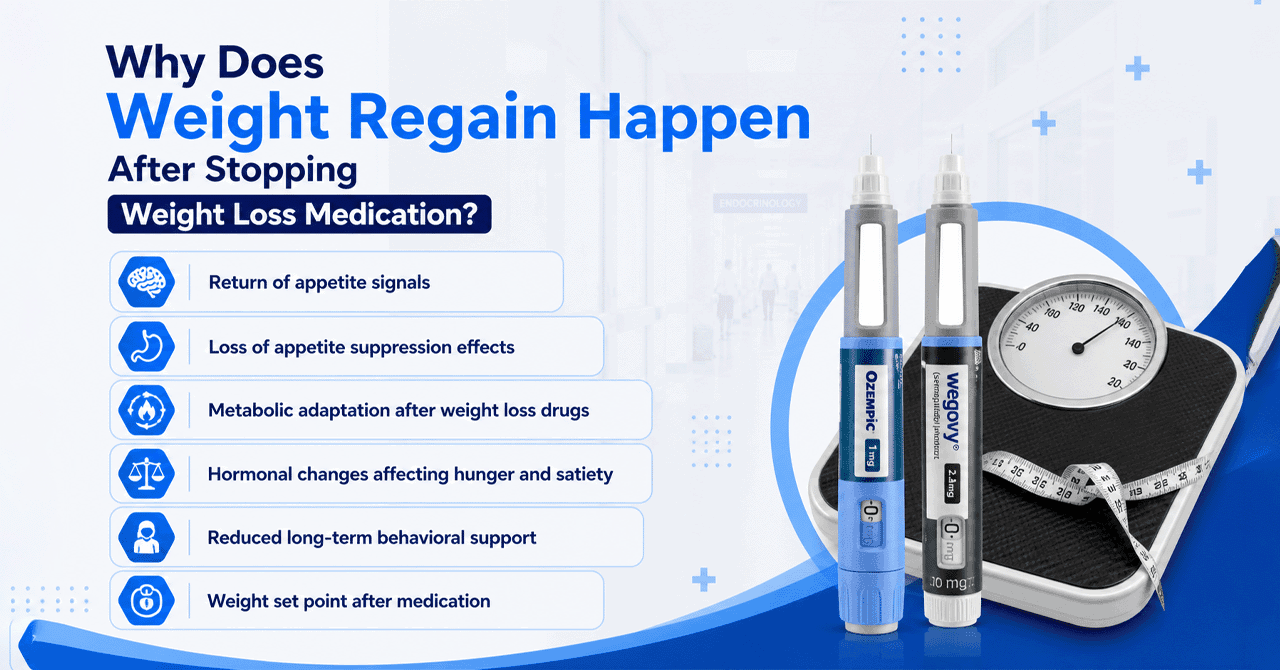
Why Does Weight Regain Happen After Stopping Weight Loss Medication?
Weight regain after stopping weight loss medication is often linked to natural biological responses that return once the medication is discontinued. Drugs such as Ozempic, Wegovy, and Mounjaro affect appetite and digestion. When these effects fade, previous eating patterns may return.
The key factors that contribute to weight regain after stopping weight loss medications include:
- Return of appetite signals: Weight loss medications reduce hunger by affecting brain pathways that control appetite. After discontinuation, these hunger signals may become stronger, increasing the desire to eat more frequently.
- Loss of appetite suppression effects: While on medication, individuals often feel full sooner and eat smaller portions. Once treatment stops, stomach emptying may return to normal speed, reducing feelings of fullness after meals.
- Metabolic adaptation after weight loss drugs: The body naturally slows metabolism to conserve energy. This adaptation may continue even after stopping medication, making it easier to regain weight if calorie intake increases.
- Hormonal changes affecting hunger and satiety: Hormones that regulate hunger and fullness can shift during and after treatment. When medication is stopped, these hormone levels may return to baseline, contributing to increased hunger and food intake.
- Reduced long-term behavioral support: Without consistent habits and follow-up, maintaining weight loss becomes more difficult.
- Weight set point after medication: The body may attempt to return to its previous weight range, making long-term maintenance more challenging.
Are There Withdrawal Symptoms When You Stop Taking Weight Loss Drugs?
Most weight loss drugs do not cause traditional withdrawal symptoms, but rebound changes may occur after stopping treatment, especially without medical guidance. Medications such as Ozempic, Wegovy, and Mounjaro are not considered addictive, so traditional withdrawal is uncommon.
Some individuals search for semaglutide withdrawal symptoms, but most effects reflect rebound appetite rather than true withdrawal. These rebound effects are sometimes described as GLP-1 receptor agonist rebound, referring to the return of appetite and metabolic signals.
The changes that may be noticed after stopping weight loss drugs include:
- Increased hunger and cravings: Appetite may rise as the medication’s appetite-suppressing effects fade.
- Blood sugar changes: Levels may rise, especially in individuals with diabetes.
- Digestive adjustments: Stomach emptying may return to normal speed, reducing feelings of fullness after meals.
- Return of previous symptoms: Challenges such as frequent hunger or overeating tendencies may gradually reappear.
Bottom Line: What Happens After Stopping Weight Loss Drugs?
Stopping weight loss drugs may lead to gradual changes in appetite, metabolism, and body weight. While weight regain is common, long-term success often depends on maintaining healthy eating habits, regular physical activity, and ongoing medical guidance.
Individual responses vary, so decisions about discontinuing medications should be made with a healthcare provider. Understanding the long-term effects of stopping GLP-1 medications and following a structured post-GLP-1 diet plan may support long-term weight stability.
Frequently Asked Questions
Yes, it is possible to maintain weight loss after stopping treatment, especially for those following strategies on how to maintain weight after Wegovy through consistent diet and exercise.
Many weight loss drugs are designed for long-term use, particularly for individuals with obesity, and are typically combined with lifestyle changes such as healthy eating and physical activity.
Weight regain may begin within weeks to months of stopping weight loss drugs, depending on the medication used and individual lifestyle habits.
Medical Disclaimer
This blog is provided for informational purposes only and does not replace professional medical advice, diagnosis, or treatment. Information is based on trusted sources, including peer-reviewed studies and recognized medical organizations. Always consult an authorized healthcare professional before making treatment decisions.