What Is Synthroid Used For?
Synthroid (levothyroxine) is a commonly prescribed underactive thyroid medication used to treat hypothyroidism, a condition in which the body does not produce enough thyroid hormone. By replacing this essential hormone, Synthroid helps restore normal metabolism, improve energy levels, and support overall bodily functions.
Beyond hypot hyroidism, it is also used to prevent or treat goiter and as part of therapy for certain thyroid cancers. Understanding what is Synthroid used for can help patients better manage their condition and treatment expectations.
What Is Synthroid Used For in Hypothyroidism?
Synthroid for hypothyroidism is primarily prescribed to restore normal thyroid hormone levels, helping the body return to its natural metabolic balance. Clinical guidance from the National Institute of Diabetes and Digestive and Kidney Diseases supports thyroid hormone replacement as the primary treatment for hypothyroidism. When thyroid hormone levels are low, many essential functions slow, leading to symptoms such as fatigue, weight gain, sensitivity to cold, and a slowed heart rate.
As part of T4 hormone replacement therapy, Synthroid replaces thyroxine (T4). Synthroid helps improve these symptoms over time and supports normal energy production, digestion, and overall bodily function. Consistent treatment is important for maintaining stable hormone levels and preventing symptoms from returning.

What Is Synthroid Used For in Hashimoto’s Thyroiditis?
Synthroid is a key part of Hashimoto’s disease treatment, helping manage the hypothyroidism that develops when the immune system gradually damages the thyroid gland. As the gland loses its ability to produce enough hormones, Synthroid replaces thyroxine (T4) to help maintain stable thyroid hormone levels over time.
It also helps lower elevated thyroid-stimulating hormone (TSH) levels, which rise as the thyroid function declines. In some cases, consistent treatment may help reduce thyroid enlargement (goiter) associated with Hashimoto’s. Because the condition is chronic, Synthroid is typically required as a long-term treatment.
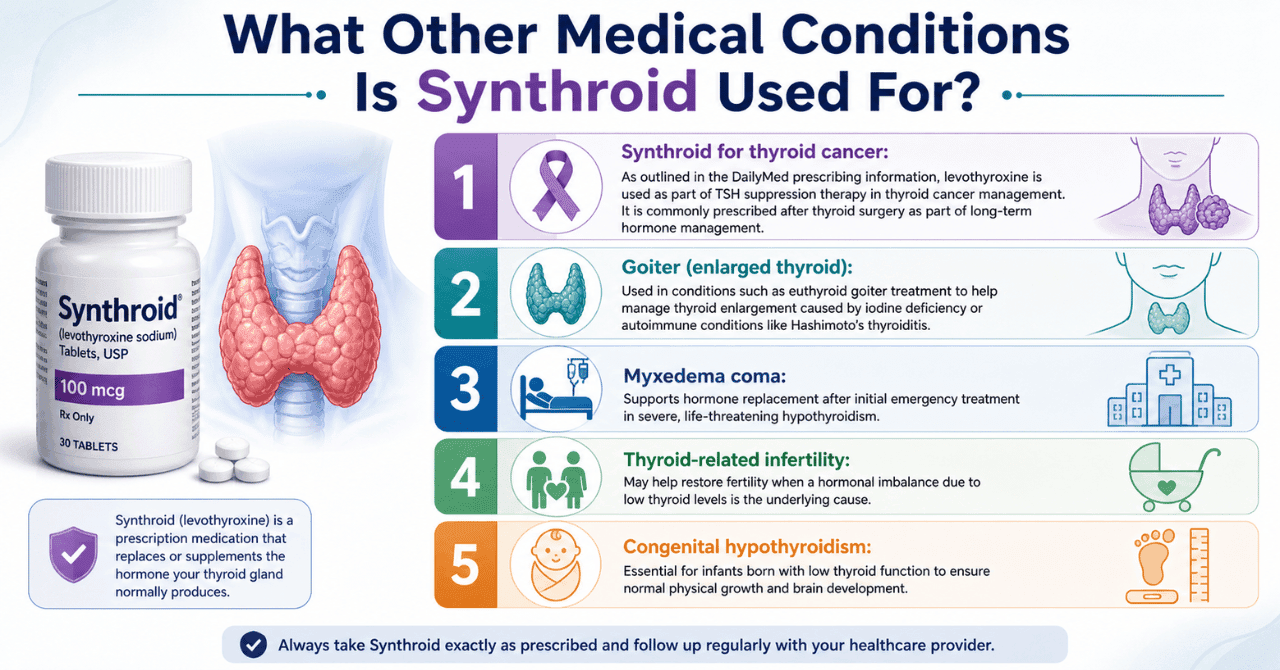
What Other Medical Conditions Is Synthroid Used For?
In addition to hypothyroidism, Synthroid is used to manage several other thyroid-related conditions, including:
- Synthroid for thyroid cancer: As outlined in the DailyMed prescribing information, levothyroxine is used as part of TSH suppression therapy in thyroid cancer management. It is commonly prescribed after thyroid surgery as part of long-term hormone management.
- Goiter (enlarged thyroid): Used in conditions such as euthyroid goiter treatment to help manage thyroid enlargement caused by iodine deficiency or autoimmune conditions like Hashimoto’s thyroiditis.
- Myxedema coma: Supports hormone replacement after initial emergency treatment in severe, life-threatening hypothyroidism.
- Thyroid-related infertility: May help restore fertility when a hormonal imbalance due to low thyroid levels is the underlying cause.
- Congenital hypothyroidism: Essential for infants born with low thyroid function to ensure normal physical growth and brain development.
What Is Synthroid Used For in Special Cases (Children and Congenital Hypothyroidism)?
Synthroid is also used in special cases, such as children and infants diagnosed with congenital hypothyroidism, a condition in which the thyroid gland does not produce enough hormones from birth. Early treatment is essential because thyroid hormones play a critical role in brain development, growth, and overall physical development.
In these cases, Synthroid replaces the missing hormone to ensure normal cognitive function and healthy growth. Treatment is usually started soon after diagnosis and carefully monitored to maintain appropriate hormone levels as the child develops.
How Synthroid Supports the Body in Treating Thyroid Conditions?
Synthroid is a synthetic replacement for thyroxine (T4), a hormone naturally produced by the thyroid gland. The thyroid plays a key role in regulating metabolism and energy balance. When T4 levels are balanced, your body’s systems run at the correct speed.
By supplementing the body with levothyroxine, Synthroid supports:
- Metabolic Regulation: It helps cells convert oxygen and calories into energy, which aids in weight management and body temperature control.
- Cardiovascular Health: It helps maintain a steady heart rate and regulate cholesterol levels.
- Neurological Function: It clears the "brain fog" often associated with hypothyroidism, improving concentration and mood.
- Growth and Repair: In children, it fuels bone growth and brain development; in adults, it supports the repair of skin, hair, and nails.
How Long Does It Take for Synthroid to Work?
Synthroid does not work instantly, as it takes time to restore normal thyroid hormone levels in the body. While some people may begin to notice improvements in symptoms within the first couple of weeks, full effects typically develop gradually with consistent use. The timeline can vary depending on individual health factors, dosage, and thyroid levels before starting treatment.
| Timeframe | What to Expect |
|---|---|
| 1-2 weeks | Initial improvement in symptoms like fatigue and low energy |
| 3-4 weeks | Gradual improvement in metabolism and overall well-being |
| 4-6 weeks | Noticeable stabilization of thyroid hormone levels |
| 6-8 weeks | Full therapeutic effect; the doctor may reassess the dosage if needed |
← Swipe to see more →
The Final Words on the Uses of Synthroid
Synthroid is a life-changing medication for those with thyroid imbalances, offering a path back to energy and metabolic health. Whether you are managing Hashimoto’s or recovering from thyroid surgery, the key to success lies in consistent dosing and regular communication with your healthcare provider. By understanding the timeline and the mechanics of your treatment, you can take an active role in your wellness journey.
Frequently Asked Questions
Synthroid is mainly used to treat hypothyroidism, a condition in which the thyroid gland does not produce enough hormones. It works by replacing thyroxine (T4), helping restore normal metabolism, energy levels, and overall body function.
Yes. In fact, maintaining healthy thyroid levels is crucial for a healthy pregnancy. However, your dosage requirements will likely increase, so frequent blood tests are necessary.
While they contain the same active ingredient, the inactive fillers can vary. Most experts recommend sticking to one brand to keep your TSH levels consistent.
Take it as soon as you remember, unless it is almost time for your next dose. Do not double the dose unless your doctor specifically instructs you to.
Side effects are usually related to incorrect dosing and may include symptoms such as heart palpitations, weight changes, or mood fluctuations. Women may also notice menstrual irregularities if hormone levels are not properly balanced.
Medical Disclaimer
This blog is provided for informational purposes only and does not replace professional medical advice, diagnosis, or treatment. Information is based on trusted sources, including peer-reviewed studies and recognized medical organizations. Always consult an authorized healthcare professional before making treatment decisions.