What Is the Strongest Weight Loss Prescription Pill? A Detailed Guide
Weight loss can be challenging, especially when diet and lifestyle changes alone do not deliver the desired results. For individuals seeking medically supported options, a common question arises: What is the Strongest Weight Loss Prescription Pill?
Current clinical evidence shows that medications such as tirzepatide (Zepbound) and semaglutide produce the greatest average weight loss, making them the leading options when discussing the most effective prescription treatments. In such cases, medications approved by the U.S. Food and Drug Administration (FDA) may be recommended as part of a medically supervised weight management plan.
Which Prescription Medication Leads to the Strongest Weight Loss?
Among available prescription treatments, medications that target GLP-1 and related hormone pathways produce the highest average weight loss. The comparison below highlights how leading options differ in effectiveness, type, and usage.
Comparison of the Most Effective Prescription Weight Loss Medications
| Medication | Average Weight Loss | Type | How to Take |
|---|---|---|---|
| Tirzepatide | 15-22% body weight | Dual GLP-1/GIP agonist | Weekly injection |
| Semaglutide | 12-15% body weight | GLP-1 agonist | Weekly injection |
| Phentermine-Topiramate | 8-12% | Combination pill | Daily oral |
| Naltrexone-Bupropion | 5-9% | Combination pill | Daily oral |
| Liraglutide | 5-10% | GLP-1 agonist | Daily injection |
| Orlistat | 5-7% | Fat absorption blocker | Daily oral |
← Swipe to see more →
Safety and Long-Term Effects of Strong Weight Loss Medications
Clinical studies published in PubMed Central have shown that GLP-1-based medications can produce significant and sustained weight loss when used alongside diet and lifestyle changes. Most patients maintain significant weight reduction while continuing treatment.
However, long-term use may be associated with side effects such as nausea, vomiting, and constipation. In rare cases, more serious complications such as pancreatitis or gallbladder disease may occur. Patients using tirzepatide typically require ongoing monitoring by a healthcare provider to evaluate effectiveness and safety.

Other FDA-Approved Options (Overview)
FDA-approved prescription weight loss medications include the following options and their general mechanisms of action.
| Medication | Approved For | How It Works |
|---|---|---|
| Orlistat (Xenical, Alli) Oral pill, 3 times daily | Adults and children 12 years and older | Works in the digestive tract to reduce fat absorption from food |
| Phentermine–Topiramate (Qsymia) Oral pill, once daily | Adults and children 12 years and older | Combination of phentermine (appetite suppressant) and topiramate (affects appetite control and fullness) |
| Naltrexone–Bupropion (Contrave) Oral pill, 1–2 times daily | Adults | A combination of naltrexone and bupropion that reduces hunger and cravings |
| Liraglutide (Saxenda) Daily injection | Adults and children 12 years and older | Mimics GLP-1 hormone, helping control appetite and reduce food intake |
| Semaglutide (Wegovy) Weekly injection | Adults and children 12 years and older | Mimics GLP-1 hormone to regulate appetite and reduce food intake |
| Setmelanotide (IMCIVREE) Daily injection | Individuals 6 years and older with certain rare genetic obesity conditions (e.g., POMC, PCSK1, LEPR deficiency, Bardet-Biedl syndrome) | Activates brain pathways that reduce appetite and increase calorie burning |
| Tirzepatide (Zepbound) Weekly injection | Adults | Mimics GIP and GLP-1 hormones, helping reduce appetite and improve fullness |
← Swipe to see more →
What Prescription Pills Make You Lose Weight Fast?
Some medications, particularly injectable options like tirzepatide and semaglutide, may produce faster initial weight loss compared to oral treatments. However, rapid weight loss is not always the safest goal. Sustainable, gradual weight reduction is generally associated with better long-term outcomes, especially when combined with medically guided doctor prescribed weight loss pills and lifestyle changes.
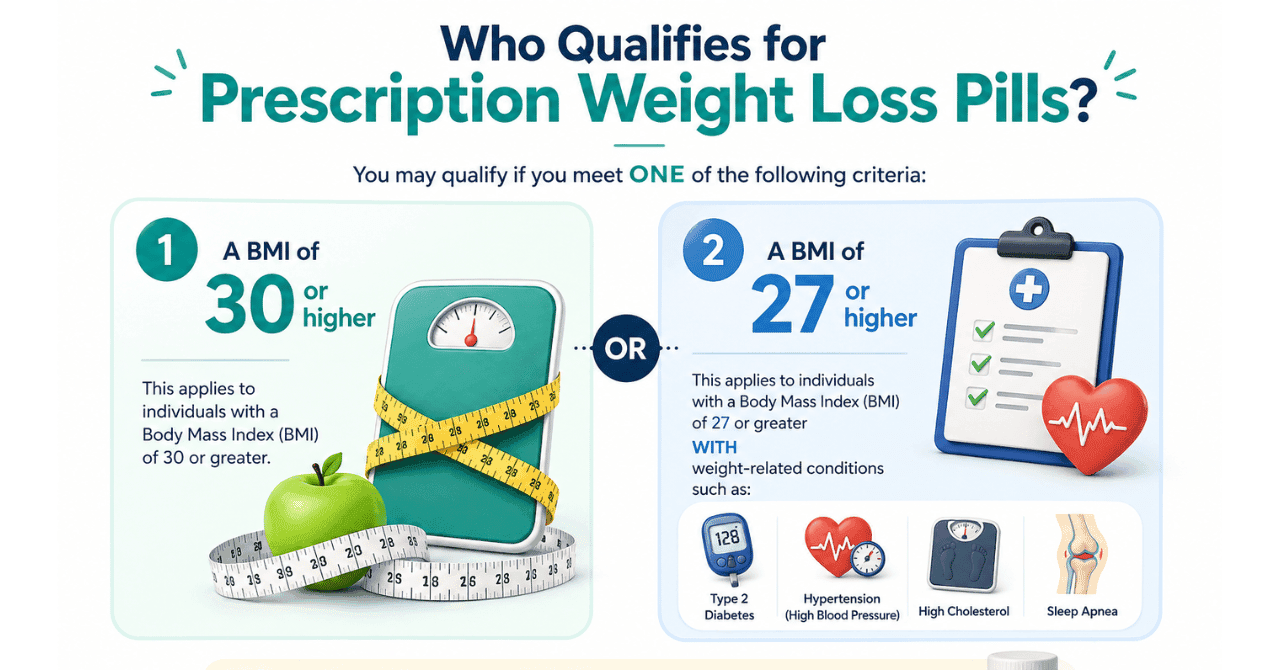
Who Qualifies for Prescription Weight Loss Pills?
Prescription weight loss medications are typically recommended for individuals with:
- A BMI of 30 or higher, or
- A BMI of 27 or higher with weight-related conditions such as type 2 diabetes or hypertension
Eligibility is determined by a healthcare provider based on overall health, medical history, and treatment goals.
Final Thoughts: Choosing the Right Prescription Weight Loss Medication
Medications such as tirzepatide and semaglutide are among the most effective options for weight loss based on clinical outcomes. However, the best choice depends on individual factors such as BMI, medical history, and overall health.
Sustainable results typically require ongoing treatment, healthy lifestyle habits, and regular medical follow-up. Anyone considering prescription weight loss medications should consult a qualified healthcare provider to determine the safest and most appropriate plan.
Frequently Asked Questions
Tirzepatide and semaglutide are generally considered the most effective options based on clinical outcomes.
Most doctor prescribed weight loss pills are considered safe when used under medical supervision, but long-term use requires regular monitoring to manage side effects and ensure continued effectiveness.
Weight regain can occur after stopping medications such as semaglutide or tirzepatide because appetite-regulating hormones return to baseline levels. Maintaining weight loss usually requires ongoing lifestyle changes, including balanced nutrition and regular physical activity. Healthcare providers may recommend long-term treatment plans to support sustained results.
Medical Disclaimer
The above content is for informational purposes only and does not replace professional medical advice. Always consult a licensed healthcare provider before starting or combining medications.