Why Some U.S. Patients Quit Microdosing After 3 Months in 2026 (And What They Switch To)
Key Takeaways
- Clinical data show over 26% of patients quit GLP-1 therapy by month three due to stalled physical progress and high costs.
- Unauthorized fractional dosing fails to eliminate severe digestive discomfort and constant nausea.
- Quitting cold turkey triggers a rapid biological rebound that causes significant weight regain within months.
- Uninsured patients increasingly transition to verified international pharmacies to access affordable standard medication safely.
In 2026, many U.S. patients quit microdosing their metabolic medications at exactly the three-month mark. Clinical data show that people abandon these off-label routines due to rising out-of-pocket costs and sudden treatment stalls. If you are frustrated by a microdose not working, understanding the biological walls you hit is the first step toward finding a legitimate solution.
Why Some Patients Stop Ozempic After 3 Months
According to recent clinical data regarding GLP-1 receptor agonist discontinuation among patients with obesity, 26.2% of individuals abandon their therapy exactly at the three-month mark. When you explore, why stop Ozempic after 3 months? The answer heavily involves the realities of unapproved dose manipulation. Patients initially stretch their pens to save money, assuming the early water weight drop will continue forever.
However, the human body quickly adapts to these unauthorized fractional doses. By the time you reach month three, the initial appetite suppression fades away completely. You are left paying a high out-of-pocket cost monthly without seeing any physical changes in the mirror. This intense financial drain, combined with severe GLP-1 fatigue, forces massive numbers of people to quit microdosing 3 months in 2026. Living with the constant stress of medication management without the reward of physical progress simply becomes impossible to maintain.

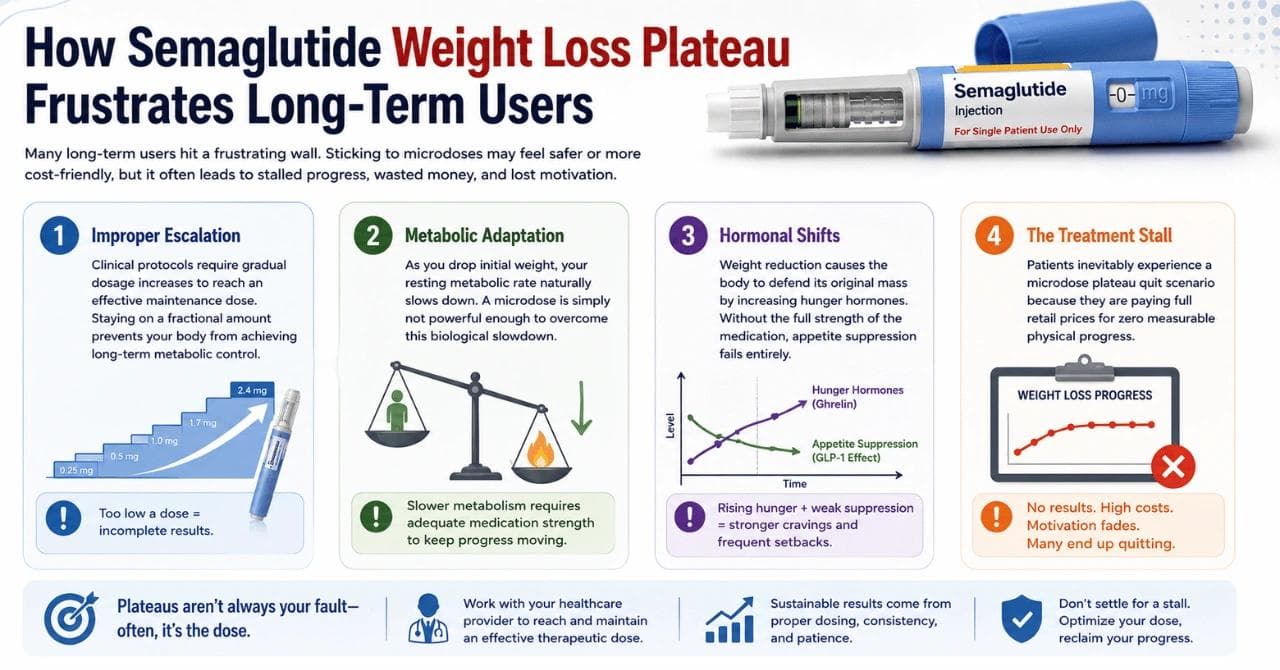
How Semaglutide Weight Loss Plateau Frustrates Long-Term Users
A semaglutide weight loss plateau occurs when the initial physical effects of the medication diminish. When patients manipulate their pens instead of following the official clinical escalation schedule, their progress stalls completely, triggering severe frustration.
- Improper Escalation: Clinical protocols require gradual dosage increases to reach an effective maintenance dose. Staying on a fractional amount prevents your body from achieving long-term metabolic control.
- Metabolic Adaptation: As you drop initial weight, your resting metabolic rate naturally slows down. A microdose is simply not powerful enough to overcome this biological slowdown.
- Hormonal Shifts: Weight reduction causes the body to defend its original mass by increasing hunger hormones. Without the full strength of the medication, appetite suppression fails entirely.
- The Treatment Stall: Patients inevitably experience a microdose plateau quit scenario because they are paying full retail prices for zero measurable physical progress.
Why Side Effects of Microdosing Ozempic Still Push Patients to Quit
Many individuals attempt fractional doses specifically to avoid feeling sick. Unfortunately, a recent pharmacovigilance study using the FDA adverse event reporting system proves that unauthorized dose manipulation still triggers the severe gastrointestinal side effects that force patients to abandon treatment.
| Expected Microdose Benefit | The Harsh Clinical Reality | |
|---|---|---|
| Mild or zero daily nausea | Constant nausea that ruins daily meals and routines | |
| Better digestive function | Severe abdominal pain, diarrhea, and unpredictable bowel changes | |
| Easier medication management | High risk of medication errors and contamination from tampering with pens | |
| Cost-effective symptom relief | Paying premium prices while feeling sick every single week |
← Swipe to see more →
These unresolved physical burdens are a primary reason why patients ultimately quit microdosing. When the constant physical discomfort outweighs the stalled weight loss results, the side effects of microdosing Ozempic simply become too disruptive to tolerate.
What Happens When You Stop Taking GLP-1 Medications
If you abruptly halt your treatment, your biology reacts almost immediately. When asking what happens when you stop taking GLP-1 medications, clinical meta-analysis data reveal a rapid and severe rebound effect. Your suppressed appetite returns in full force, and blood sugar levels can fluctuate wildly within days of missing your expected dose.
Medical studies confirm that patients regain over 40% of their lost weight within 28 weeks of stopping the medication completely. This intense rebound often involves gaining back body fat while struggling to recover any muscle mass loss experienced during the initial treatment phase. Because quitting cold turkey causes such a jarring physical shock, medical professionals strongly advise transitioning to an approved routine rather than abandoning metabolic support altogether.
Switching from Microdosing to Standard GLP-1 Affordability Options
Recent clinical studies evaluating 1-year persistence and adherence show that the severe financial burden of off-label routines drives the trend of switching from microdosing to more regulated, stable pathways. Instead of risking contamination by stretching pens, you can explore legitimate, affordable Ozempic alternatives in 2026 by following these structured steps:
- Official Formulary Exceptions: Have your healthcare provider submit a formal appeal to your insurance company to secure coverage for standard, full-strength medication based on your exact clinical history.
- Prescription Discount Programs: Investigate official manufacturer assistance programs directly through the pharmaceutical company. These programs offer specific pricing tiers and savings cards for eligible patients who meet strict income requirements.
- Clinical Re-Titration: When moving to a standard approved routine, your doctor must guide a safe, gradual dosage escalation to prevent the severe physical shock caused by abrupt medication changes.
Cash Pay Pharmacy Options Patients Explore After Quitting Microdosing
When domestic insurance appeals fail completely, you must be incredibly cautious about where you source your medication. The FDA recently announced the issuance of 30 warning letters to telehealth companies for illegally marketing unapproved and unregulated copies. To avoid these dangerous scams, uninsured patients fleeing high out-of-pocket costs are increasingly looking into verified international cash pay pharmacy options.
Ordering standard, fully approved pens from a licensed Canadian pharmacy is a widely recognized strategy for U.S. patients. Using a verified service like Polar Bear Meds allows you to access legitimate name-brand medication safely. This route eliminates the need to rely on risky dose manipulation, providing a stable path forward after you quit microdosing.
The Bottom Line: Why Cost and Frustration Drive GLP-1 Drop-Off Trends
The decision to quit microdosing ultimately stems from a predictable combination of stalled physical progress, ongoing digestive sickness, and unmanageable financial strain. When individuals realize that stretching their pens fails to deliver sustainable metabolic control, they hit a breaking point where the unregulated costs outweigh the minimal benefits.
Rather than abandoning your health goals entirely after hitting this biological wall, the safest approach is to secure fully approved therapies through verified international channels. If you are ready to transition away from unauthorized dosage adjustments and find a stable treatment plan, you can safely review your legitimate fulfillment options below.
Frequently Asked Questions
Patients stop because the initial water weight loss halts entirely while they continue to suffer from constant side effects and high out-of-pocket costs.
A plateau occurs because the body adapts to the low fractional amount, and the patient never reaches the clinical maintenance dose required for continued fat burning.
Clinical studies show that manipulating the drug delivery system still triggers gastrointestinal distress, meaning patients experience nausea and abdominal pain despite taking a smaller amount.
Abruptly stopping metabolic medication causes a rapid rebound effect, leading to a sudden return of hunger and severe blood sugar fluctuations.
Yes, patients can restart the medication under strict medical supervision, but they must usually begin again at the lowest introductory dose to avoid severe digestive shock.
People switch because they realize that standard dosing is the only way to achieve sustainable long-term results without remaining stuck in a permanent progress stall.
Uninsured patients frequently compare prices across legitimate domestic retail pharmacies and verified international Canadian pharmacies to secure safe, name-brand medication.
Yes, patients who meet strict corporate income guidelines can apply for official manufacturer hardship programs to significantly reduce their monthly medication expenses.
You should consult your healthcare provider to establish a safe transition plan, as stopping abruptly can cause a harsh physical shock and rapid weight regain.
Disclaimer
This blog is provided for informational purposes only and does not replace professional medical, insurance, financial, or prescription guidance. Pricing, availability, prescription requirements, shipping timelines, and medication access policies may change over time and vary by provider, pharmacy source, and insurance plan. Always consult your healthcare provider, insurance representative, or official government resources before making medication, prescription, or coverage decisions.