Why U.S. Drug Pricing Programs Often Don’t Help Most Patients (2026 Eligibility Reality Check)
Many patients try U.S. drug pricing programs expecting major savings, only to discover that eligibility rules, insurance limitations, or pricing conditions reduce the actual benefit. In 2026, some programs will remain limited to specific patient groups. High deductibles and coverage restrictions can also leave people paying high out-of-pocket costs at the pharmacy counter, leading some patients to compare alternatives such as Canadian Pharmacy in 2026.
How Do U.S. Drug Pricing Programs Work in 2026?
A U.S. drug pricing program is designed to reduce prescription costs through government negotiations, manufacturer discounts, and assistance-based pricing systems. In 2026, most programs work through a few major structures that control how certain medications are priced and distributed.
Medicare Price Negotiation Programs
Under recent federal policy changes, Medicare can now negotiate prices for selected high-cost medications. These negotiated prices primarily apply to eligible Medicare beneficiaries and are intended to reduce out-of-pocket costs for covered patients.
Safety-Net Discount Programs
Some federal programs require pharmaceutical manufacturers to offer discounted pricing to qualifying hospitals, clinics, and healthcare organizations. These discounts are designed to support patients served through approved healthcare systems.
Manufacturer Assistance Programs
Many pharmaceutical companies also operate patient assistance or savings programs. These programs may provide discounts or lower copays. But eligibility often depends on income level, insurance status, or specific enrollment requirements.
Because these systems follow strict qualification rules, not every patient receives the same level of savings. This is one reason many people researching U.S. pricing program limitations compare multiple prescription access options rather than relying on a single program.

Why Many U.S. Patients Do Not Qualify for Drug Pricing Programs
Many people expect a U.S. drug pricing program to automatically reduce their prescription costs. However, strict eligibility rules often prevent patients from receiving meaningful savings.
- Insurance Restrictions: Some programs only support patients with specific insurance types. Manufacturer copay programs usually exclude Medicare and Medicaid patients due to federal compliance requirements.
- Income-Based Eligibility: Many assistance programs use fixed income limits. Patients earning slightly above the required threshold may not qualify, even if their prescription costs remain high.
- Facility and Network Limits: Certain discounted pricing systems only apply at approved hospitals or clinics. Patients outside those networks may not receive the same pricing access.
- Copay Accumulator Programs: Some private insurers use copay accumulator or maximizer programs. Under these systems, manufacturer assistance may not count toward a patient’s deductible or yearly out-of-pocket limit.
Because of these restrictions, many patients compare retail pharmacies, cash-pay services, and licensed international pharmacy providers.
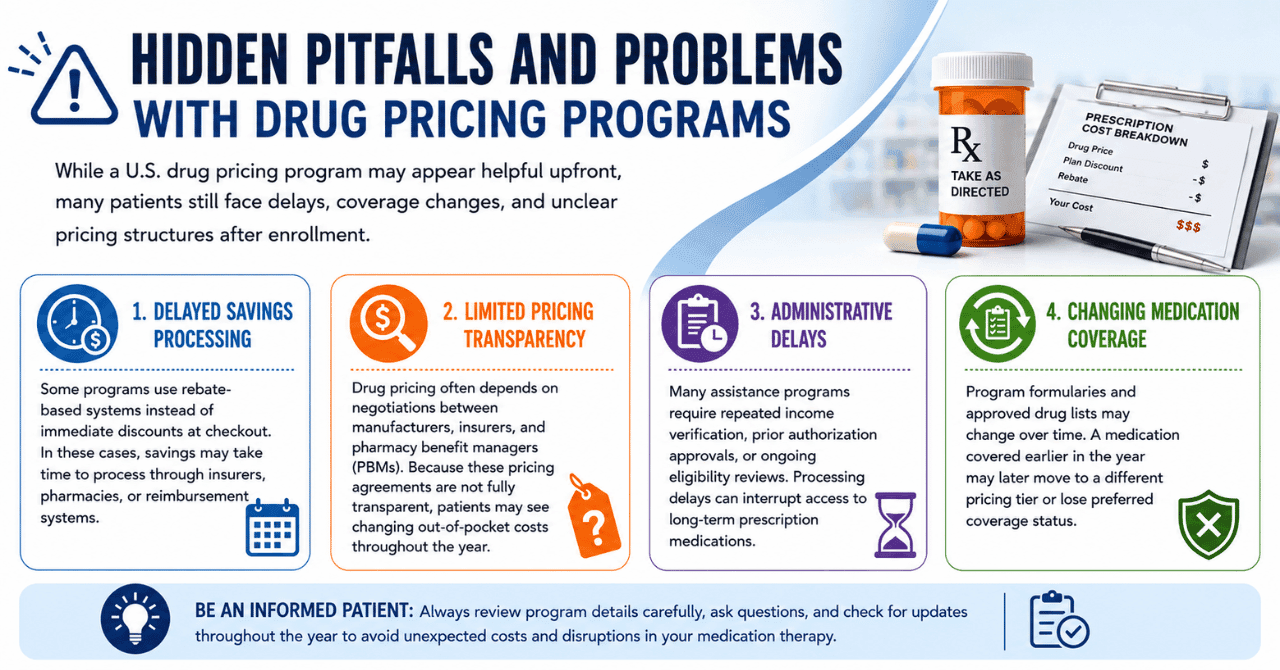
Hidden Pitfalls and Problems with Drug Pricing Programs
While a U.S. drug pricing program may appear helpful upfront, many patients still face delays, coverage changes, and unclear pricing structures after enrollment.
Delayed Savings Processing: Some programs use rebate-based systems instead of immediate discounts at checkout. In these cases, savings may take time to process through insurers, pharmacies, or reimbursement systems.
Limited Pricing Transparency: Drug pricing often depends on negotiations between manufacturers, insurers, and pharmacy benefit managers (PBMs). Because these pricing agreements are not fully transparent, patients may see changing out-of-pocket costs throughout the year.
Administrative Delays: Many assistance programs require repeated income verification, prior authorization approvals, or ongoing eligibility reviews. Processing delays can interrupt access to long-term prescription medications.
Changing Medication Coverage: Program formularies and approved drug lists may change over time. A medication covered earlier in the year may later move to a different pricing tier or lose preferred coverage status.
Drug Pricing Programs vs. Alternative Prescription Access Options
In 2026, many patients will compare traditional pricing systems with direct cash-pay services to better manage prescription costs. Understanding how a drug program vs. an insurance model differs from alternative access options helps explain why pricing can vary so widely between platforms.
Traditional drug pricing programs usually operate through insurance systems, manufacturer assistance structures, or government-regulated pricing frameworks. Alternative access options focus on direct purchasing models with upfront pricing transparency.
Key Differences Between Prescription Access Models
| Feature | Traditional Drug Pricing Programs | Alternative Prescription Access Options |
|---|---|---|
| Pricing Structure | Insurance-linked discounts or negotiated pricing systems | Direct cash pricing and visible retail costs |
| Eligibility Requirements | Often requires income, insurance, or program qualification | Generally open access with limited restrictions |
| Insurance Integration | Connected to insurance plans and deductibles | Usually operates outside insurance systems |
| Approval Process | May require enrollment, verification, or authorization | Faster purchasing with standard prescription verification |
| Medication Focus | Often used for specialty or higher-cost medications | Commonly used for generic and maintenance medications |
| Pricing Stability | Can change based on coverage or formulary updates | Pricing is typically shown upfront before purchase |
← Swipe to see more →
Drug Program vs. Insurance: Which Option Makes More Sense?
Traditional pricing programs may reduce costs for eligible patients, especially for specialty medications. However, strict qualification rules, insurance restrictions, and changing formularies can limit access.
Alternative prescription access options provide more direct pricing visibility and simpler purchasing pathways. However, purchases made outside insurance networks may not count toward annual deductibles or out-of-pocket maximums.
Checklist: What to Review Before Using a Drug Pricing Program
Before using a U.S. drug pricing program, review how the pricing works. Also, check if the pharmacy accepts it. Compare how it may affect insurance costs or future prescription spending.
Important Things to Check Before Filling a Prescription
- Compare insurance and discount pricing: Always compare the program price with your normal insurance copay. In some cases, insurance pricing may still be lower.
- Understand deductible limitations: Many cash-pay discount systems do not apply toward insurance deductibles or annual out-of-pocket limits.
- Verify pharmacy participation: Not every pharmacy accepts the same discount networks or savings programs. Confirm acceptance before processing a prescription.
- Recheck prices before every refill: Medication pricing can change based on pharmacy agreements, supply conditions, or program updates.
- Confirm prescription details carefully: Make sure the medication strength, quantity, and dosage match the active prescription exactly.
- Review privacy and data policies: Some third-party pricing platforms collect user or prescription-related data. Reviewing privacy policies helps patients understand how information may be used.
- Check manufacturer assistance restrictions: Certain manufacturer savings programs may not work alongside specific insurance plans or copay accumulator systems.
Reviewing these details carefully can help patients avoid unexpected costs. It also makes it easier to decide whether a traditional U.S. drug pricing program or another prescription option offers better value in 2026.
Choosing the Right U.S. Drug Pricing Program Option in 2026
Many patients explore a traditional U.S. drug pricing program expecting fast prescription savings. However, strict eligibility rules and insurance restrictions often lead to high out-of-pocket costs or unexpected denials. Understanding who can use the U.S. drug program systems depends on insurance type, medication category, and program requirements.
For Medicare patients using selected specialty medications, these programs may provide meaningful cost relief. However, patients with private insurance or common generic prescriptions often compare cash-pay pharmacy platforms and direct retail pricing. These options may provide faster access and more predictable savings.
Read our blog for more: The 7 Drugs Where a Canadian Pharmacy Still Beats US Pricing Programs in 2026.
Frequently Asked Questions
No. Most U.S. drug pricing programs only apply to selected medications. Coverage usually depends on the program structure and insurance rules. Medication eligibility may also vary under specific pricing or assistance frameworks.
The 340B drug pricing program is a federal program. It requires pharmaceutical manufacturers to provide discounted outpatient medications to eligible hospitals and healthcare organizations. The program is designed to support approved healthcare providers serving qualifying patient populations.
Yes, but eligibility depends on the insurance type and the program rules. Some manufacturer savings programs work only with private insurance. Certain government-supported programs apply specifically to Medicare or Medicaid beneficiaries.
Disclaimer
This article is for informational purposes only and does not provide medical, legal, or financial advice. Information related to the U.S. drug pricing program, eligibility rules, insurance limitations, and prescription pricing structures may change over time. Patients should consult a licensed healthcare provider before making any medication-related decisions. They should also verify current program requirements, insurance policies, and pharmacy regulations before purchasing medications.