Acute Pancreatitis on Mounjaro: Warning Signs, Symptoms & Emergency Care
Key Takeaways
- Acute pancreatitis is a rare but serious potential side effect of Mounjaro (tirzepatide).
- The cardinal symptom is severe, persistent upper abdominal pain that often radiates to the back.
- This pain is distinctly different from common, mild GI side effects like nausea or bloating.
- If you experience these severe symptoms, stop Mounjaro and seek emergency medical care immediately.
- A history of pancreatitis, gallstones, or very high triglycerides significantly increases your risk and requires careful discussion with your doctor.
Mounjaro (tirzepatide) remains one of the most commonly prescribed GLP-1/GIP medications for adults with type 2 diabetes in the United States. Although it is highly effective for blood sugar control and weight reduction, it continues to carry an FDA warning about the rare risk of acute pancreatitis. Clinical trial data and post-marketing safety monitoring through 2026 indicate that this complication remains uncommon but requires immediate medical attention when suspected.
What warning signs should I watch for if I’m on Mounjaro and worried about pancreatitis?
Knowing the specific symptoms of acute pancreatitis can help you act quickly. The most critical warning sign is a distinctive, severe pain.
The hallmark symptom is a sudden, intense pain in your upper abdomen. People often describe this as a "belt-like" pain that wraps around the upper body and frequently radiates straight through to the back. This pain is typically constant and severe. It usually does not improve with changing positions, over-the-counter antacids, or passing gas.
Alongside this severe pain, watch for these accompanying signs:
- Persistent nausea and vomiting.
- Fever and a tender abdomen that hurts when touched.
- A rapid pulse.
If you experience this combination, especially the severe, persistent abdominal pain with back radiation, you must seek emergency medical care immediately. Do not wait to see if it gets better.
Can Mounjaro cause pancreatitis and how does it affect the pancreas in people with type 2 diabetes?
Yes, Mounjaro (tirzepatide) can cause acute pancreatitis, but it's important to understand the scale of the risk. The current U.S. FDA Prescribing Information continues to advise permanently discontinuing Mounjaro if pancreatitis is suspected and confirmed. The medication has not been studied extensively in patients with a prior history of pancreatitis, so healthcare providers should carefully assess individual risks before prescribing it. As noted, it is a rare event, occurring in a small fraction of users.
Mounjaro belongs to a class of drugs called incretin mimetics. It works as a dual GIP and GLP-1 receptor agonist. These hormones help regulate blood sugar and appetite. The exact biological mechanism has not been fully established. Researchers believe incretin-based therapies may influence pancreatic activity in susceptible individuals, although a direct cause-and-effect relationship has not been conclusively proven.
For people with type 2 diabetes, the pancreas is already under metabolic stress. Adding a medication that further stimulates pancreatic function might, in rare instances, tip the balance toward inflammation in susceptible individuals.
How do I tell the difference between normal stomach discomfort and serious warning signs of Mounjaro and pancreatitis?
It's common to experience mild gastrointestinal (GI) side effects when starting Mounjaro. Differentiating these from pancreatitis symptoms is key. The table below summarizes the differences between common Mounjaro side effects and acute pancreatitis symptoms.
| Feature | Common Mounjaro GI Side Effects | Warning Signs of Acute Pancreatitis |
|---|---|---|
| Pain Location & Quality | General stomach upset, bloating, or cramping. | Severe, constant, upper abdominal pain often radiating to the back. |
| Pain Intensity | Mild to moderate discomfort. | Severe, intense, and persistent pain that may make it hard to find a comfortable position. |
| Nausea/Vomiting | Occasionally, often improves as your body adjusts. | Persistent and severe, accompanying the intense pain. |
| Onset | Often occurs when starting or increasing a dose. | Can occur at any time, often suddenly and severely. |
| Other Symptoms | Diarrhea or constipation. | Fever, rapid heart rate, and abdominal tenderness. |
← Swipe to see more →
If your symptoms are mild, manageable, and not accompanied by that classic severe pain, they are likely common side effects. If you have severe, unrelenting pain, especially with fever or vomiting, assume it's an emergency.
Are there known cases of pancreatitis in people using Mounjaro for type 2 diabetes or weight loss medications?
Yes, there are documented cases. Clinical trials for tirzepatide (the active ingredient in Mounjaro) recorded acute pancreatitis events. Post-market surveillance also continues to track these rare adverse events as more people use the medication.
Reports extend beyond Mounjaro to other GLP-1 receptor agonist medications like semaglutide (Ozempic, Wegovy). This suggests a potential class effect related to how these drugs work. Rare post-marketing reports of severe pancreatitis, including fatal cases, have been investigated internationally. Although these reports are extremely uncommon and cannot always establish that tirzepatide directly caused the event, they reinforce the importance of seeking immediate medical care for severe abdominal pain while taking Mounjaro.
These real-world cases reinforce why awareness is essential, even though the statistical risk for any individual remains low.
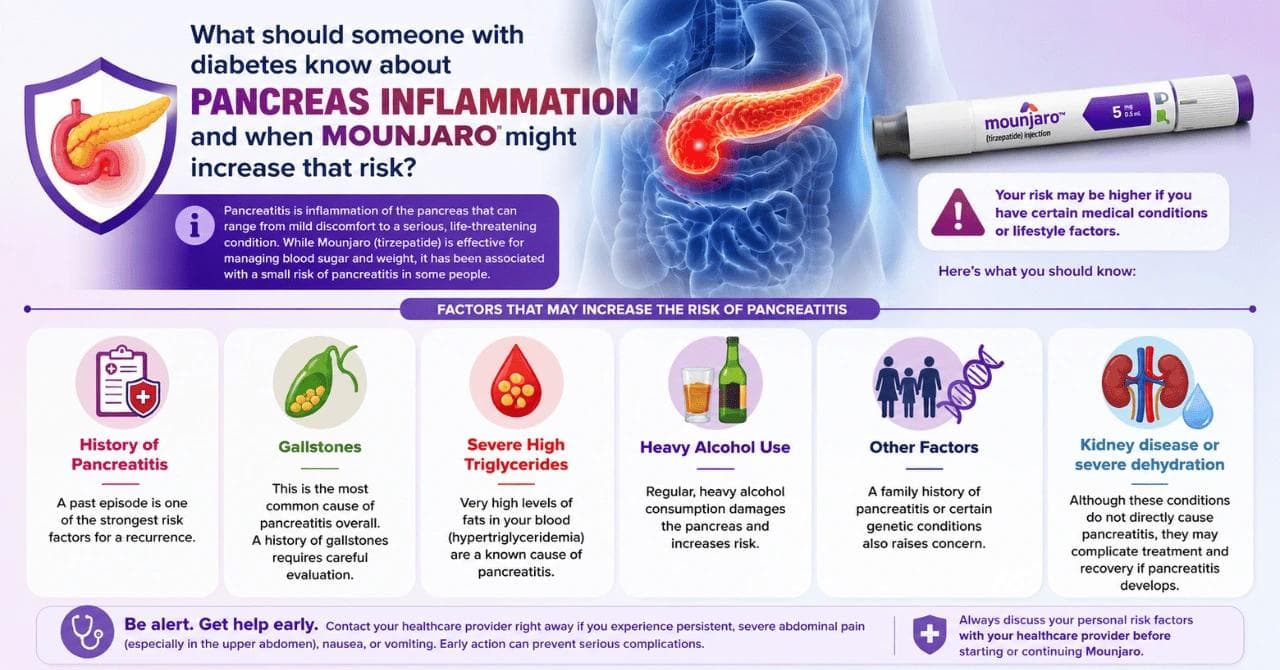
What should someone with diabetes know about pancreas inflammation and when Mounjaro might increase that risk?
If you have diabetes, you should know that your pancreas is central to your condition. It produces insulin, and inflammation can disrupt this function. Having diabetes itself is considered a risk factor for pancreatitis.
Certain pre-existing conditions significantly increase your risk of developing pancreatitis while on Mounjaro. You and your doctor need to discuss these before and during treatment:
- History of Pancreatitis: A past episode is one of the strongest risk factors for a recurrence.
- Gallstones: This is the most common cause of pancreatitis overall. A history of gallstones requires careful evaluation.
- Severe High Triglycerides: Very high levels of fats in your blood (hypertriglyceridemia) are a known cause of pancreatitis.
- Heavy Alcohol Use: Regular, heavy alcohol consumption damages the pancreas and increases risk.
- Other Factors: A family history of pancreatitis or certain genetic conditions also raises concern.
- Kidney disease or severe dehydration: Although these conditions do not directly cause pancreatitis, they may complicate treatment and recovery if pancreatitis develops.
If you have any of these risk factors, your doctor will perform a thorough evaluation. They will weigh the benefits of Mounjaro against the potential risks and may recommend more frequent monitoring.
When do the warning signs become an emergency and what should I do if Mounjaro and pancreatitis symptoms appear suddenly?
This is the most important section. If you suspect pancreatitis, it is always a medical emergency. The condition can worsen rapidly, leading to severe complications like kidney failure, breathing problems, and widespread infection.
Immediate Action Plan (What to Do):
- STOP taking Mounjaro immediately. Do not take your next scheduled dose.
- DO NOT try to "wait it out" or self-treat at home.
- SEEK EMERGENCY CARE IMMEDIATELY. Do not restart Mounjaro unless your healthcare provider specifically determines it is safe to do so.
- INFORM your prescribing doctor as soon as possible after seeking emergency care.
In the hospital, doctors will diagnose pancreatitis by checking for two of these three criteria: the classic abdominal pain, blood tests showing pancreatic enzymes (lipase/amylase) at least three times the normal limit, or imaging scans showing pancreatic inflammation. Treatment involves hospitalization for pain control, intravenous (IV) fluids, and resting your digestive system.
Frequently Asked Questions
This requires a very careful, individualized decision with your doctor. A history of pancreatitis increases your risk, so your doctor must weigh the potential benefits against this significant risk. They may suggest alternative treatments.
There is no recommendation in the current U.S. guidelines (2026) for routine testing of lipase or amylase in people without symptoms. Instead, healthcare providers focus on educating patients about warning signs and evaluating any severe abdominal pain immediately.
Depending on your medical history, your healthcare provider may recommend another diabetes medication or a different weight-management strategy. The best alternative depends on your BMI, diabetes status, cardiovascular health, kidney function, and previous history of pancreatitis. Bariatric surgery is one option for eligible patients, but it is not appropriate for everyone.
Most reported cases occur within the first few months of starting treatment. However, it can theoretically happen at any time during therapy, which is why ongoing vigilance is important.
Typically, no. If a medication is suspected of causing pancreatitis, it is usually contraindicated for life due to the high risk of recurrence. Your doctor will need to explore other treatment avenues for your diabetes or weight management.