Does Saxenda Make You Tired?
Losing weight often seems to improve energy levels, but for many, taking Saxenda can leave them feeling very tired. If you have been reaching for extra cups of coffee just to get through your day while taking injections, you are not alone. Many people experience safe weight loss with Saxenda, while others have a common concern: Does Saxenda make you tired?
The short answer is yes, Saxenda can cause fatigue in some people, especially during the early stages. In clinical trials of Saxenda (liraglutide), fatigue was reported but less frequently than gastrointestinal side effects. As a Glucagon-like peptide-1 (GLP-1) agonist, Saxenda is a commonly prescribed injectable medication for weight management, especially for individuals struggling with obesity or weight-related conditions. Here’s why it happens and what you can do about it to help you stay consistent with your treatment and avoid unnecessary stress.
“When starting a weight management program, understanding the concept helps you stay in control—not surprised”
How Common Is Fatigue with Saxenda?
Fatigue is considered an uncommon to moderate side effect of Saxenda. In clinical trials, it was reported less frequently than gastrointestinal symptoms like nausea, vomiting, and diarrhea.
For most users, tiredness:
- Occurs early in treatment or during dose increases
- Is usually temporary
- Improves as the body adjusts over time
If you are wondering, “Is this normal?”, mild fatigue can be a normal part of the adjustment phase, but persistent or severe tiredness should be evaluated by a healthcare provider.
How Does Saxenda Work in the Body?
Saxenda contains liraglutide, a GLP-1 receptor agonist that helps support weight loss by working with your body’s natural systems. It slows the rate at which your stomach empties, helps curb cravings and appetite, and improves blood sugar control. Eventually, you tend to feel fuller sooner and stay satisfied for longer after meals.
Because of how these effects work together, your body begins to adjust to changes in how much and how often you eat. During this transition, it’s not unusual to feel a bit low on energy or tired, especially in the early stages of treatment, as your metabolism and calorie intake shift.
Why Do People Feel Tired on Saxenda?
Some people may feel tired, usually because of reduced calorie intake, dehydration, or adjustment to treatment. If you still wonder, “Does Saxenda make you tired?”, here’s a quick breakdown of the most common reasons you may feel tired while losing weight with Saxenda:
| Cause | Why It Happens | What You May Feel | What You Can Do |
|---|---|---|---|
| Reduced calorie intake | Saxenda suppresses appetite, leading to lower food intake and energy levels | Low energy, weakness, tiredness | Eat small, nutrient-dense meals with enough protein |
| Blood sugar changes | Changes in eating patterns can affect glucose levels | Fatigue, dizziness, shakiness | Monitor blood sugar and avoid skipping meals |
| Dehydration (due to nausea, vomiting, diarrhea) | Fluid and electrolyte loss reduces energy levels | Weakness, headaches, fatigue | Stay hydrated and consider electrolyte-rich fluids |
| Dose adjustment phase | The body takes time to adapt to Saxenda, especially during dose increases | Temporary fatigue, low energy | Follow gradual dose titration and allow time to adjust |
| Nutritional deficiencies | Eating less may reduce intake of essential nutrients | Persistent tiredness, weakness | Ensure a balanced diet with vitamins, iron, and protein |
← Swipe to see more →
Let’s break this down further:
1. Reduced Calorie Intake
Saxenda suppresses appetite, leading you to eat less. While this supports weight loss, a sudden drop in calorie intake can cause:
- Low energy levels
- Weakness
- General tiredness
Your body needs time to adjust to a lower energy intake.
2. Blood Sugar Fluctuations
Saxenda helps regulate blood glucose, but changes in eating patterns may sometimes lead to:
- Mild hypoglycemia (low blood sugar), especially if you have diabetes
- Symptoms like fatigue, dizziness, or shakiness
3. Gastrointestinal Side Effects
- Nausea
- Diarrhea
- Vomiting
These can lead to dehydration or electrolyte imbalance, both of which contribute to fatigue.
4. Body Adjustment Cycle
When starting Saxenda or increasing the dose, your body goes through an adjustment period. During this time, you may feel:
- Slight discomfort
- Low energy
- Temporary fatigue
This usually improves within a few weeks.
5.Weight Loss
Rapid or significant weight loss itself can make you feel tired. Especially if:
- Your nutrient intake is insufficient.
- You are not consuming enough essential vitamins or enough protein.
Saxenda vs Other GLP-1 Medications: Which Causes More Fatigue?
Saxenda does not appear to cause significantly more fatigue than other GLP-1 receptor agonists, but there are slight differences based on dosage, duration, and how each medication works in the body.
Here’s a quick comparison:
| Medication | Generic Name | Dosing Frequency | Fatigue Risk |
|---|---|---|---|
| Saxenda | Liraglutide | Daily injection | Mild to moderate |
| Ozempic | Semaglutide | Weekly injection | Similar or slightly lower |
| Wegovy | Semaglutide | Weekly injection | Comparable |
← Swipe to see more →
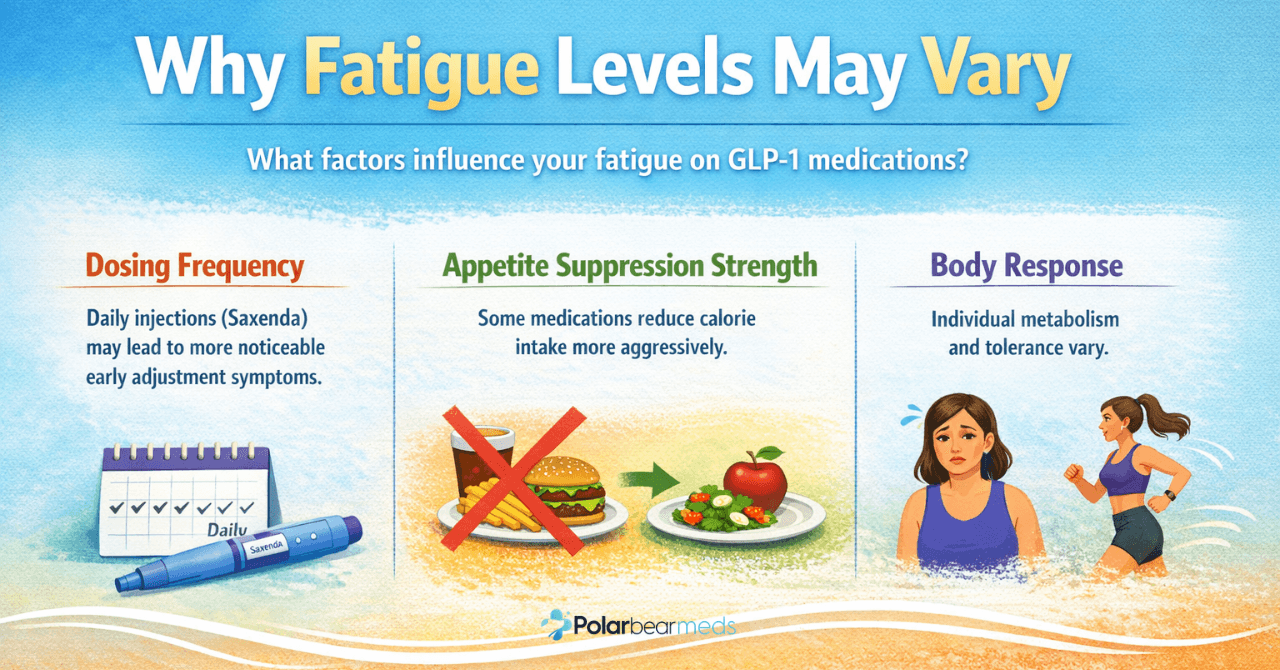
Why Fatigue Levels May Vary
- Dosing frequency: Daily injections (Saxenda) may lead to more noticeable early adjustment symptoms.
- Appetite suppression strength: Some medications reduce calorie intake more aggressively.
- Body response: Individual metabolism and tolerance vary.
Overall, fatigue is not a dominant side effect in any GLP-1 medication, and differences between them are generally minimal.
Is Saxenda Fatigue Temporary or Long-Term?
In most cases, fatigue caused by Saxenda is temporary and improves within a few weeks.
Short-term fatigue is usually linked to:
- Reduced calorie intake
- Dose escalation phase
- Mild dehydration
However, if fatigue:
- Lasts longer than 3-4 weeks
- Gets worse over time
- Interferes with daily activities
It may indicate underlying issues such as nutritional deficiencies or improper dosing.
Tips to Manage Fatigue While Taking Saxenda
If Saxenda is making you feel tired, here are some tips and tricks to manage your fatigue:
Managing Fatigue
- Eat balanced and nutrient-dense meals (Protein target per meal, e.g., 20-30 g)
- Stay hydrated
- Follow the proper dosing schedule
- Monitor blood sugar levels
- Get enough rest
- Avoid overexertion; focus on light activity
Alternatives If Fatigue Occurs
- Dose modification
- Slower titration
- Nutritional assessment
- Switching to another GLP-1 medication

When Fatigue On Saxenda Is Not Normal
While mild tiredness is common during the early stages of treatment, certain symptoms may indicate a more serious issue and should not be ignored.
Seek medical attention if fatigue is accompanied by:
- Severe or persistent dehydration (very dark urine, minimal urination, extreme thirst).
- Ongoing vomiting or diarrhea that does not improve.
- Signs of low blood sugar (hypoglycemia) include shakiness, sweating, confusion, or blurred vision.
- Rapid or irregular heartbeat.
- Severe weakness or inability to perform daily activities.
These symptoms may indicate complications such as electrolyte imbalance, hypoglycemia, or intolerance to the medication and require prompt medical evaluation.
When to Contact Your Doctor
While tiredness is a common symptom, seek medical help if you experience serious symptoms:
- Dizziness or fainting
- Severe weakness or inability to perform daily activities
- Persistent or worsening fatigue
- Signs of dehydration (reduced urination, dry mouth)
- Confusion or rapid heartbeat
The Bottom Line on Managing Weight with Saxenda
So, does Saxenda make you tired? Yes, it can make you feel tired, but with proper diet control and light exercise, you can overcome fatigue. Fatigue is often associated with reduced calorie intake, body adjustment, or mild dehydration rather than the medication itself. The key is to carefully manage your nutrition, hydration, and dosing. Most people find that their energy levels improve as their body adapts to the treatment.
If fatigue becomes persistent or severe, it is important to consult your healthcare provider to rule out underlying causes and adjust your treatment plan safely. At Polar Bear Meds, we understand that starting a new medication can come with questions and uncertainties. Our goal is to provide reliable, patient-focused information to help you make informed health decisions.
Medical Disclaimer: The above content is for informational purposes only and does not replace professional medical advice. Always consult a licensed healthcare provider before starting or combining medications.
Frequently Asked Questions
You may feel tired with Saxenda, typically for a few days to a few weeks, particularly during dose increases. If it persists longer, consult your doctor.
Yes, you may feel weak, especially during the initial weeks. This is usually due to reduced calorie intake or temporary body adjustment. It can often improve over time.
No, do not stop taking the medication without consulting your healthcare professional. Mild tiredness is a common symptom and may improve with time. Contact your doctor if any serious symptoms occur.
Not necessarily. While reduced appetite and calorie intake can cause fatigue, they are not direct indicators of the medication’s effectiveness.