



Search for 'Ozempic'
Flat-rate shipping $14.99 · included in your cart total before checkout

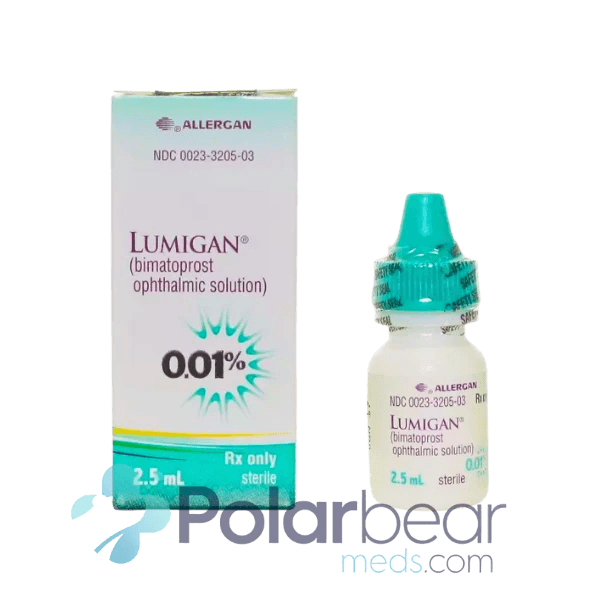
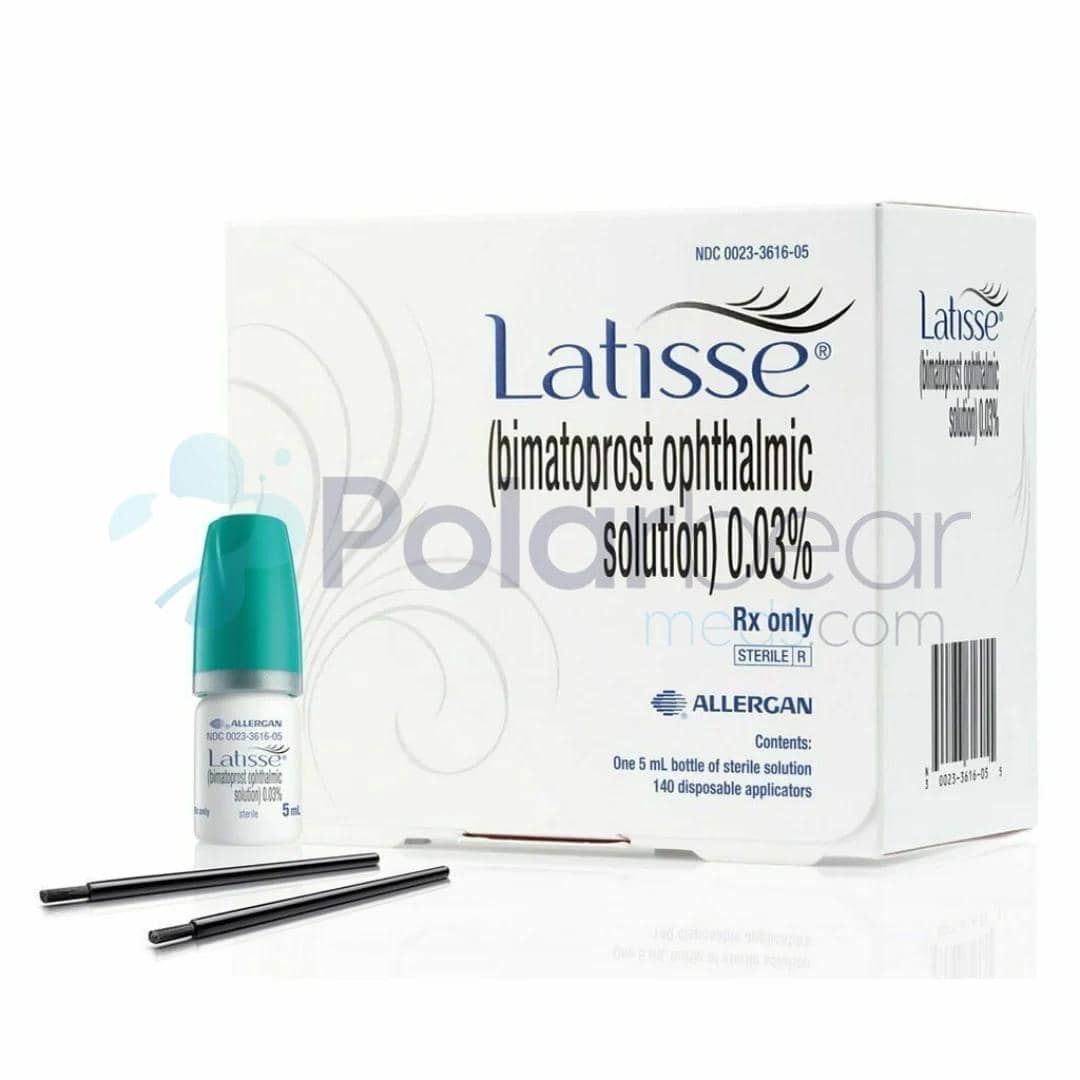
Bimatoprost is a prescription eye medication primarily used to lower elevated eye pressure in people with open-angle glaucoma or ocular hypertension. It belongs to a class of drugs called prostaglandin analogs, which work by helping fluid drain out of the eye more efficiently, lowering eye pressure. It comes in different formulations, commonly marketed under two brand names: Lumigan, an eye drop, and Latisse, an eyelash solution for longer, thicker eyelashes. Cosmetic use of Bimatoprost is distinct from its glaucoma indication and carries separate dosing, risks, and FDA labeling. This page focuses on the generic Bimatoprost ophthalmic solution for eye pressure.
| Generic Name | Bimatoprost |
|---|---|
| Brand Names | Lumigan (eye drops), Latisse (eyelash solution) |
| Drug Class | Prostaglandin analog |
| FDA Approval | Yes |
| Prescription Required | Yes |
| Routes | Ophthalmic (eye drops), topical (eyelash application) |
| Common Strengths | 0.01%, 0.03% |
| Primary Uses | Glaucoma, ocular hypertension |
| Secondary Use | Eyelash growth (specifically for brand-name Latisse formulation only) |
| Typical Dosing | Once daily in the evening |
| Storage | Store at room temperature and keep protected from light |
| Controlled Substance | No |
← Swipe to see more →
Yes. Bimatoprost is an FDA-approved eye drop and requires a prescription for safe use. It is primarily used for lowering intraocular pressure in:
The FDA has also approved a separate formulation (Latisse) of Bimatoprost for hypotrichosis of the eyelashes (inadequate or sparse lashes). Avoid using Latisse for glaucoma, as this is not the same product as glaucoma eye drops and should not be used interchangeably. Before you buy Bimatoprost online, consult a doctor to ensure you are using the correct formulation.

Lumigan (Bimatoprost) and Latanoprost are both first-line prescription eye drops used to lower intraocular pressure (IOP) in individuals with ocular hypertension or open-angle glaucoma. While both are highly effective, they differ in potency, side-effect profiles, tolerability, and dosing nuances. Below is a clear comparison of “Lumigan (Bimatoprost) vs. Latanoprost” to help you understand the differences.
| Feature | Lumigan (Generic Bimatoprost Eye Drops) | Latanoprost |
|---|---|---|
| Drug class | Prostaglandin analog | Prostaglandin analog |
| FDA-approved uses | Open-angle glaucoma, ocular hypertension | Open-angle glaucoma, ocular hypertension |
| IOP-lowering strength | Generally, slightly stronger IOP reduction | Very effective; may be slightly less potent than Bimatoprost |
| Dosing | Once daily in the evening for optimal results | Once daily in the evening for optimal results |
| Common side effects | Eye redness (more frequent), irritation, eyelash growth | Eye redness (less frequent), mild irritation |
| Cosmetic effects | Higher likelihood of eyelash growth and periocular skin darkening | Cosmetic effects occur, but are usually milder |
| Iris color change risk | Yes (gradual, may be permanent) | Yes (similar risk) |
| Tolerability | Some patients stop due to redness | Often better tolerated overall |
| Generic availability | Yes | Yes |
| Typical clinical preference | When greater IOP reduction is needed | When tolerability and comfort are priorities |
← Swipe to see more →

As with many prescription eye drops, Bimatoprost ophthalmic solution can cause side effects. The table below summarizes FDA-reported side effects associated with Bimatoprost (Lumigan) eye drops when used for glaucoma or ocular hypertension.
| Common | Severe (Less Common) | Long-Term |
|---|---|---|
| Eye redness (conjunctival hyperemia), itching, or irritation | Macular edema | Increased brown pigmentation of the iris |
| Burning or stinging sensation | Eye pain | Darkening of eyelid skin |
| Dry eyes and eyelid redness | Vision changes | Increased periocular pigmentation |
| Increased eyelash growth | Hypersensitivity reactions | Changes in eyelash thickness or direction |
← Swipe to see more →

Do not use Bimatoprost ophthalmic solution if you:
Bimatoprost is a prostaglandin analog that increases drainage of the fluid in the eye, commonly known as aqueous humor. When fluid drains more efficiently, intraocular pressure decreases. Lowering eye pressure is important because, over time, untreated high eye pressure can damage the optic nerve and permanently cause vision loss.

If you are using Bimatoprost for glaucoma or ocular hypertension, follow these steps for effective results:
While Bimatoprost for eye pressure is generally safe when used as directed, it carries specific risks and potential long-term side effects.
High-Risk Warnings:
Safety Information:
Most people who use Bimatoprost for ocular hypertension or glaucoma stay on it long term. Bimatoprost lowers eye pressure to prevent optic nerve damage, but it does not fix the root cause. If you stop using it, your eye pressure will likely return to its previous high levels. For optimal results, the ophthalmic solution must be used daily. Doctors usually recommend applying them in the evening for the best results, but there is no specific time to use this medication. Consult an ophthalmologist for detailed information on this medication.

Bimatoprost eye drops have very few drug interactions, especially compared with oral medications. Because the solution is applied directly to the eye, systemic (whole-body) interactions are unlikely. However, using two prostaglandin analog eye drops together may reduce pressure‑lowering effectiveness and should be avoided. Do not use with another prostaglandin analog eye drop, such as:
If Bimatoprost is not a good fit for you, your doctor may suggest one of the following:
Other prostaglandin analog eye drops:
Non-prostaglandin:

Many patients choose to order Bimatoprost ophthalmic solution from Polar Bear Meds because it may cost less than at many U.S. pharmacy retail rates. Prices from Canadian pharmacy partners can be up to 80–90% lower, depending on the prescribed strength, quantity, and availability. To help patients manage long-term prescription costs, Polar Bear Meds offers several savings programs:

The information provided on this page about Bimatoprost ophthalmic solution for eye pressure is for general educational purposes and should not be considered a medical diagnosis or medical advice. Bimatoprost is a prescription medication and should be used only under the supervision of a licensed healthcare professional. Do not start, stop, or change the dose without first consulting your eye care provider.


Dr. Jackson Miller is a board-certified medicine physician & hospitalist. He is a healthcare professional with a strong background in patient care. With years of experience and a patient-first approach, he believes the foundation of good health is a patient who feels informed and empowered. He contributes to medical content review, drawing on his background in clinical practice and patient education. He focuses on presenting health information in a clear, accurate, and accessible way to help readers make informed decisions. His work emphasizes clarity, evidence-based guidance, and understandable explanations of medical topics.
Learn more about Bimatoprost and related topics



We offer competitive pricing on all our medications. We'll match if you find a lower price on an identical product at a verified Canadian online pharmacy!
Need help? Call our friendly support team at 1-888-779-2193 or fill out the Contact Form