GLP-1 Cruise Vacations: What US Patients Must Know for 2026
Key Takeaways
- FDA labels permit in-use GLP-1 pens at room temperature for 21 to 56 days, depending on the drug, so short cruises may not require onboard refrigeration.
- Stateroom mini-bars on major cruise lines are beverage chillers, not medical refrigerators, and are not safe for temperature-sensitive medications.
- Requesting a dedicated medical refrigerator must be done in advance via a Special Needs form.
- Declaring injectable medications at TSA checkpoints is required, keep them in carry-on bags, not checked luggage.
GLP-1 cruise vacations require more upfront planning than most trips. Patients on Ozempic, Wegovy, or Zepbound face real storage and logistics challenges at sea, and the consequences of getting it wrong go beyond inconvenience. Here's what the FDA labels and cruise line policies actually say.
Do You Actually Need Cold Storage on a Short Cruise?
Probably not, if your pen is already in use. According to FDA labeling, Ozempic (semaglutide) pens can stay at room temperature (59°F to 86°F) for up to 56 days after first use. Wegovy (semaglutide) can be kept at room temperature (up to 86°F) for up to 28 days prior to cap removal. Zepbound (tirzepatide) has the shortest window: a maximum of 21 days at room temperature.
Understanding GLP-1 cold storage at sea starts with knowing whether your pen is already in use or still unopened, since FDA storage recommendations differ significantly between the two.
For most patients, a standard 7-day cruise falls within the FDA-approved room-temperature window for an in-use pen. The 86°F ceiling matters more than most passengers expect. Tropical cabin temperatures and direct sun during shore excursions can push well past that limit. Keep pens out of direct sunlight, away from hot car interiors at port stops, and never leave one in a bag sitting on a beach chair.
Unopened pens are a different situation entirely. Those require refrigeration between 36°F and 46°F, according to FDA labeling. If you're bringing a sealed backup pen, you need proper cold storage arranged before you board.
| Medication | Room-Temp Limit (°F) | Max Days at Room Temp | Unopened: Refrigerate? |
|---|---|---|---|
| Ozempic (semaglutide) | 59°F to 86°F | 56 days (after first use) | Yes (36°F to 46°F) |
| Wegovy (semaglutide) | Up to 86°F | 28 days (before cap removal) | Yes (36°F to 46°F) |
| Zepbound (tirzepatide) | Up to 86°F | 21 days | Yes (36°F to 46°F) |
← Swipe to see more →
The pattern here is clear: an in-use pen on a week-long cruise is almost always within its approved window. An unopened backup pen is not.
The Mini-Fridge Reality: Why Your Cabin Cooler Is Not Enough
This is where a lot of patients get caught off guard. As of July 2026, both Carnival Cruise Line and Royal Caribbean explicitly state that stateroom mini-bars are designed to maintain beverage temperatures only and should not be used for medications. They're coolers, not refrigerators, and they don't reliably hold the 36°F to 46°F range that unopened GLP-1 medications require. This distinction is one of the most important aspects of medication storage on cruises, especially for passengers carrying unopened GLP-1 pens that require continuous refrigeration.
If you need proper cold storage for prescription drugs like semaglutide or tirzepatide, both cruise lines offer a solution. Royal Caribbean requires guests traveling with injectable medications to submit a Guest Special Needs Form before sailing to request a medical refrigerator and a sharps disposal container. Carnival also makes portable medical refrigerators available, but on a first-come, first-served basis.
That "first-come" detail is the critical one. Request early. Submitting these forms well in advance of your sail date is the safest approach. Waiting until embarkation day is a real risk, especially on larger ships where demand is high.
A backup option: the ship's Medical Center can store temperature-sensitive medications if stateroom arrangements fall through. Know where it is on day one.
Getting to the Port: TSA Rules and Transit Storage
Traveling with GLP-1 medications is straightforward if you follow the rules when flying to your departure port. As of July 2026, the TSA allows passengers to bring unused syringes and injectable medications in carry-on bags, provided they're declared to security officers at the checkpoint. Don't pack them in checked luggage where temperature control is unreliable.
For unopened pens, use an insulated travel cooler with gel packs to maintain the cold chain for temperature-sensitive GLP-1 medications during transit. These are widely available and TSA-approved. Keeping medications in their original prescription packaging is a practical step that can help security officers verify what you're carrying and prevent unnecessary delays.
Patients planning medical travel or ordering Ozempic or Wegovy online from Canada should confirm their shipment arrives with enough lead time to pack properly before departure.
What to Do If You Forget a Pen or Face a Port-Stop Emergency
It happens. A pen gets left on the bathroom counter, or one is damaged in transit. Mid-cruise, your options narrow fast.
First, go directly to the ship's Medical Center. Staff there can advise on cold storage and may be able to help with medication management, though they won't carry your specific GLP-1 prescription. Have your prescriber's contact information saved on your phone so a replacement prescription can be called in if needed.
At port stops, finding GLP-1 medications locally can be difficult. Ozempic and Wegovy have varying availability internationally, and you shouldn't count on a port pharmacy to stock your specific medication or dose. This is exactly why carrying a backup pen matters.
If you're managing ongoing prescriptions for weight loss or diabetes and want to avoid supply gaps before a trip, refilling your prescription in advance gives you enough medication to bring a proper backup without scrambling.
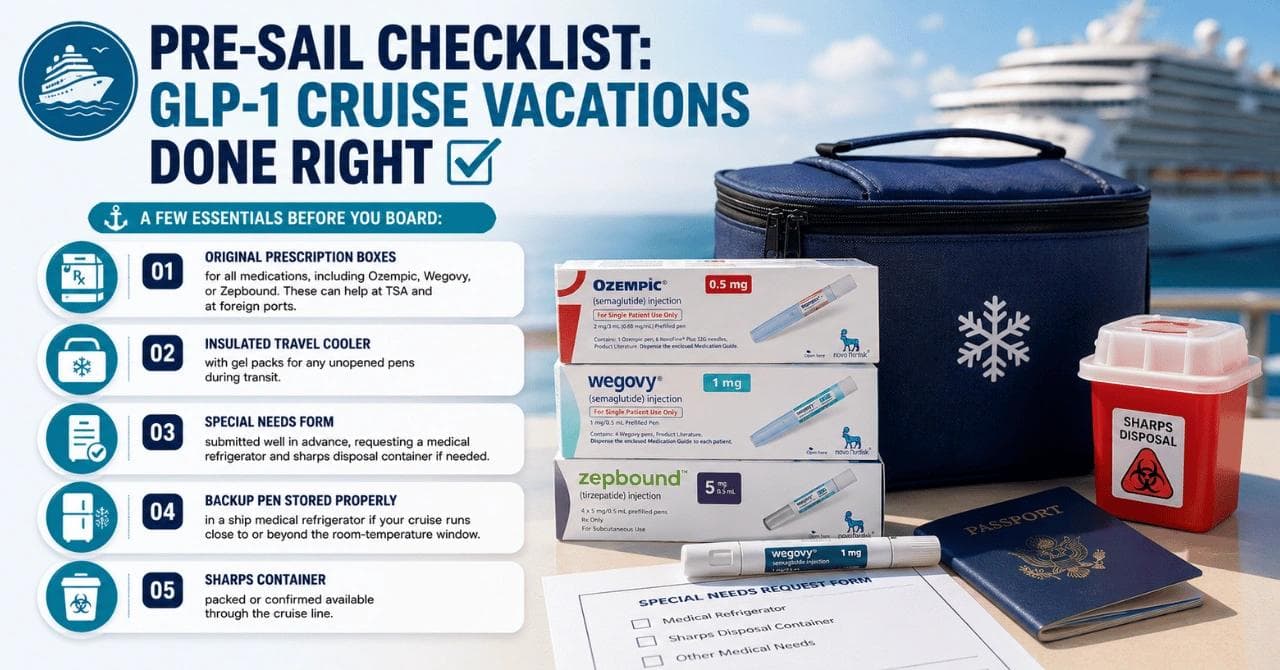
Pre-Sail Checklist: GLP-1 Cruise Vacations Done Right
For patient cruise vacations 2026, planning medication storage before departure is just as important as packing travel documents and prescriptions.
A few essentials before you board:
- Original prescription boxes for all medications, including Ozempic, Wegovy, or Zepbound. These can help at TSA and at foreign ports.
- Insulated travel cooler with gel packs for any unopened pens during transit.
- Special Needs form submitted well in advance, requesting a medical refrigerator and sharps disposal container if needed.
- Backup pen stored properly in a ship medical refrigerator if your cruise runs close to or beyond the room-temperature window.
- Sharps container packed or confirmed available through the cruise line.
On the lifestyle side, GLP-1 medications suppress appetite significantly, which can make all-inclusive dining packages feel like a poor fit. Staying hydrated is especially worth prioritizing in tropical heat.
The Polar Bear Meds health and wellness blog includes additional travel health guides on managing GLP-1 medications during vacations and lifestyle changes.
Bottom Line: Planning Ahead Makes GLP-1 Cruise Vacations Easier
For most patients, GLP-1 cruise vacations don't require major changes to their treatment plan, but they do require careful preparation. Knowing your medication's storage requirements, arranging refrigeration for unopened pens when needed, and following TSA and cruise line policies can help you avoid unnecessary stress while traveling.
If you're planning a trip, make sure you have enough medication before departure and discuss any travel-related concerns with your healthcare provider or pharmacist. Proper planning lets you focus on enjoying your cruise while staying on track with your treatment.
Frequently Asked Questions
Rules vary by destination. Keeping your medication in its original prescription packaging is a practical step that helps customs officers verify what you're carrying. Check each port country's customs authority website before you sail, as some destinations may have stricter rules around injectable medications.
If you suspect a pen has been exposed to temperatures above 86°F, don't assume it's still effective. Contact your prescriber or pharmacist before using any pen you think may have been overheated. They can advise on whether it's safe to use or needs to be replaced.
Interest in medical tourism GLP-1 programs continues to grow as the global wellness travel market expands, with international health centers and destination spas adding weight-loss and longevity services. Dedicated medical tourism itineraries through wellness-focused operators are a separate, emerging category worth researching if that's your goal.
Declaring your injectable medication covers the checkpoint interaction. Keep your sharps in a secure container and confirm any local disposal requirements at your departure and arrival destinations before you fly.
Disclaimer
This article covers storage guidelines and cruise line policies for informational purposes only. It isn't medical advice. Before traveling with any prescription medication, including semaglutide or tirzepatide, talk to your prescribing doctor or pharmacist as part of your ongoing patient care plan before traveling. They can confirm whether your specific pen and dosing schedule fit within the room-temperature windows discussed here.