



We offer competitive pricing on all our medications. Find a lower price? We'll match it from any verified Canadian online pharmacy! Know More
Strength
Quantity
To Place OrderCall 1-(888)-478-2193
 Ships from Canada

We offer competitive pricing on all our medications. Find a lower price? We'll match it from any verified Canadian online pharmacy! Know More

Dr. Jackson Miller is a board-certified medicine physician & hospitalist. He is a healthcare professional with a strong background in patient care. With years of experience and a patient-first approach, he believes the foundation of good health is a patient who feels informed and empowered. He contributes to medical content review, drawing on his background in clinical practice and patient education. He focuses on presenting health information in a clear, accurate, and accessible way to help readers make informed decisions. His work emphasizes clarity, evidence-based guidance, and understandable explanations of medical topics.
Ordering your medication online is simple and convenient.
Select the prescribed dosage and quantity, then proceed to checkout.
Sign in or create a new account.
Upload your prescription.
Complete your purchase by processing the payment.
Select the prescribed dosage and quantity, then proceed to checkout.
Sign in or create a new account.
Upload your prescription.
Complete your purchase by processing the payment.
Shipping takes approximately 3-5 business days.

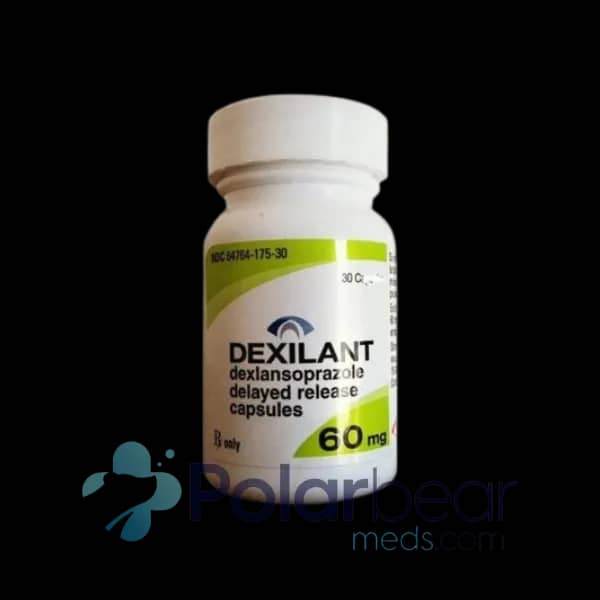
Dexilant (dexlansoprazole) is a prescription proton pump inhibitor (PPI) used to lower stomach acid and treat acid-related conditions such as erosive esophagitis (EE) and gastroesophageal reflux disease (GERD). It helps relieve symptoms such as heartburn and acid reflux while giving the esophagus time to heal.
Below is a quick overview of important facts for patients and caregivers:
| Brand Name | Dexilant |
|---|---|
| Active Ingredient | Dexlansoprazole |
| Strengths | 30 mg, 60 mg |
| Drug Class | Proton pump inhibitor (PPI) |
| Primary Use | Treatment of GERD, healing of erosive esophagitis, and maintenance of healed esophagitis |
| Dosage Form | Delayed-release oral capsules |
| Prescription Required | Yes |
| Storage | Store at 68°F-77°F (20°-25°C); excursions permitted to 59°F-86°F (15°-30°C). Keep at controlled room temperature. |
← Swipe to see more →

Dexilant is prescribed to treat certain acid-related conditions of the esophagus and stomach in patients 12 years of age and older.

Dexilant (dexlansoprazole) belongs to a class of medicines called proton pump inhibitors (PPIs) that lower stomach acid by blocking the final step of acid production.
It also uses a dual delayed-release formulation that releases the medication in two phases, helping provide extended acid suppression throughout the day.

Always follow your healthcare provider’s instructions. General guidelines include:
The recommended dosage of Dexilant depends on the condition being treated. The following table outlines the typical dosing guidelines for patients 12 years of age and older.
| Condition | Recommended Dose | Duration |
|---|---|---|
| Healing of Erosive Esophagitis (EE) | 60 mg once daily | Up to 8 weeks |
| Maintenance of Healed EE and Relief of Heartburn | 30 mg once daily | Up to 6 months in adults; up to 16 weeks in patients 12-17 years |
| Symptomatic Non-Erosive GERD | 30 mg once daily | 4 weeks |
← Swipe to see more →
Dose adjustment:
Patients with moderate hepatic impairment (Child-Pugh Class B) may require a reduced dose of 30 mg once daily for up to 8 weeks for healing of erosive esophagitis. It is not recommended for patients with severe hepatic impairment (Child-Pugh Class C).

Taking more than the recommended dose may increase the risk of adverse reactions. Reported symptoms associated with high doses may include:
Dexlansoprazole is not expected to be removed by hemodialysis. Treatment of overdose is generally supportive and based on the patient’s symptoms. If an overdose is suspected, seek immediate emergency medical help or contact a poison control center.

Dexilant capsules may cause side effects in some patients. While many reactions are mild, certain symptoms may require medical attention.
Commonly reported side effects in adults include:
In patients 12 to 17 years old, common side effects may include:
Serious allergic reactions may occur in rare cases. Symptoms may include:
Seek immediate medical attention if you experience any of the following:
This is not a complete list of side effects. Contact your healthcare provider for medical advice about adverse reactions. You may report side effects to the FDA at 1-800-FDA-1088 or visit MedWatch.

While taking this medication, the following warnings and precautions should be considered:
Dexilant capsules should be used during pregnancy only if clearly needed and prescribed by a healthcare provider. Available human data are limited, although studies with related medications have not shown a clear increase in congenital disabilities. It is not known whether this medication passes into human breast milk, so breastfeeding mothers should consult their healthcare provider before using it to evaluate potential risks and benefits.

Dexilant may interact with certain medications, which can affect how the drug works or increase the risk of side effects. Examples include:
Patients should inform their healthcare provider about all supplements, over-the-counter drugs, and prescription medications they use before starting Dexilant capsules.

Several medications may be considered as alternatives for GERD or other acid-related conditions, depending on a patient’s response to treatment.
| Brand Name | Active Ingredient | Drug Class |
|---|---|---|
| Nexium | Esomeprazole | Proton Pump Inhibitor |
| Prilosec | Omeprazole | Proton Pump Inhibitor |
| Protonix | Pantoprazole | Proton Pump Inhibitor |
| Prevacid | Lansoprazole | Proton Pump Inhibitor |
| AcipHex | Rabeprazole | Proton Pump Inhibitor |
← Swipe to see more →
Brand availability may vary depending on location and pharmacy supply. A healthcare provider will determine the most appropriate option based on the patient’s symptoms and treatment response.
Both Dexilant and omeprazole are proton pump inhibitors (PPIs) used to reduce stomach acid, but they differ in formulation and duration of action.
| Feature | Dexilant | Omeprazole |
|---|---|---|
| Active Ingredient | Dexlansoprazole | Omeprazole |
| Drug Class | Proton pump inhibitor (PPI) | Proton pump inhibitor (PPI) |
| Release Mechanism | Dual delayed-release formulation | Standard delayed-release |
| Duration of Acid Control | May provide longer acid control in some patients | Standard acid suppression |
| Typical Use | GERD and erosive esophagitis | GERD, ulcers, acid reflux |
← Swipe to see more →
A healthcare provider determines which medication is most appropriate based on the patient’s symptoms and treatment response.

Prescription medications for acid reflux and GERD may be costly at many U.S. retail pharmacies. Ordering Dexilant online from Polar Bear Meds may help reduce overall costs while maintaining safety, quality, and reliability.
All Dexilant orders require a valid prescription. Medications are dispensed by licensed pharmacies that comply with applicable pharmacy regulations and safety standards.

This content is for informational purposes only and does not replace expert medical guidance, diagnosis, or treatment. Dexilant is a prescription medication used to treat conditions such as erosive esophagitis, gastroesophageal reflux disease (GERD), and acid-related heartburn. Always consult an authorized healthcare professional before starting, stopping, or changing the dosage. Individual results, side effects, and dosing needs may vary.

Learn more about Dexilant and related topics



We offer competitive pricing on all our medications. We'll match if you find a lower price on an identical product at a verified Canadian online pharmacy!
To Place Order, call 1-(888) 478-2193 or fill out the Contact Form
Rated 4.9/5 Verified Reviews on Shopper Approved
