



Avg. USA Price
$307.23

Our Price
$59.87

We offer competitive pricing on all our medications. Find a lower price? We'll match it from any verified Canadian online pharmacy! Know More
Strength
Quantity
To Place OrderCall 1-(888)-478-2193
 Ships from Canada

We offer competitive pricing on all our medications. Find a lower price? We'll match it from any verified Canadian online pharmacy! Know More

Dr. Jackson Miller is a board-certified medicine physician & hospitalist. He is a healthcare professional with a strong background in patient care. With years of experience and a patient-first approach, he believes the foundation of good health is a patient who feels informed and empowered. He contributes to medical content review, drawing on his background in clinical practice and patient education. He focuses on presenting health information in a clear, accurate, and accessible way to help readers make informed decisions. His work emphasizes clarity, evidence-based guidance, and understandable explanations of medical topics.
Ordering your medication online is simple and convenient.
Select the prescribed dosage and quantity, then proceed to checkout.
Sign in or create a new account.
Upload your prescription.
Complete your purchase by processing the payment.
Select the prescribed dosage and quantity, then proceed to checkout.
Sign in or create a new account.
Upload your prescription.
Complete your purchase by processing the payment.
Shipping takes approximately 3-5 business days.

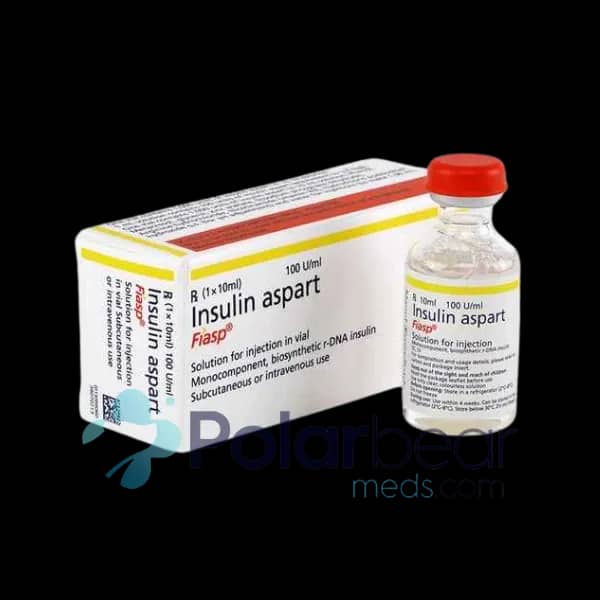
Fiasp Vial is a rapid-acting insulin containing insulin aspart used to improve blood sugar control in adults and children with diabetes mellitus (type 1 and type 2) who require insulin therapy. It helps control post-meal increases in blood glucose by allowing glucose to move from the bloodstream into body cells, where it is used for energy. It is typically injected at the start of a meal or within 20 minutes after beginning to eat as part of an overall diabetes management plan.
Key information about Fiasp Vial is summarized below:
| Category | Information |
|---|---|
| Brand Name | Fiasp Vial |
| Active Ingredient | Insulin aspart |
| Strengths | 100 units/mL |
| Drug Class | Rapid-acting insulin analog |
| Primary Use | Blood sugar control in diabetes mellitus |
| Dosage Form | Injection solution (10 mL multiple-dose vial) |
| Administration | Subcutaneous injection |
| Prescription Required | Yes |
← Swipe to see more →

Fiasp Vial is indicated to improve glycemic control in adult and pediatric patients with diabetes mellitus. It is commonly used as part of an insulin treatment plan to help control blood glucose levels, particularly around mealtimes. It may be prescribed for:

Fiasp Vial contains insulin aspart, a rapid-acting insulin that helps regulate glucose metabolism in the body. It mimics the effects of natural insulin to lower blood sugar levels. It works by:
Because of its rapid-acting formulation, it is typically used around mealtimes to help control post-meal increases in blood glucose.
Fiasp is formulated to act faster than many traditional rapid-acting insulins. After injection, insulin aspart begins entering the bloodstream quickly and helps control the rise in blood glucose that occurs after meals.
| Insulin Action | Typical Time |
|---|---|
| Onset of action | About 2-5 minutes after injection |
| Peak effect | Around 60-90 minutes |
| Duration of action | Approximately 3-5 hours |
← Swipe to see more →
The exact timing may vary depending on the dose, injection site, and individual response to insulin therapy.

Fiasp is available in several delivery forms designed to suit different insulin administration methods.
| Formulation | Description |
|---|---|
| Fiasp Vial | 10 mL multiple-dose vial used with insulin syringes |
| Fiasp FlexTouch | Pre-filled insulin injection pen |
| Fiasp PenFill | Cartridge used with compatible insulin pens |
| Fiasp PumpCart | Cartridge designed for insulin pumps |
← Swipe to see more →
This page refers specifically to the Fiasp 10 mL vial, which is commonly used with a syringe for insulin injections.
Follow your healthcare provider’s instructions when using this medication. General guidelines include:
Common injection areas include:
Never reuse or share needles or syringes, as this can spread serious infections.

The dose of Fiasp Vial is determined based on a patient’s metabolic needs, blood glucose levels, and treatment goals. Dosing should always be determined and adjusted by a healthcare provider.
| Dosage Consideration | Guidance |
|---|---|
| Administration timing | Inject at the beginning of a meal or within 20 minutes after starting a meal |
| Typical use | Often used with intermediate-acting or long-acting insulin in basal-bolus therapy |
| Switching from another mealtime insulin | Initial conversion may be done unit-to-unit |
| Dose adjustments | May be required with changes in activity, diet, illness, medications, or insulin regimen |
| Monitoring | Blood glucose should be monitored regularly, especially when changing insulin therapy. |
← Swipe to see more →
Dosage adjustments should only be made under medical supervision to reduce the risk of hypoglycemia or hyperglycemia.

Taking more Fiasp than prescribed can lead to excessive insulin activity in the body, which may cause hypoglycemia (low blood sugar) and hypokalemia (low potassium levels). Symptoms of insulin overdose may include:
Mild hypoglycemia may be treated with oral glucose or carbohydrate intake. Severe cases may require glucagon injection or intravenous glucose under medical supervision. If an overdose is suspected, seek immediate emergency medical help or contact a poison control center.

Fiasp Vial may cause side effects, some of which can be serious. Contact your healthcare provider if you experience unusual symptoms while using this medication.
Commonly reported side effects include:
Seek immediate medical attention if you experience any of the following:
| Serious Condition | Possible Signs and Symptoms |
|---|---|
| Low blood sugar (hypoglycemia) | Dizziness or light-headedness Blurred vision Anxiety or irritability Sweating Slurred speech Hunger Confusion Shakiness Headache Fast heartbeat |
| Low potassium levels (hypokalemia) | Muscle weakness Irregular heartbeat Fatigue or muscle cramps |
| Severe allergic reactions | Rash over the entire body Difficulty breathing Fast heartbeat Swelling of the face, tongue, or throat Extreme drowsiness, dizziness, or confusion |
← Swipe to see more →
This is not a complete list of side effects. Contact your healthcare provider for medical advice about adverse reactions. You may report side effects to the FDA at 1-800-FDA-1088 or visit MedWatch.

The following warnings and precautions should be considered when using Fiasp Vial:
Limited data are available on the use of Fiasp during pregnancy. Insulin aspart has not been associated with major congenital disabilities in available studies, but maintaining proper blood sugar control during pregnancy is essential. It is not known whether insulin aspart passes into human breast milk. Patients who are pregnant, planning to become pregnant, or breastfeeding should consult their healthcare provider before using this medication.

Certain medications may affect how Fiasp works or influence blood sugar levels. Dose adjustments and closer blood sugar monitoring may be required when these drugs are used together.
| Interaction Type | Examples of Medications |
|---|---|
| Drugs that may increase the risk of hypoglycemia | ACE inhibitors, antidiabetic agents, fluoxetine, angiotensin II receptor blockers, fibrates, monoamine oxidase inhibitors, pramlintide, salicylates, somatostatin analogs, sulfonamide antibiotics |
| Drugs that may decrease the glucose-lowering effect of Fiasp | Corticosteroids, diuretics, estrogens, oral contraceptives, thyroid hormones, atypical antipsychotics, sympathomimetic agents |
| Drugs that may increase or decrease the blood glucose-lowering effect | Beta-blockers, alcohol, lithium salts, clonidine |
| Drugs that may mask symptoms of hypoglycemia | Beta-blockers, clonidine, guanethidine, reserpine |
← Swipe to see more →
Patients should inform their healthcare provider about all supplements, over-the-counter drugs, and prescription medications they are taking.

Store Fiasp Vial according to the manufacturer’s storage instructions to maintain its effectiveness.
Several rapid-acting insulin medications may be prescribed as alternatives depending on a patient’s treatment plan and blood glucose management needs.
| Medication | Active Ingredient | Type |
|---|---|---|
| NovoLog | Insulin Aspart | Rapid-acting insulin |
| Humalog | Insulin Lispro | Rapid-acting insulin |
| Apidra | Insulin Glulisine | Rapid-acting insulin |
| Admelog | Insulin Lispro | Rapid-acting insulin |
← Swipe to see more →
Brand availability may vary depending on location and pharmacy supply. A healthcare provider will determine the most appropriate option based on the patient’s symptoms and treatment response.

Insulin medications may be costly at many U.S. retail pharmacies. Ordering Fiasp Vial online from Polar Bear Meds may help lower overall costs while maintaining safety and reliability.
All Fiasp Vial orders require a valid prescription. Medications are dispensed by licensed pharmacies that comply with applicable pharmacy regulations and safety standards.

This content is for informational purposes only and does not replace expert medical guidance, diagnosis, or treatment. Fiasp Vial is a prescription medication used to help control blood sugar levels in patients with diabetes mellitus. Always consult an authorized healthcare professional before starting, stopping, or changing the dosage. Individual results, side effects, and dosing needs may vary.

Learn more about Fiasp Vial and related topics



We offer competitive pricing on all our medications. We'll match if you find a lower price on an identical product at a verified Canadian online pharmacy!
To Place Order, call 1-(888) 478-2193 or fill out the Contact Form
Rated 4.9/5 Verified Reviews on Shopper Approved
