After Compounded GLP-1 Phase-Out in 2026: Microdosing Brand vs. Polar Bear Meds Standard Dose
Key Takeaways
- FDA compounding enforcement in 2026 is rapidly eliminating access to unapproved semaglutide copies.
- Losing affordable compounded vials leaves cash pay patients facing massive brand-name retail costs.
- High prices push individuals toward unsafe Ozempic microdosing and dangerous manual pen manipulation.
- Patients can safely secure affordable standard doses through regulated international pharmacies and manufacturer programs.
The GLP-1 phase-out in 2026 is forcing cash pay patients to make difficult financial choices. As access to cheaper compounded medications disappears, individuals face a massive gap between losing their affordable vials and affording standard retail prices. Understanding how this regulatory shift happened reveals exactly why patients are turning to dangerous microdosing strategies right now.
Understanding the 2026 Compounded GLP-1 Phase-Out Timeline
Recent FDA compounding enforcement actions accelerated immediately after federal regulators announced that the national semaglutide supply was stabilizing. During the height of the scarcity, compounders were temporarily permitted to produce unapproved versions of these medications. Once commercial availability improved, the FDA clarified policies for compounders as the national GLP-1 supply began to stabilize, reminding them that they cannot regularly produce drugs that are essentially copies of approved commercial products.
This GLP-1 shortage update means many telehealth platforms and compounding pharmacies must alter or stop distributing these unapproved formulations. In addition, the agency proposed excluding semaglutide from the 503B bulks list because it found no clinical need to compound it from bulk substances. Regulators are actively tightening the market to ensure patients rely on fully tested, factory-approved delivery systems.
Patients are now watching their affordable access disappear almost overnight. When compounded semaglutide stopped being widely available, consumers were suddenly pushed back into the traditional commercial market. This swift regulatory transition sparked widespread panic over long-term treatment affordability.

Why Patients Are Struggling After Compounded Semaglutide Ending
The primary issue surrounding the compounded semaglutide ending is the immediate financial shock to the patient. Individuals who previously relied on affordable vials are now thrust into a retail system where the Ozempic price without insurance can exceed one thousand dollars per month. For average households, absorbing this sudden price increase is financially impossible.
Commercial insurance providers continue to deny many of these prescriptions, often enforcing high deductibles that leave patients paying the full retail cost out of pocket. Those attempting to switch compounded to brand Ozempic quickly discover that the traditional retail system offers very few safety nets for cash pay buyers. This severe economic trap is exactly what drives individuals to search for alternative financial survival tactics online.
What Is Ozempic Microdosing After the GLP-1 Phase-Out 2026?
As patients search for ways to survive the GLP-1 phase-out in 2026, many turn to a controversial financial workaround known as Ozempic microdosing. To understand why this practice is growing, compare the reality of self-managed dosing against regulated medical standards.
| Feature | Ozempic Microdosing | Ozempic Standard Dosing |
|---|---|---|
| Definition | Manually extracting non-standard amounts from a maximum-strength brand-name pen. | Taking the exact FDA-approved factory dose as prescribed by a doctor. |
| Motivation | Stretching a single prescription over several weeks to save money. | Following official clinical trials to maintain effectiveness and safety. |
| Safety Profile | High risk of bacterial contamination and severe volume measurement errors. | Highly stable factory-sealed delivery system designed for prescribed administration. |
| Medical Oversight | Self-managed at home and completely unapproved by drug manufacturers. | Monitored directly by licensed healthcare providers to track side effects. |
← Swipe to see more →
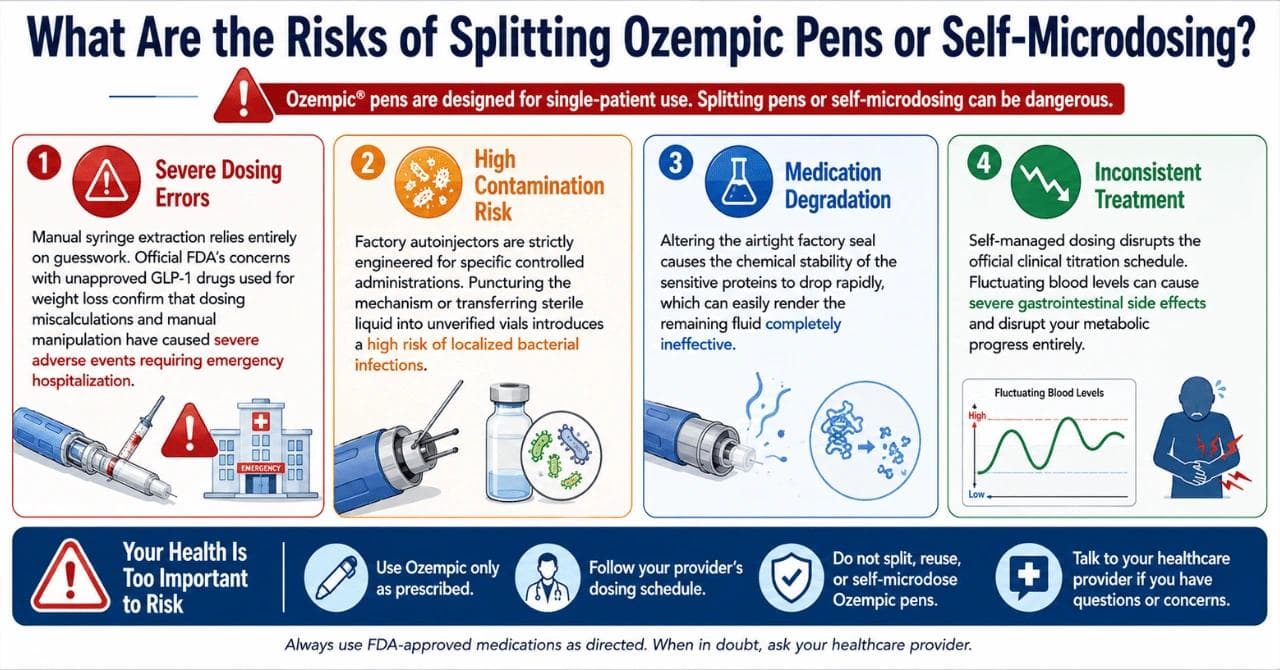
What Are the Risks of Splitting Ozempic Pens or Self-Microdosing?
While stretching a single pen might seem financially necessary, bypassing official medical protocols introduces critical physical dangers. Before attempting to manipulate a sealed device, you must evaluate the severe risks associated with splitting an Ozempic pen.
- Severe Dosing Errors: Manual syringe extraction relies entirely on guesswork. Official FDA’s concerns with unapproved GLP-1 drugs used for weight loss confirm that dosing miscalculations and manual manipulation have caused severe adverse events requiring emergency hospitalization.
- High Contamination Risk: Factory autoinjectors are strictly engineered for specific controlled administrations. Puncturing the mechanism or transferring sterile liquid into unverified vials introduces a high risk of localized bacterial infections.
- Medication Degradation: Altering the airtight factory seal causes the chemical stability of the sensitive proteins to drop rapidly, which can easily render the remaining fluid completely ineffective.
- Inconsistent Treatment: Self-managed dosing disrupts the official clinical titration schedule. Fluctuating blood levels can cause severe gastrointestinal side effects and disrupt your metabolic progress entirely.
Affordable Alternatives After Compounded GLP-1 Phased Out in 2026
After the compounded GLP-1 phased out in 2026 transition, you do not have to resort to dangerous manual modifications to afford your medication. Multiple legitimate pathways exist to help you secure affordable Ozempic alternatives safely.
- Manufacturer Savings Programs: The official drug developer offers direct assistance cards to help eligible commercially insured patients reduce their monthly pharmacy costs.
- Formal Insurance Appeals: You can work closely with your healthcare provider to submit a prior authorization appeal based on documented medical necessity to force coverage exceptions.
- Independent Financial Grants: Certain nonprofit patient advocacy organizations offer financial support for individuals managing chronic metabolic conditions who meet specific income requirements.
- Verified International Pharmacies: Cash pay buyers often compare regulated international channels to manage costs. For example, verified options like Polar Bear Meds provide factory-sealed standard-dose Ozempic Canada sourcing at lower international retail rates.
The Bottom Line: Safe Options After the Compounded GLP-1 Phase-Out
As the landscape of weight management therapies shifts, relying on unverified administrative techniques presents serious clinical hazards that far outweigh any temporary financial relief. The complete breakdown of the unapproved compounding market means individuals must transition away from self-directed workarounds and move toward structured, regulatory-compliant options to protect their long-term health.
Prioritizing structured medical oversight and relying solely on factory-sealed delivery systems guarantees both treatment efficacy and metabolic safety. To confidently replace a discontinued treatment plan with a clinically validated approach, individuals should thoroughly investigate all legally available avenues for metabolic care.
Frequently Asked Questions
The FDA updated official shortage monitoring channels to confirm that the national supply of commercial semaglutide has stabilized. Consequently, regulators are actively enforcing federal rules that strictly prohibit compounding facilities from producing drugs that are essentially copies of approved, commercially available medications.
It is an unapproved, self-directed financial strategy where patients attempt to manually extract non-standard amounts from a larger brand-name pen. The goal is to stretch a single prescription over several weeks to lower costs when facing high traditional retail prices.
No, official government data confirms that manual pen splitting and unverified volume manipulation introduce high risks of severe bacterial contamination and dangerous dosing errors. The factory autoinjectors are engineered strictly for controlled, prescribed administration and lack mechanisms for safe manual adjustment.
The domestic retail cost for cash pay buyers often exceeds one thousand dollars per month. This substantial out-of-pocket economic barrier is the primary reason individuals turn to unsafe online dosing workarounds.
Patients can explore manufacturer savings programs for commercially insured individuals, file prior authorization appeals with their insurance providers, apply for independent nonprofit medical grants, or compare lower international retail rates through verified mail-order channels such as Polar Bear Meds.
Disclaimer
This blog is provided for informational purposes only and does not replace professional medical, insurance, financial, or prescription guidance. Pricing, availability, prescription requirements, shipping timelines, and medication access policies may change over time and vary by provider, pharmacy source, and insurance plan. Always consult your healthcare provider, insurance representative, or official government resources before making medication, prescription, or coverage decisions.