How to Store Insulin Without Refrigeration Safely?
Storing insulin correctly is essential to maintain its effectiveness, especially when refrigeration isn’t available. Situations like travel, power cuts, or high temperatures can increase the risk of heat exposure. According to the U.S. Food and Drug Administration (FDA), most in-use insulin can remain stable at room temperature (below 30°C or 86°F) for a limited period without losing potency.
Understanding how to store insulin without refrigeration helps prevent temperature-related damage that can affect blood sugar control. Keeping insulin away from direct sunlight and using basic cooling methods can help preserve its stability. This helps ensure your medication remains safe and effective, even when a refrigerator isn’t available.
Can Insulin Be Stored Without Refrigeration?
Yes, insulin can be stored without refrigeration, but only under specific conditions. While unopened insulin should remain refrigerated to maintain its full shelf life, “in-use” insulin is designed to stay stable at room temperature for a limited period. In most cases, it should be kept below 30°C (86°F) and protected from heat and direct sunlight.
How Long Can Insulin Last Without Refrigeration?
The stability of insulin at room temperature depends on the type, formulation, and manufacturer guidelines. Once opened or removed from the fridge, each insulin has a defined “in-use” window to ensure it remains effective.
Typical Room Temperature Storage Duration (In-Use Insulin)
| Insulin Type / Category | Examples | Typical Duration at Room Temperature |
|---|---|---|
| Standard (Most Common) | Humalog, Novolog, Apidra, Lantus, Basaglar | Up to 28 days |
| Extended Stability | Levemir, Novolin R (vials), Novolin N (vials) | Up to 42 days (6 weeks) |
| Longest Stability | Tresiba, Toujeo (pens) | Up to 56 days (8 weeks) |
| Short Duration (Pre-mixed) | Humalog Mix 75/25, Humulin R U-500 | 10–14 days |
← Swipe to see more →
These timelines may vary by product and whether it is a vial or a pen, so always refer to the manufacturer’s instructions for accuracy.
Patient Tip
- Avoid repeated temperature changes: Once insulin reaches room temperature, keep it at a consistent temperature. Moving it repeatedly between hot and cold environments can reduce its stability and effectiveness over time.
Practical Ways to Keep Insulin Cool Without a Fridge
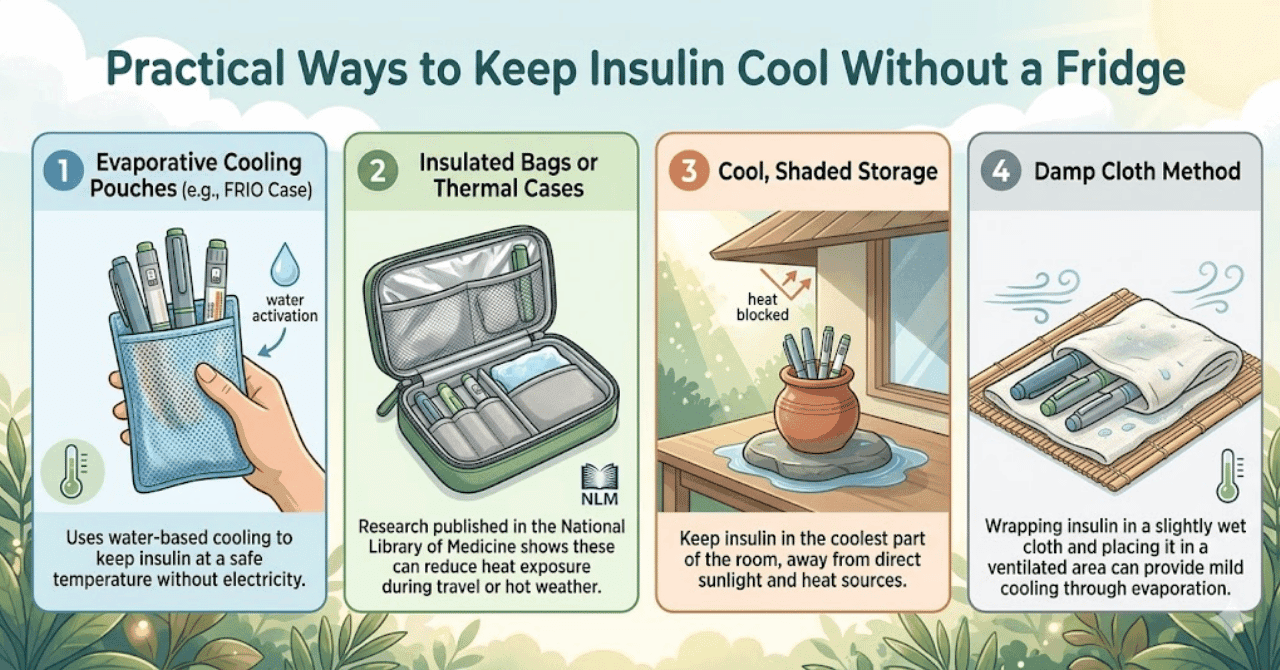
When refrigeration isn’t available, insulin should remain within the recommended room-temperature limits. The following methods can help keep insulin within a safer temperature range:
- Evaporative cooling pouches: Products like FRIO insulin cooling case use water-based cooling to keep insulin at a safe temperature without electricity.
- Insulated bags or thermal cases: Research published in the National Library of Medicine shows these can reduce heat exposure during travel or hot weather.
- Cool, shaded storage: Keep insulin in the coolest part of the room, away from direct sunlight and heat sources.
- Damp cloth method: Wrapping insulin in a slightly wet cloth and placing it in a ventilated area can provide mild cooling through evaporation.
How to Identify Spoiled or Ineffective Insulin Without Refrigeration
According to the American Diabetes Association (ADA), heat-damaged insulin may appear normal but can lose effectiveness. Always perform a visual check and monitor your glucose response closely when storing insulin without a fridge.
1. Physical Signs of Damage in Unrefrigerated Insulin (Visual Check)
- Cloudiness in Clear Insulin: Rapid or long-acting insulins (like Humalog, Lantus, or Novolog) should be crystal clear. If they look milky or "foggy," discard them.
- Clumping or "Frosting": Look for white particles or a "dusty" coating on the inside of the glass. This indicates the proteins have crystallized.
- Stringiness: If you see thin, hair-like strands floating in the liquid, the insulin has likely broken down due to heat.
- Color Changes: Any yellowish or brownish tint is a sign of severe degradation.
Note on NPH/Pre-mixed: Naturally cloudy insulins should look like uniform milk after rolling. If they stay clumped or "spotty" after mixing, they are spoiled.
2. Signs of Ineffective Unrefrigerated Insulin (Reduced Potency)
If insulin is exposed to extreme heat beyond recommended limits, direct sunlight, or freezing, it may lose effectiveness even if it looks normal. Watch for:
- Unexplained Highs: Blood sugar levels that stay high despite correct dosing.
- Hyperglycemia Symptoms: Increased thirst, extreme fatigue, or frequent urination shortly after a meal.
- Slower Action: If it takes much longer than usual for your glucose levels to drop.
Critical Mistakes to Avoid When Storing Insulin Without Power
Managing insulin without refrigeration requires avoiding key environmental risks that can quickly reduce its effectiveness. According to the Centers for Disease Control and Prevention (CDC) and the FDA, these are the most common and dangerous mistakes:
- Freezing through direct ice contact: Placing insulin directly on ice packs or dry ice can freeze it. If insulin freezes, discard it even if it looks normal after thawing.
- The “greenhouse” effect: Leaving insulin in parked cars or near windows can expose it to extreme heat (often exceeding 60°C/140°F), rapidly destroying its potency.
- Relying on the box expiration date: After insulin reaches room temperature, stability decreases. Always follow the in-use timeframe (typically ~28 days) rather than the printed expiry.
- Shaking insulin aggressively: Vigorous shaking can damage insulin’s protein structure, especially if it has already been exposed to heat.
- Ignoring performance signs: Insulin may look clear but still be ineffective. Persistently high blood sugar despite correct dosing can indicate loss of potency.
- Storing insulin in checked luggage: Always carry insulin in your hand luggage when flying. Insulin is safe to pass through airport X-ray machines, but cargo holds can expose it to extreme temperatures that may damage its effectiveness.
Final Thoughts: Safe Insulin Storage Without Refrigeration
Safely managing insulin without refrigeration requires careful temperature control and regular monitoring. Keeping it below 30°C (86°F) and using tools like the FRIO insulin cooling case can help maintain its effectiveness during travel or emergencies. Always follow the recommended storage timeframe and discard insulin showing any signs of damage to ensure reliable blood sugar control.
Frequently Asked Questions
Most “in-use” insulin can be kept at room temperature (below 30°C/86°F) for up to 28 days. Some types last longer, up to 42 days (like Levemir) or 56 days (like Tresiba). Always check your specific insulin guidelines.
The “3-hour rule” is not an official guideline. It’s a practical safety rule suggesting that prolonged exposure to heat (above 30°C/86°F) for several hours may reduce insulin potency. If insulin is left in a hot environment (like a car), it’s safer to replace it.
No insulin is fully shelf-stable long term. All insulin should be refrigerated before use. Once opened, most types (such as Humalog, Novolog, and Lantus) can be kept at room temperature for a limited time based on their usage guidelines.
Medical Disclaimer
This content is for informational purposes only and does not constitute medical advice. Insulin storage requirements may vary based on the type, brand, and individual health needs. Always consult a licensed healthcare provider before making changes to how you store or use insulin, especially in situations involving temperature exposure or emergencies.