Novolin 70/30 vs. NovoLog Mix 70/30: What’s the Difference?
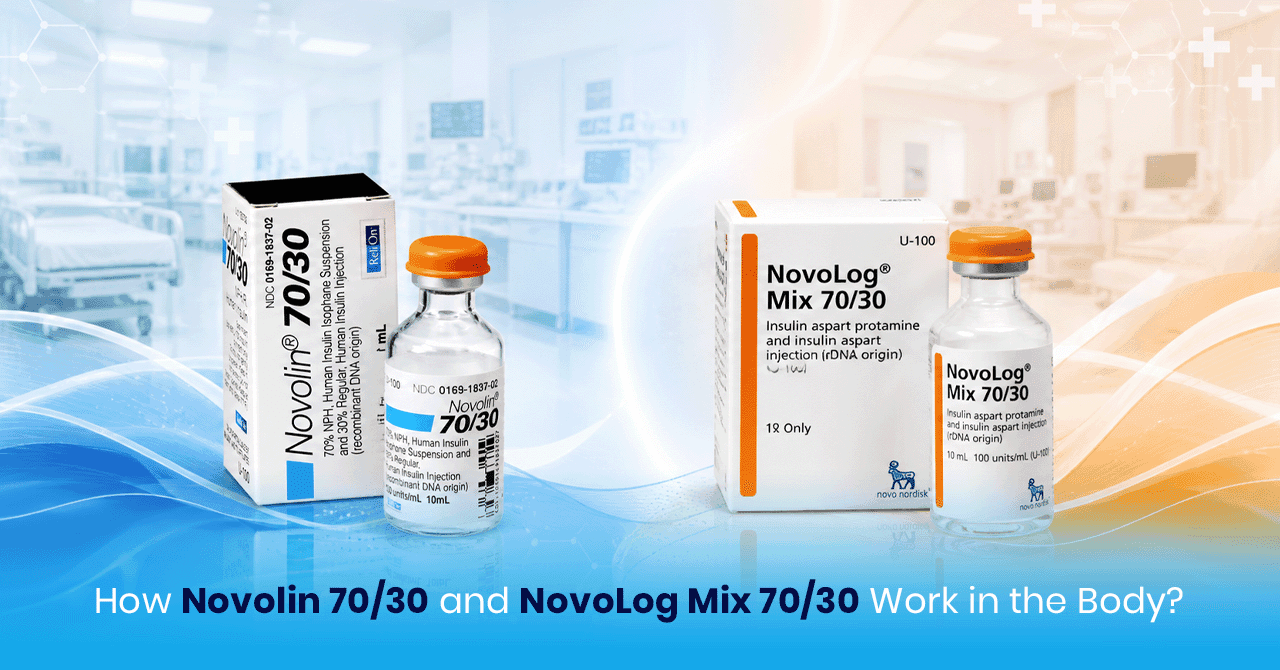
The main difference between Novolin 70/30 vs. NovoLog Mix 70/30 is how quickly they start working and what type of insulin they contain. NovoLog Mix 70/30 uses a rapid-acting insulin (insulin aspart), so it is taken within 15 minutes before a meal. While Novolin 70/30 uses a short-acting human insulin, it should be taken about 30 minutes before meals.
Both are premixed insulin combinations with a fixed ratio, but this difference in the onset time of insulin and injection timing before meals directly affects how you plan meals and control blood sugar.
How Novolin 70/30 and NovoLog Mix 70/30 Work in the Body?
Premixed insulin combinations like these use two components in one injection to control blood sugar. The 70% portion provides intermediate-acting insulin for background control, while the 30% portion manages blood sugar spikes after meals. This structure supports both basal vs. prandial insulin needs in a simplified regimen.
The difference between NovoLog and Novolin insulin comes from the type of mealtime insulin used. Novolin 70/30 contains NPH and regular human insulin, while NovoLog Mix 70/30 contains Insulin aspart protamine and insulin aspart. According to the Centers for Disease Control and Prevention (CDC), premixed insulin combinations are designed to cover both basal and mealtime insulin needs in one dose.
Novolin 70/30 vs. NovoLog Mix 70/30: Onset, Duration, and How You Use Them
The key difference between Novolin 70/30 vs. NovoLog Mix 70/30 is how fast they start working, which directly affects when you take them before meals and how flexible your routine can be.
| Feature | Novolin 70/30 | NovoLog Mix 70/30 |
|---|---|---|
| Insulin Type | NPH and Regular human insulin | Insulin aspart protamine and insulin aspart |
| Acting Type | Intermediate and short-acting | Intermediate and rapid-acting |
| Onset Time | Approximately 30 minutes | Approximately 15 minutes |
| Injection Timing | About 30 minutes before meals | Within 15 minutes before meals |
| Duration | Up to 12-18 hours | Up to 10-18 hours |
← Swipe to see more →
According to DailyMed prescribing information, NovoLog Mix 70/30 has an earlier onset compared to human insulin premixes, which explains its quicker action in real use.
Novolin 70/30 vs. NovoLog Mix 70/30 Side Effects
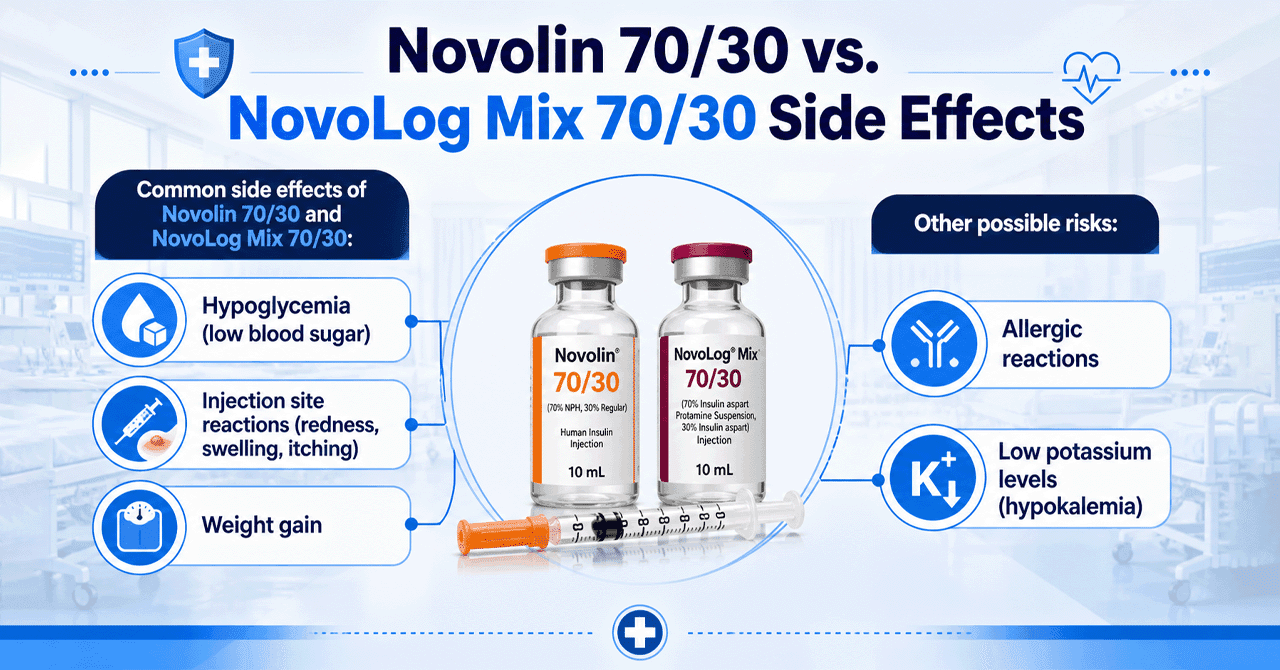
Side effects are similar for both insulins because they are premixed insulin combinations used to control blood sugar in the same way. The most common risk is hypoglycemia (low blood sugar), which is the most frequent adverse effect of insulin therapy and can become severe if not managed properly.
Common side effects of Novolin 70/30 and NovoLog Mix 70/30:
- Hypoglycemia (low blood sugar)
- Injection site reactions (redness, swelling, itching)
- Weight gain
Other possible risks:
- Allergic reactions
- Low potassium levels (hypokalemia)
While the side effects are largely the same, the faster onset of NovoLog Mix 70/30 may change when hypoglycemia occurs compared to Novolin 70/30.
Safety Considerations When Using Novolin 70/30 or NovoLog Mix 70/30
Similar restrictions apply to these insulins because they are premixed insulin combinations, but certain conditions increase the risk of serious side effects.
| Risk Factors | Why It Matters |
|---|---|
| Active hypoglycemia | Insulin can further lower blood sugar and become life-threatening |
| Allergy to insulin or components | May cause severe hypersensitivity or anaphylaxis |
| Kidney or liver impairment | Can reduce insulin clearance and increase hypoglycemia risk |
| Switching insulin types | May require dose adjustment and close monitoring |
| Irregular meal timing | Increases risk of mismatched insulin action and low blood sugar |
← Swipe to see more →
According to FDA prescribing information, both insulins are contraindicated during hypoglycemia and in patients with hypersensitivity reactions, and require careful monitoring when changing insulin regimens.
The Bottom Line: Can You Switch Between Novolin 70/30 and NovoLog Mix 70/30?
No, you cannot directly switch between Novolin 70/30 and NovoLog Mix 70/30 without a doctor's medical guidance. These insulins are not directly interchangeable because they differ in insulin type and onset time, which affects when they should be taken and how your body responds after meals. Switching without adjusting timing or dosage can increase the risk of hypoglycemia or poor blood sugar control.
The right choice depends on your routine, meal timing, and how your body responds to insulin, so any change should be supervised by a healthcare provider. If you are considering a switch or looking for access options, make sure you follow a valid prescription and consult a qualified professional before purchasing insulin online.
Frequently Asked Questions
No. Both are premixed insulin combinations, but they contain different types of insulin. NovoLog Mix 70/30 uses insulin aspart, a rapid-acting insulin, while Novolin 70/30 uses regular human insulin, which is short-acting. This difference changes their onset time of insulin and how they are used around meals.
NovoLog Mix 70/30 works faster because it contains insulin aspart, a rapid-acting insulin. Novolin 70/30 contains regular human insulin, which takes longer to start working, so it must be taken earlier before meals.
Novolin 70/30 is typically taken about 30 minutes before meals, while NovoLog Mix 70/30 is taken within 15 minutes before eating. This difference is due to their different onset times.
No. These insulins are not directly interchangeable due to differences in insulin type and onset time. Switching from Novolin 70/30 to NovoLog Mix 70/30 requires medical supervision to adjust dosing and timing safely.
Yes. NovoLog Mix 70/30 generic equivalent contains insulin aspart protamine and insulin aspart, which may be available in unbranded or biosimilar forms. Availability depends on your prescription, pharmacy, and location.
Medical Disclaimer
This blog is provided for informational purposes only and does not replace expert medical guidance, diagnosis, or treatment. The content is based on trusted sources, including U.S. Food and Drug Administration (FDA) prescribing information, CDC guidance, and peer-reviewed research from the National Library of Medicine (PubMed), but individual responses may vary. Always consult an authorized healthcare professional before making treatment decisions.