Insulin Overdose in Dogs: Symptoms, Treatment & Prevention Guide
Key Takeaways
- Insulin overdose in dogs causes hypoglycemia, which can lead to lethargy and weakness, confusion, seizures, or loss of consciousness.
- Early action is critical, including giving a fast-acting sugar, such as honey or Karo syrup, to dogs if they are conscious, and contacting a veterinarian immediately.
- Symptoms can appear quickly and may return or persist, which is why monitoring is essential even after initial improvement.
- Most cases occur due to dosing errors, such as accidental double injections, incorrect measurements, or giving insulin when your dog has not eaten.
- Treatment often requires veterinary care, including blood glucose stabilization and monitoring, while consistent dosing routines help prevent future overdose.
An insulin overdose in dogs is a medical emergency that causes hypoglycemia, where blood glucose drops to dangerous levels. This can lead to lethargy and weakness, disorientation, tremors, and in severe cases, dog seizures or loss of consciousness. Veterinary evidence shows that hypoglycemia from insulin overdose can occur within hours and may persist or recur for an extended period, depending on the dose and insulin type.
If your dog is conscious, you can rub honey on a dog's gums or use Karo syrup for dogs as a temporary measure, but this does not replace veterinary care. Immediate medical attention is required because symptoms can worsen or return even after initial improvement.
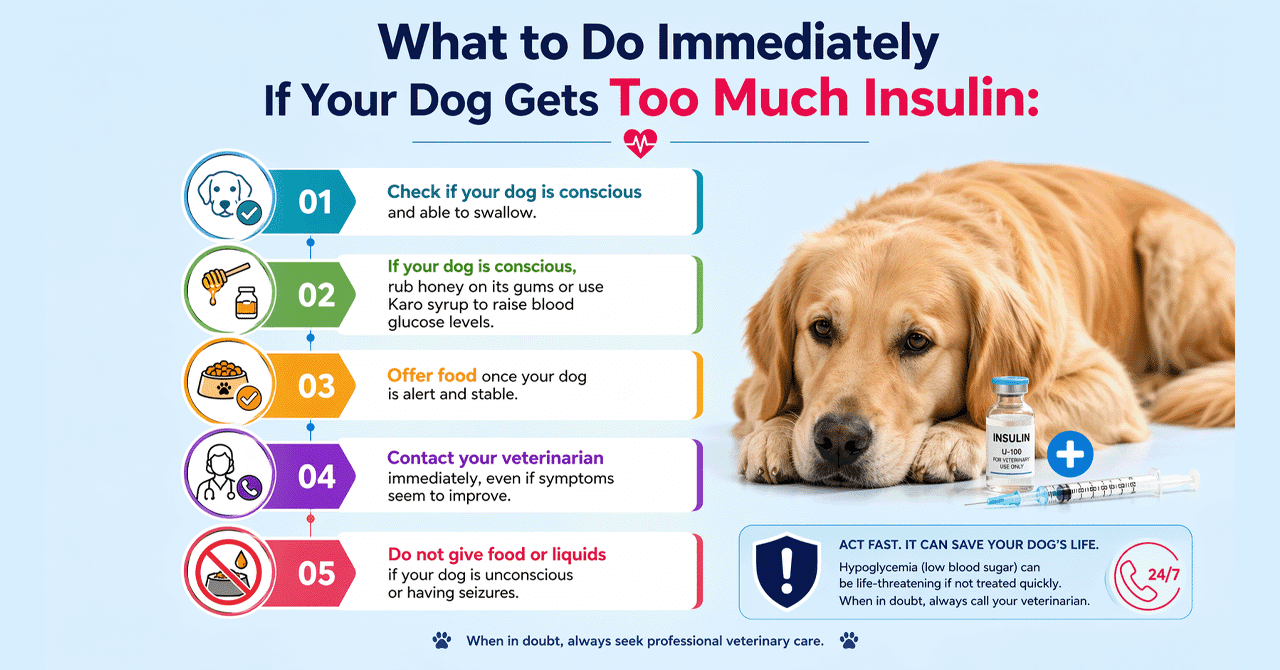
What to Do Immediately If Your Dog Gets Too Much Insulin
If you suspect an insulin overdose in dogs, you need to act immediately to prevent severe hypoglycemia in dogs:
- Check if your dog is conscious and able to swallow.
- If your dog is conscious, rub honey on its gums or use Karo syrup to raise blood glucose levels.
- Offer food once your dog is alert and stable.
- Contact your veterinarian immediately, even if symptoms seem to improve.
- Do not give food or liquids if your dog is unconscious or having seizures.
Clinical evidence shows that hypoglycemia caused by insulin overdose can persist or recur for an extended period, which is why monitoring and veterinary care are essential.
Dog Insulin Overdose Symptoms (Early to Severe Signs)
Dog insulin overdose symptoms usually appear quickly as blood glucose levels drop. Early signs may be subtle, but they can rapidly progress to severe neurological complications if not treated in time. Recognizing these stages helps you act before the condition becomes life-threatening.
| Stage | Symptoms |
|---|---|
| Early signs | Lethargy and weakness, disorientation or confusion, trembling or restlessness |
| Moderate signs | Difficulty walking (ataxia), lack of coordination, unusual behavior |
| Severe signs | Dog seizures, loss of consciousness, coma (insulin shock in dogs) |
← Swipe to see more →
Studies show that symptoms such as ataxia, altered mental state, and seizures are directly linked to hypoglycemia caused by insulin overdose.
Common Causes of Insulin Overdose in Dogs
Most cases of insulin overdose in dogs occur due to dosing errors or administration mistakes. The common causes are as follows:
- Accidental double dosing, especially in multi-caregiver households
- Incorrect measurement or confusion between syringe types or insulin concentrations
- Giving insulin when your dog has not eaten as expected
- Changes in weight, activity, or routine without adjusting the prescribed dose
According to veterinary research, improper dosing and administration errors are among the most common causes of insulin-related complications in dogs.
How to Treat Insulin Overdose in Dogs
If your dog has received too much insulin, immediate steps focus on restoring blood glucose levels and preventing further complications. At home, if your dog is conscious, you can give a fast-acting sugar source such as honey or Karo syrup for dogs as a temporary measure, but this does not replace veterinary care.
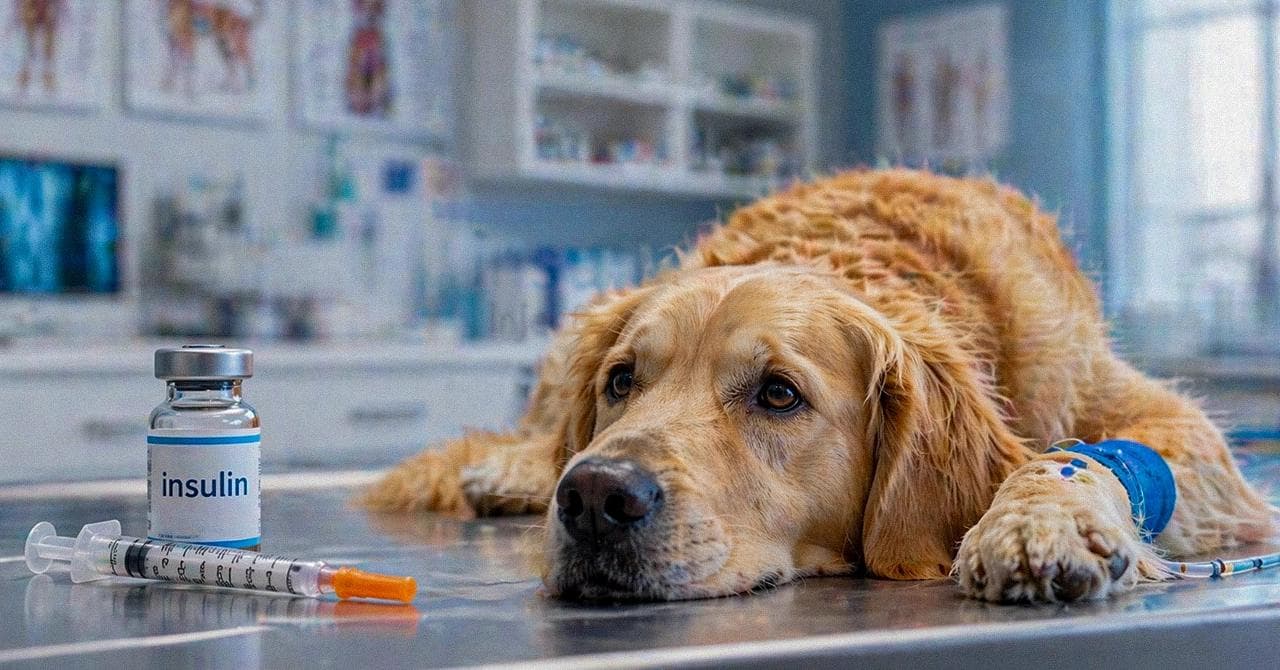
At a veterinary clinic, treatment focuses on stabilizing blood glucose using intravenous dextrose and continuous monitoring to prevent recurring hypoglycemia in dogs. Clinical evidence shows that hypoglycemia from insulin overdose can persist for extended periods, and in some cases, may last beyond 24 hours depending on the severity and insulin type. It may require prolonged monitoring and repeated glucose support.
When to Seek Emergency Care for Insulin Overdose in Dogs
You should seek immediate veterinary care if your dog shows any of the following signs of insulin overdose in dogs:
- Dog seizures
- Loss of consciousness
- Worsening symptoms despite giving sugar
- Inability to swallow safely
Even early symptoms should not be ignored, as hypoglycemia in dogs can progress rapidly and become life-threatening.
How to Prevent Insulin Overdose in Dogs
Preventing insulin overdose in dogs depends on accurate dosing and consistent routines.
- Track every insulin dose to avoid accidental double injections.
- Always feed your dog before giving insulin.
- Use the correct syringe or dosing device recommended for your dog’s prescribed insulin.
- Monitor changes in appetite, weight, and activity that may require dose adjustments.
Veterinary evidence shows that proper handling and accurate dosing are critical to reducing insulin-related complications in dogs.
The Bottom Line: Managing Insulin Overdose in Dogs Safely
Insulin overdose in dogs is a serious condition that requires quick recognition and the right response to prevent complications. Identifying early symptoms, taking immediate action with a fast-acting sugar if your dog is conscious, and seeking veterinary care without delay are critical steps.
Treatment often requires medical monitoring because hypoglycemia can last longer than expected, and recovery depends on timely intervention. By following proper dosing practices and maintaining consistent routines, you can reduce the risk of overdose and keep your dog safe.
Frequently Asked Questions
An insulin overdose causes hypoglycemia in dogs, where blood glucose levels drop dangerously low. This can lead to lethargy and weakness, confusion, and in severe cases, dog seizures or unconsciousness. Immediate action and veterinary care are required.
If an accidental double dose of insulin occurs, give a fast-acting sugar like honey or Karo syrup for dogs if your dog is conscious, and contact a veterinarian immediately. Do not wait for symptoms to appear, as hypoglycemia can develop quickly.
Dog insulin overdose symptoms include lethargy and weakness, disorientation, trembling, difficulty walking, and, in severe cases, insulin shock in dogs with seizures or loss of consciousness.
At home, if your dog is conscious, you can rub honey on a dog's gums or give Karo syrup for dogs to raise blood glucose levels temporarily. This is only a short-term measure, and veterinary care is still necessary.
The effects can last from several hours to multiple days, depending on the type and dose of insulin. Close monitoring is important because blood glucose levels can drop again after initial improvement.
Yes, many dogs recover with timely treatment. Early recognition, quick action, and proper veterinary care significantly improve the chances of recovery.
Yes, in some situations, even a prescribed insulin dose may lower blood glucose levels too much. This can happen if your dog eats less than expected, has increased activity, or experiences changes in health. If this occurs, contact your veterinarian for guidance.
Track each insulin dose carefully using a log or reminder system. This helps prevent confusion, especially in households where more than one person administers insulin.
Important Disclaimer
This blog is provided for informational purposes only and does not replace expert medical guidance, diagnosis, or treatment. The information is based on peer-reviewed sources, including studies published in the National Library of Medicine (PMC). Individual responses may vary, and you should always consult a licensed veterinarian before making any treatment decisions for your dog.