Mounjaro Side Effects: A Complete Symptoms List and What to Do About Them
Key Takeaways
1. Gastrointestinal effects like nausea and diarrhea are the most common Mounjaro symptoms and typically ease within weeks.
2. Serious side effects, including pancreatitis and gallbladder problems, are rare but require immediate medical attention.
3. Mounjaro’s FDA-approved labeling describes it as a GIP/GLP-1 receptor agonist- immune suppression is not listed as its mechanism.
4. Dose titration is an important strategy to reduce GI adverse reactions.
Mounjaro side effects are a top concern for anyone starting tirzepatide, and for good reason. This dual GIP/GLP-1 receptor agonist works by targeting metabolic pathways to regulate glucose and appetite, which means it touches several body systems at once. Most people tolerate it well after an adjustment period, but knowing what's normal, what's temporary, and what's a genuine red flag can make the difference between pushing through and missing a warning sign.
What Mounjaro Does to Your Body: A Quick Primer
Mounjaro (tirzepatide) is a dual GIP/GLP-1 receptor agonist approved for type 2 diabetes and used off-label for weight loss. It works by targeting metabolic pathways that regulate both blood glucose and appetite. According to Fella Health, Mounjaro doesn't directly suppress or significantly alter immune system function: its mechanism isn't touching immune cells.
That distinction matters. People sometimes worry that a powerful metabolic drug must be doing something to their immune system. It isn't. The side effects you'll encounter come from its effects on digestion, blood sugar, and hormonal signaling, not from any immune suppression.
Timing matters too. Most side effects appear when you first start the medication or step up to a higher dose. Side effects are often more noticeable after starting treatment or increasing the dose. Many GI symptoms decrease over time, especially after dose escalation. Knowing this timeline helps you plan and stay the course when the first week feels rough. People also search for Mounjaro long-term effects, but many known side effects are tied to digestion, blood sugar changes, and dose escalation rather than permanent body changes.

Gastrointestinal Side Effects: The Most Common Mounjaro Challenge
The Mounjaro gastrointestinal effects are where most people's experience begins and ends with side effects. The digestive system is simply where tirzepatide has its strongest impact.
Nausea: The Most Reported Symptom
In adult placebo-controlled Mounjaro trials, nausea was reported by 12% to 18% of patients, depending on dose. Nausea may be more noticeable during dose escalation and often decreases over time. Eating smaller, more frequent meals helps significantly. So does eating slowly, avoiding greasy or heavily spiced foods, and staying upright for at least an hour after meals. If nausea is severe, your doctor can prescribe anti-nausea medication to bridge the adjustment period.
Diarrhea and Constipation
Between 12% and 17% of clinical trial participants experienced diarrhea. Constipation is also reported, and some people cycle between the two as their gut adapts. For diarrhea, the key is hydration. Losing fluids quickly can lead to dizziness and, in serious cases, strain on the renal system, so staying on top of fluid intake isn't optional. For constipation, increasing dietary fiber and water intake usually helps. Both symptoms are generally temporary.
Abdominal Pain, Bloating, and Indigestion
Abdominal discomfort, bloating, and indigestion are part of the Mounjaro common side effects picture. The stomach empties more slowly on tirzepatide, which explains the bloating and the sensation of fullness that can tip into discomfort. Eating smaller portions and cutting out carbonated drinks tends to reduce bloating noticeably. If abdominal pain is severe or comes on suddenly, that's a different story: sudden, intense pain in the upper abdomen is a red flag that needs medical evaluation right away.
Decreased Appetite
Reduced appetite is partly the point of Mounjaro for weight loss patients, but it can become a problem if you're not eating enough. Undereating puts you at risk of nutrient deficiencies and can amplify fatigue. Focus on nutrient-dense foods in smaller amounts rather than skipping meals entirely. If you're losing weight faster than expected or feel consistently weak, tell your prescriber.
Milder but Bothersome Side Effects
Not every Mounjaro symptom is dramatic. Some symptoms are simply annoying, and understanding their cause makes them easier to manage. Patients also report musculoskeletal discomfort, such as body aches or general weakness. These symptoms are less central than GI effects, but persistent pain or weakness should be discussed with a healthcare provider.
Headaches, Dizziness, and Fatigue
Headache and dizziness on Mounjaro are often tied to dehydration, blood sugar shifts, and sometimes cardiovascular symptoms like a racing heartbeat during low blood sugar. Fatigue shows up for similar reasons. Simple steps may help: drink water consistently, avoid skipping meals, and give your body time to recalibrate. These symptoms tend to resolve within days to weeks at a stable dose.
Injection Site Reactions
Mounjaro skin reactions at the injection site, including redness, pain, or irritation, occurred in just over 3% of people in clinical trials. That's a relatively small proportion. Rotating injection sites (abdomen, thigh, upper arm) and letting the medication reach room temperature before injecting can reduce local irritation. These reactions almost always resolve on their own.
Serious Side Effects You Must Know
Mounjaro may slow stomach emptying and has been associated with pulmonary aspiration risk during general anesthesia or deep sedation, so patients should tell healthcare providers before planned procedures. The Mounjaro symptoms list includes rare but serious events that no one should dismiss. Knowing what to watch for is genuinely important.
Here’s a quick Mounjaro symptoms list to separate common effects from warning signs.
| Symptom Area | Common Examples | When to Seek Medical Help |
|---|---|---|
| Gastrointestinal | Nausea, vomiting, diarrhea, constipation, bloating | Severe pain, dehydration, or symptoms that do not improve |
| Blood sugar | Dizziness, shakiness, sweating, confusion | Possible hypoglycemia, especially with insulin or sulfonylureas |
| Gallbladder | Upper-right abdominal pain, nausea, fever | Pain with fever or yellowing skin/eyes |
| Pancreatitis | Severe upper abdominal pain, nausea, vomiting | Sudden or intense pain that may radiate to the back |
| Skin or injection site | Redness, pain, irritation | Swelling, rash, breathing trouble, or severe allergy signs |
← Swipe to see more →
Acute Pancreatitis
Pancreatitis is rare. In clinical studies, 14 acute pancreatitis events were confirmed in 13 Mounjaro-treated adults, or 0.23 patients per 100 years of exposure, versus 0.11 in comparator-treated patients. But rare doesn't mean ignore it. Symptoms include sudden, severe upper abdominal pain that may radiate to the back, nausea, and vomiting. Seek urgent medical help if severe abdominal pain occurs, especially with nausea or vomiting.
Gallbladder Problems
Gallstones and gallbladder inflammation (cholecystitis) are recognized side effects, partly linked to the rapid weight loss Mounjaro can produce. In adult placebo-controlled Mounjaro trials, acute gallbladder disease was reported by 0.6% of Mounjaro-treated patients and 0% of placebo-treated patients. Warning signs include pain in the upper right abdomen, fever, nausea, and yellowing of the skin or eyes. Any of these needs prompt medical evaluation.
Hypoglycemia
The risk of low blood sugar with Mounjaro alone is low. That changes when you combine it with other diabetes medications. In add-on-to-basal-insulin trials, severe hypoglycemia occurred in 0%, 2%, and 1% of patients on Mounjaro 5 mg, 10 mg, and 15 mg. Symptoms include shakiness, sweating, confusion, and in severe cases, loss of consciousness. If you're on insulin or sulfonylureas alongside tirzepatide, your prescriber should review your doses carefully.
Thyroid Cancer Risk
Mounjaro carries an FDA boxed warning regarding the potential risk of thyroid C-cell tumors, based on rodent studies. The drug is contraindicated in anyone with a personal or family history of medullary thyroid carcinoma (MTC) or Multiple Endocrine Neoplasia syndrome type 2 (MEN 2). If you have either in your history, Mounjaro is contraindicated and should not be used unless your healthcare provider advises otherwise. Report any neck lump, difficulty swallowing, or hoarseness to your doctor immediately.
Acute Kidney Injury and Severe Allergic Reactions
Severe vomiting and diarrhea can lead to significant dehydration, which in turn can stress the renal system and potentially trigger acute kidney injury. Staying hydrated during GI flares isn't just comfort management: it's protective. Severe allergic reactions are rare but do occur. Signs include swelling of the face, throat tightening, difficulty breathing, and rash. This is an emergency. Call 911 or get to an ER immediately.
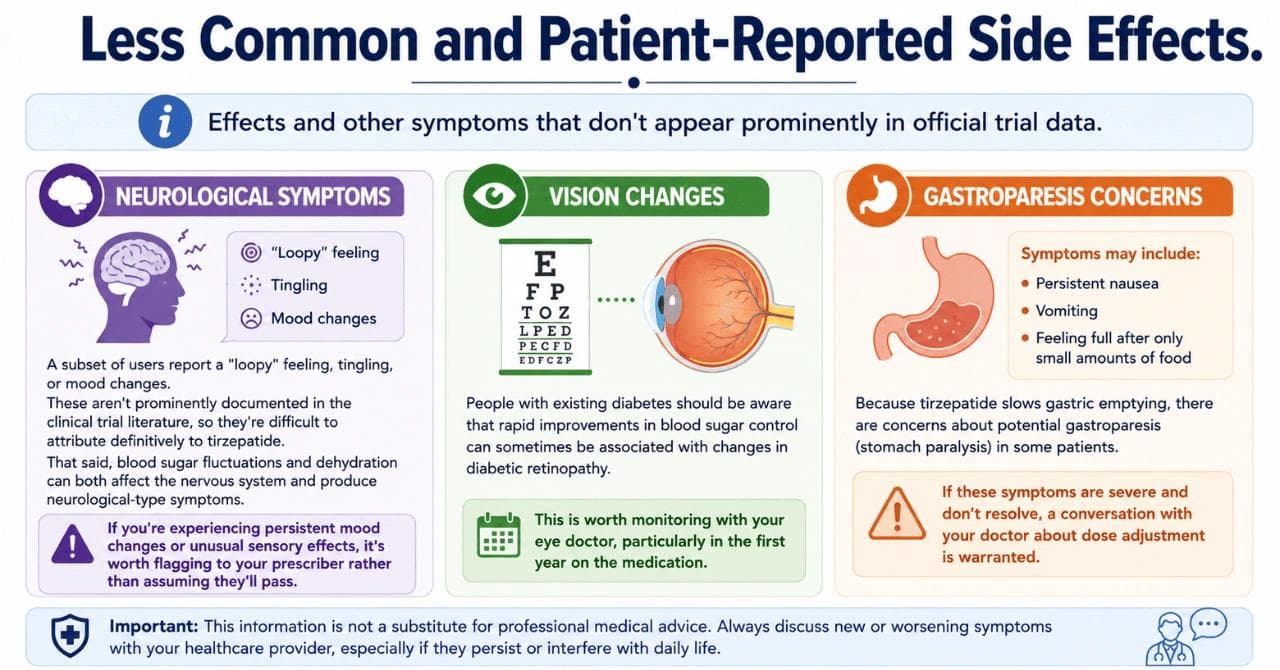
Less Common and Patient-Reported Side Effects
Beyond the clinically documented effects, some patients report Mounjaro neurological side effects and other symptoms that don't appear prominently in official trial data.
Neurological Symptoms
A subset of users report a "loopy" feeling, tingling, or mood changes. These aren't prominently documented in the clinical trial literature, so they're difficult to attribute definitively to tirzepatide. That said, blood sugar fluctuations and dehydration can both affect the nervous system and produce neurological-type symptoms. If you're experiencing persistent mood changes or unusual sensory effects, it's worth flagging to your prescriber rather than assuming they'll pass.
Vision Changes
People with existing diabetes should be aware that rapid improvements in blood sugar control can sometimes be associated with changes in diabetic retinopathy. This is worth monitoring with your eye doctor, particularly in the first year on the medication.
Gastroparesis Concerns
Because tirzepatide slows gastric emptying, there are concerns about potential gastroparesis (stomach paralysis) in some patients. Symptoms include persistent nausea, vomiting, and feeling full after only small amounts of food. If these symptoms are severe and don't resolve, a conversation with your doctor about dose adjustment is warranted.
Managing Side Effects: Practical Strategies That Work
Most Mounjaro side effects are manageable. The approach that works best combines dose strategy with lifestyle adjustments.
Start Low, Go Slow
The dose titration approach (starting at a low dose and increasing gradually) exists specifically to reduce side effect severity. Skipping ahead in the dose schedule to get faster results almost always backfires. Stick to the titration schedule your prescriber set, and don't rush it.
Dietary Adjustments
Smaller, more frequent meals beat three large ones. Greasy, heavily spiced, or high-fat foods amplify nausea and GI discomfort. Eating slowly and stopping before you're full helps your slowed digestive system keep pace. These aren't permanent restrictions for most people, just useful habits during the adjustment phase.
Hydration and Injection Timing
Drink water consistently throughout the day, especially if you're dealing with diarrhea or vomiting. Some people find that injecting Mounjaro in the evening means the worst of the next-day symptoms happen while they're sleeping. That's a practical workaround worth trying. Stay upright for at least an hour after eating to reduce reflux.
When to Call Your Doctor
Mild symptoms may be manageable, but patients should contact their healthcare provider if symptoms are severe, persistent, worsening, or bothersome. Severe, persistent, or worsening symptoms do. Specifically: intense abdominal pain, unrelenting vomiting, signs of dehydration (dark urine, significant dizziness), yellowing of skin or eyes, or any symptom that feels like an emergency.
When in doubt, call. Your prescriber can adjust your dose or add supportive medications to help you through the rough patches. For prescription access or pharmacy questions, Polar Bear Meds can help explain ordering requirements. Medical side-effect questions should go to a doctor or pharmacist.
Final Thoughts on Managing Mounjaro Side Effects
Mounjaro side effects are real, but for most people they're manageable and temporary. The gastrointestinal effects get the most attention because they’re the most common, with nausea reported by 12% to 18% of adults in placebo-controlled Mounjaro trials. Serious events like pancreatitis occur in fewer than half a percent of patients in trials, and the thyroid risk, while carrying an FDA boxed warning, applies specifically to people with relevant personal or family histories.
The clearest path through the adjustment period is the one your prescriber already mapped out: start low, increase slowly, eat smart, and stay hydrated. Know the difference between expected discomfort and a genuine warning sign. And don't try to manage serious symptoms alone.
If you're considering Mounjaro or already on it, you can explore tirzepatide and other prescription options through a legitimate Canadian pharmacy to understand your access and cost options. When it comes to Mounjaro side effects, the more informed you are going in, the better your chances of staying on the medication long enough to see the results it's capable of delivering.
Frequently Asked Questions
The most common side effects are gastrointestinal. Nausea, diarrhea, vomiting, constipation, decreased appetite, indigestion, and abdominal pain top the Mounjaro common side effects list. Headache, dizziness, fatigue, and burping are also frequently reported, particularly in the early weeks or after a dose increase.
Most gastrointestinal side effects are temporary. They are often more noticeable when starting Mounjaro or increasing the dose. Many symptoms decrease over time after dose escalation, but severe, persistent, or worsening symptoms should be discussed with a healthcare provider.
Yes, though serious events are rare. Acute pancreatitis, gallbladder problems, severe hypoglycemia (especially when combined with insulin or sulfonylureas), acute kidney injury from dehydration, and severe allergic reactions have all been reported. Mounjaro also carries an FDA boxed warning for the potential risk of thyroid C-cell tumors based on animal studies, and it's contraindicated for anyone with a relevant personal or family history.
For mild GI symptoms, focus on smaller meals, avoiding trigger foods, staying hydrated, and eating slowly. For anything severe, including intense abdominal pain, unrelenting vomiting, signs of dehydration, jaundice, or symptoms of very low blood sugar, contact your doctor immediately or seek emergency care. Your provider may recommend a dose adjustment or supportive medications to help you stay on track. You can also browse prescription drug options and resources to better understand what's available through a licensed pharmacy.
Disclaimer
This article covers what the research says about Mounjaro side effects, but it's not medical advice. Everyone's health situation is different, and tirzepatide interacts with other medications in ways that matter. Before starting, adjusting, or stopping Mounjaro, talk to your doctor or pharmacist. They're the right people to guide your specific treatment plan.