Real Truth About Aczone (Dapsone 7.5% Gel) for Acne
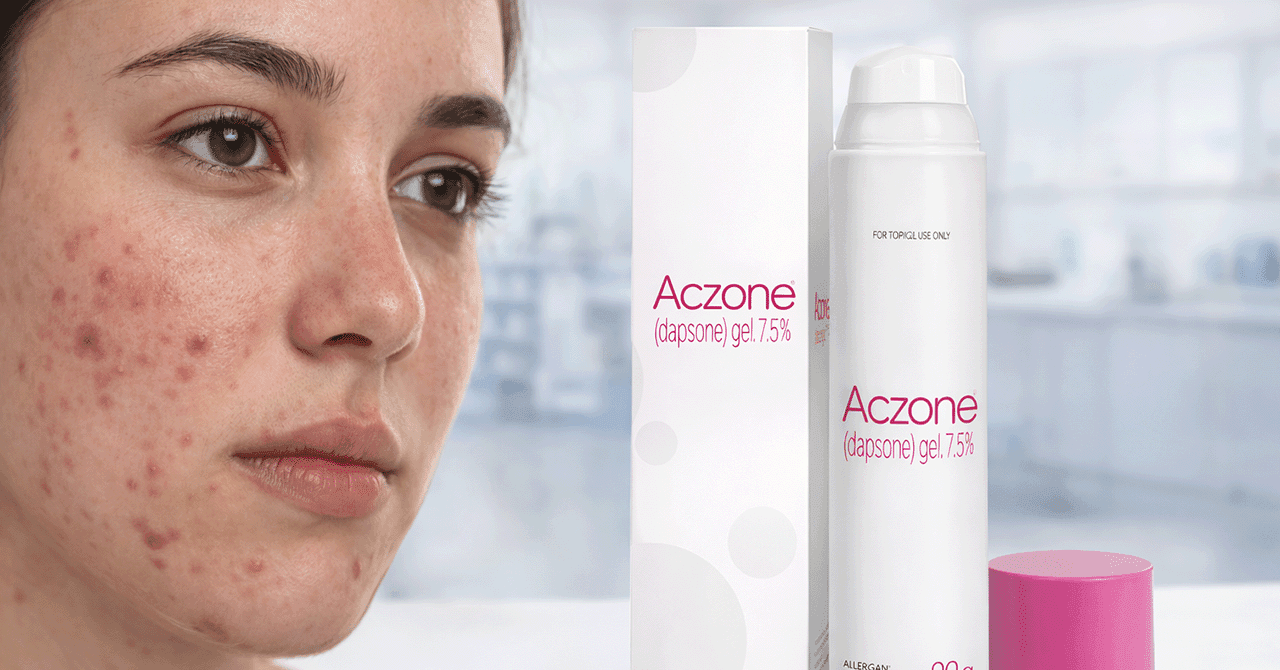
Aczone 7.5% gel is a prescription topical treatment used to reduce inflammation and acne-causing bacteria. It is mainly prescribed for inflammatory acne and applied once daily. According to the DailyMed prescribing information, it is approved for the treatment of acne in patients aged 9 years and older.
It should be reassessed if no improvement is seen after 12 weeks. If you are considering this treatment, what matters is simple: how it works, how long it takes, and whether it is the right choice for your skin.
How Does Aczone Work for Acne?
The exact mechanism of action of dapsone gel in acne treatment is not fully understood. However, it is believed to have both anti-inflammatory and antibacterial effects, which may contribute to its clinical benefits. It may help reduce the growth of acne-causing bacteria while also decreasing inflammation in the skin. According to MedlinePlus, dapsone slows or stops bacterial growth and decreases inflammation in the skin.
This dual action makes it useful for inflammatory acne. Unlike retinoids, it does not increase skin cell turnover. Instead, it focuses on reducing redness and active breakouts, making it a non-retinoid option for inflammatory acne.
How Long Does Aczone Take to Work?
Most people begin to see improvement within 2 to 4 weeks, but full results typically take up to 12 weeks. According to a clinical study indexed in PubMed, acne improvement may begin as early as week 2. More visible changes typically appear between weeks 4 and 8, with full evaluation recommended at 12 weeks. Aczone works gradually, so consistent use is important rather than expecting immediate results.
Who Should Use or Avoid Aczone (Dapsone 7.5% Gel) for Acne?
Aczone gel is best suited for specific types of acne and may not be ideal for everyone. It works primarily by reducing inflammation, so results depend on your acne type and medical profile.
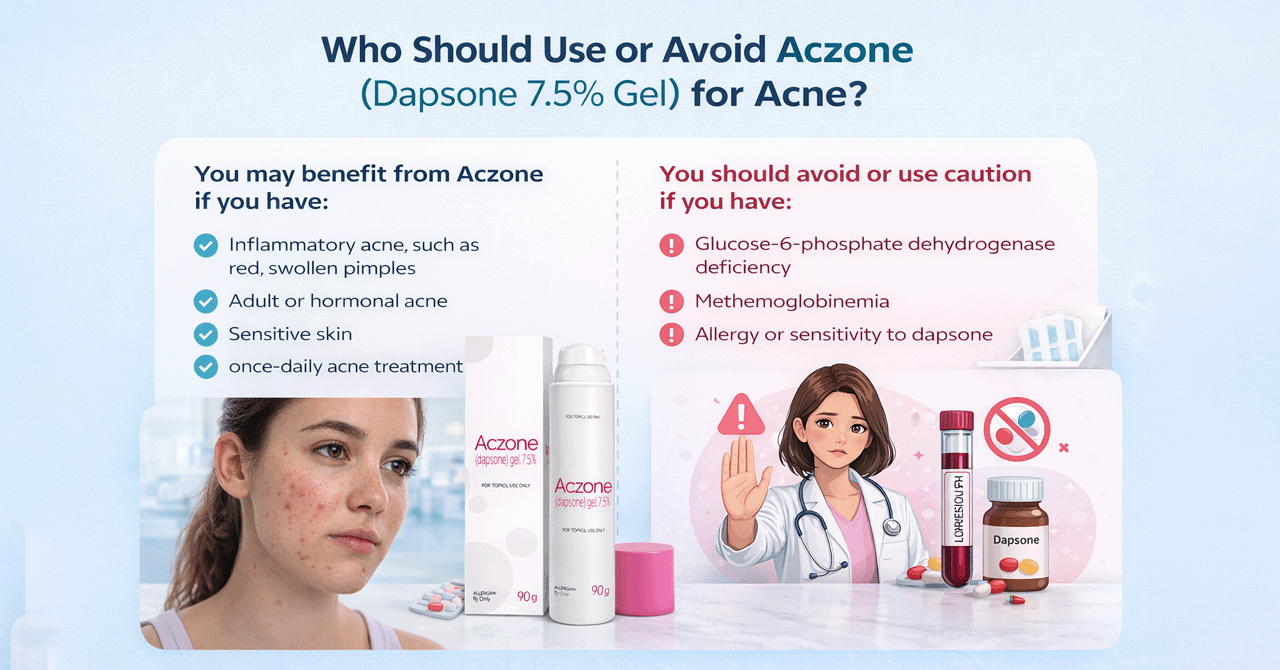
You may benefit from Aczone if you have:
- Inflammatory acne, such as red, swollen pimples
- Adult or hormonal acne
- Sensitive skin that cannot tolerate stronger treatments
- Need for a once-daily acne treatment
You should avoid or use caution if you have:
- Glucose-6-phosphate dehydrogenase deficiency
- A history of methemoglobinemia
- A known allergy or sensitivity to dapsone
According to FDA prescribing information, these conditions may increase the risk of serious side effects and require medical supervision.
It may not be the best option if:
- Your acne is mainly blackheads or clogged pores
- You are looking for rapid or aggressive results
Aczone Side Effects and Safety
Aczone gel for acne is generally well tolerated, with most side effects limited to the application site.
Common side effects:
| Side Effect | Description |
|---|---|
| Dryness | Skin may feel dry or tight |
| Redness | Mild irritation or erythema |
| Itching | Temporary irritation at the application site |
| Peeling | Skin may peel or flake |
← Swipe to see more →
The FDA label states that the most common adverse reactions are application site dryness and itching.
Rare but serious risks:
| Condition | What to watch for |
|---|---|
| Methemoglobinemia | Bluish or gray lips, nails, or skin |
| Hemolysis (G6PD risk) | Fatigue, shortness of breath, dark urine |
← Swipe to see more →
These conditions are rare but require immediate medical attention if symptoms appear, as noted in FDA safety warnings.
How to Use Aczone Gel Correctly
Using Aczone (dapsone 7.5% gel) for acne correctly helps improve results and reduce irritation. This medication is for topical use only and should not be applied to the eyes, mouth, or inside the nose.
- Apply a pea-sized amount once daily.
- Spread a thin layer over the entire affected area, not just individual pimples.
- Use on clean, dry skin
- Wash your hands after applying
MedlinePlus also states that applying more than recommended will not improve results and may increase skin irritation. If your acne does not improve after 12 weeks, treatment should be reassessed.
Can You Use Aczone With Other Acne Treatments?
Aczone (dapsone 7.5% gel) for acne can be used with other treatments. Certain medications, such as trimethoprim-sulfamethoxazole (TMP/SMX), may increase systemic exposure to dapsone and should be used with caution. The clinical studies show that using Aczone with benzoyl peroxide may cause temporary yellow or orange discoloration of the skin or facial hair. You should always follow your healthcare provider’s guidance before combining Aczone with other acne treatments to avoid unwanted side effects.
When Should You Stop Aczone and Consult a Doctor?
You should consult a healthcare provider if:
- You experience severe skin irritation.
- Your acne does not improve after 12 weeks.
- You notice symptoms such as unusual fatigue, shortness of breath, or skin discoloration.
The Bottom Line: Is Aczone Worth It for Acne?
Aczone (dapsone 7.5% gel) for acne is a reliable option for treating inflammatory acne, especially if you need a once daily, non-retinoid treatment with a lower risk of irritation. It works gradually by reducing bacteria and inflammation, with visible improvement typically seen over several weeks. While it may not deliver dramatic or fast results for everyone, it can be an effective part of a consistent acne treatment plan when used correctly and under medical guidance.
Frequently Asked Questions
Aczone (dapsone 7.5% gel) is an effective option for treating inflammatory acne. Clinical studies show it reduces acne severity and lesion counts when used consistently for up to 12 weeks.
Yes, the NLM studies show that dapsone is classified as a sulfone antibiotic with anti-inflammatory properties, which helps reduce acne-causing bacteria and skin inflammation.
The 7.5% gel is designed for once daily use; applying more than prescribed will not improve results and may increase irritation.
Important Disclaimer
This blog is provided for informational purposes only and does not replace expert medical guidance, diagnosis, or treatment. The information is based on trusted sources such as the FDA and National Library of Medicine, but individual responses may vary. Always consult an authorized healthcare professional before making treatment decisions.