Vaniqa Canada Price 2026: How U.S. Patients Save on Eflornithine Cream
Following the discontinuation of brand-name Vaniqa in the United States, many U.S. patients now explore licensed Canadian pharmacy channels to access eflornithine cream in 2026. These regulated supply options help maintain product availability. They may also offer lower cash-pay pricing compared to U.S. specialty pharmacy costs for uninsured patients.
What Is the Vaniqa Canada Price in 2026 for U.S. Patients?
When comparing cross-border options for eflornithine cream, pricing in 2026 depends on whether patients access brand-name Vaniqa or generic eflornithine formulations. Vaniqa costs also vary based on pharmacy source, availability, and dispensing channel.
2026 Eflornithine Cream Cost Comparison
| Medication Type & Source | Tube Size | Average International Cash Price | U.S. Retail / Specialty Price | |
|---|---|---|---|---|
| Generic Eflornithine (International) | 30g | $60 - $110 USD | Not available in the U.S. retail market | |
| Brand-Name Vaniqa (Canada) | 30g | $150 - $175 USD | Not available / discontinued in the U.S. | |
| U.S. Specialty Pharmacy Channels | Varies | Not applicable | $180 - $240+ USD (compounded alternatives) |
← Swipe to see more →
How Can U.S. Patients Save on Vaniqa Cream in 2026?
Because brand-name Vaniqa (eflornithine) is no longer widely available in the United States, traditional retail coupon-based savings are limited. Most patients now explore alternative sourcing and treatment pathways depending on prescription access and pharmacy availability.
Regulated Cross-Border Sourcing via Canada
Many U.S. patients compare licensed Canadian pharmacy options for accessing eflornithine cream in 2026. These international channels may offer more stable cash-pay pricing compared to U.S. specialty pharmacy channels, depending on pharmacy source, supply, and dispensing fees.
Multi-Tube or Bulk Prescription Planning
Some international pharmacies may allow larger supply fills (when prescribed), which can reduce repeated dispensing and shipping costs. This approach is often used to improve overall affordability over longer treatment periods, subject to prescription limits and pharmacy policy.
Compounded Eflornithine Formulations (U.S. Option)
In the absence of consistent commercial availability, some dermatology clinics and licensed compounding pharmacies may prepare custom eflornithine formulations. Cost and availability depend on pharmacy standards, formulation strength, and state-level regulations.
Medical Alternatives for Long-Term Management
In certain cases, healthcare providers may consider hormonal or systemic treatment options to manage the underlying causes of unwanted facial hair growth. These are typically evaluated based on medical history and treatment response.
Why Is Vaniqa Canada Pricing So Much Cheaper?
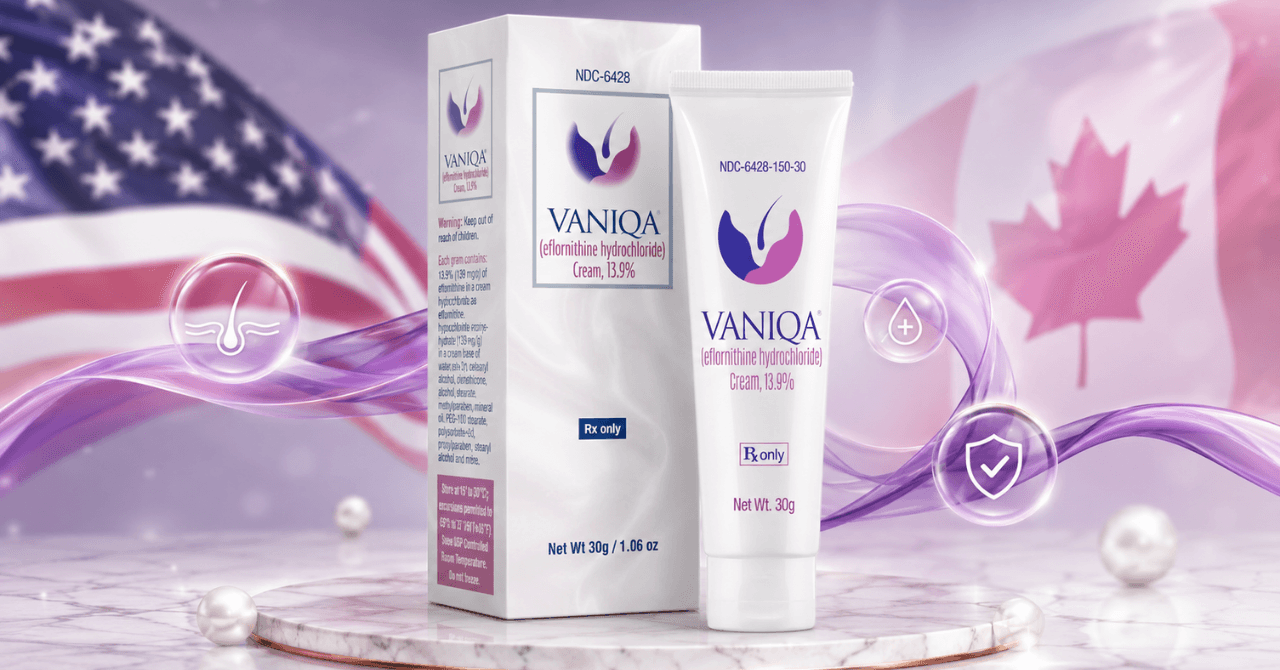
Vaniqa (eflornithine) is priced lower in Canada due to stricter government regulation, centralized drug purchasing, and tighter pharmaceutical price controls compared to the United States. These system-level differences directly impact final patient pricing.
Government Price Regulation in Canada
Canada regulates patented medicines through the Patented Medicine Prices Review Board (PMPRB), which limits launch prices and controls price increases over time using international reference benchmarks. This creates a more controlled pricing environment compared to the U.S. market-driven system.
Centralized Drug Purchasing System
Canadian provinces use centralized procurement and bulk purchasing agreements to negotiate drug prices. Unlike the fragmented U.S. system with multiple private insurers, provinces act as large buyers, increasing bargaining power and reducing:
- Administrative costs
- Pharmacy-level markups
- Distribution inefficiencies
Controlled Supply Chain Structure
Canada maintains a regulated pharmaceutical distribution system that keeps pricing consistent across regions. This reduces price variation between pharmacies, unlike the U.S., where costs vary widely due to insurance contracts and retail pricing differences.
International Label Strength Clarification (Important Note)
Some international sources list eflornithine as 11.5% (UK/EU standard), while older U.S. references show 13.9% strength. This is a labeling difference, not a formulation difference. It comes from different regulatory measurement methods, based on weight vs salt-weight representation. Both values refer to the same approved eflornithine formulation with no difference in clinical effect, safety, or quality.
Cross-Border Access Factor
Vaniqa is no longer widely available through standard U.S. retail pharmacies. As a result, some patients use regulated international pharmacy channels under valid prescriptions. Pricing differences arise from national healthcare systems and procurement models, not differences in the medication itself.
Is Sourcing Vaniqa (Eflornithine) Cream from Canada Legal?
Technically, U.S. federal law restricts importing prescription medications from foreign countries. However, under the FDA’s Personal Importation Policy, small quantities for personal use may sometimes be allowed under enforcement discretion. Even then, mail-order imports are not officially FDA-approved, and delivery is never guaranteed.
To qualify for this discretionary allowance, the transaction must meet specific criteria:
- Valid Prescription: The medication must be for personal use only and supported by a valid prescription from a licensed U.S. healthcare provider.
- 90-Day Supply Limit: Import quantities are generally limited to short-term personal use, typically a 90-day supply.
- Non-Commercial Use Only: The product cannot be resold, redistributed, or used for any commercial purpose. Each shipment is reviewed individually, and approval is not automatic.
It is important to understand that importing prescription medications through mail-order or online channels remains outside the FDA-approved supply chain. Shipments may be delayed, refused, or held at customs.
Since brand-name Vaniqa (eflornithine) is no longer available in the U.S. retail market, some patients explore international sourcing options. However, regulatory risk still applies in all cases, and outcomes are not guaranteed.
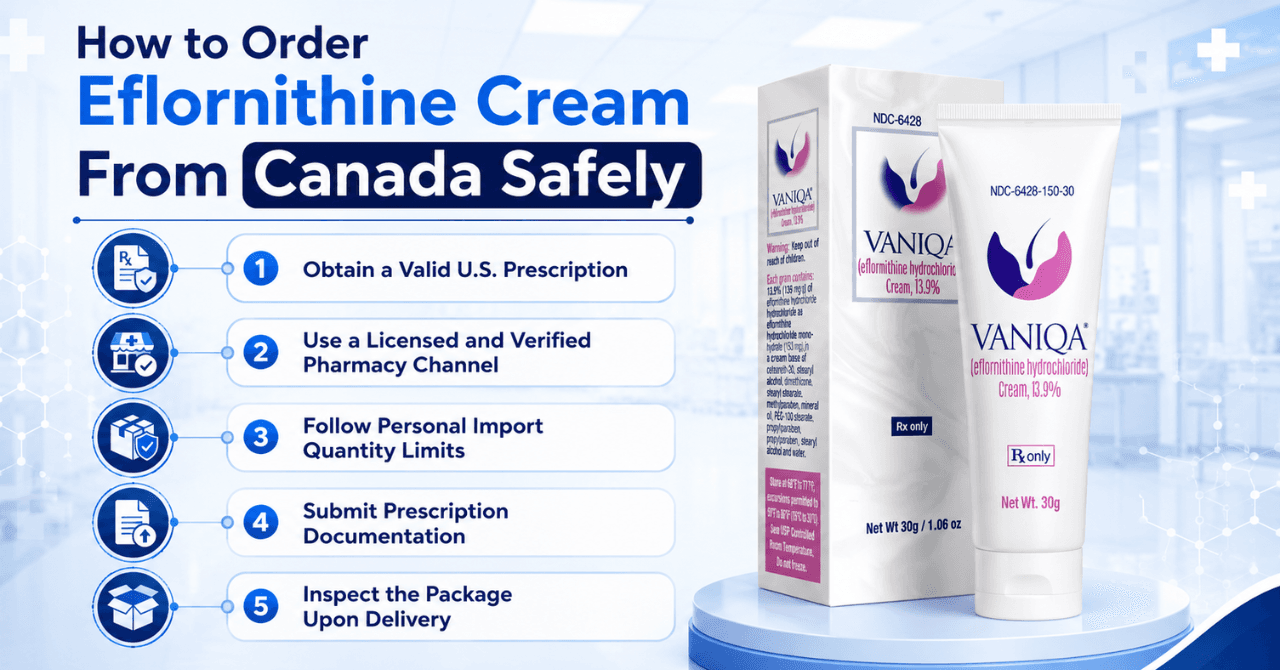
How to Order Eflornithine Cream From Canada Safely
U.S. patients considering cross-border access to prescription medications should follow a structured and compliant process to reduce risk, ensure prescription validation, and avoid unreliable suppliers.
1. Obtain a Valid U.S. Prescription
A licensed U.S. healthcare provider must prescribe eflornithine cream before any order is placed. Reputable pharmacies, domestic or international, require a valid prescription and will not dispense prescription medication without one.
2. Use a Licensed and Verified Pharmacy Channel
Only use established pharmacy services that operate with transparent licensing and pharmacist oversight. Avoid any website or seller that offers prescription medication without requiring medical authorization, as this is a common indicator of unsafe or counterfeit supply chains.
3. Follow Personal Import Quantity Limits
When ordering internationally, shipments are generally expected to align with personal-use quantities (commonly referenced as short-term or up to approximately a 90-day supply). Orders that appear commercial in scale may face additional review or delays during customs processing.
4. Submit Prescription Documentation
During checkout, you may be required to upload or provide your prescription details. This allows the dispensing pharmacy to verify the medication, dosage form, and patient identity before fulfilling the order.
5. Inspect the Package Upon Delivery
When the shipment arrives, it is recommended to perform a basic inspection before use:
- Confirm the packaging is sealed and undamaged
- Verify the medication label matches the prescribed product and strength
- Check the expiration date and manufacturer details printed on the packaging
Important Note
Cross-border prescription fulfillment operates outside standard domestic pharmacy supply chains. As a result, processing times, shipping outcomes, and customs clearance can vary depending on regulatory review and shipment conditions.
Final Vaniqa Canada Price 2026 Summary for U.S. Patients
U.S. patients considering eflornithine cream in 2026 often evaluate Canadian sourcing as a cost-driven alternative to unavailable domestic retail options. Access requires a valid prescription and compliance with personal import guidelines. While pricing may be more affordable, all international shipments remain subject to regulatory review, customs inspection, and variable delivery outcomes.
Frequently Asked Questions
No, eflornithine cream (Vaniqa or generic eflornithine) is not available over-the-counter. It is a prescription-only medication in most countries, meaning it must be prescribed by a licensed healthcare provider before it can be dispensed by a pharmacy.
Vaniqa (eflornithine) cream is not widely available as a standard retail product in Canada. However, eflornithine may still be accessible through regulated prescription channels, depending on pharmacy availability and formulation (brand-name or compounded versions).
Vaniqa was discontinued in the United States primarily due to commercial and manufacturing decisions by the manufacturer, not safety concerns. It is no longer routinely stocked in U.S. retail pharmacies, and patients often need to explore alternative options such as generics or compounding under medical supervision.
Disclaimer
This article is for informational purposes only and does not provide medical, legal, or financial advice. Pricing, availability, and regulatory policies related to Vaniqa (eflornithine) cream in Canada and the U.S. may change over time. Costs, access, and pharmacy options can vary depending on location, supplier, and prescription requirements. Patients should consult a licensed healthcare provider and verify pharmacy credentials before making any purchasing or ordering decisions.